Taxonomy & Classification
- Kingdom
- Animalia
- Phylum
- Chordata
- Class
- Reptilia
- Order
- Squamata
- Family
- Mosasauridae
- Genus
- Mosasaurus
- Species
- Mosasaurus hoffmannii

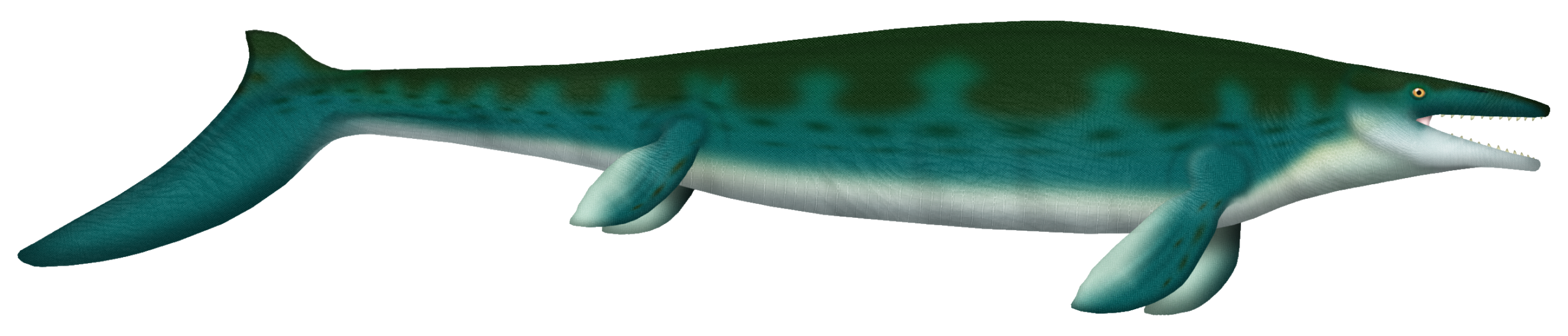 Photo Credit: TotalDino / Wikimedia Commons
In the warm, sunlit waters of the late Cretaceous period, the Mosasaurus, known scientifically as Mosasaurus hoffmanni, ruled the ancient seas with an air of majesty and power. Imagine gliding through a vibrant underwater world, where schools of fish dart among colorful corals and the shadows of larger creatures loom in the depths. The Mosasaurus, with its long, muscular tail and streamlined body, was perfectly designed for this aquatic realm. It could swim with incredible speed, making it one of the ocean’s top predators, a true master of its domain.
What makes the Mosasaurus so captivating to scientists and nature enthusiasts alike is not just its size—growing up to 56 feet long—but also its unique adaptations. With a head resembling that of a crocodile, complete with sharp teeth for gripping slippery prey, this ancient reptile was a fierce carnivore. It feasted on everything from bony fish to cephalopods, showcasing its role as a keystone species in its ecosystem. As we dive deeper into the life of the Mosasaurus, we uncover the secrets of its behavior, diet, and the fascinating world it inhabited, revealing why this magnificent creature continues to spark our curiosity about the ancient oceans.
Mosasaurus is a captivating figure in the tree of life, nestled within the vast kingdom of Animalia. This ancient marine reptile belongs to the class Reptilia, which includes all reptiles, and is part of the order Squamata, the group that encompasses lizards and snakes. What sets Mosasaurus apart is its adaptation to life in the ocean, showcasing a streamlined body and powerful limbs that evolved into flippers. This unique design allowed it to thrive in the water, making it one of the top predators of its time, ruling the seas during the Late Cretaceous period, around 70 to 66 million years ago.
| Taxonomic Rank | Scientific Name | Meaning & Significance |
|---|---|---|
| Kingdom | Animalia | This name signifies that Mosasaurus is part of the animal kingdom, which includes all multicellular organisms that are not plants, fungi, or bacteria. |
| Phylum | Chordata | Chordata means “having a notochord,” a flexible rod that provides support. This feature is a key characteristic of all vertebrates, including Mosasaurus. |
| Class | Reptilia | Reptilia refers to reptiles, which are cold-blooded animals with scales. Mosasaurus shares this classification with modern-day lizards and snakes. |
| Order | Squamata | Squamata means “scaly,” highlighting the presence of scales on Mosasaurus, similar to its closest living relatives, snakes and lizards. |
| Family | Mosasauridae | This family name indicates that Mosasaurus is part of a group of marine reptiles known as mosasaurs, which were specifically adapted for life in the ocean. |
| Genus | Mosasaurus | The name Mosasaurus translates to “Meuse lizard,” named after the Meuse River in the Netherlands where the first fossils were discovered, linking it to its geographic origins. |
The classification of Mosasaurus reveals a fascinating evolutionary history that connects it to both ancient marine environments and modern reptiles. As a member of the Squamata order, it shares traits with today’s lizards and snakes, yet its adaptations for aquatic life highlight a remarkable journey of evolution. This lineage showcases how species can evolve over millions of years, adapting to new habitats and challenges, ultimately leading to the diverse array of life we see today. Mosasaurus serves as a reminder of the dynamic nature of evolution and the incredible stories hidden within the tree of life.
The story of Mosasaurus unfolds during the late Cretaceous period, around 70 to 66 million years ago. This was a time when dinosaurs roamed the land, and the oceans were teeming with life. Mosasaurus, a giant marine reptile, emerged as one of the top predators of its time, showcasing a fascinating evolutionary journey that highlights the adaptability of life in changing environments.
Mosasaurus is part of a larger family known as Mosasauridae, which evolved from terrestrial lizards. These ancestors began to adapt to life in the water, gradually developing features that would allow them to thrive in marine habitats. Over millions of years, they transitioned from land-dwelling creatures to powerful swimmers. Their limbs transformed into flippers, enhancing their ability to navigate through the ocean’s depths. This shift marked a significant evolutionary leap, as they became more streamlined and efficient in their movements.
The adaptations of Mosasaurus were crucial for its survival in the competitive marine ecosystem. Its streamlined body and powerful tail allowed it to be an agile hunter, while its sharp teeth ensured it could capture a wide range of prey. With keen senses to detect food and the ability to thrive in different temperatures, Mosasaurus was well-equipped to dominate the oceans during its time. This remarkable evolutionary journey showcases how life can adapt and flourish in diverse environments, leaving a lasting legacy in the fossil record.
Imagine a creature that glides through the ancient seas with the grace of a modern-day dolphin but possesses the formidable power of a crocodile. The Mosasaurus, a giant marine reptile, boasts a streamlined body that can reach lengths of up to 17 meters, or about 56 feet. Its long, muscular tail propels it through the water, while its limbs have evolved into flippers, allowing for agile movement. With a sleek, elongated form, this predator is built for speed and efficiency, making it a master of its underwater domain.
| Feature | Description |
|---|---|
| Weight | 78 tonnes |
| Skin Type | Scales |
| Most Distinctive Feature | Double-hinged jaw |
The Mosasaurus’s impressive weight of 78 tonnes gives it a commanding presence in the ocean, while its scaly skin provides protection and reduces drag as it swims. The most striking feature, its double-hinged jaw, allows this predator to open its mouth wide enough to capture large prey, making it a fearsome hunter. Together, these characteristics create a perfect blend of power and agility, enabling the Mosasaurus to thrive in its aquatic environment, where it ruled the seas millions of years ago.
Mosasaurus thrived in a world dominated by vast oceans and warm, shallow waters. Picture a sun-drenched shoreline where the waves gently lap against sandy beaches, and lagoons filled with vibrant marine life teem with activity. These ancient waters were rich in nutrients, providing a perfect playground for Mosasaurus. It navigated through coastal regions, where the sunlight penetrated the water, creating a lively environment filled with fish and other marine creatures.
The climate of Mosasaurus’s habitat was typically warm, reflecting the conditions of the late Cretaceous period. Shallow coastal waters and lagoons offered a stable environment, where temperatures remained relatively high. These areas were often influenced by the ebb and flow of tides, creating dynamic ecosystems that supported a variety of life. The warm waters were essential for Mosasaurus, as they helped regulate its body temperature and provided ample food sources.
To thrive in these specific habitats, Mosasaurus developed several adaptations. Its streamlined body allowed for swift movement through the water, while its powerful tail provided the propulsion needed to chase down prey. The creature’s long, sharp teeth were perfect for catching fish and other marine animals, making it an efficient predator. Additionally, Mosasaurus had strong limbs that evolved into flippers, enabling it to maneuver gracefully in the shallow waters of its coastal home. These adaptations made it a formidable presence in the ancient seas, perfectly suited to its environment.
As the sun dipped below the horizon, the ancient seas came alive with the stirring of Mosasaurus. This nocturnal predator preferred the cover of darkness, using the night to hunt and explore its underwater realm. With its powerful tail propelling it through the water, Mosasaurus would glide silently, scanning the depths for prey. Its keen eyesight and acute sense of smell helped it locate fish and other marine creatures, making it a skilled hunter in the shadows of the ocean.
While Mosasaurus was primarily a solitary creature, it occasionally crossed paths with others of its kind. These encounters were not frequent, as each Mosasaurus preferred to carve out its own territory. When they did meet, it was often a brief interaction, perhaps a display of size or strength to establish dominance. Communication among these reptiles was likely subtle, involving body language and perhaps even low-frequency sounds that traveled through the water, allowing them to sense each other’s presence without the need for vocalizations.
| Behavior Type | Description |
|---|---|
| Activity Patterns | Nocturnal hunting, primarily at night to avoid competition and increase hunting success. |
| Social Structure | Solitary lifestyle, with occasional interactions during mating or territorial disputes. |
| Communication Methods | Body language and possibly low-frequency sounds to communicate with others in the vicinity. |
The behaviors of Mosasaurus were finely tuned to ensure its survival in a competitive marine environment. By hunting at night, it reduced the risk of encountering larger predators and increased its chances of catching prey. Its solitary nature allowed it to maintain control over its territory, ensuring access to food without the stress of competition. These adaptations made Mosasaurus a formidable presence in the ancient oceans, thriving in a world filled with challenges.
Mosasaurus was a fierce carnivore, meaning it primarily ate meat. This ancient marine reptile had a varied diet that included bony fish, cephalopods (like squid and octopus), sharks, and even other marine reptiles. With its powerful jaws and sharp teeth, Mosasaurus was well-equipped to capture and consume its prey. It likely used a combination of stealth and speed to ambush its meals, making it a formidable predator in the ancient seas.
| Dietary Aspect | Details |
|---|---|
| Diet Type | Carnivore |
| Favorite Foods | Bony fish, cephalopods, sharks, marine reptiles |
| Prey Items | Fish, squid, other marine reptiles |
| Hunting Strategies | Stealthy ambush and swift attacks |
The diet of Mosasaurus played a crucial role in shaping its ecology and daily routine. As a top predator, it helped maintain the balance of marine life in its environment. By preying on various species, Mosasaurus influenced the population dynamics of its prey, ensuring that no single species became too dominant. This intricate web of life highlights the importance of each creature in the ecosystem, even those that lived millions of years ago.
Mosasaurus had intriguing mating behaviors that likely took place during specific breeding seasons. These ancient marine reptiles would have engaged in elaborate courtship displays, possibly involving swimming patterns and vocalizations to attract mates. The exact details of their mating rituals remain a mystery, but like many reptiles, they probably sought out warm, shallow waters for breeding, where conditions were ideal for the development of their young.
| Reproductive Aspect | Details |
|---|---|
| Gestation Period | Approximately 10 to 12 months |
| Litter Size | Typically 2 to 5 young |
| Age of Maturity | About 5 to 10 years |
| Name of Young | Pups |
Once the pups were born, they faced a world filled with both challenges and opportunities. Mosasaurus likely provided some level of parental care, guiding their young to safe areas where they could grow and learn to hunt. These pups would have been independent from a young age, but their early experiences in the water were crucial for their survival. As they matured, they developed the skills needed to thrive in the vast oceans, eventually becoming the powerful predators they were meant to be. The journey from pup to adult was a vital part of their life cycle, ensuring the continuation of their species in the ancient seas.
Mosasaurus held a prominent position in the ancient marine food web, acting as a top predator in its ecosystem. With its powerful jaws and swift swimming abilities, it hunted a variety of prey, including fish and cephalopods. However, even the mightiest of creatures faced dangers that could threaten their survival.
To defend itself against these threats, Mosasaurus likely relied on its speed and agility in the water. When faced with danger, it could swiftly maneuver through the ocean, using its streamlined body to escape predators or environmental hazards. Additionally, its size and powerful bite would deter many would-be attackers, allowing it to maintain its status as a formidable presence in the ancient seas.
A keystone species is a vital part of its ecosystem, playing a crucial role in maintaining the structure and balance of that environment. If removed, the entire ecosystem could change dramatically. Mosasaurus, a powerful marine predator from the late Cretaceous period, qualifies as a keystone species due to its significant impact on the marine food web. Its presence influenced the populations of various marine organisms, helping to shape the community dynamics of its time.
Mosasaurus was a top predator, meaning it sat at the top of the food chain. This position allowed it to control the populations of its prey, which included bony fish, cephalopods, and even other marine reptiles. By preying on these animals, Mosasaurus helped prevent any one species from becoming too dominant, which could lead to overgrazing of resources or depletion of certain populations. For example, if Mosasaurus kept the numbers of smaller fish in check, it allowed for a diverse range of species to thrive in the same habitat, promoting biodiversity.
Additionally, Mosasaurus likely played a role in nutrient cycling within its ecosystem. As it consumed prey, it contributed to the energy flow through the food web. When it died, its body would have provided nutrients to scavengers and decomposers, enriching the surrounding waters and supporting the growth of other marine life. This process is essential for maintaining healthy ecosystems, as it ensures that energy and nutrients are recycled and made available to other organisms.
If Mosasaurus were to disappear from its ecosystem, the consequences could be severe. Without this apex predator, the populations of its prey could explode, leading to overgrazing and depletion of resources. This imbalance could result in a decline in biodiversity, as some species might outcompete others for food and habitat. The entire marine community would shift, potentially collapsing the intricate web of life that had developed over millions of years. In essence, the loss of Mosasaurus would not just affect its immediate surroundings but could ripple through the entire ecosystem, demonstrating the profound importance of keystone species in maintaining ecological balance.
Mosasaurus was a dominant predator in its ancient marine environment, occupying a crucial ecological niche. As a top predator, it played a significant role in regulating the populations of various marine species. This giant reptile thrived in warm, shallow coastal waters, lagoons, and along shorelines, where it could hunt effectively. Its presence helped maintain the balance of the ecosystem, ensuring that no single species became too abundant, which could disrupt the delicate web of life in the ocean.
| Ecosystem Service | Impact |
|---|---|
| Population Control | Mosasaurus kept the numbers of prey species in check, preventing overpopulation. |
| Habitat Structuring | By preying on certain species, it influenced the types of organisms that thrived in its environment. |
| Nutrient Cycling | As a carnivore, it contributed to the nutrient cycle through its feeding and waste, enriching the ecosystem. |
| Food Source for Other Species | Its remains provided nutrients for scavengers and decomposers, supporting a diverse community. |
Mosasaurus had a profound influence on its ecosystem, particularly through its hunting habits. By preying on a variety of marine life, including bony fish and cephalopods, it helped maintain a balanced food web. For instance, if Mosasaurus targeted a specific fish species, it could prevent that population from exploding, which would otherwise lead to competition for resources among other marine animals. This dynamic interaction ensured that various species could coexist, each playing its part in the vibrant tapestry of life beneath the waves.
The ecological importance of Mosasaurus extends beyond its role as a predator. As a keystone species, its presence was vital for the health of its marine environment. If Mosasaurus had disappeared, the entire ecosystem could have faced dramatic changes, leading to overpopulation of certain species and the decline of others. This ancient reptile not only shaped its immediate surroundings but also contributed to the overall stability and diversity of marine life during the late Cretaceous period. Understanding its role helps us appreciate the intricate connections that sustain ecosystems, both past and present.
In the intricate web of life, symbiosis refers to the close interactions between different species, which can take on various forms. These relationships can be mutualistic, where both species benefit; parasitic, where one benefits at the expense of the other; or commensal, where one benefits while the other is neither helped nor harmed. Understanding these connections helps us appreciate how species like Mosasaurus interacted with their environment and other organisms in the ancient seas.
| Species/Type | Relationship Type | Description |
|---|---|---|
| Small fish | Commensal | Small fish may have swum alongside Mosasaurus, benefiting from the protection it provided while feeding on leftover scraps from its hunts. |
| Remoras | Mutualistic | Remoras, or suckerfish, could attach themselves to Mosasaurus, gaining transportation and access to food, while helping to keep its skin clean by eating parasites. |
| Cephalopods | Parasitic | While Mosasaurus hunted cephalopods, some species may have attached themselves to its body, feeding on its skin or mucus, which could be harmful. |
These relationships evolved over time, shaped by the needs and behaviors of the species involved. The mutualistic bond between Mosasaurus and remoras illustrates how cooperation can enhance survival, while the commensal relationship with small fish highlights the benefits of living near a powerful predator. Even parasitic interactions, while harmful, play a role in the balance of ecosystems. By understanding these connections, we gain insight into the dynamic and ever-changing world of ancient marine life, where every species had a role to play in the grand tapestry of existence.
Mosasaurus, a fascinating marine reptile from the late Cretaceous period, is often overshadowed by its dinosaur cousins. However, this ancient predator had some truly surprising traits that make it stand out in the history of life on Earth.
The Mosasaurus, a colossal marine reptile that ruled the oceans during the late Cretaceous period, has captured the imagination of humanity for centuries. Historical encounters with this magnificent creature, though limited to fossil discoveries, have sparked a wealth of cultural significance. Ancient peoples, upon discovering Mosasaurus remains, likely wove tales of sea monsters into their folklore, blending the lines between reality and myth. These stories reflect humanity’s enduring fascination with the unknown and the powerful forces of nature, as well as our desire to understand the world around us.
In modern times, the relationship between Mosasaurus and humanity has shifted from myth to science. While we no longer encounter these ancient giants in the wild, their fossils provide invaluable insights into prehistoric life and marine ecosystems. Today, paleontologists study Mosasaurus to learn about evolution, adaptation, and the dynamics of ancient food webs. Additionally, the popularity of Mosasaurus in media, such as movies and documentaries, has sparked interest in marine conservation. This interest can lead to a greater awareness of current oceanic threats, such as pollution and climate change, which affect living marine species today.
As we look to the future, the relationship between Mosasaurus and humanity will continue to evolve. While these magnificent creatures are long extinct, their legacy lives on through the lessons we learn from their existence. By studying Mosasaurus, we gain a deeper appreciation for the delicate balance of marine ecosystems and the importance of protecting our oceans. As we strive to safeguard the future of marine life, the story of Mosasaurus serves as a reminder of the wonders of the natural world and our responsibility to preserve it for generations to come.
The Mosasaurus, a magnificent marine reptile that once ruled the oceans, is classified as extinct. This means that there are no living individuals of this species today. The last of the Mosasaurus disappeared around 66 million years ago, likely due to the catastrophic events that marked the end of the Cretaceous period. While we can only speculate about its population trends during its time, it is clear that this apex predator played a vital role in its ecosystem before its sudden disappearance.
| Conservation Factor | Status/Details |
|---|---|
| IUCN Status | Extinct |
| Population Estimates | Unknown |
| Trend Direction | N/A |
The main threats to Mosasaurus were likely environmental changes and competition with other marine species. During the late Cretaceous, dramatic shifts in climate and sea levels could have altered their habitats, making it difficult for them to find food and reproduce. Additionally, the rise of other marine reptiles and predatory fish may have increased competition for resources, further stressing their populations.
Despite the Mosasaurus being long gone, its legacy continues to inspire conservation efforts for modern marine life. By studying ancient species like Mosasaurus, scientists gain insights into the importance of biodiversity and the delicate balance of marine ecosystems. Protecting today’s ocean habitats is crucial to ensure that we do not lose more species to extinction. The story of Mosasaurus serves as a reminder of the need to safeguard our planet’s rich natural history and the creatures that inhabit it.
| Question | Answer |
|---|---|
| What was the habitat of Mosasaurus? | Mosasaurus lived in shorelines, lagoons, and shallow coastal waters. These environments provided plenty of food and space for this massive marine reptile to thrive. |
| What did Mosasaurus eat? | Mosasaurus was a carnivore, meaning it primarily ate meat. Its diet likely included fish, squid, and even other marine reptiles, making it a top predator in its ecosystem. |
| How did Mosasaurus behave? | Mosasaurus was an agile swimmer, using its long, powerful tail to propel itself through the water. It likely hunted in a similar way to modern-day crocodiles, ambushing its prey with speed and stealth. |
| How did Mosasaurus reproduce? | While we don't have direct evidence of Mosasaurus reproduction, it is believed that like many reptiles, it laid eggs. Fossils suggest that some marine reptiles gave birth to live young, but the exact method for Mosasaurus remains a mystery. |
| What threats did Mosasaurus face? | As a top predator, Mosasaurus faced few natural threats, but it lived during a time of significant environmental changes. The extinction of many marine species at the end of the Cretaceous period likely contributed to its decline. |
| What is a distinctive feature of Mosasaurus? | One of the most remarkable features of Mosasaurus is its double-hinged jaw. This unique adaptation allowed it to open its mouth wide and swallow prey whole, much like some modern-day snakes. |
| Is Mosasaurus related to any modern animals? | Yes, Mosasaurus is closely related to modern-day lizards and snakes. They all belong to a group called Lepidosauria, which highlights the fascinating evolutionary connections between ancient and contemporary reptiles. |