Taxonomy & Classification
- Kingdom
- Animalia
- Phylum
- Chordata
- Class
- Mammalia
- Order
- Artiodactyla
- Family
- Tragulidae
- Genus
- Tragulus
- Species
- Tragulidae

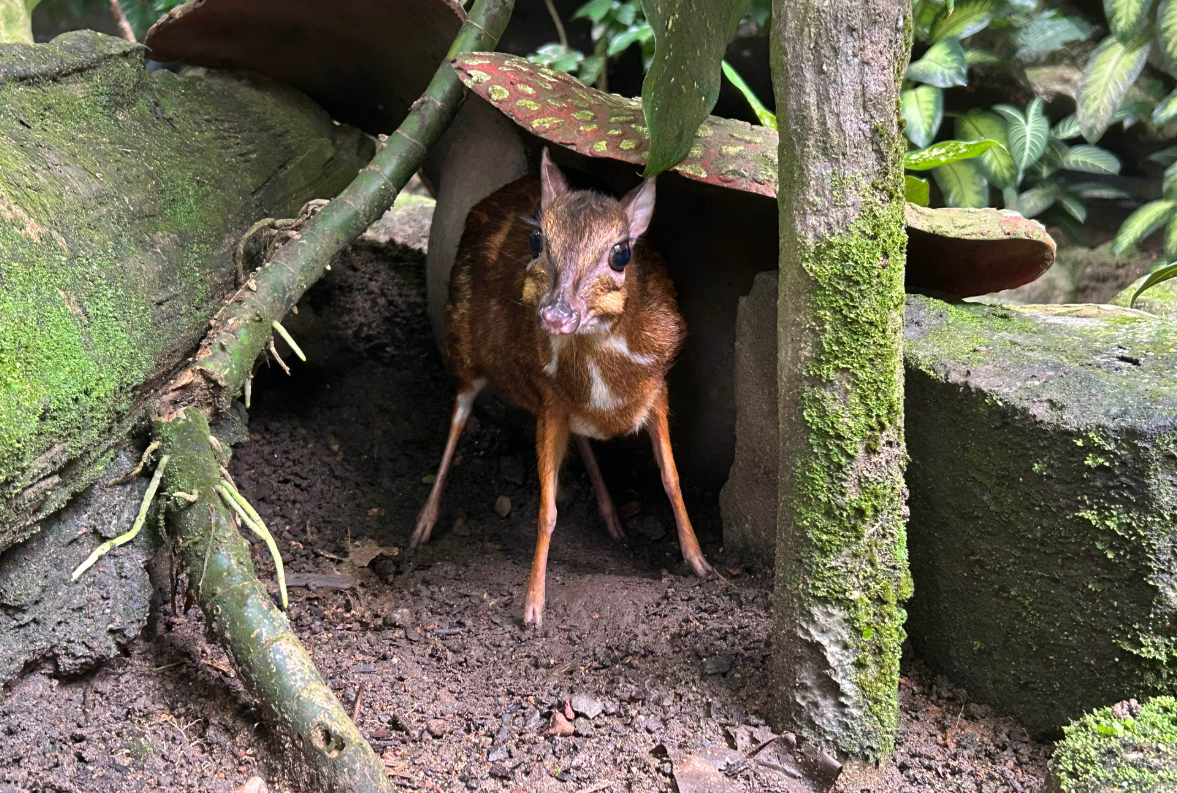 Photo Credit: FFelxii / Wikimedia Commons
In the heart of Southeast Asia’s lush, tropical forests, the mouse-deer, or chevrotain (Tragulus spp.), quietly navigates its verdant world. With its delicate frame, standing only about a foot tall at the shoulder, this enchanting creature resembles a living doll, complete with large, expressive eyes and a soft, brown coat that blends seamlessly into the dappled shadows of its habitat. As the sun dips below the horizon, the mouse-deer emerges from its daytime hideaway, ready to explore the underbrush in search of tender leaves and juicy fruits. This small herbivore is not just a feast for the eyes; it also plays a crucial role in its ecosystem, helping to disperse seeds and maintain the health of its forest home.
Scientists and nature enthusiasts alike are captivated by the mouse-deer’s unique adaptations and behaviors. Unlike most deer, which are larger and more robust, the mouse-deer is a master of stealth and agility, darting through the dense foliage with remarkable speed. Its evolutionary history stretches back millions of years, making it a living link to the ancient ancestors of hoofed mammals. This fascinating blend of characteristics, along with its elusive nature, has made the mouse-deer a subject of study and admiration, as researchers seek to understand its role in the ecosystem and the challenges it faces in a rapidly changing world. As we delve deeper into the life of the mouse-deer, we will uncover the secrets of its behavior, diet, and the vital role it plays in the rich tapestry of life in the forest.
The mouse-deer, or chevrotain, occupies a special place in the animal kingdom, showcasing a blend of characteristics that make it both intriguing and distinct. Scientifically classified under the family Tragulidae, these small, hoofed mammals are often referred to as “living fossils.” This nickname highlights their ancient lineage, as they have existed for millions of years, with ancestors dating back to the Eocene epoch. Unlike most deer, mouse-deer are petite, resembling a cross between a deer and a mouse, which is where they get their name. Their unique size and features, such as their elongated snouts and small stature, set them apart from other members of the Artiodactyla order, which typically includes larger ungulates like cows and pigs.
| Taxonomic Rank | Scientific Name | Meaning & Significance |
|---|---|---|
| Kingdom | Animalia | This name signifies that mouse-deer belong to the broad group of multicellular organisms known as animals, which are characterized by their ability to move and respond to their environment. |
| Phylum | Chordata | Chordata means “having a notochord,” a flexible rod that supports the body. This feature is a key trait of all vertebrates, including mouse-deer, which have a backbone. |
| Class | Mammalia | Mammalia refers to mammals, animals that possess mammary glands to nurse their young. Mouse-deer are warm-blooded and have fur, typical traits of this class. |
| Order | Artiodactyla | Artiodactyla means “even-toed,” indicating that these animals have an even number of toes on each foot. Mouse-deer have two main weight-bearing toes, which help them navigate their forest habitats. |
| Family | Tragulidae | Tragulidae is derived from the Latin word “tragulus,” meaning “little goat.” This name reflects their small size and goat-like appearance, although they are more closely related to deer. |
| Genus | Tragulus | The genus name Tragulus also means “little goat” in Latin, emphasizing their diminutive stature and agile movements in the underbrush. |
The classification of mouse-deer reveals much about their evolutionary journey. As members of the Artiodactyla order, they share a common ancestor with other even-toed ungulates, but their small size and unique adaptations suggest a specialized niche in their ecosystems. This lineage illustrates how evolution can lead to diverse forms and behaviors, allowing species like the mouse-deer to thrive in dense forests and jungles. Their ancient roots and distinct characteristics remind us of the rich tapestry of life on Earth, where every species plays a role in the grand story of evolution.
The evolutionary journey of the mouse-deer, or chevrotain, stretches back millions of years, tracing its roots to the ancient ancestors of hoofed mammals. These small, agile animals belong to the family Tragulidae, which diverged from other ungulates around 30 million years ago. This timeline places them in a unique position within the mammalian family tree, showcasing a blend of traits that reflect their adaptations to diverse environments.
Ancestral forms of the mouse-deer were likely larger and more robust than their modern descendants. Over time, these early relatives adapted to their surroundings, leading to significant evolutionary transitions. One of the most notable changes was the reduction in size, allowing them to navigate dense forests and underbrush with ease. This shift not only helped them escape predators but also enabled them to exploit a variety of food sources, such as leaves, fruits, and shoots. Additionally, their limbs became more slender and agile, enhancing their ability to dart through thick vegetation.
These adaptations have been crucial for the survival of the mouse-deer in their natural habitats. By becoming smaller and more agile, they can evade predators while foraging for food. Their specialized hooves and keen senses further enhance their ability to navigate the complex forest floor. As a result, the mouse-deer has carved out a niche that allows it to thrive in the shadows of the forest, showcasing the wonders of evolution in action.
The mouse-deer, or chevrotain, presents a charming and delicate appearance that captures the imagination. With its small stature, typically weighing between 4 to 11 pounds, it resembles a living doll of the forest. Its body is compact and graceful, supported by long, thin legs that give it an elegant, almost ballet-like quality as it moves through its habitat. The mouse-deer’s overall form is a delightful blend of features that make it both adorable and surprisingly agile, allowing it to navigate the underbrush with ease.
| Feature | Description |
|---|---|
| Size | Small, typically weighing between 4 to 11 pounds |
| Color | Soft brown fur that helps it blend into the forest floor |
| Skin Type | Fur, providing warmth and camouflage |
| Distinctive Feature | Long, thin legs that enhance agility and speed |
These physical traits work together to create a creature perfectly adapted to its environment. The mouse-deer’s small size and soft brown fur allow it to remain hidden among the leaves and shadows, making it less visible to predators. Its long, thin legs are not just for show; they enable quick, nimble movements, helping it dart away at the first sign of danger. This combination of features not only enhances its survival but also adds to the enchanting allure of this elusive forest dweller.
The mouse-deer, or chevrotain, thrives in the lush embrace of dense wet forests, where the air is thick with humidity and the ground is carpeted with vibrant green foliage. These enchanting habitats are often found near rivers and streams, providing a rich environment filled with the sounds of rustling leaves and chirping insects. The dappled sunlight filters through the canopy, creating a mosaic of light and shadow that offers both beauty and shelter. Here, the mouse-deer can navigate through the underbrush with ease, using its keen senses to stay alert to potential dangers.
These small mammals prefer climates that are warm and humid, as they are not built for extreme temperatures. The wet forests they inhabit provide a consistent source of moisture, which is essential for their survival. The environment is rich in vegetation, offering plenty of food sources like leaves, fruits, and tender shoots. This lush setting also helps maintain the temperature and humidity levels that the mouse-deer needs to thrive, making it a perfect home for these shy creatures.
Adaptation is key for the mouse-deer in its forest home. With their small size and nimble bodies, they can easily maneuver through thick underbrush, allowing them to escape predators and find food. Their coloration, often a mix of browns and grays, helps them blend into the forest floor, providing excellent camouflage. Additionally, their ability to remain quiet and still makes them less noticeable to both predators and humans. These adaptations not only enhance their survival but also allow them to flourish in the vibrant ecosystems of their wet forest habitats.
As the sun sets and the world begins to dim, the mouse-deer, or chevrotain, stirs from its daytime slumber. These small, nimble creatures are primarily nocturnal, meaning they are most active at night. As darkness blankets their forest homes, they venture out to forage for food. Their diet mainly consists of leaves, fruits, and tender shoots, which they nibble on quietly, always alert to the sounds of the night. With their keen senses, they navigate through the underbrush, using their agility to dodge potential predators while seeking out their next meal.
In terms of social behavior, mouse-deer are generally solitary animals. Unlike many other species that thrive in groups, these little mammals prefer to roam alone. This solitary lifestyle helps them avoid competition for food and reduces the risk of attracting predators. However, they do communicate with one another through a variety of sounds and scents. When they encounter each other, they may engage in brief interactions, but they quickly return to their own paths, maintaining their independence while still being aware of their surroundings.
| Behavior Type | Description |
|---|---|
| Activity Patterns | Nocturnal foraging for leaves, fruits, and shoots; active primarily at night. |
| Social Structure | Solitary lifestyle; prefers to live and forage alone. |
| Communication Methods | Uses sounds and scents to communicate with others, especially during encounters. |
The behaviors of the mouse-deer are finely tuned to ensure their survival in the wild. By being nocturnal, they avoid many daytime predators, while their solitary nature allows them to be stealthy and less noticeable. Their ability to communicate through sounds and scents helps them stay aware of their surroundings, ensuring they can react quickly to any threats. This combination of traits not only aids in their survival but also allows them to thrive in the rich, dense forests they call home.
The mouse-deer, or chevrotain, is a herbivore, which means it primarily eats plants. These small animals have a diet that consists mainly of leaves, fruits, and tender shoots. They are known for their gentle foraging behavior, often nibbling on the vegetation found in their forest homes. While they mainly stick to plant matter, they occasionally munch on insects, adding a bit of protein to their diet. This unique combination helps them thrive in their lush environments.
| Dietary Aspect | Details |
|---|---|
| Diet Type | Herbivore |
| Favorite Foods | Leaves, fruits, and tender shoots |
| Prey Items | Occasionally insects |
| Hunting/Foraging Strategies | Gentle nibbling and browsing in dense vegetation |
The diet of the mouse-deer plays a crucial role in its ecology and daily routine. By feeding on a variety of plants, it helps maintain the health of its forest habitat, promoting new growth and supporting the ecosystem. Its foraging habits also influence when and where it moves, as it seeks out the freshest and most nutritious food sources during the night. This delicate balance between feeding and the environment showcases the interconnectedness of life in the forest, where every nibble contributes to the larger story of nature.
When it comes to mating, mouse-deer, or chevrotains, engage in a rather charming courtship. During the breeding season, which typically occurs once a year, males will display their strength and agility to attract females. They often engage in playful behaviors, such as bounding and leaping, to impress potential mates. This season is marked by a flurry of activity, as males compete for the attention of females, showcasing their fitness and readiness to reproduce.
| Reproductive Aspect | Details |
|---|---|
| Gestation Period | 6 months |
| Litter Size | 1 fawn |
| Age of Maturity | Approximately 1 year |
| Name of Young | Fawn |
After the fawn is born, parental care becomes crucial for its survival. The mother is highly attentive, often hiding her young in dense vegetation to protect it from predators. For the first few weeks, the fawn remains hidden while the mother forages for food nearby. This strategy helps keep the fawn safe until it is strong enough to accompany her. As the fawn grows, it learns essential survival skills from its mother, gradually becoming more independent. By the time it reaches maturity at about one year old, the young mouse-deer is ready to embark on its own journey in the wild, continuing the cycle of life in the lush forests they call home.
The mouse-deer, or chevrotain, plays a vital role in its ecosystem, serving as both prey and a seed disperser. Positioned in the food web, these small herbivores are a source of nourishment for various predators, while also helping to maintain the health of their forest habitats by spreading seeds as they munch on plants. This delicate balance is crucial for the survival of many species, including the mouse-deer itself.
To evade these threats, mouse-deer have developed several clever survival strategies. Their small size allows them to navigate through dense underbrush, making it easier to hide from larger predators. When danger approaches, they often freeze in place, relying on their excellent camouflage to blend into the forest floor. Additionally, their keen senses help them detect threats early, allowing them to dart away quickly if needed. By staying alert and using their natural surroundings to their advantage, mouse-deer can increase their chances of survival in a world filled with dangers.
A keystone species is an organism that has a disproportionately large impact on its environment relative to its abundance. This means that if it were to disappear, the ecosystem would change dramatically. The mouse-deer, or chevrotain, while not as widely recognized as some other keystone species, does play an important role in its habitat, particularly in the dense wet forests where it resides.
Mouse-deer are herbivores, meaning they primarily eat plants, including leaves, fruits, and tender shoots. By feeding on these plants, they help control vegetation growth, which can prevent certain species from dominating the landscape. This grazing behavior promotes biodiversity, allowing a variety of plant species to thrive. Additionally, as they move through their forest homes, mouse-deer contribute to seed dispersal. When they consume fruits, they often excrete the seeds in different locations, helping new plants to grow in areas where they might not have otherwise taken root.
Moreover, mouse-deer serve as a crucial food source for various predators, including larger mammals and birds of prey. Their presence in the food web supports the survival of these predators, which rely on them for nourishment. This interconnectedness highlights the mouse-deer’s role in maintaining the balance of its ecosystem, ensuring that both plant and animal populations remain healthy and diverse.
If mouse-deer were to vanish from their ecosystems, the consequences could be significant. Without their grazing, certain plant species might overgrow, leading to a decline in plant diversity. This could, in turn, affect the animals that rely on those plants for food and shelter. Additionally, predators that depend on mouse-deer for sustenance would face food shortages, potentially leading to their decline as well. The ripple effects of losing such a small yet vital species could disrupt the entire forest ecosystem, illustrating just how interconnected life truly is.
The mouse-deer, or chevrotain, occupies a vital ecological niche in the dense wet forests where it resides. As a small herbivore, it plays a significant role in shaping its environment. By feeding on a variety of plants, including leaves, fruits, and tender shoots, the mouse-deer helps maintain the balance of plant life in its habitat. This delicate creature is not just a passive resident; it actively influences the growth and distribution of vegetation, which in turn supports a diverse array of other species.
| Ecosystem Service | Impact |
|---|---|
| Seed Dispersal | Helps spread plant seeds, promoting forest regeneration. |
| Grazing | Controls plant growth, preventing overgrowth and promoting biodiversity. |
| Prey for Predators | Serves as a food source for larger carnivores, supporting the food web. |
| Nutrient Cycling | Contributes to soil health through waste, enriching the forest floor. |
The influence of the mouse-deer extends beyond its immediate actions. For instance, as it grazes on young plants, it encourages the growth of a variety of species by preventing any single type from dominating the landscape. This grazing behavior not only helps maintain a healthy balance of flora but also creates habitats for other animals. Additionally, when mouse-deer consume fruits, they inadvertently aid in seed dispersal, allowing new plants to grow in different areas, which is crucial for forest regeneration.
The broader ecological importance of the mouse-deer cannot be overstated. As a keystone species, its presence is essential for the health of its ecosystem. If mouse-deer were to vanish, the effects would ripple through the food web, potentially leading to overgrown vegetation and a decline in the diversity of plant and animal life. By supporting various ecological processes, the mouse-deer ensures that its forest home remains vibrant and full of life, showcasing the interconnectedness of all living things in nature.
In the intricate web of life, symbiosis refers to the close and often long-term interactions between different species. These relationships can take many forms, including mutualism, where both species benefit, parasitism, where one benefits at the expense of the other, and commensalism, where one benefits while the other is neither helped nor harmed. The mouse-deer, or chevrotain, engages in various ecological partnerships that highlight the complexity of its environment and the interconnectedness of life in dense wet forests.
| Species/Type | Relationship Type | Description |
|---|---|---|
| Birds (e.g., fruit doves) | Mutualistic | As mouse-deer feed on fruits, they help disperse seeds through their droppings, aiding in plant reproduction while benefiting from the nutritious food source. |
| Parasites (e.g., ticks) | Parasitic | Ticks latch onto mouse-deer to feed on their blood, which can weaken the host and transmit diseases, illustrating the darker side of ecological relationships. |
| Fungi (e.g., mycorrhizal fungi) | Mutualistic | These fungi form partnerships with the roots of plants in the forest, helping them absorb nutrients while benefiting from the sugars produced by the plants. |
The evolution of these relationships has shaped the survival strategies of the mouse-deer and its partners. Over time, the mouse-deer has adapted to thrive in its habitat, forming beneficial connections that enhance its chances of survival. By dispersing seeds, it plays a crucial role in maintaining the health of its forest ecosystem. Meanwhile, the presence of parasites serves as a reminder of the challenges these animals face. Understanding these relationships not only highlights the mouse-deer’s role in its environment but also emphasizes the delicate balance of life that sustains the rich biodiversity of our planet.
The mouse-deer, or chevrotain, is a captivating little creature that often surprises those who take the time to learn about it. With its delicate frame and unique adaptations, this small herbivore has some remarkable traits that set it apart in the animal kingdom.
The relationship between mouse-deer, or chevrotains, and humanity is steeped in history and cultural significance. These small, elusive animals have been part of folklore and traditional stories in various cultures, particularly in Southeast Asia, where they are often seen as symbols of grace and agility. In some regions, they are even featured in local art and crafts, reflecting the deep connection between these creatures and the communities that share their habitats. Historically, humans have encountered mouse-deer in the wild, leading to a blend of admiration and curiosity about their unique characteristics and behaviors.
Today, the interactions between mouse-deer and humans are complex and multifaceted. As urban areas expand and forests are cleared for agriculture, these animals face habitat loss, which poses a significant threat to their survival. Conservation efforts are underway in some regions to protect their natural habitats and ensure their populations remain stable. However, conflicts can arise when mouse-deer venture into agricultural lands, leading to crop damage and tension between farmers and wildlife. While domestication of mouse-deer is not common, their gentle nature has led to interest in their potential as exotic pets, raising questions about ethical treatment and conservation.
Looking ahead, the future of the relationship between mouse-deer and humanity will depend on our ability to balance development with conservation. As awareness grows about the ecological roles these small herbivores play, there is hope for more sustainable practices that protect their habitats. By fostering a sense of stewardship and respect for wildlife, we can ensure that future generations will continue to share the planet with these enchanting creatures, celebrating their beauty and importance in our ecosystems.
The conservation status of the mouse-deer, or chevrotain, is currently classified as Endangered. This means that these charming little animals are facing a high risk of extinction in the wild. Population estimates are difficult to determine precisely due to their elusive nature and the dense habitats they occupy. However, it is clear that their numbers are declining, primarily due to habitat loss and hunting pressures.
| Conservation Factor | Status/Details |
|---|---|
| IUCN Status | Endangered |
| Population Estimates | Unknown, but declining |
| Trend Direction | Decreasing |
The main threats to the mouse-deer stem from human activities. Deforestation, driven by agriculture and urban development, is a significant factor that destroys their natural habitats. As forests are cleared, these small mammals lose their homes and food sources. Additionally, hunting for bushmeat poses a serious risk, as these animals are often targeted for their meat. The combination of habitat destruction and hunting creates a challenging environment for the mouse-deer to survive.
Conservation efforts are underway to protect the mouse-deer and their habitats. Various organizations are working to establish protected areas and promote sustainable land-use practices. Education and awareness campaigns are also crucial, helping local communities understand the importance of preserving these unique animals. While the outlook remains uncertain, the commitment to conservation gives hope that with continued efforts, the mouse-deer can find a path toward recovery and stability in the wild.
| Question | Answer |
|---|---|
| What is the natural habitat of the Mouse-Deer? | Mouse-Deer, also known as chevrotains, thrive in dense wet forests. These lush environments provide them with plenty of cover and food sources, allowing them to hide from predators and find the plants they love to eat. |
| What do Mouse-Deer eat? | Mouse-Deer are herbivores, which means they primarily eat plants. Their diet consists of leaves, fruits, and tender shoots, making them well-suited for their forest homes where such food is abundant. |
| How do Mouse-Deer behave in the wild? | Mouse-Deer are generally shy and elusive creatures. They are most active during dawn and dusk, a behavior known as crepuscular, which helps them avoid predators while foraging for food. |
| How do Mouse-Deer reproduce? | Mouse-Deer have a unique reproductive cycle. After a gestation period of about seven months, females give birth to a single fawn, which is usually hidden in dense vegetation to protect it from predators. |
| What threats do Mouse-Deer face? | Mouse-Deer are classified as endangered, facing threats from habitat loss due to deforestation and hunting. As their forest homes disappear, their populations decline, making conservation efforts crucial for their survival. |
| What is a distinctive feature of the Mouse-Deer? | One of the most distinctive features of Mouse-Deer is their long, thin legs. These legs help them navigate through dense underbrush and make them agile, allowing for quick escapes from potential threats. |
| Are Mouse-Deer social animals? | Mouse-Deer are generally solitary creatures, preferring to live alone or in small family groups. This behavior helps them avoid detection by predators and allows them to be more efficient foragers in their forest habitats. |