Taxonomy & Classification
- Kingdom
- Animalia
- Phylum
- Chordata
- Class
- Actinopterygii
- Order
- Gobiiformes
- Family
- Oxudercidae
- Genus
- Periophthalmus

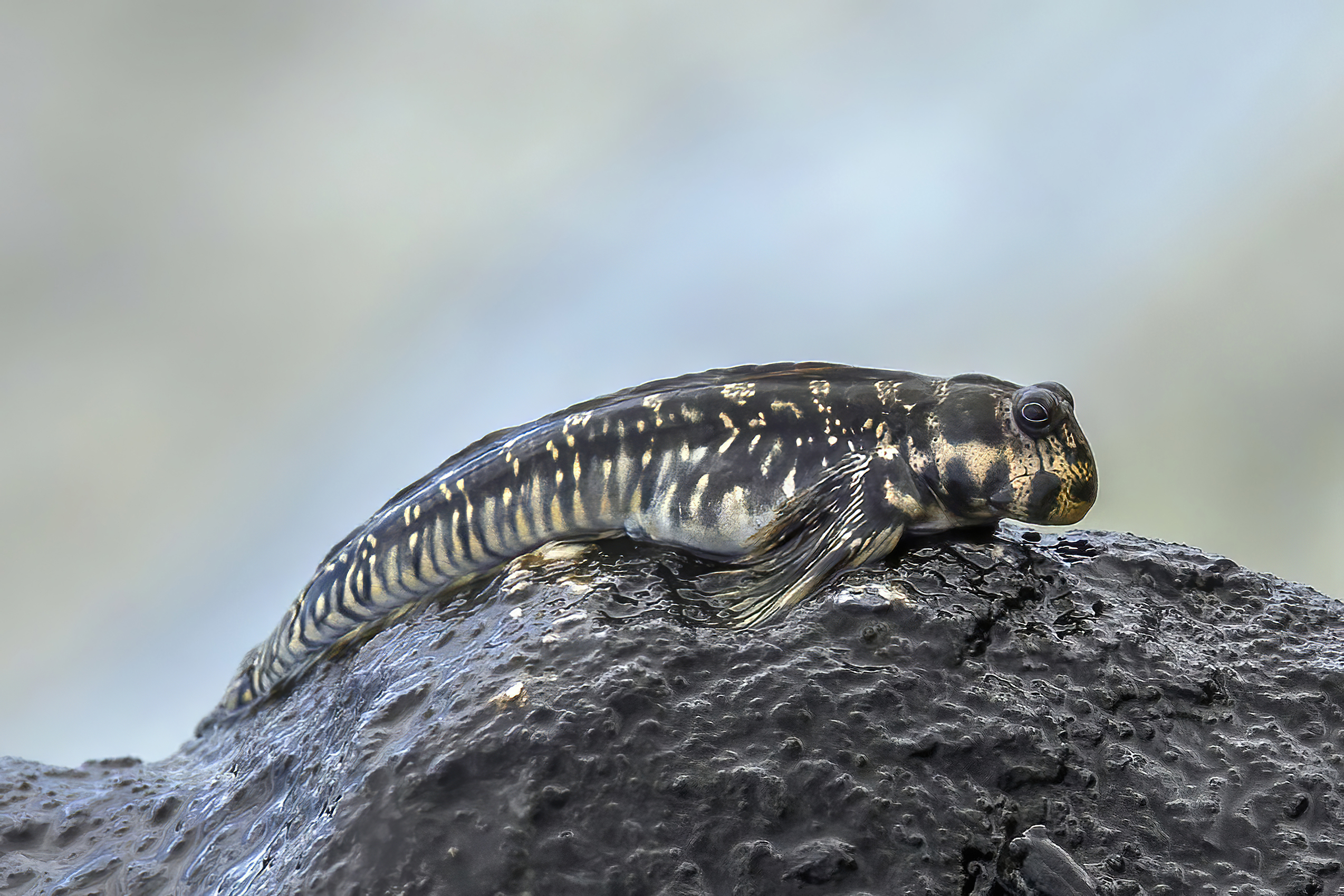 Photo Credit: Charlesjsharp / Wikimedia Commons
In the muddy estuaries of coastal regions, the mudskipper, scientifically known as Periophthalmus, emerges as a true marvel of nature. Picture a landscape where the land meets the sea, with squishy mudflats glistening under the sun. Here, this remarkable fish defies the traditional boundaries of aquatic life, using its strong pectoral fins to hop and skip across the mud, much like a tiny, determined frog. With its bulging eyes perched atop a flattened head, the mudskipper is perfectly adapted to its unique habitat, allowing it to survey its surroundings while keeping an eye out for both predators and potential meals.
What makes the mudskipper particularly captivating to scientists and nature enthusiasts alike is its ability to thrive in two worlds: water and land. This fish can breathe through its skin and the lining of its mouth, a fascinating adaptation that allows it to survive in oxygen-poor environments. As the tide recedes, mudskippers come alive, darting about in search of small invertebrates to munch on, showcasing their playful and energetic nature. Their vibrant colors and intricate behaviors during mating season add to their allure, making them a subject of study and admiration. Join us as we dive deeper into the life of the mudskipper, exploring its behaviors, diet, and the vital role it plays in its ecosystem.
The mudskipper is a truly extraordinary fish that occupies a unique niche in the animal kingdom. Taxonomically, it belongs to the Kingdom Animalia, Phylum Chordata, Class Actinopterygii, Order Gobiiformes, Family Oxudercidae, and Genus Periophthalmus. What sets mudskippers apart from other fish is their remarkable ability to thrive both in water and on land. These amphibious fish can “skip” across mudflats, using their pectoral fins to propel themselves, which is a behavior that has captivated scientists and nature enthusiasts alike. Their adaptations for life on land, such as the ability to breathe through their skin and the lining of their mouth, make them a fascinating subject of study in evolutionary biology.
| Taxonomic Rank | Scientific Name | Meaning & Significance |
|---|---|---|
| Kingdom | Animalia | This name comes from the Latin word “animalis,” meaning “having breath” or “living.” It signifies all living organisms that are not plants or fungi. |
| Phylum | Chordata | Derived from the Greek word “chordē,” meaning “string,” this name refers to animals that have a notochord, a flexible rod that supports the body, at some stage of their development. |
| Class | Actinopterygii | This term means “ray-finned fish” in Greek, highlighting the structure of their fins, which are supported by bony rays, allowing for a wide range of movement. |
| Order | Gobiiformes | From the Latin “gobius,” meaning “goby,” this order includes small fish that often inhabit shallow waters, showcasing their adaptability to various environments. |
| Family | Oxudercidae | This name is derived from the Greek words “oxus,” meaning “sharp,” and “derkesthai,” meaning “to see,” referring to the sharp, protruding eyes of these fish that help them spot predators and prey. |
| Genus | Periophthalmus | From the Greek “peri,” meaning “around,” and “ophthalmos,” meaning “eye,” this name reflects the mudskipper’s distinctive eyes that are positioned high on its head, allowing it to see above the water while remaining submerged. |
The classification of the mudskipper reveals a fascinating evolutionary history that showcases its transition from aquatic to semi-terrestrial life. As members of the Gobiiformes order, mudskippers share a lineage with other gobies, but their unique adaptations for life on land highlight a significant evolutionary step. This ability to navigate both environments not only illustrates the diversity of life on Earth but also emphasizes the remarkable ways in which species can adapt to changing habitats over time. The mudskipper stands as a testament to the resilience and ingenuity of nature, reminding us of the intricate connections that bind all living things.
The evolutionary journey of the mudskipper stretches back millions of years, tracing its roots to ancient fish that first ventured onto land. This remarkable transition began during the Devonian period, around 400 million years ago, when some fish started to explore shallow waters and muddy shores. Over time, these early pioneers adapted to life in a challenging environment, leading to the fascinating mudskippers we see today.
Mudskippers belong to the family Oxudercidae and the genus Periophthalmus. Their ancestors were likely similar to other fish that thrived in aquatic habitats. However, as some fish began to inhabit intertidal zones—areas that are underwater at high tide and exposed at low tide—they faced new challenges. To survive, they developed several key adaptations that allowed them to breathe air and move on land. This evolutionary path was not just about leaving the water; it was about thriving in a world where water and land meet.
These adaptations have been vital for the mudskipper’s survival in its dynamic environment. By evolving the ability to breathe air and move on land, mudskippers have carved out a niche that few other fish can occupy. Their strong fins and unique behaviors not only help them navigate the muddy terrain but also play a crucial role in their social interactions and reproduction. As a result, mudskippers continue to thrive in the intertidal zones, showcasing the incredible power of evolution in shaping life on Earth.
The mudskipper is a captivating sight, blending the features of both fish and amphibians. Its body is elongated and somewhat flattened, allowing it to navigate through muddy environments with ease. With a head that is slightly larger than its body, the mudskipper boasts large, expressive eyes that sit high on its head, giving it a panoramic view of its surroundings. This fish is often seen using its pectoral fins to “walk” across the mud, showcasing its remarkable adaptation to life both in and out of water.
| Feature | Description |
|---|---|
| Size | Typically ranges from 4 to 10 inches long |
| Color | Varies from brown to green, often with spots or stripes |
| Skin Type | Moist, smooth skin that helps with respiration |
| Most Distinctive Feature | Ability to breathe out of water, using skin and gills |
These features work together to create a creature perfectly suited for its environment. The mudskipper’s moist skin is not just for show; it plays a crucial role in its ability to breathe air when out of water. This adaptation allows it to thrive in tidal flats and mangroves, where it can hunt for food and escape predators. Its coloration helps it blend into the muddy surroundings, providing camouflage against potential threats. With its unique combination of traits, the mudskipper is a true marvel of evolution, showcasing the incredible ways life can adapt to diverse habitats.
The mudskipper thrives in a world where land and water meet, often found in the intertidal zones of coastal regions. Picture a landscape of muddy flats, mangroves, and estuaries, where the tide ebbs and flows, creating a dynamic environment. Here, the mud is not just a home but a playground, teeming with life. As the tide recedes, mudskippers can be seen hopping and skipping across the wet, squishy ground, their fins propelling them like little acrobats in a muddy circus.
Mudskippers prefer warm, tropical climates where the temperature is generally mild. They thrive in brackish waters, which is a mix of fresh and saltwater, often found in estuaries. These fish are quite tolerant of varying salinity levels, meaning they can adapt to changes in salt concentration. The environment is usually rich in organic material, providing plenty of food sources like small invertebrates and algae. The mud itself is essential, as it offers shelter and a place to burrow, protecting them from predators and extreme weather.
To survive in these challenging habitats, mudskippers have developed some incredible adaptations. Their ability to breathe through their skin and the lining of their mouths allows them to stay out of water for extended periods. They also have strong, muscular pectoral fins that help them move across the mud, almost like legs. This unique combination of features enables them to thrive in a world where few other fish can venture, making them true masters of their muddy domain.
As the sun rises over the muddy flats, mudskippers begin their day with a series of lively activities. These fascinating fish are known for their ability to thrive both in water and on land. They spend their mornings basking in the sun, using their pectoral fins to propel themselves across the mud. This unique movement allows them to explore their environment, searching for food like small crustaceans and insects. As the tide changes, mudskippers will often retreat to their burrows, which they dig into the mud, providing a safe haven from predators and harsh weather.
Socially, mudskippers exhibit interesting behaviors that reflect their adaptability. While they can be solitary, they often gather in small groups, especially during feeding times. This social structure helps them keep an eye out for potential threats. Communication among mudskippers is quite dynamic; they use a combination of body movements and vocalizations to signal to one another. For instance, males may engage in displays of dominance, puffing up their bodies and making sounds to attract females or ward off rivals. These interactions are crucial for maintaining their social hierarchy and ensuring successful breeding.
| Behavior Type | Description |
|---|---|
| Activity Patterns | Active during low tide, mudskippers forage for food and bask in the sun, using their fins to move across mudflats. |
| Social Structure | Can be solitary or found in small groups, especially during feeding or mating seasons, allowing for better protection and resource sharing. |
| Communication Methods | Utilize body movements and vocalizations, with males displaying dominance through puffing and sounds to attract mates or deter competitors. |
The behaviors of mudskippers are not just fascinating; they are essential for survival in their challenging habitats. By forming groups, they enhance their chances of spotting predators and finding food. Their unique communication methods help maintain social order, which is vital for breeding success. As they navigate the delicate balance between land and water, mudskippers showcase the incredible adaptability of life in the natural world.
The mudskipper has a diverse diet that reflects its unique lifestyle, allowing it to thrive in both aquatic and terrestrial environments. Primarily, these fish are opportunistic feeders, meaning they eat whatever is available and easy to catch. Their diet mainly consists of small invertebrates, such as crustaceans and worms, which they hunt in the mud and shallow waters. Mudskippers are also known to graze on algae and detritus, which is organic matter that has decomposed. This varied diet not only sustains them but also plays a crucial role in their daily activities and interactions with their environment.
| Dietary Aspect | Details |
|---|---|
| Diet Type | Opportunistic feeder |
| Favorite Foods | Small invertebrates, algae, and detritus |
| Prey Items | Crustaceans, worms, and other small organisms |
| Hunting/Foraging Strategies | Active foraging in mud and shallow waters, using their pectoral fins to move and search for food |
This varied diet shapes the mudskipper’s ecology and daily routine significantly. By feeding on a range of organisms, mudskippers help maintain the balance of their ecosystem, controlling populations of small invertebrates and contributing to nutrient cycling. Their foraging behavior also encourages the mixing of sediments, which can enhance the health of their muddy habitats. As they navigate between land and water, mudskippers not only find food but also play a vital role in the intricate web of life in coastal environments.
During the breeding season, which typically occurs in warmer months, mudskippers engage in intriguing mating behaviors. Males perform elaborate displays to attract females, showcasing their vibrant colors and unique movements. They often leap and wiggle on the mud, creating a spectacle that highlights their agility and strength. Once a female is attracted, she will lay her eggs in a burrow, which the male has prepared. This burrow serves as a safe haven for the eggs, protecting them from predators and environmental changes.
| Reproductive Aspect | Details |
|---|---|
| Gestation Period | Approximately 2 to 3 weeks |
| Litter Size | Up to several hundred eggs |
| Age of Maturity | About 6 months |
| Name of Young | Fry |
After the eggs hatch, the fry emerge and begin their journey into the world. These tiny fish are initially vulnerable, relying on the protective burrow until they are strong enough to venture out. The male often stays close, ensuring the safety of the young as they learn to navigate their environment. As the fry grow, they gradually develop the skills needed to thrive both in water and on land, eventually maturing into the agile mudskippers that captivate us with their unique lifestyle. This nurturing phase is crucial, as it helps the young adapt to the challenges of their dynamic habitat.
The mudskipper plays a vital role in its ecosystem, sitting comfortably in the food web as both predator and prey. These fascinating fish feast on small invertebrates, like worms and crustaceans, while also becoming a meal for various predators. Their unique ability to thrive in both water and on land makes them an important link between these two environments, but it also exposes them to a range of dangers.
To survive these threats, mudskippers have developed some clever defensive behaviors. They often use their ability to quickly retreat into the mud or water when danger approaches. Their camouflage helps them blend into the muddy environment, making it harder for predators to spot them. Additionally, mudskippers can leap out of the water, using their powerful pectoral fins to escape quickly. These adaptations not only help them evade predators but also ensure their survival in a world filled with challenges.
A keystone species is an organism that has a disproportionately large impact on its environment relative to its abundance. This means that if a keystone species were to disappear, the entire ecosystem could change dramatically. The mudskipper, with its unique adaptations and behaviors, qualifies as a keystone species in its habitat. By influencing the structure and function of its ecosystem, the mudskipper plays a crucial role in maintaining the balance of life in the intertidal zones where it resides.
Mudskippers are not just fascinating to watch; they actively shape their environment. For instance, as they burrow into the mud to create homes, they aerate the soil, allowing oxygen to reach plant roots and other organisms. This activity promotes the growth of mangroves and other vegetation, which in turn provides shelter and food for various species. Additionally, mudskippers serve as a food source for birds and larger fish, linking different levels of the food web. Their foraging behavior also helps control populations of small invertebrates, ensuring that no single species dominates the ecosystem.
The mudskipper’s role extends beyond its immediate interactions. By feeding on detritus and organic matter, it contributes to nutrient cycling in the ecosystem. This process is essential for maintaining soil health and supporting the diverse life forms that depend on these coastal habitats. Furthermore, mudskippers are indicators of environmental health; their presence often signals a balanced ecosystem, while their decline can indicate problems such as pollution or habitat destruction.
If mudskippers were to vanish from their habitats, the consequences would ripple through the ecosystem. Without their burrowing activities, soil aeration would decline, negatively affecting plant life and the animals that rely on those plants for food and shelter. The loss of mudskippers would also disrupt the food web, leading to overpopulation of certain invertebrates and a decline in the species that depend on mudskippers for sustenance. Ultimately, the disappearance of this remarkable fish could lead to a less diverse and less resilient ecosystem, highlighting just how vital these small creatures are to the health of their environment.
The mudskipper is a fascinating fish that plays a crucial role in its ecosystem, particularly in intertidal zones where land meets water. This remarkable creature has adapted to thrive in both aquatic and terrestrial environments, allowing it to influence its surroundings in unique ways. By foraging in the mud and interacting with other species, the mudskipper helps maintain the balance of its habitat, making it an essential player in the ecological community.
| Ecosystem Service | Impact |
|---|---|
| Soil Aeration | By burrowing and moving through the mud, mudskippers help to aerate the soil, allowing oxygen to reach plant roots and promoting healthy growth. |
| Nutrient Cycling | Their feeding habits contribute to the breakdown of organic matter, recycling nutrients back into the ecosystem, which supports plant and animal life. |
| Habitat Creation | As they dig and create burrows, mudskippers provide shelter for other organisms, enhancing biodiversity in their environment. |
| Food Source | They serve as a vital food source for various predators, including birds and larger fish, thus supporting the food web. |
Mudskippers influence their ecosystem in several specific ways. For instance, their burrowing behavior not only aerates the soil but also creates habitats for other small creatures, such as crabs and shrimp. This activity fosters a rich community of life in the mudflats, where many species depend on the mudskipper’s actions for survival. Additionally, as opportunistic feeders, mudskippers help control populations of small invertebrates, ensuring that no single species dominates the ecosystem. This balance is vital for maintaining the health of the intertidal zone.
The broader ecological importance of the mudskipper cannot be overstated. As a keystone species, its presence significantly impacts the structure and function of its habitat. If mudskippers were to disappear, the effects would ripple through the ecosystem, potentially leading to declines in plant growth and the loss of other species that rely on the mudskipper for food or shelter. By understanding the role of the mudskipper, we gain insight into the intricate web of life that exists in these dynamic coastal environments, highlighting the interconnectedness of all living things.
In the intricate web of life, symbiosis refers to the close and often long-term interactions between different species. These relationships can take many forms, including mutualism, where both species benefit, parasitism, where one benefits at the other’s expense, and commensalism, where one benefits while the other is neither helped nor harmed. Mudskippers, with their unique adaptations to both land and water, engage in various ecological relationships that highlight the interconnectedness of life in their muddy habitats.
| Species/Type | Relationship Type | Description |
|---|---|---|
| Crabs | Mutualistic | Crabs and mudskippers often share the same habitat. While crabs dig burrows that provide shelter, mudskippers benefit from these burrows as safe places to hide from predators. |
| Birds | Commensal | Some birds follow mudskippers to catch small invertebrates that are disturbed as the fish move through the mud. The birds gain food, while the mudskippers are largely unaffected. |
| Parasites (like certain worms) | Parasitic | Some mudskippers can host parasites that feed on their blood or tissues. This relationship can weaken the fish, but it allows the parasites to thrive. |
These relationships have evolved over time, shaped by the needs and behaviors of the species involved. Mutualistic partnerships, like that between mudskippers and crabs, enhance survival for both, while commensal interactions allow other species to benefit without impacting the mudskippers. Parasitic relationships, though less favorable for the mudskippers, are a natural part of the ecosystem, demonstrating the complex balance of life. Understanding these connections helps us appreciate the delicate dance of nature, where every species plays a role in the grand story of survival and adaptation.
The mudskipper is a truly captivating fish that has adapted to life both in water and on land, showcasing some remarkable traits that set it apart from other aquatic animals. Here are some surprising facts that highlight the extraordinary nature of this unique creature.
The mudskipper has long captured the imagination of people living near coastal regions. Historically, these remarkable fish have been part of local folklore and cultural practices, especially in areas where they thrive, such as mangroves and estuaries. In some cultures, mudskippers symbolize resilience and adaptability, reflecting their unique ability to navigate both land and water. Their unusual behavior, like “walking” on land using their pectoral fins, has fascinated observers for generations, leading to stories and traditions that celebrate their unique lifestyle.
In modern times, the relationship between mudskippers and humans has evolved significantly. As coastal habitats face threats from pollution and climate change, conservation efforts have become crucial. Communities are increasingly recognizing the importance of preserving these ecosystems, where mudskippers play a vital role. However, conflicts can arise, particularly in areas where development encroaches on their habitats. Some people have even attempted to domesticate mudskippers for aquariums, drawn by their quirky antics and vibrant colors. This interaction highlights both the challenges and opportunities in our relationship with these extraordinary fish.
As we look to the future, the relationship between mudskippers and humanity holds both promise and responsibility. By fostering a deeper understanding of these fascinating fish and their habitats, we can work together to ensure their survival. This partnership can lead to healthier ecosystems, benefiting not only mudskippers but also the countless species that share their environment. Embracing this connection can inspire future generations to appreciate and protect the wonders of our natural world.
The mudskipper currently holds a conservation status of “Least Concern” according to the International Union for Conservation of Nature (IUCN). This means that, overall, the species is not facing immediate threats that could lead to its extinction. Population estimates are stable, and while specific numbers can be hard to pin down due to their wide distribution, they are generally considered to be abundant in their natural habitats.
| Conservation Factor | Status/Details |
|---|---|
| IUCN Status | Least Concern |
| Population Estimates | Stable and abundant |
| Trend Direction | Stable |
Despite their current stable status, mudskippers face several threats that could impact their populations in the future. Habitat destruction is a significant concern, particularly due to coastal development and pollution. As mangroves and intertidal zones are altered or destroyed, mudskippers lose their homes and breeding grounds. Additionally, climate change poses a risk, as rising sea levels and changing temperatures can disrupt their delicate ecosystems.
Conservation efforts are underway to protect the habitats where mudskippers thrive. Initiatives aimed at preserving coastal ecosystems, such as mangrove restoration projects, are crucial for ensuring these fascinating fish continue to flourish. With ongoing awareness and action, the outlook for mudskippers remains positive, allowing future generations to marvel at their unique adaptations and behaviors.
| Question | Answer |
|---|---|
| What is a mudskipper? | A mudskipper is a unique fish that can live both in water and on land. They belong to the family Gobiidae and are known for their ability to "skip" across mudflats using their pectoral fins. |
| Where do mudskippers live? | Mudskippers are typically found in intertidal zones, which are areas that are covered by water at high tide and exposed at low tide. They thrive in muddy or sandy habitats, often in mangroves and estuaries. |
| What do mudskippers eat? | Mudskippers are omnivores, meaning they eat both plants and animals. Their diet mainly consists of small invertebrates like crabs and worms, as well as algae and detritus, which is decomposing organic material. |
| How do mudskippers breathe? | Mudskippers have a remarkable ability to breathe out of water. They can absorb oxygen through their skin and the lining of their mouth, which allows them to stay active on land for extended periods. |
| How do mudskippers reproduce? | Mudskippers typically breed during the rainy season. Males create burrows in the mud where they attract females, and after mating, the female lays eggs inside the burrow, providing a safe environment for the developing young. |
| What are the threats to mudskippers? | While mudskippers are currently classified as Least Concern, they face threats from habitat destruction due to coastal development and pollution. Changes in their environment can impact their populations and the ecosystems they inhabit. |
| What is an interesting fact about mudskippers? | One of the most fascinating features of mudskippers is their ability to "walk" on land using their fins. This adaptation allows them to explore their environment, escape predators, and find food, making them truly unique among fish. |