Taxonomy & Classification
- Kingdom
- Animalia
- Phylum
- Chordata
- Class
- Mammalia
- Order
- Artiodactyla
- Family
- Cervidae
- Genus
- Odocoileus
- Species
- Odocoileus hemionus

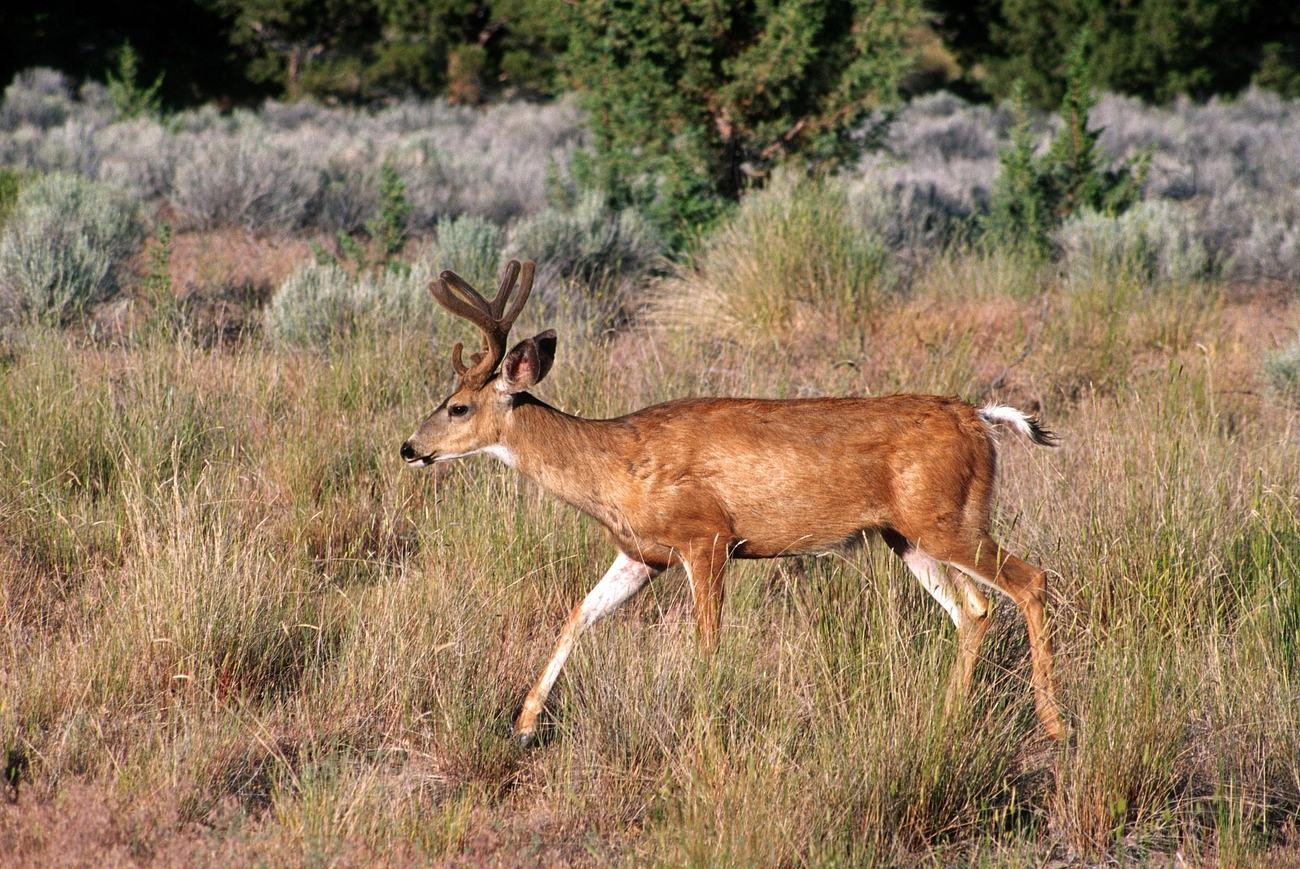 Photo Credit: U.S. Forest Service (source) / Rawpixel
In the sun-dappled forests and rolling hills of the American West, the mule deer, or Odocoileus hemionus, gracefully navigates its habitat. With its large, expressive ears that can swivel like radar dishes, this elegant creature is perfectly adapted to detect the faintest sounds of rustling leaves or distant predators. The mule deer’s robust body, which can weigh between 200 to 400 pounds, is complemented by its long legs, allowing it to leap effortlessly over obstacles in its path. This combination of strength and agility makes the mule deer a captivating subject for both scientists and nature enthusiasts alike.
As twilight descends, the mule deer comes alive, venturing out to graze on tender shoots and lush foliage. Its diet plays a crucial role in maintaining the balance of its ecosystem, as these herbivores help shape the landscape by controlling plant growth. Observing a mule deer in its natural environment is like witnessing a delicate dance, where each movement is a testament to its adaptability and survival skills. With a rich evolutionary history and a vital role in the food web, the mule deer invites us to explore the wonders of nature and understand the intricate connections that sustain life in the wild.
Mule deer, known scientifically as Odocoileus hemionus, hold a special place in the animal kingdom. They belong to the family Cervidae, which includes all deer species, and are part of the order Artiodactyla, a group of even-toed ungulates. What sets mule deer apart is their large, mule-like ears, which help them detect sounds in their environment, and their ability to thrive in diverse habitats across North America. These graceful animals are not just beautiful; they play a vital role in their ecosystems, influencing plant growth and serving as prey for larger predators.
| Taxonomic Rank | Scientific Name | Meaning & Significance |
|---|---|---|
| Kingdom | Animalia | This name signifies that mule deer are part of the vast group of multicellular organisms that are primarily heterotrophic, meaning they consume other organisms for energy. |
| Phylum | Chordata | Chordata refers to animals that have a notochord, a flexible rod that supports the body. In vertebrates like mule deer, this notochord develops into a backbone. |
| Class | Mammalia | Mammalia indicates that mule deer are mammals, characterized by having fur or hair and the ability to nurse their young with milk produced by mammary glands. |
| Order | Artiodactyla | This order includes even-toed ungulates, which means mule deer walk on an even number of toes. This adaptation helps them run swiftly and navigate their habitats effectively. |
| Family | Cervidae | Cervidae is the family of deer, which are known for their antlers, a unique feature that males grow and shed annually, used for attracting mates and establishing dominance. |
| Genus | Odocoileus | The genus name Odocoileus comes from Greek, meaning “tooth” and “swiftness,” highlighting the deer’s quick movements and their specialized teeth for grazing on plants. |
| Species | hemionus | This species name refers to the mule deer’s resemblance to the mule, particularly in their large ears, which enhance their hearing and survival skills. |
Understanding the taxonomic classification of mule deer reveals much about their evolutionary journey. As members of the Cervidae family, they share common ancestors with other deer species, showcasing adaptations that have allowed them to thrive in various environments. Their unique physical traits, such as their large ears and specialized teeth, reflect the ecological niches they occupy. By studying their classification, we gain insights into how mule deer have evolved over time, adapting to their surroundings while playing a crucial role in the balance of their ecosystems.
The evolutionary journey of the mule deer, scientifically known as Odocoileus hemionus, stretches back millions of years. This captivating story begins in the late Miocene epoch, around 10 million years ago, when the ancestors of modern deer roamed the earth. As the climate changed and landscapes transformed, these early ungulates adapted to new environments, leading to the diverse species we see today.
Mule deer are part of the Cervidae family, which includes all deer species. Their ancestors were small, forest-dwelling creatures that gradually evolved into larger, more adaptable forms. One significant transition occurred during the Pleistocene epoch, about 2.6 million years ago, when the earth experienced dramatic climate shifts. This period saw the emergence of larger deer species, better suited for open habitats. The mule deer, in particular, adapted to the varied terrains of North America, developing traits that allowed them to thrive in both mountainous regions and arid deserts.
Mule deer’s evolutionary adaptations have played a vital role in their survival. Their keen senses and physical agility allow them to navigate their environments effectively, avoiding predators and finding food. The ability to thrive in diverse habitats has enabled them to spread across North America, showcasing the remarkable resilience of this species. As they continue to adapt to changing landscapes, mule deer remain a testament to the power of evolution in shaping life on our planet.
The mule deer is a striking animal, easily recognized by its graceful form and distinctive features. With a sturdy body that can weigh between 200 to 400 pounds, these deer possess a robust yet agile build, allowing them to navigate their varied habitats with ease. Their long legs are designed for swift movement, making them adept at escaping predators. The most eye-catching aspect of the mule deer is its large ears, which can swivel independently to pick up sounds from different directions, enhancing their ability to detect danger.
| Feature | Description |
|---|---|
| Weight | 200-400 pounds |
| Skin Type | Fur |
| Most Distinctive Feature | Large ears |
These physical characteristics work together to create a well-adapted survivor in the wild. The thick fur provides insulation against cold weather, while the large ears not only enhance hearing but also help regulate body temperature. This combination of features allows mule deer to thrive in diverse environments, from mountainous regions to open plains. Their impressive agility and keen senses make them a fascinating part of the ecosystem, showcasing the beauty of nature’s design.
Mule deer thrive in a variety of habitats that paint a beautiful picture of the American West. Imagine vast mountainous forests where tall trees stretch toward the sky, their leaves whispering in the wind. Picture scrublands, where low shrubs and grasses create a patchwork of green and brown. These environments provide the perfect backdrop for mule deer, allowing them to roam freely while blending into their surroundings.
Mule deer prefer areas with a mix of open spaces and dense cover. They thrive in climates that range from cool mountain air to the warmer, drier conditions found in scrublands. These deer are well-suited to environments that experience seasonal changes, including snowy winters and warm summers. They need access to water sources, such as streams or ponds, to stay hydrated, especially during the hotter months.
Adaptation is key to the mule deer’s survival in these diverse habitats. Their large ears help them detect sounds from afar, alerting them to potential dangers. The deer’s coloration allows them to blend seamlessly into their surroundings, making it harder for predators to spot them. Additionally, their ability to thrive in both mountainous and arid regions showcases their versatility, enabling them to find food and shelter in a variety of landscapes.
Mule deer lead a life that is both intriguing and adaptive, primarily active during the twilight hours of dawn and dusk. This nocturnal lifestyle allows them to navigate their environment with a mix of caution and curiosity. As the sun sets, they emerge from their hidden spots in the underbrush, ready to forage for food. Their diet mainly consists of leaves, shrubs, and grasses, which they nibble on while keeping a watchful eye for predators. During the day, they often find refuge in dense vegetation, resting and conserving energy until the evening.
Socially, mule deer are generally solitary animals, preferring to roam alone or in small groups. This behavior helps them avoid detection by predators, as a lone deer can be less conspicuous than a larger herd. However, during the mating season, known as the rut, males may gather in small groups to compete for the attention of females. Communication among mule deer is subtle yet effective, involving body language and a range of sounds, from soft grunts to snorts. These interactions are crucial for establishing territory and signaling danger to one another.
| Behavior Type | Description |
|---|---|
| Activity Patterns | Mule deer are primarily nocturnal, foraging at dawn and dusk while resting during the day. |
| Social Structure | Typically solitary, but may form small groups during the mating season. |
| Communication Methods | Use body language and vocalizations, such as grunts and snorts, to convey messages. |
The behaviors of mule deer are finely tuned to ensure their survival in the wild. By being active during twilight hours, they reduce the risk of encounters with predators that hunt during the day. Their solitary nature allows them to blend into their surroundings, making it harder for threats to spot them. Additionally, their ability to communicate effectively helps them stay alert to dangers, ensuring they can react quickly when needed. This combination of habits and instincts makes mule deer well-equipped to thrive in their diverse habitats.
Mule deer are herbivores, which means they primarily eat plants. Their diet consists mainly of leaves, grasses, and shrubs. These deer are particularly fond of tender shoots and the foliage of various trees, especially during the spring and summer months when fresh growth is abundant. To find food, mule deer use their keen sense of smell and sight, often foraging in the early morning or late evening when they feel safest from predators. Their ability to adapt their diet based on seasonal availability helps them thrive in diverse environments.
| Dietary Aspect | Details |
|---|---|
| Diet Type | Herbivore |
| Favorite Foods | Tender leaves, grasses, shrubs, and tree foliage |
| Prey Items | Vegetation |
| Hunting/Foraging Strategies | Forage during dawn and dusk, using keen senses to locate food |
The diet of mule deer plays a crucial role in their ecology and daily routine. By feeding on a variety of plants, they help maintain the health of their habitats, promoting new growth and supporting other wildlife. Their foraging habits also influence the plant communities in their environment, as they selectively eat certain species while leaving others to flourish. This balance is essential for the ecosystem, showcasing how the mule deer’s diet is not just about survival, but also about contributing to the intricate web of life around them.
Mule deer have a captivating mating ritual that takes place during the fall, typically from late October to early December. During this time, male mule deer, known as bucks, engage in a series of displays to attract females, or does. They may engage in sparring matches, where they lock antlers and push against each other to show strength and dominance. This behavior not only helps bucks establish their rank but also signals to does that they are healthy and ready to mate. Once a doe is receptive, she will mate with a buck, leading to the exciting journey of reproduction.
| Reproductive Aspect | Details |
|---|---|
| Gestation Period | 190-200 days |
| Average Litter Size | 2 |
| Age of Sexual Maturity | 1-2 years |
| Name of Young | Fawn |
After a gestation period of about six to seven months, the doe gives birth to her fawns, usually in late spring. This timing is crucial, as it allows the young to grow during the warmer months when food is plentiful. The mother is highly protective, keeping her fawns hidden in tall grass or brush to shield them from predators. As the fawns grow, they begin to accompany their mother, learning essential survival skills like foraging for food and recognizing danger. By the time they reach sexual maturity at one to two years, these young deer are well-equipped to thrive in their environment, continuing the cycle of life in the wild.
Mule deer, or Odocoileus hemionus, play a vital role in the food web of their ecosystems. As herbivores, they primarily feed on plants, which helps maintain the balance of vegetation in their habitats. However, they are also prey for various predators, making them an important food source for carnivores. This delicate balance highlights their significance in the natural world, where every species has a role to play.
To survive against these threats, mule deer have developed several clever defensive behaviors. They are known for their incredible agility, allowing them to leap away from danger with impressive bounds. Their keen senses of sight and hearing help them detect predators from a distance. Additionally, mule deer often use their natural camouflage, blending into their surroundings to avoid being spotted. When threatened, they may also freeze in place, relying on their stillness to go unnoticed. These strategies, combined with their ability to adapt to changing environments, help ensure their survival in the wild.
A keystone species is an organism that has a disproportionately large impact on its environment relative to its abundance. In other words, if a keystone species were to disappear, the entire ecosystem could change dramatically. Mule deer, scientifically known as Odocoileus hemionus, can indeed be considered a keystone species in their habitats, particularly in mountainous forests and scrublands. Their presence influences various ecological processes, making them vital players in maintaining the balance of their ecosystems.
Mule deer are herbivores, meaning they primarily eat plants, which allows them to shape the vegetation in their habitats. By grazing on grasses, leaves, and shrubs, they help control plant growth and promote biodiversity. For instance, when mule deer feed on certain plants, they prevent those species from dominating the landscape. This grazing behavior encourages a variety of plant species to thrive, which in turn supports a wider range of animals, from insects to birds.
Additionally, mule deer serve as prey for larger predators, such as mountain lions and coyotes. This predator-prey relationship is crucial for maintaining the health of the ecosystem. When mule deer populations are stable, they provide a consistent food source for these predators, which helps regulate their numbers. If mule deer were to decline significantly, it could lead to an overpopulation of predators, which might then overhunt other species, disrupting the entire food web.
Moreover, mule deer contribute to seed dispersal. As they move through their habitats, they consume fruits and seeds, which can then be spread through their droppings. This process helps plants to grow in new areas, promoting genetic diversity and resilience in plant populations. The plants that thrive as a result of this seed dispersal provide food and shelter for countless other species, creating a rich tapestry of life.
If mule deer were to disappear from their ecosystems, the consequences would be profound. Without their grazing, certain plant species could become overly dominant, leading to a decline in biodiversity. This shift could affect other herbivores that rely on a variety of plants for food, potentially causing their populations to decline as well. Additionally, predators that depend on mule deer for sustenance would face food shortages, leading to increased competition and possibly the decline of those predator populations. The intricate web of life that depends on the presence of mule deer would unravel, demonstrating just how crucial these animals are to the health of their ecosystems.
Mule deer, scientifically known as Odocoileus hemionus, play a crucial role in shaping their ecosystems. As herbivores, they primarily feed on a variety of plants, including leaves, grasses, and shrubs. This feeding behavior not only influences the types of vegetation that thrive in their habitats but also affects the overall health of the ecosystem. By grazing, mule deer help maintain plant diversity and prevent any single species from dominating the landscape. Their presence is essential for the balance of life in mountainous forests and scrublands, where they roam.
| Ecosystem Service | Impact |
|---|---|
| Vegetation Management | Grazing helps control plant growth and promotes biodiversity. |
| Soil Health | Deer droppings enrich the soil with nutrients, supporting plant life. |
| Food Source | They serve as prey for predators, contributing to the food web. |
| Seed Dispersal | By consuming fruits and plants, they help spread seeds across the landscape. |
Mule deer influence their environment in several specific ways. For instance, their grazing habits can prevent overgrowth of certain plant species, allowing a variety of flora to flourish. This diversity is vital for many other animals that depend on different plants for food and shelter. Additionally, when mule deer move through their habitats, they create trails that can be used by other wildlife, facilitating movement and access to resources. Their droppings, rich in nutrients, fertilize the soil, promoting healthy plant growth and contributing to a vibrant ecosystem.
The broader ecological importance of mule deer cannot be overstated. As a keystone species, their presence supports a complex web of life. If mule deer were to disappear, the balance of their ecosystems would be disrupted, leading to overgrown vegetation and a decline in plant diversity. This, in turn, would affect other species that rely on those plants for survival. By understanding the role of mule deer, we gain insight into the intricate connections that sustain life in the wild, reminding us of the delicate balance that exists in nature.
In the intricate web of nature, symbiosis refers to the close and often long-term interactions between different species. These relationships can take many forms, including mutualism, where both species benefit, parasitism, where one benefits at the expense of the other, and commensalism, where one benefits while the other is neither helped nor harmed. Mule deer, known for their graceful presence in mountainous forests and scrublands, engage in various ecological partnerships that highlight the interconnectedness of life.
| Species/Type | Relationship Type | Description |
|---|---|---|
| Ticks | Parasitic | Ticks attach to mule deer to feed on their blood, benefiting from a nutrient source while potentially harming the deer by transmitting diseases. |
| Birds (e.g., oxpeckers) | Mutualistic | These birds feed on ticks and parasites found on mule deer, helping to keep the deer healthy while gaining a meal. |
| Plants (e.g., shrubs) | Commensal | Mule deer feed on shrubs, which can help the plants by promoting new growth through pruning, but the plants do not gain any direct benefit from the deer. |
The evolution of these relationships showcases the adaptability and resilience of mule deer and their partners. Over time, these interactions have developed to enhance survival and reproductive success for both the deer and the species they interact with. By understanding these connections, we gain insight into the delicate balance of ecosystems and the importance of preserving the habitats that support such diverse life forms. Each relationship, whether beneficial or neutral, plays a role in the grand tapestry of nature, reminding us that every creature has its place in the world.
Mule deer are captivating animals that roam the western United States and parts of Canada and Mexico. With their large ears and graceful movements, they are a sight to behold in their natural habitats. Here are some surprising facts about these remarkable creatures that will surely pique your interest.
Mule deer, known scientifically as Odocoileus hemionus, have long been intertwined with human history and culture. Indigenous peoples of North America revered these animals, often incorporating them into their spiritual beliefs and daily lives. The deer provided not only sustenance through hunting but also materials for clothing and tools. As settlers moved westward, mule deer became symbols of the untamed wilderness, representing the beauty and challenges of the American landscape. Their presence in folklore and art highlights the deep connection humans have felt toward these graceful creatures throughout the ages.
Today, the relationship between mule deer and humanity is complex and multifaceted. On one hand, conservation efforts aim to protect their habitats and ensure their populations remain stable. Organizations work tirelessly to educate the public about the importance of mule deer in ecosystems, emphasizing their role as a keystone species. However, conflicts can arise, especially in suburban areas where deer wander into neighborhoods, leading to vehicle collisions or garden damage. While domestication is not a part of their story, understanding and managing these interactions is crucial for both deer and humans to coexist peacefully.
Looking ahead, the future of the relationship between mule deer and humanity will depend on our ability to adapt and find balance. As urban areas expand, it will be essential to create spaces where both deer and people can thrive. By fostering understanding and respect for these animals, we can ensure that mule deer continue to grace our landscapes, enriching our lives and ecosystems for generations to come.
Mule deer, scientifically known as Odocoileus hemionus, currently hold a conservation status of “Least Concern” according to the International Union for Conservation of Nature (IUCN). This means that, overall, they are not facing immediate threats of extinction. With an estimated population size of around 4 million individuals, mule deer are relatively stable in many areas. However, their populations can fluctuate based on local conditions, habitat availability, and human impacts.
| Conservation Factor | Status/Details |
|---|---|
| IUCN Status | Least Concern |
| Estimated Population Size | Approximately 4 million |
| Population Trend | Stable in many areas, but can vary locally |
Despite their overall stable status, mule deer face several significant threats. Habitat loss due to urban development, agriculture, and road construction can fragment their living spaces, making it harder for them to find food and mates. Additionally, climate change poses a risk by altering their habitats and food sources. Increased vehicle collisions also threaten their safety, especially in areas where roads intersect with their migration paths. These challenges highlight the need for ongoing monitoring and conservation efforts.
Conservation initiatives are underway to ensure the future of mule deer populations. Wildlife agencies and organizations are working to protect and restore their habitats, creating wildlife corridors that allow safe passage across roads and urban areas. Public education campaigns aim to raise awareness about the importance of these animals in their ecosystems. With continued efforts, the outlook for mule deer remains hopeful, as they adapt to changing environments and thrive in the wild.
| Question | Answer |
|---|---|
| What is the habitat of Mule Deer? | Mule Deer thrive in mountainous forests and scrublands. These areas provide them with plenty of cover and food sources, allowing them to stay safe from predators while foraging for their meals. |
| What do Mule Deer eat? | Mule Deer are herbivores, which means they primarily eat plants. Their diet consists of leaves, grasses, and shrubs, making them well-suited for their natural habitats where these plants are abundant. |
| How do Mule Deer behave in the wild? | Mule Deer are known for their alertness and agility. They often use their large ears to detect sounds from far away, helping them stay aware of potential dangers in their environment. |
| How do Mule Deer reproduce? | Mule Deer typically mate in the fall, with males competing for the attention of females. After a gestation period of about 200 days, females give birth to one or two fawns in the spring, when food is plentiful for nursing. |
| What threats do Mule Deer face? | While Mule Deer are currently classified as Least Concern, they still face threats from habitat loss and hunting. Additionally, predators like mountain lions and coyotes can impact their populations, especially in areas where their habitat is fragmented. |
| What is a distinctive feature of Mule Deer? | One of the most distinctive features of Mule Deer is their large ears. These ears help them hear better and stay alert to any sounds in their surroundings, which is crucial for their survival. |
| Are Mule Deer social animals? | Mule Deer can be somewhat social, often seen in small groups, especially during the winter months. However, they are also known to be solitary, particularly during the breeding season when males and females may separate. |