Taxonomy & Classification
- Kingdom
- Animalia
- Phylum
- Chordata
- Class
- Mammalia
- Order
- Rodentia
- Family
- Heterocephalidae
- Genus
- Heterocephalus
- Species
- Heterocephalus glaber

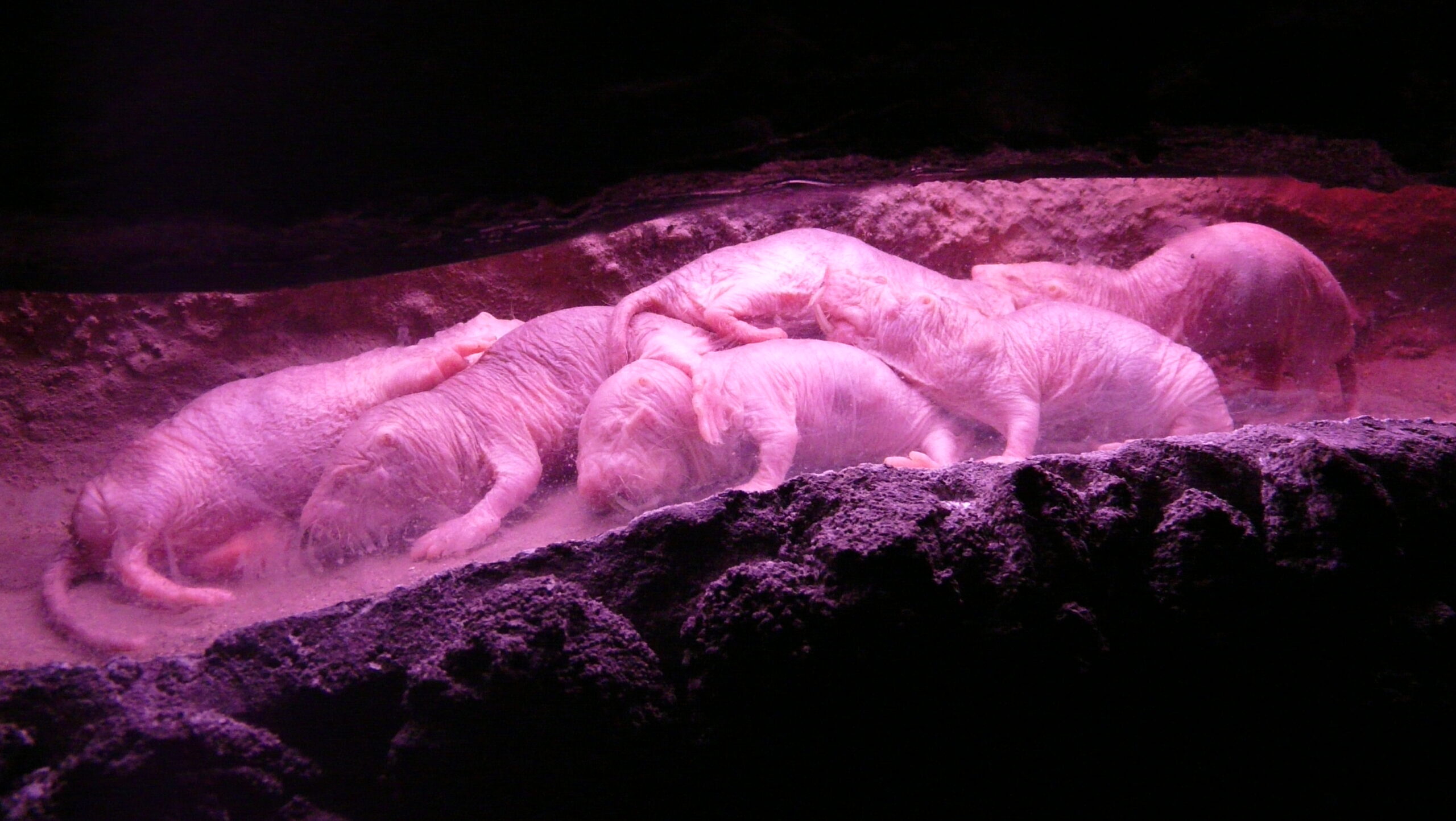 Photo Credit: RTG / Wikimedia Commons
In the sun-baked tunnels of East Africa, the Naked Mole Rat, or Heterocephalus glaber, scuttles through its underground kingdom. With its wrinkled, hairless body and large, protruding front teeth, this remarkable rodent looks like something out of a science fiction story. Its unique appearance is just the beginning of what makes it so captivating. These little creatures live in complex social structures, much like bees or ants, where a single queen rules over a colony of workers. This fascinating lifestyle, combined with their extraordinary adaptations, has drawn the attention of scientists and nature lovers alike.
As the Naked Mole Rat navigates its labyrinthine burrows, it showcases a world of wonders. These rodents are not just masters of their subterranean domain; they are also incredibly resilient. They can survive in low-oxygen environments and have a diet that primarily consists of underground plant parts, which they skillfully dig up. Their ability to thrive in harsh conditions and their intriguing social behaviors make them a subject of intense study. From their unique reproductive strategies to their role in the ecosystem, the Naked Mole Rat offers a glimpse into the marvels of evolution and adaptation, inviting us to explore the hidden wonders of the natural world.
The Naked Mole Rat, a truly extraordinary member of the animal kingdom, occupies a unique niche in the tree of life. Scientifically classified within the Kingdom Animalia, Phylum Chordata, Class Mammalia, Order Rodentia, Family Heterocephalidae, and Genus Heterocephalus, this small, hairless rodent is not just another face in the crowd. Its unusual appearance, social behavior, and remarkable adaptations set it apart from other mammals. For instance, Naked Mole Rats are known for their eusocial structure, similar to that of bees and ants, where a single queen breeds while the rest of the colony works together to care for the young and maintain their underground burrows.
| Taxonomic Rank | Scientific Name | Meaning & Significance |
|---|---|---|
| Kingdom | Animalia | This name comes from the Latin word “animalis,” meaning “having breath,” which reflects the living nature of these organisms. |
| Phylum | Chordata | Derived from the Latin “chorda,” meaning “string,” this term refers to animals with a notochord, a flexible rod that supports the body during development. |
| Class | Mammalia | This name comes from “mamma,” the Latin word for “breast,” highlighting the defining feature of mammals: the ability to nurse their young with milk. |
| Order | Rodentia | From the Latin “rodere,” meaning “to gnaw,” this classification emphasizes the characteristic front teeth of rodents, which are adapted for chewing through tough materials. |
| Family | Heterocephalidae | This name means “different head,” referring to the Naked Mole Rat’s distinctively shaped head compared to other rodents, which aids in its burrowing lifestyle. |
| Genus | Heterocephalus | Also meaning “different head,” this name further emphasizes the unique adaptations of the Naked Mole Rat, particularly its lack of fur and specialized teeth. |
The classification of the Naked Mole Rat reveals much about its evolutionary journey. As a member of the Rodentia order, it shares common ancestry with other rodents, but its placement in the Heterocephalidae family highlights its distinct adaptations to a subterranean lifestyle. These adaptations, such as its hairless skin and social structure, suggest a long history of evolution in response to environmental pressures. By studying this remarkable animal, scientists can gain insights into the complexities of social behavior, survival strategies, and even the mysteries of aging, making the Naked Mole Rat a key player in understanding the diversity of life on Earth.
The evolutionary journey of the Naked Mole Rat stretches back millions of years, with its ancestors first appearing around 30 million years ago. This small, hairless mammal, native to the arid regions of East Africa, has undergone significant changes that have allowed it to thrive in harsh underground environments. As we explore its evolutionary history, we uncover a tale of adaptation and survival that is as intriguing as it is complex.
The Naked Mole Rat belongs to the family Heterocephalidae, which diverged from other rodents long ago. Its ancestors were likely more similar to typical rodents, with fur and a more conventional body structure. Over time, these animals adapted to life in the tunnels of the African savanna, leading to several major evolutionary transitions. One of the most notable changes was the loss of fur, which helps them stay cool in their underground burrows. Additionally, their teeth evolved to grow continuously, allowing them to dig through tough soil and roots without wearing down. Their social structure also transformed, becoming highly cooperative, much like bees or ants, which is rare among mammals.
These remarkable adaptations have equipped the Naked Mole Rat to conquer its subterranean world. By evolving to live in colonies, they benefit from teamwork, which enhances their ability to find food and protect each other from predators. Their unique physical traits, like hairlessness and continuous tooth growth, allow them to dig efficiently and stay cool in their warm, humid habitats. Together, these features not only ensure their survival but also make them a captivating subject of study in the field of evolutionary biology.
The Naked Mole Rat is a curious little animal that captures attention with its unusual appearance. Imagine a small, wrinkled body that seems almost like a living piece of art. These fascinating creatures have a cylindrical shape, measuring about 3 to 4 inches long, and they lack the fur that most mammals have. Instead, their skin is smooth and pinkish, giving them a somewhat alien look. Their tiny eyes are nearly hidden beneath the folds of skin, and their large, protruding front teeth are perfect for digging through the tough underground tunnels they call home.
| Feature | Description |
|---|---|
| Weight | 1.1 to 1.2 ounces, with queens weighing up to 2.8 ounces |
| Skin Type | Smooth, hairless skin |
| Most Distinctive Feature | Social structure similar to that of insects, living in colonies |
These physical traits are not just for show; they serve important purposes in the Naked Mole Rat’s life. Their hairless skin helps them thrive in the warm, humid environment of their underground burrows, while their small size allows them to navigate through narrow tunnels with ease. The large teeth are essential for digging and foraging, enabling them to access roots and tubers deep in the soil. Living in colonies, much like social insects, they work together to maintain their complex underground homes, showcasing a remarkable blend of individuality and teamwork. This combination of features makes the Naked Mole Rat a true marvel of adaptation in the animal kingdom.
The Naked Mole Rat calls the underground tunnels of the arid regions of East Africa its home. These remarkable rodents dig extensive burrow systems beneath the surface, creating a labyrinth of chambers and tunnels. This subterranean lifestyle protects them from the harsh conditions above, where temperatures can soar and food is scarce. The dark, cool environment of their underground homes provides safety and a stable climate, allowing them to thrive in a world that many other animals would find inhospitable.
These fascinating animals prefer a dry climate, often found in areas with little rainfall. The underground burrows they create help maintain a consistent temperature and humidity level, which is crucial for their survival. The soil in their habitat is typically sandy or loamy, making it easier for them to dig and navigate their tunnels. This environment also helps them avoid predators and extreme weather, allowing them to focus on foraging for food and caring for their young.
Naked Mole Rats have developed several adaptations that make them perfectly suited for life underground. Their hairless bodies help them stay cool in the warm, dry conditions, while their large front teeth are ideal for digging through tough soil. They also have a unique social structure, living in colonies that work together to maintain their burrows and care for the young. This teamwork not only enhances their survival but also creates a fascinating social dynamic that is rare among mammals.
The Naked Mole Rat leads a life that is both busy and structured, filled with activities that revolve around its underground home. Each day begins with the sun rising over the arid landscapes of East Africa, but for these little mammals, the real action happens below the surface. They spend their time digging intricate tunnels, foraging for food, and caring for their young. Their diet mainly consists of underground plant parts, like tubers, which they skillfully locate and harvest. As social animals, Naked Mole Rats thrive in colonies, where teamwork is essential for survival and daily tasks.
Social behavior is at the heart of Naked Mole Rat life. Living in colonies that can number in the dozens, these rodents exhibit a fascinating social structure. Each colony has a queen, who is the only female that breeds, while the rest of the group consists of workers and soldiers. Workers are responsible for digging and foraging, while soldiers protect the colony from threats. Communication is vital in these close-knit groups, and Naked Mole Rats use a variety of sounds, like squeaks and chirps, to convey messages. They also engage in physical interactions, such as grooming each other, which helps strengthen their bonds and maintain harmony within the colony.
| Behavior Type | Description |
|---|---|
| Activity Patterns | Naked Mole Rats are primarily active during the day, foraging for food and maintaining their burrow systems. |
| Social Structure | Colonies consist of a queen, workers, and soldiers, each with specific roles that contribute to the colony’s success. |
| Communication Methods | They use a range of sounds, including squeaks and chirps, along with grooming behaviors to communicate and bond. |
The behaviors of Naked Mole Rats are finely tuned to ensure their survival in a challenging environment. By working together in colonies, they can efficiently gather food, defend against predators, and maintain their complex burrow systems. This cooperative lifestyle not only enhances their chances of survival but also fosters a strong sense of community, making them one of nature’s most intriguing examples of social living.
The Naked Mole Rat has a diet that is primarily omnivorous, meaning it eats both plant and animal matter. These fascinating little rodents have a particular fondness for underground plant parts, especially tubers, which are thickened roots that store energy. They use their sharp front teeth, which are similar to those of a squirrel, to dig into the soil and access these tasty treats. Their foraging behavior is quite social, as they often work together in their colonies to find food, showcasing a teamwork approach that is essential for survival in their harsh environment.
| Dietary Aspect | Details |
|---|---|
| Diet Type | Omnivore |
| Favorite Foods | Tubers, roots, and underground plant parts |
| Prey Items | Occasionally small insects |
| Hunting/Foraging Strategies | Collaborative digging and foraging in colonies |
This diet plays a crucial role in shaping the Naked Mole Rat’s ecology and daily routine. By primarily consuming tubers, they help aerate the soil and promote plant growth, which benefits their entire ecosystem. Their social foraging habits not only strengthen their bonds within the colony but also ensure that they can efficiently gather food in their challenging underground habitat. This unique lifestyle allows them to thrive in an environment where food can be scarce, showcasing the incredible adaptability of these small mammals.
When it comes to mating, Naked Mole Rats have a rather intriguing social structure. They live in colonies led by a dominant female, often referred to as the queen. This queen is the only female that breeds, and she mates with a select group of males in the colony. The breeding season typically aligns with the warmer months, when food is plentiful and conditions are favorable for raising young. During this time, the queen’s pheromones signal her readiness to mate, attracting the males who will compete for the chance to father her pups.
| Reproductive Aspect | Details |
|---|---|
| Gestation Period | 70 days |
| Litter Size | Typically 3-12 pups |
| Age of Sexual Maturity | 228 days for females, 1 year for males |
| Name of Young | Pup |
Once the pups are born, they are completely dependent on their mother and the colony for care. The queen and other workers in the colony take turns nurturing the young, ensuring they are fed and kept safe. As the pups grow, they begin to explore their surroundings, learning essential skills from the adults. This cooperative parenting style helps the pups develop into healthy adults, ready to take on their roles within the colony. By the time they reach sexual maturity, they are well-prepared to contribute to the fascinating social structure of their underground world.
The Naked Mole Rat plays a vital role in its ecosystem, primarily as a prey species within the food web. Living underground in East Africa, these small mammals are an important food source for various predators. Their unique lifestyle and social structure help them navigate the dangers that lurk above ground, but they are not without threats.
To defend themselves against these threats, Naked Mole Rats rely on their underground burrows for safety. When danger approaches, they can quickly retreat into their complex tunnel systems, which provide a secure refuge. Additionally, their social structure allows them to work together, alerting one another to potential dangers. This teamwork, combined with their ability to dig rapidly, helps them evade predators and survive in their challenging environment.
A keystone species is an organism that has a disproportionately large impact on its environment relative to its abundance. In other words, if a keystone species were to disappear, the entire ecosystem could change dramatically. The Naked Mole Rat, with its unique lifestyle and ecological interactions, qualifies as a keystone species in its underground habitat. Its presence influences many other organisms and the overall health of its ecosystem.
Naked Mole Rats are not just quirky little rodents; they play a crucial role in their underground world. By digging extensive burrow systems, they aerate the soil, which helps improve water infiltration and nutrient distribution. This activity creates a healthier environment for plants, allowing them to thrive. Additionally, their diet consists mainly of underground plant parts, which means they help control plant populations and promote biodiversity. As they consume roots and tubers, they also encourage the growth of new plants, contributing to a balanced ecosystem.
Moreover, Naked Mole Rats serve as a vital food source for various predators, including snakes and birds of prey. Their presence supports the food web, ensuring that these predators have enough to eat. The colonies they form also create a social structure that can influence the behavior of other species in their habitat. For example, their communal living and cooperative breeding can inspire similar behaviors in other animals, showcasing the interconnectedness of life underground.
If Naked Mole Rats were to vanish from their environment, the consequences would be significant. The soil would become compacted, leading to poorer plant growth and reduced biodiversity. Without these rodents, the balance of the food web would be disrupted, potentially causing a decline in predator populations that rely on them for sustenance. The intricate relationships that Naked Mole Rats maintain within their ecosystem highlight their importance, proving that even the smallest creatures can have a monumental impact on the world around them.
The Naked Mole Rat plays a crucial role in shaping its ecosystem, particularly in the arid regions of East Africa where it resides. By living underground and creating extensive burrow systems, these small mammals not only provide shelter for themselves but also influence the environment around them. Their unique lifestyle and social structure allow them to thrive in harsh conditions, making them an essential part of their ecosystem.
| Ecosystem Service | Impact |
|---|---|
| Soil Aeration | Naked Mole Rats dig tunnels that help aerate the soil, allowing air and water to reach plant roots more easily. |
| Seed Dispersal | As they forage for food, they inadvertently help spread seeds, promoting plant diversity in their habitat. |
| Food Source | They serve as prey for various predators, contributing to the food web and supporting other species. |
| Organic Matter Recycling | Their waste enriches the soil with nutrients, enhancing plant growth and overall ecosystem health. |
The influence of Naked Mole Rats extends beyond their immediate surroundings. For instance, their burrowing activities create a network of tunnels that not only serve as homes for the rats but also provide habitats for other organisms, such as insects and small reptiles. This underground community thrives due to the conditions created by the Naked Mole Rats, which help maintain moisture levels and improve soil quality. Additionally, their foraging habits lead to the consumption of roots and tubers, which can stimulate new plant growth when they are removed, further enhancing biodiversity.
The broader ecological importance of Naked Mole Rats cannot be overstated. As a keystone species, their presence significantly impacts the health and stability of their ecosystem. If they were to disappear, the intricate balance of life in their underground world would be disrupted, affecting not only the plants and animals that rely on their burrows but also the larger food web. By understanding the role of Naked Mole Rats, we gain insight into the delicate interconnections that sustain life in these arid environments, reminding us of the importance of every species in maintaining ecological harmony.
In the intricate web of life, symbiosis refers to the close and often long-term interactions between different species. These relationships can take many forms, including mutualism, where both species benefit, parasitism, where one benefits at the other’s expense, and commensalism, where one benefits while the other is neither helped nor harmed. The Naked Mole Rat, with its unique lifestyle and habitat, engages in various ecological partnerships that highlight the complexity of nature’s relationships.
| Species/Type | Relationship Type | Description |
|---|---|---|
| Fungi | Mutualistic | Naked Mole Rats often interact with fungi in their underground burrows. The fungi help decompose organic matter, enriching the soil, while the Naked Mole Rats benefit from healthier plant roots nearby. |
| Parasites (like mites) | Parasitic | Some mites live on Naked Mole Rats, feeding on their skin and fur. This relationship can harm the Naked Mole Rat, as the mites can cause irritation and stress. |
| Other Naked Mole Rats | Mutualistic | Within their colonies, Naked Mole Rats work together to maintain their burrows and care for the young. This cooperation enhances their survival and strengthens social bonds. |
These relationships have evolved over time, shaped by the needs and adaptations of the species involved. The mutualistic partnerships, like those with fungi, demonstrate how interconnected life can be, as both species thrive through their collaboration. Meanwhile, parasitic relationships remind us that not all interactions are beneficial. Understanding these dynamics helps us appreciate the delicate balance of ecosystems, where every species, including the Naked Mole Rat, plays a vital role in maintaining the health and diversity of their environment.
The Naked Mole Rat is a truly astonishing animal that challenges our understanding of mammalian life. With its unusual lifestyle and remarkable adaptations, this little creature offers a glimpse into the wonders of evolution and social behavior.
The Naked Mole Rat has a long and intriguing history with humanity, dating back to ancient times. These peculiar rodents were first documented by scientists in the 18th century, but they have been known to local tribes in East Africa for much longer. In some cultures, they are seen as symbols of resilience and adaptability, thriving in harsh environments where few other animals can survive. Their unique characteristics, such as their hairless bodies and social structures, have sparked curiosity and fascination among researchers and the general public alike.
Today, our interactions with Naked Mole Rats are multifaceted, ranging from scientific research to conservation efforts. These animals are often studied in laboratories due to their remarkable biological traits, such as their resistance to cancer and their ability to live in low-oxygen environments. This research has the potential to unlock secrets about human health and longevity. However, as urban development encroaches on their natural habitats, Naked Mole Rats face challenges that threaten their populations. Conservationists are working to protect their environments while educating the public about the importance of these unique rodents in the ecosystem.
Looking ahead, the relationship between Naked Mole Rats and humanity is poised for further exploration and understanding. As we continue to study these remarkable creatures, we may uncover new insights that not only benefit our knowledge of biology but also enhance our appreciation for the intricate connections between species. By fostering a sense of stewardship for their habitats, we can ensure that Naked Mole Rats thrive alongside us, enriching our world with their unique adaptations and behaviors.
The Naked Mole Rat currently holds a conservation status of “Least Concern,” according to the International Union for Conservation of Nature (IUCN). This means that, overall, they are not facing immediate threats that could lead to their extinction. While specific population estimates are difficult to determine, their numbers appear stable across their natural habitat in East Africa. This resilience is a positive sign, suggesting that these quirky rodents continue to thrive in their underground worlds.
| Conservation Factor | Status/Details |
|---|---|
| IUCN Status | Least Concern |
| Estimated Population Size | Unknown |
| Population Trend | Stable |
Despite their stable status, Naked Mole Rats face some challenges in their environment. Habitat destruction is a significant threat, primarily due to agricultural expansion and urban development. As humans encroach on their natural habitats, the intricate burrow systems that these rodents rely on can be disrupted. Additionally, climate change poses a risk, as shifts in temperature and rainfall patterns could affect the availability of food sources and suitable living conditions.
Conservation efforts for Naked Mole Rats are not as extensive as for more endangered species, but their stable status allows for a focus on habitat preservation. Protecting the arid regions of East Africa where they live is crucial for maintaining their populations. By promoting sustainable land use and raising awareness about the importance of these fascinating animals, conservationists hope to ensure that Naked Mole Rats continue to thrive in their unique underground ecosystems for generations to come.
| Question | Answer |
|---|---|
| Where do Naked Mole Rats live? | Naked Mole Rats are found underground in the arid regions of East Africa, particularly in countries like Ethiopia and Kenya. They dig extensive tunnel systems that can stretch for miles, creating a safe and stable environment away from predators. |
| What do Naked Mole Rats eat? | These fascinating creatures are omnivores, meaning they eat both plants and animals. Their diet mainly consists of underground parts of plants, such as tubers and roots, which provide them with essential nutrients. |
| How do Naked Mole Rats behave in their colonies? | Naked Mole Rats are highly social animals that live in colonies, much like bees or ants. They have a strict social structure, with one queen who breeds and several workers who dig tunnels and care for the young. |
| How do Naked Mole Rats reproduce? | The queen Naked Mole Rat is the only female in the colony that breeds, and she can have multiple litters each year. The workers help raise the pups, ensuring that the colony thrives and grows. |
| What threats do Naked Mole Rats face? | While Naked Mole Rats are currently classified as Least Concern, they can face threats from habitat destruction and climate change. Their underground homes can be disturbed by human activities, which may impact their populations. |
| What is an interesting characteristic of Naked Mole Rats? | Naked Mole Rats are unique because they are mammals that live almost entirely like social insects. They have a remarkable ability to tolerate low oxygen levels and can even survive without oxygen for extended periods. |
| Why are Naked Mole Rats considered important for research? | Scientists study Naked Mole Rats to understand their resistance to cancer and aging. Their unique biological traits may provide insights into human health and longevity, making them valuable for medical research. |