Taxonomy & Classification
- Kingdom
- Animalia
- Phylum
- Chordata
- Class
- Amphibia
- Order
- Caudata
- Family
- Salamandridae
- Genus
- Triturus

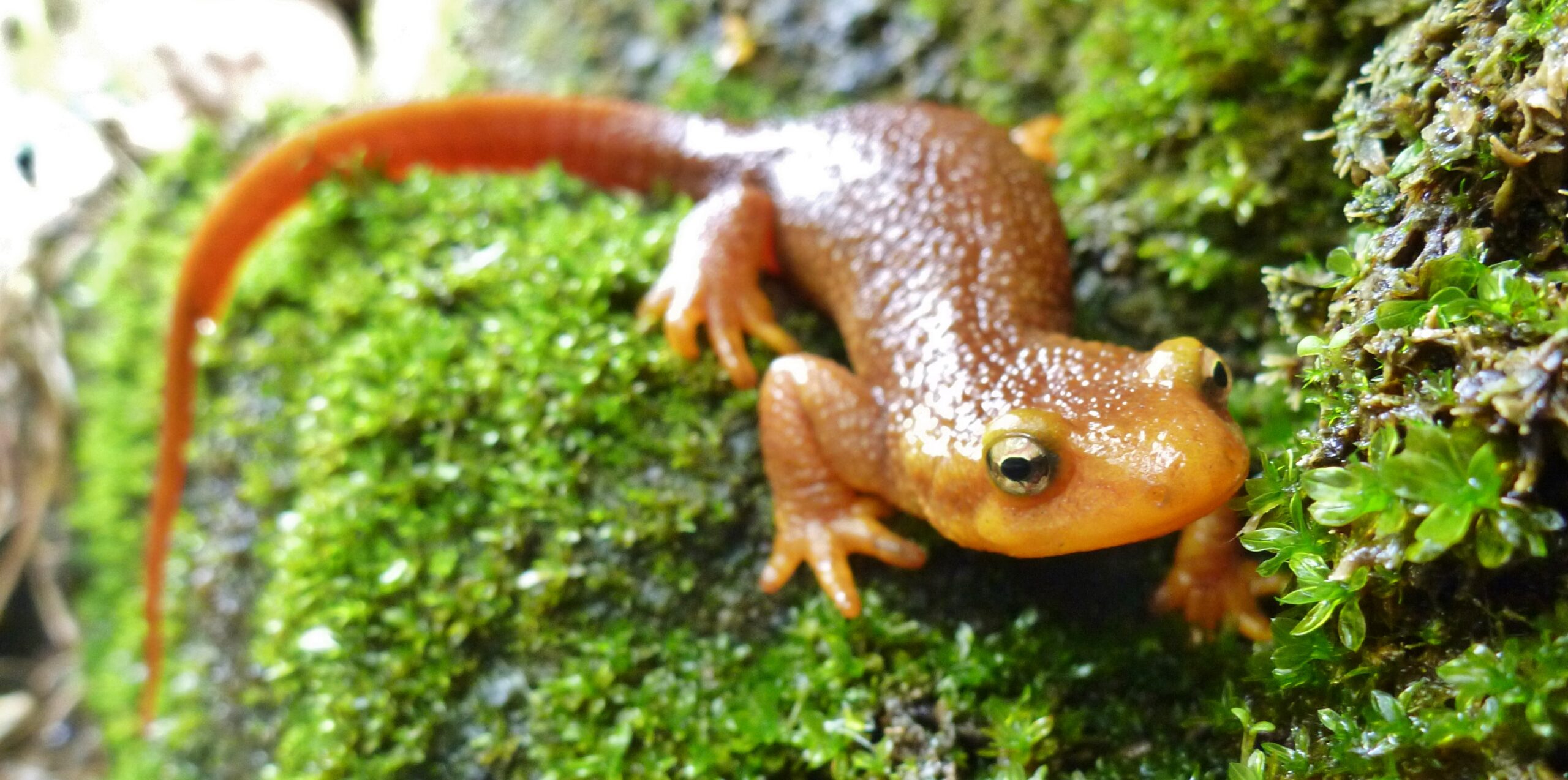 Photo Credit: Artix Kreiger 2 / Wikimedia Commons
In the heart of a lush, temperate forest, the newt, scientifically known as Notophthalmus viridescens, glides gracefully through the cool, clear waters of a pond. With its slender, elongated body and vibrant hues of orange and yellow, this amphibian is a true marvel of nature. Its smooth skin, often speckled with dark spots, not only adds to its beauty but also serves a purpose: it helps the newt blend into its surroundings, protecting it from predators. As the sun filters through the canopy, casting dappled light on the water’s surface, the newt emerges from the depths, showcasing its remarkable ability to thrive both in water and on land.
What makes newts particularly captivating to scientists and nature lovers alike is their extraordinary life cycle and unique adaptations. These amphibians are not just skilled swimmers; they are also adept at navigating the forest floor, where they hunt for small invertebrates like worms and insects. Their ability to regenerate lost limbs adds another layer of intrigue, making them a subject of study in the fields of biology and medicine. As we explore the world of newts, we will uncover their fascinating behaviors, the vital roles they play in their ecosystems, and the enchanting stories that have woven them into human culture throughout history. Join us on this adventure to discover the secrets of these remarkable amphibians!
Newts are captivating amphibians that hold a special place in the tree of life. They belong to the class Amphibia, which means they are part of a group of animals that can live both in water and on land. Newts are particularly interesting because they undergo a remarkable transformation during their life cycle, shifting from aquatic larvae to terrestrial adults. This ability to thrive in two different environments showcases their adaptability and resilience, making them a unique member of the animal kingdom.
| Taxonomic Rank | Scientific Name | Meaning & Significance |
|---|---|---|
| Kingdom | Animalia | This name comes from the Latin word for “animal,” highlighting that newts are part of the vast group of living organisms that are multicellular and typically capable of movement. |
| Phylum | Chordata | Derived from the Greek word “chordē,” meaning “string,” this classification indicates that newts have a notochord, a flexible rod that supports their body during development. |
| Class | Amphibia | This term means “double life” in Greek, referring to the dual existence of newts in both aquatic and terrestrial habitats. |
| Order | Caudata | From the Latin word “cauda,” meaning “tail,” this name emphasizes that newts, like other members of this order, possess long tails throughout their lives. |
| Family | Salamandridae | This family name comes from the Greek word “salamandra,” which refers to the lizard-like appearance of these amphibians, even though they are not lizards. |
| Genus | Triturus | Originating from the Latin word for “to rub,” this name may refer to the smooth skin of newts, which is often moist and slippery, aiding in their aquatic lifestyle. |
The classification of newts reveals a fascinating evolutionary history that connects them to both ancient and modern amphibians. Their position within the phylum Chordata highlights their shared ancestry with other vertebrates, while their unique adaptations, such as their ability to live both in water and on land, showcase the evolutionary innovations that have allowed them to thrive in diverse environments. Understanding where newts fit in the tree of life not only deepens our appreciation for these remarkable animals but also sheds light on the intricate web of life that connects all living beings.
The evolutionary journey of newts stretches back over 300 million years, tracing their lineage to ancient amphibians that first emerged during the Carboniferous period. These early ancestors were among the first vertebrates to venture onto land, adapting to a life that required both aquatic and terrestrial habitats. As time passed, these amphibians evolved into various forms, leading to the diverse group we recognize today as newts.
Newts belong to the family Salamandridae and the genus Triturus. Their ancestors were likely similar to modern-day salamanders, which are known for their moist skin and ability to regenerate lost limbs. Over millions of years, newts underwent significant changes, including the development of a more streamlined body for swimming and specialized skin that helps them absorb moisture. They also transitioned from a fully aquatic lifestyle to a more versatile existence, allowing them to thrive in both water and on land. This adaptability has been crucial for their survival in various environments.
These adaptations have played a vital role in the survival of newts throughout their evolutionary history. Their moist skin allows them to thrive in wet environments, while their remarkable regenerative abilities provide a safety net against injury. The bright colors not only serve as a warning to predators but also help them communicate with each other. By mastering the art of metamorphosis, newts can take advantage of both aquatic and terrestrial resources, ensuring their place in the diverse tapestry of life on Earth.
Newts are enchanting amphibians that capture the imagination with their sleek, elongated bodies and vibrant colors. Their form is both streamlined and sturdy, allowing them to glide gracefully through water while also navigating the terrestrial world. With a body length that can vary, newts often present a captivating sight, showcasing a blend of elegance and resilience. Their limbs are short but powerful, perfectly adapted for both swimming and climbing, making them versatile in their habitats.
| Feature | Description |
|---|---|
| Weight | 10-50g (0.3-1.8oz) |
| Skin Type | Scales |
The combination of their lightweight body and scaled skin plays a crucial role in their survival. The scales help protect newts from predators and environmental hazards, while their relatively low weight allows for agile movement in both water and on land. This adaptability is essential for evading threats and finding food, showcasing how their physical features are finely tuned to thrive in diverse environments.
Newts thrive in a variety of habitats, but they are particularly fond of temperate forests and the banks of rivers. Imagine a lush, green forest filled with tall trees, their leaves whispering in the gentle breeze. Beneath the canopy, the ground is soft and damp, perfect for these amphibians. Nearby, a clear, flowing river meanders through the landscape, providing a vital source of water and a place for newts to hunt and breed. This enchanting environment is a blend of moisture, shade, and rich biodiversity, making it an ideal home for these fascinating creatures.
Newts prefer climates that are mild and moist, which is why they are often found in temperate regions. These areas experience four distinct seasons, allowing newts to take advantage of the warm, wet spring and summer months for breeding. They thrive in environments where the humidity is high, as this helps keep their skin moist. Since newts breathe through their skin, a damp atmosphere is essential for their survival. They often seek out shaded spots to escape the heat and avoid drying out, making their habitats a delicate balance of warmth and moisture.
To adapt to their specific habitats, newts have developed several clever strategies. Their smooth, permeable skin allows them to absorb moisture from their surroundings, which is crucial for their survival in both aquatic and terrestrial environments. During the breeding season, they often return to water bodies, where they lay their eggs in safe, sheltered areas. Additionally, their ability to camouflage with the forest floor or riverbed helps them evade predators. This combination of physical traits and behavioral adaptations ensures that newts can thrive in their chosen homes, making them a vital part of the ecosystem.
Newts lead a life that is both intriguing and methodical. Their daily activities often revolve around foraging for food, which primarily consists of small invertebrates like worms and insects. As dusk falls, these amphibians become more active, taking advantage of the cooler temperatures to hunt. They are most often seen gliding through the water or exploring the damp forest floor, using their keen senses to detect movement and smell. Newts are also known to bask in the sun during the day, soaking up warmth to help regulate their body temperature, a process known as thermoregulation.
While newts are generally solitary creatures, they do exhibit interesting social behaviors during the breeding season. Males often engage in elaborate courtship displays to attract females, showcasing their vibrant colors and performing intricate movements in the water. These displays can include swimming in circles or gently nudging the female with their snouts. Once a female chooses a mate, she will lay her eggs in water, often attaching them to aquatic plants. After this, the adults typically go their separate ways, returning to their solitary lifestyles.
| Behavior Type | Description |
|---|---|
| Foraging | Newts search for food like worms and insects, primarily during the evening when they are most active. |
| Breeding Displays | Males perform colorful courtship rituals to attract females, showcasing their vibrant colors and swimming skills. |
| Solitary Lifestyle | Outside of breeding season, newts prefer to live alone, exploring their habitats independently. |
| Communication | Newts communicate through body language and chemical signals, especially during mating rituals. |
The behaviors of newts are finely tuned to ensure their survival in the wild. Their solitary nature allows them to avoid competition for resources, while their courtship displays help them find mates when the time is right. By being active during cooler hours, they can hunt effectively while minimizing the risk of overheating. Each aspect of their daily life, from foraging to breeding, plays a crucial role in maintaining their populations and adapting to their ever-changing environments.
Newts are omnivores, which means they enjoy a varied diet that includes both plant and animal matter. Their feeding behavior is quite fascinating, as they are opportunistic feeders, meaning they will eat whatever is available in their environment. This adaptability allows them to thrive in different habitats, from lush forests to the edges of ponds. As dusk falls, newts become more active, using their keen senses to hunt for food in the cool evening air.
| Dietary Aspect | Details |
|---|---|
| Diet Type | Omnivore |
| Favorite Foods | Worms, insects, and water snails |
| Prey Items | Small invertebrates |
| Hunting/Foraging Strategies | Active foraging at dusk, using keen senses to locate food |
This diverse diet plays a crucial role in the newt’s ecology and daily routine. By consuming a variety of prey, newts help control insect populations and contribute to the health of their ecosystems. Their foraging habits also mean they are constantly on the move, exploring their surroundings and interacting with other species. This not only keeps them healthy but also supports the balance of life in their habitats, making them important players in the natural world.
When it comes to reproduction, newts have some interesting behaviors that make their breeding season quite a spectacle. Typically, this season occurs in the spring, when temperatures rise and ponds begin to thaw. Male newts often engage in elaborate courtship displays to attract females. They may perform a dance, waving their tails and showing off their colorful bodies. This display is not just for show; it helps the female choose a mate based on the male’s health and vitality. Once a female selects a male, they will mate, and the female will lay her eggs in water, often attaching them to aquatic plants for protection.
| Reproductive Aspect | Details |
|---|---|
| Gestation Period | Eggs hatch in about 2 to 3 weeks |
| Litter Size | Average of 100 eggs |
| Age of Maturity | 1 to 3 years |
| Name of Young | Larvae or efts |
After the eggs hatch, the young newts, known as larvae, begin their journey in the water. These tiny creatures are equipped with gills, allowing them to breathe underwater. As they grow, they undergo a fascinating transformation called metamorphosis. During this process, they develop lungs and lose their gills, preparing them for life on land. Once they reach maturity, which can take anywhere from one to three years, they become fully developed adults. While newts do not provide extensive parental care, the placement of their eggs in safe locations helps ensure that the next generation has a better chance of survival. This cycle of life continues, showcasing the resilience and adaptability of these remarkable amphibians.
Newts occupy a crucial role in the food web, serving as both predators and prey. As amphibians, they help control insect populations while also providing nourishment for various animals. Their presence indicates a healthy ecosystem, as they thrive in environments rich in biodiversity. However, this delicate balance also places them in the sights of numerous predators.
To survive these threats, newts have developed a range of defensive behaviors. One of their most fascinating strategies is the ability to secrete toxic substances through their skin, which can deter hungry predators. This toxicity varies among species, but it serves as a powerful warning to would-be attackers. Additionally, newts can employ camouflage, blending into their surroundings to avoid detection. When threatened, they may also exhibit a behavior called autotomy, where they can shed part of their tail to escape a predator’s grasp. These survival tactics showcase the newt’s resilience in the face of danger, allowing them to thrive in their natural habitats.
A keystone species is an organism that plays a critical role in maintaining the structure of an ecosystem. Its presence or absence can significantly impact the environment and the other species living there. Newts, with their unique behaviors and ecological interactions, qualify as a keystone species in their habitats, particularly in temperate forests and along river banks.
Newts contribute to their ecosystems in several important ways. As omnivores, they help regulate insect populations by feeding on small invertebrates like worms and insects. This predation keeps these populations in check, preventing overpopulation that could lead to imbalances in the ecosystem. Additionally, newts serve as a food source for various predators, including birds and mammals, thus supporting the food web. Their presence helps maintain biodiversity, as they interact with many other species in their environment.
Moreover, newts play a role in nutrient cycling. When they consume organic matter and excrete waste, they return essential nutrients to the soil and water, promoting plant growth. This process is vital for the health of the ecosystem, as it supports the growth of vegetation that provides habitat and food for countless other organisms.
Newts also participate in the breeding cycle of many aquatic plants and animals. Their breeding activities in ponds create temporary habitats that can be crucial for other species, including amphibians and insects, which rely on these environments for reproduction and development.
If newts were to disappear from their ecosystems, the consequences could be severe. Insect populations might explode, leading to overgrazing of plants and a decline in vegetation health. This, in turn, would affect the animals that rely on those plants for food and shelter. The loss of newts would ripple through the food web, potentially leading to a decline in biodiversity and the overall health of the ecosystem. Without these remarkable amphibians, the balance of life in their habitats would be at risk, highlighting just how vital they are to the natural world.
Newts play a vital role in their ecosystems, acting as both predators and prey while contributing to the health of their habitats. These amphibians thrive in temperate forests and along riverbanks, where they help maintain the balance of life. By foraging for small invertebrates and consuming a variety of plant matter, newts influence the populations of other species, ensuring that no single group dominates the ecosystem. Their presence is essential for a thriving, diverse environment.
| Ecosystem Service | Impact |
|---|---|
| Predation | Controls insect populations, preventing overpopulation and promoting biodiversity. |
| Nutrient Cycling | Contributes to the breakdown of organic matter, enriching the soil and water. |
| Prey for Other Species | Serves as a food source for birds, mammals, and larger amphibians, supporting the food web. |
| Habitat Creation | Helps maintain wetland areas that provide homes for various organisms. |
Newts influence their surroundings in several specific ways. For instance, by feeding on insects and other small invertebrates, they help keep these populations in check. This predation is crucial, especially in areas where insects can become pests. Additionally, as newts move through their habitats, they contribute to nutrient cycling. Their waste products enrich the soil and water, promoting plant growth and benefiting other organisms that rely on these resources.
The broader ecological importance of newts cannot be overstated. As a keystone species, their presence helps maintain the structure of their ecosystems. When newt populations are healthy, they support a diverse array of life, from the tiniest insects to larger predators. Conversely, if newts were to decline, the balance of their habitats could be disrupted, leading to a cascade of negative effects on other species. By understanding and protecting newts, we help safeguard the intricate web of life that depends on them.
In the intricate web of life, symbiosis refers to the close and often long-term interactions between different species. These relationships can take many forms, including mutualism, where both species benefit, parasitism, where one benefits at the expense of the other, and commensalism, where one benefits while the other is neither helped nor harmed. Newts, with their adaptable nature, engage in various ecological partnerships that highlight the interconnectedness of life in their habitats.
| Species/Type | Relationship Type | Description |
|---|---|---|
| Algae | Mutualistic | Newts often share their aquatic environments with algae. The algae benefit from the nutrients in the newts’ waste, while the newts enjoy cleaner water and a habitat rich in oxygen. |
| Leeches | Parasitic | Some leeches attach to newts to feed on their blood. While this relationship benefits the leeches, it can weaken the newts, making them more vulnerable to disease. |
| Fungi | Commensal | Certain fungi grow on the skin of newts. These fungi do not harm the newts but may help break down organic material in their environment, indirectly benefiting the ecosystem. |
These relationships have evolved over time, shaped by the needs and adaptations of each species involved. Mutualistic partnerships, like those with algae, enhance the survival of newts by providing cleaner habitats, while parasitic interactions with leeches remind us of the delicate balance in nature. Commensal relationships with fungi illustrate how life can thrive together without direct competition. Understanding these connections helps us appreciate the complexity of ecosystems and the vital roles that each species plays in maintaining the health of their environment.
Newts are truly captivating amphibians, and there’s so much more to them than meets the eye. Here are some surprising facts that will intrigue nature enthusiasts of all ages.
Throughout history, newts have held a special place in human culture and folklore. These amphibians have often been associated with magic and transformation, appearing in stories and myths across various cultures. In ancient times, people believed that newts possessed healing powers, and they were sometimes used in traditional medicine. Their vibrant colors and unique behaviors have sparked curiosity and admiration, making them symbols of change and adaptability. As humans have explored the natural world, encounters with newts have inspired art, literature, and even scientific inquiry, highlighting their significance in our understanding of biodiversity.
In modern times, the relationship between newts and humanity has evolved, reflecting both cooperation and conflict. Conservation efforts are underway to protect newt populations, as many species face threats from habitat loss, pollution, and climate change. Organizations and researchers are working to create safe environments for these amphibians, emphasizing the importance of preserving their habitats. However, conflicts can arise when newts invade gardens or homes, leading to misunderstandings about their role in the ecosystem. While some people may view them as pests, others recognize their value in controlling insect populations and maintaining ecological balance.
As we look to the future, the relationship between newts and humanity will likely continue to evolve. With increasing awareness of environmental issues, more people are recognizing the importance of protecting these amphibians and their habitats. Education and conservation efforts can foster a deeper appreciation for newts, encouraging coexistence rather than conflict. By understanding their role in the ecosystem, we can ensure that future generations will also marvel at the beauty and resilience of these remarkable creatures. Together, we can create a world where newts thrive alongside us, enriching our lives and the environment.
Newts currently hold a conservation status of “Least Concern,” according to the International Union for Conservation of Nature (IUCN). This means that, overall, they are not facing immediate threats of extinction. Their populations are stable in many areas, although some local populations may experience fluctuations due to environmental changes. As adaptable amphibians, newts have managed to thrive in various habitats, but ongoing monitoring is essential to ensure their continued well-being.
| Conservation Factor | Status/Details |
|---|---|
| IUCN Status | Least Concern |
| Population Estimates | Stable in many regions |
| Trend Direction | Stable |
Despite their overall stable status, newts face several significant threats that could impact their populations. Habitat loss is a primary concern, as urban development and agriculture can destroy the wetlands and forests they rely on for breeding and foraging. Pollution from pesticides and chemicals can also harm their delicate skin and disrupt their reproductive cycles. Additionally, climate change poses a growing risk, altering the temperatures and water levels in their habitats, which can affect their survival.
Conservation efforts are underway to protect newts and their habitats. Organizations are working to restore wetlands and promote sustainable land use practices that benefit both wildlife and humans. Public awareness campaigns aim to educate communities about the importance of preserving these amphibians and their ecosystems. With continued efforts and a commitment to conservation, the outlook for newts remains hopeful, ensuring that future generations can enjoy the wonders of these fascinating creatures.
| Question | Answer |
|---|---|
| What is the habitat of newts? | Newts typically live in temperate forests and near river banks. They enjoy moist environments where they can easily find water for breeding and hunting. |
| What do newts eat? | Newts are omnivores, which means they eat both plants and animals. Their diet includes insects, worms, and small aquatic creatures, as well as algae and other plant matter. |
| How do newts behave? | Newts are generally solitary creatures, but they can be quite social during the breeding season. They are known for their unique swimming style and can often be seen gliding gracefully through the water. |
| How do newts reproduce? | Newts reproduce by laying eggs in water, usually in the spring. The female lays clusters of eggs, which hatch into larvae that eventually develop into adult newts. |
| What threats do newts face? | Newts face several threats, including habitat loss due to urban development and pollution. Climate change also poses a risk, as it can alter their habitats and breeding patterns. |
| What are some interesting characteristics of newts? | Newts have the ability to regenerate lost limbs, which is a fascinating survival trait. They also have a unique skin that can absorb water and oxygen, making them sensitive to environmental changes. |
| Are newts endangered? | Most newt species are classified as "Least Concern," meaning they are not currently at risk of extinction. However, some specific species may be threatened due to local environmental issues. |