Taxonomy & Classification
- Kingdom
- Animalia
- Phylum
- Chordata
- Class
- Reptilia
- Order
- Crocodilia
- Family
- Crocodylidae
- Genus
- Crocodylus
- Species
- Crocodylus niloticus

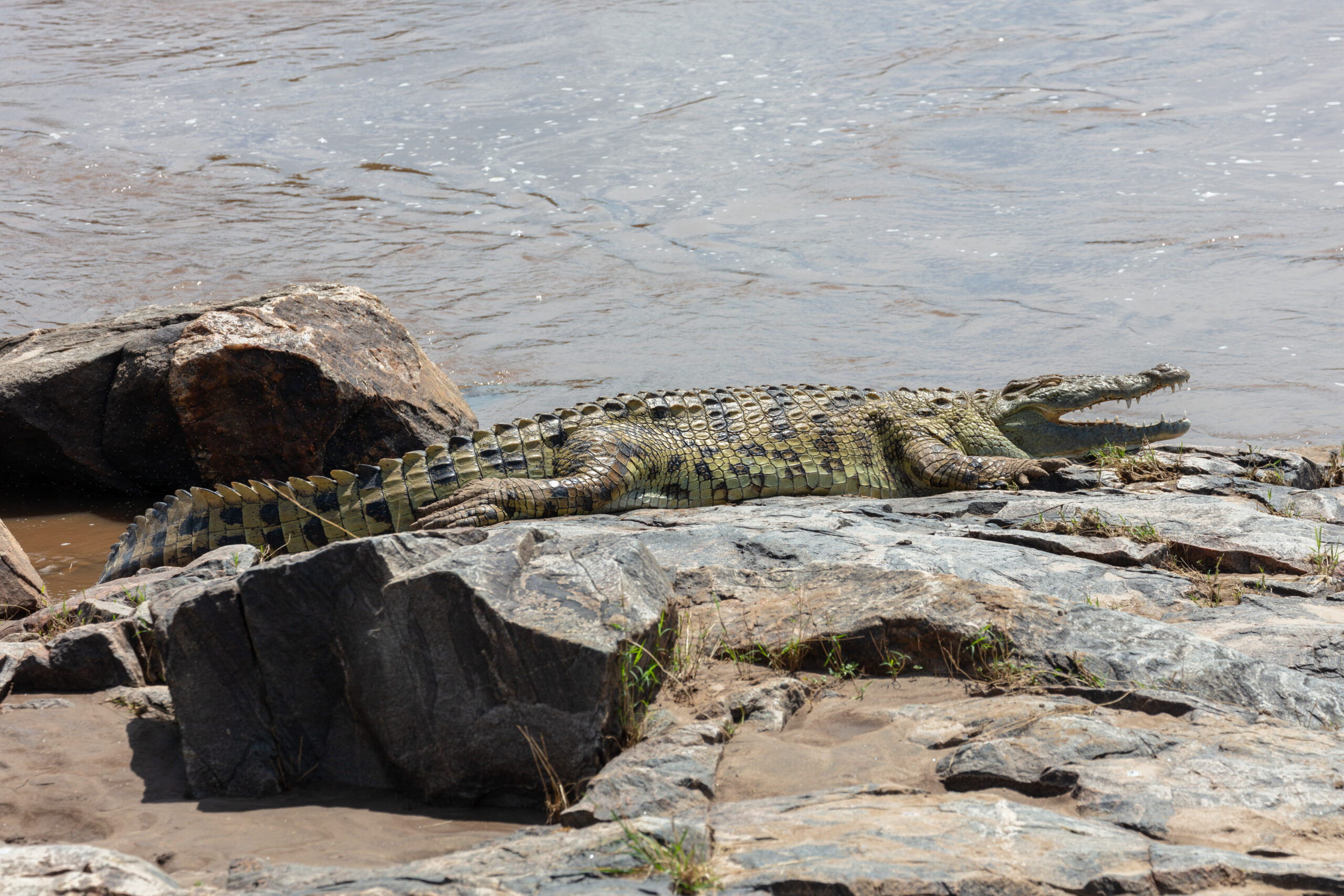 Photo Credit: Poco a poco / Wikimedia Commons
In the shimmering waters of Africa’s rivers and swamps, the Nile crocodile, or Crocodylus niloticus, reigns supreme. With its powerful body stretching up to 20 feet long, this ancient reptile is a master of stealth and strength. Its rugged, scaly skin, adorned with a pattern of earthy greens and browns, allows it to blend seamlessly into the murky depths, making it a formidable predator. As the sun rises, the Nile crocodile basks on the riverbank, its eyes peeking just above the water’s surface, ready to spring into action at a moment’s notice. This captivating creature has fascinated scientists and nature lovers alike, not only for its impressive size but also for its role in the ecosystem as a top predator.
The Nile crocodile’s evolutionary history stretches back over 200 million years, making it one of the oldest living species on Earth. This long lineage has equipped it with remarkable adaptations, such as powerful jaws filled with sharp teeth and a keen sense of hearing, which help it hunt in both water and on land. As we explore the world of the Nile crocodile, we will uncover its behaviors, diet, and the vital role it plays in maintaining the balance of its aquatic habitat. From its intriguing mating rituals to its interactions with other species, the Nile crocodile is not just a fearsome predator; it is a key player in the intricate web of life that thrives in Africa’s waterways.
The Nile crocodile, scientifically known as Crocodylus niloticus, holds a significant place in the animal kingdom. As a member of the class Reptilia, this impressive reptile is part of a lineage that dates back over 200 million years, making it one of the oldest surviving species on Earth. What sets the Nile crocodile apart is not just its formidable size and powerful jaws, but also its adaptability to various habitats, from rivers and lakes to brackish coastal areas. This adaptability has allowed it to thrive in diverse environments across Africa, showcasing its evolutionary success.
| Taxonomic Rank | Scientific Name | Meaning & Significance |
|---|---|---|
| Kingdom | Animalia | This name signifies that Nile crocodiles are part of the vast group of multicellular organisms that are primarily heterotrophic, meaning they consume other organisms for energy. |
| Phylum | Chordata | Chordata refers to animals that have a notochord, a flexible rod that supports the body. In crocodiles, this structure is replaced by a backbone as they develop. |
| Class | Reptilia | Reptilia indicates that Nile crocodiles are reptiles, characterized by their scaly skin and cold-blooded nature, meaning they rely on external sources to regulate their body temperature. |
| Order | Crocodilia | Crocodilia is the order that includes alligators, caimans, and gharials, highlighting their shared evolutionary traits, such as a semi-aquatic lifestyle and a powerful bite. |
| Family | Crocodylidae | This family name emphasizes the true crocodiles, which are distinguished by their long snouts and strong jaws, adapted for catching prey. |
| Genus | Crocodylus | The genus name Crocodylus comes from the Greek word for “pebble worm,” referring to the animal’s scaly skin that resembles pebbles in texture. |
| Species | niloticus | This species name is derived from the Nile River, where these crocodiles are commonly found, linking them directly to their natural habitat. |
Understanding the Nile crocodile’s classification reveals much about its evolutionary journey. As a member of the ancient order Crocodilia, it shares a common ancestor with birds and dinosaurs, showcasing a remarkable evolutionary adaptation to life both in water and on land. This classification not only highlights its physical traits but also underscores its role as a top predator in its ecosystem, maintaining the balance of life in the rivers and wetlands it inhabits. The Nile crocodile is a living testament to the resilience and adaptability of life on Earth, reminding us of the intricate connections that bind all living beings.
The Nile crocodile, or Crocodylus niloticus, has a rich evolutionary history that stretches back over 200 million years. This timeline places it among the ancient reptiles that roamed the Earth during the age of dinosaurs. As one of the most successful species in the Crocodylidae family, the Nile crocodile has adapted to a variety of environments, showcasing a remarkable journey of survival and evolution.
The ancestors of modern crocodiles were quite different from the Nile crocodile we know today. Early crocodilians were smaller and more agile, living in diverse habitats. Over millions of years, these reptiles underwent significant changes, adapting to their environments. One major transition was the development of a more powerful jaw, allowing them to become efficient hunters. As they evolved, they also became more aquatic, with streamlined bodies and webbed feet, which helped them navigate through water with ease.
These adaptations have played a crucial role in the Nile crocodile’s survival. Their powerful jaws allow them to capture a wide range of prey, from fish to larger mammals, while their camouflage helps them remain undetected. The ability to regulate their body temperature ensures they can thrive in various climates, and their parental care increases the likelihood of their young reaching maturity. Together, these traits have made the Nile crocodile a formidable predator and a resilient survivor in the ever-changing landscapes of Africa.
The Nile crocodile is a true titan of the waterways, exuding a sense of ancient power and primal grace. With a body that can stretch up to 20 feet long, this reptile commands attention wherever it glides. Its robust form is covered in tough, scaly skin that glistens in shades of olive green and brown, allowing it to blend seamlessly into the murky waters of rivers and lakes. The Nile crocodile’s long, muscular tail propels it through the water with ease, while its strong legs help it navigate both land and water. Its formidable jaws, lined with sharp teeth, are designed for catching prey, making it one of the most efficient hunters in its habitat.
| Feature | Description |
|---|---|
| Weight | 500-1,650 lbs |
| Skin Type | Scales |
| Most Distinctive Feature | Large size |
The Nile crocodile’s impressive size and powerful build are not just for show; they play a crucial role in its survival. The thick, scaly skin protects it from predators and environmental hazards, while its coloration provides excellent camouflage against the riverbed. This allows the crocodile to ambush unsuspecting prey, making it a master of stealth. With its weight and strength, it can overpower large animals that come to the water’s edge, ensuring it remains at the top of the food chain. Each feature of the Nile crocodile is a testament to its evolutionary success, perfectly adapted to thrive in its aquatic realm.
The Nile crocodile thrives in a variety of watery environments that paint a vivid picture of its natural habitat. Imagine lush mangrove swamps, where tangled roots reach down into the water, creating a maze of shadows and sunlight. Picture wide, slow-moving rivers that meander through the landscape, their banks lined with tall grasses and reeds. Freshwater marshes, with their rich plant life and teeming fish populations, also serve as perfect homes for these formidable reptiles. Each of these settings provides the Nile crocodile with the resources it needs to survive and thrive.
The climate in these regions is typically warm and humid, which is ideal for the Nile crocodile. These reptiles prefer areas where the temperature is consistently high, as they are ectothermic, meaning they rely on external heat sources to regulate their body temperature. The presence of water is crucial, not just for hunting but also for basking in the sun and cooling off. During the dry season, they often seek out deeper waters to stay hydrated and avoid the heat, while the rainy season brings an abundance of food and breeding opportunities.
Adaptations have finely tuned the Nile crocodile to its watery homes. Its powerful limbs and long, muscular tail make it an expert swimmer, allowing it to glide silently through the water. The crocodile’s tough, scaly skin helps protect it from the elements and potential predators. Its keen eyesight and acute sense of hearing enable it to detect prey from a distance, while its ability to remain submerged for long periods allows it to ambush unsuspecting animals. These adaptations ensure that the Nile crocodile remains a dominant predator in its environment, perfectly suited to the diverse habitats it calls home.
The Nile crocodile leads a life that is both fascinating and strategic, filled with daily activities that revolve around its aquatic habitat. As the sun rises, these reptiles bask on riverbanks, soaking up warmth to kickstart their day. They are cold-blooded, meaning they rely on external heat sources to regulate their body temperature. After a good sunbath, they often slide into the water, where they spend hours hunting for fish, birds, and even small mammals. Their stealthy approach, combined with powerful jaws, makes them effective predators. As the day winds down, they may return to the shore to rest, often in the company of others, though they are primarily solitary hunters.
Socially, Nile crocodiles are not known for forming tight-knit groups. Instead, they exhibit a more solitary lifestyle, coming together mainly during the breeding season. When they do gather, it’s often a mix of adults and juveniles, with the adults maintaining a dominant presence. Communication among these reptiles is subtle but effective. They use body language, such as head movements and posturing, to convey their intentions. Vocalizations, like hissing or growling, can also be heard, especially during mating rituals or territorial disputes. This blend of behaviors helps them navigate their environment while minimizing conflict.
| Behavior Type | Description |
|---|---|
| Activity Patterns | Nile crocodiles bask in the sun to regulate their body temperature, hunt for food, and rest on riverbanks. |
| Social Structure | Primarily solitary, they come together during breeding season, with adults often dominating the space. |
| Communication Methods | They use body language and vocalizations, such as hissing, to communicate with each other. |
The behaviors of Nile crocodiles are finely tuned to ensure their survival in the wild. Their solitary nature allows them to be stealthy hunters, while their ability to communicate effectively helps them navigate social interactions when necessary. By basking in the sun and hunting strategically, they maintain their strength and health, ensuring they remain at the top of the food chain in their aquatic realm. Each day is a blend of instinct and adaptation, showcasing the incredible resilience of these ancient reptiles.
The Nile crocodile is a true carnivore, meaning it primarily eats meat. This powerful predator has a varied diet that includes fish, birds, and even larger animals like zebras and hippos. With its keen eyesight and stealthy approach, the Nile crocodile often waits patiently in the water, camouflaged by its surroundings, before launching a surprise attack on unsuspecting prey. Its strong jaws and sharp teeth make it an efficient hunter, capable of taking down animals much larger than itself.
| Dietary Aspect | Details |
|---|---|
| Diet Type | Carnivore |
| Favorite Foods | Fish, birds, and large mammals like zebras and hippos |
| Prey Items | Fish, hippos, zebras, other crocodiles, birds |
| Hunting Strategies | Ambush predator; waits in water for prey to come close |
This diverse diet plays a crucial role in the Nile crocodile’s ecology and daily routine. By preying on various animals, it helps maintain the balance of its ecosystem, controlling populations of both fish and larger mammals. The crocodile’s hunting habits also influence the behavior of other species in its habitat, creating a dynamic web of interactions. As it hunts and feeds, the Nile crocodile not only sustains itself but also shapes the environment around it, making it an essential player in the natural world.
When it comes to the mating rituals of Nile crocodiles, the breeding season is a time of excitement and activity. Typically, this occurs during the warmer months, when temperatures rise and water levels are favorable. Male crocodiles engage in a series of displays to attract females, including vocalizations, head bobs, and even water splashing. Once a female chooses a mate, they will engage in a courtship dance, swimming together in a synchronized manner. This bonding is crucial, as it sets the stage for successful reproduction.
| Reproductive Aspect | Details |
|---|---|
| Gestation Period | 84-90 days |
| Litter Size | Typically 20-60 eggs |
| Age of Maturity | Males: size-dependent; Females: 10 years |
| Name of Young | Hatchling |
After the eggs are laid, the female Nile crocodile takes on the role of protector. She carefully constructs a nest using vegetation and mud, which helps to keep the eggs warm and safe. Once the hatchlings emerge, she assists them in breaking free from their eggs and guides them to the water. This maternal care is vital, as the young crocodiles are vulnerable to predators. As they grow, these hatchlings learn to navigate their environment, developing the skills they need to survive in the wild. Over time, they will mature into formidable adults, continuing the cycle of life in their aquatic world.
The Nile crocodile occupies a crucial role in its ecosystem, sitting at the top of the food web as a formidable predator. This means it has few natural enemies and plays an essential part in maintaining the balance of its aquatic environment. However, despite its powerful position, the Nile crocodile faces several dangers that threaten its survival.
To defend itself against these threats, the Nile crocodile employs a variety of survival strategies. It relies on its powerful jaws and stealthy hunting techniques to catch prey, while its tough, scaly skin provides protection from many potential dangers. When faced with human threats, such as poaching, these reptiles often retreat to remote areas or become more elusive, using their natural camouflage to blend into their surroundings. By adapting to their environment and using their instincts, Nile crocodiles continue to navigate the challenges of their world.
A keystone species is an organism that has a disproportionately large impact on its environment relative to its abundance. In simpler terms, if you remove a keystone species, the entire ecosystem can change dramatically. The Nile crocodile, known scientifically as Crocodylus niloticus, certainly qualifies as a keystone species. Its presence in rivers, mangrove swamps, and freshwater marshes plays a vital role in maintaining the balance of these ecosystems.
Nile crocodiles are apex predators, meaning they sit at the top of the food chain. Their hunting habits help control the populations of various prey species, such as fish and birds. By keeping these populations in check, they prevent overgrazing of aquatic vegetation and maintain the health of their habitats. For example, when crocodiles hunt fish, they help ensure that no single species becomes too dominant, which could lead to a decline in biodiversity. This balance is crucial for the overall health of the ecosystem.
Moreover, Nile crocodiles contribute to nutrient cycling. When they consume large prey, they often leave behind remains that decompose and enrich the surrounding water and soil. This process supports a variety of other organisms, from tiny microorganisms to larger plants. Additionally, their nesting activities create habitats for other species. The nests, built on riverbanks, can provide shelter for various animals and even help stabilize the soil, preventing erosion.
If Nile crocodiles were to disappear from their ecosystems, the consequences would be severe. Without these powerful predators, fish and bird populations could explode, leading to overgrazing of aquatic plants. This imbalance would not only affect the health of the waterways but could also disrupt the entire food web. Other species that rely on the same habitats would struggle to survive, leading to a decline in biodiversity. The loss of Nile crocodiles would echo through the ecosystem, illustrating just how interconnected life truly is.
The Nile crocodile, a powerful predator of Africa’s waterways, plays a vital role in shaping its ecosystem. Found in habitats like mangrove swamps, rivers, and freshwater marshes, this reptile is not just a fearsome hunter but also a key player in maintaining the balance of its environment. By controlling the populations of various species, the Nile crocodile helps ensure that no single group dominates the ecosystem, allowing for a rich diversity of life to thrive.
| Ecosystem Service | Impact |
|---|---|
| Population Control | Regulates the numbers of fish, birds, and mammals, preventing overpopulation. |
| Nutrient Cycling | Contributes to nutrient distribution in aquatic environments through waste and carcasses. |
| Habitat Creation | Creates nesting sites that benefit other species, enhancing biodiversity. |
| Food Source | Serves as prey for scavengers and other predators, supporting the food web. |
The influence of the Nile crocodile extends beyond its immediate hunting activities. For instance, when it preys on larger animals, it often leaves behind carcasses that provide food for scavengers like vultures and hyenas. Additionally, the crocodile’s nesting behavior can create small depressions in riverbanks, which may fill with water and become temporary habitats for various aquatic organisms. This not only supports a range of species but also contributes to the overall health of the ecosystem.
The broader ecological importance of the Nile crocodile cannot be overstated. As a keystone species, its presence is crucial for maintaining the balance of its habitat. Without the Nile crocodile, the populations of certain species could explode, leading to a decline in biodiversity. By ensuring that various species coexist, the Nile crocodile helps to create a vibrant and resilient ecosystem, showcasing the intricate connections that define life in the wild.
In the intricate web of life, symbiosis refers to the close and often long-term interactions between different species. These relationships can take many forms, including mutualism, where both species benefit, commensalism, where one benefits while the other is neither helped nor harmed, and parasitism, where one species benefits at the expense of the other. The Nile crocodile, a powerful predator of Africa’s waterways, engages in various ecological partnerships that highlight the complexity of its interactions with other organisms.
| Species/Type | Relationship Type | Description |
|---|---|---|
| Oxpecker Birds | Mutualistic | Oxpeckers perch on the crocodile’s back, eating parasites like ticks and dead skin. The birds get food, while the crocodile enjoys a cleaner, healthier skin. |
| Fish Species | Commensal | Small fish often swim near crocodiles, feeding on scraps left from the crocodile’s meals. The fish benefit from easy food access, while the crocodile is largely unaffected. |
| Leeches | Parasitic | Leeches attach to the crocodile’s skin to feed on its blood. This relationship harms the crocodile, as it loses nutrients and can become infected. |
These relationships have evolved over time, shaped by the needs and behaviors of the species involved. The mutualistic bond between Nile crocodiles and oxpecker birds is a perfect example of how cooperation can enhance survival. While the crocodile benefits from having parasites removed, the birds gain a reliable food source. In contrast, the parasitic relationship with leeches illustrates the darker side of ecological interactions, where one species thrives at the expense of another. Understanding these connections helps us appreciate the delicate balance of ecosystems and the roles each species plays in maintaining that balance.
The Nile crocodile is a creature of ancient lineage and remarkable adaptations, captivating nature enthusiasts with its impressive size and behavior. Here are some surprising facts that showcase just how extraordinary this reptile truly is.
The Nile crocodile has long been a figure of intrigue and reverence in human history. Ancient Egyptians viewed this powerful reptile as a symbol of strength and ferocity, often associating it with the god Sobek, who was believed to protect the Nile and its inhabitants. Artifacts and hieroglyphs from thousands of years ago depict these majestic creatures, showcasing their cultural significance. As humanity settled near rivers and lakes, encounters with Nile crocodiles became inevitable, leading to a complex relationship that has evolved over time.
Today, interactions between Nile crocodiles and humans are multifaceted, ranging from conservation efforts to conflicts. In some regions, these reptiles are protected due to their ecological importance, as they help maintain the balance of aquatic ecosystems. However, as human populations expand and encroach on their habitats, conflicts arise. Crocodiles may pose a threat to livestock or even humans, leading to calls for management strategies. Interestingly, some communities have explored the idea of domestication, raising crocodiles for their skin and meat, which presents both opportunities and ethical dilemmas.
As we look to the future, the relationship between Nile crocodiles and humanity will likely continue to evolve. With increasing awareness of conservation and the importance of biodiversity, there is hope for a more harmonious coexistence. By understanding and respecting these ancient reptiles, we can work towards solutions that benefit both humans and Nile crocodiles, ensuring that future generations can appreciate their majesty and ecological role. The journey ahead will require collaboration, education, and a commitment to preserving the delicate balance of our shared ecosystems.
The Nile crocodile, known scientifically as Crocodylus niloticus, currently holds a conservation status of “Least Concern” according to the International Union for Conservation of Nature (IUCN). This means that, while the species is not currently facing an immediate threat of extinction, its population is still monitored closely. Estimates suggest there are between 50,000 and 70,000 mature adults in the wild. Overall, the population trend appears stable, which is encouraging news for this ancient reptile.
| Conservation Factor | Status/Details |
|---|---|
| IUCN Status | Least Concern |
| Estimated Population Size | 50,000-70,000 mature adults |
| Population Trend | Stable |
Despite its stable status, the Nile crocodile faces several significant threats. Habitat loss is a major concern, as wetlands and riverbanks are increasingly being developed for agriculture and urbanization. Additionally, illegal hunting and poaching for their skin, which is highly valued in the fashion industry, pose serious risks. Pollution in their aquatic habitats can also affect their health and reproductive success, making it crucial to address these environmental challenges.
Conservation efforts are underway to protect the Nile crocodile and its habitats. Various organizations are working to raise awareness about the importance of this species and its role in the ecosystem. Protected areas have been established to safeguard their natural environments, and laws against poaching are being enforced more strictly. With continued efforts and public support, the outlook for the Nile crocodile remains hopeful, ensuring that future generations can appreciate this magnificent reptile in the wild.
| Question | Answer |
|---|---|
| Where do Nile Crocodiles live? | Nile Crocodiles are found in a variety of habitats, including mangrove swamps, rivers, and freshwater marshes. They prefer warm climates and are commonly seen in sub-Saharan Africa, where they bask in the sun along riverbanks. |
| What do Nile Crocodiles eat? | As carnivores, Nile Crocodiles primarily eat fish, birds, and mammals. They are skilled hunters, using their powerful jaws and stealth to ambush prey, often waiting patiently in the water until the perfect moment to strike. |
| How do Nile Crocodiles behave? | Nile Crocodiles are known for their territorial nature, especially males who defend their space during mating season. They are social creatures, often seen basking together in groups, but can also be quite aggressive when threatened. |
| How do Nile Crocodiles reproduce? | During the breeding season, female Nile Crocodiles build nests on land, laying around 25 to 80 eggs. After about 90 days, the eggs hatch, and the mother helps guide the hatchlings to water, showing a surprising level of care for her young. |
| What threats do Nile Crocodiles face? | While Nile Crocodiles are currently listed as Least Concern, they face threats from habitat loss and hunting. Human activities, such as agriculture and urban development, can destroy their natural habitats, making it harder for them to survive. |
| What is a distinctive feature of Nile Crocodiles? | The most distinctive feature of Nile Crocodiles is their large size, with adults often reaching lengths of up to 16 feet. Their powerful bodies and strong jaws make them one of the largest reptiles in the world, capable of taking down large prey. |
| Are Nile Crocodiles social animals? | Yes, Nile Crocodiles can be social, especially when basking in the sun or resting in the water. They often gather in groups, but they also have a strong sense of territory and can be aggressive towards each other when competing for space or food. |