Taxonomy & Classification
- Kingdom
- Animalia
- Phylum
- Chordata
- Class
- Mammalia
- Order
- Carnivora
- Family
- Felidae
- Genus
- Leopardus
- Species
- Leopardus pardalis

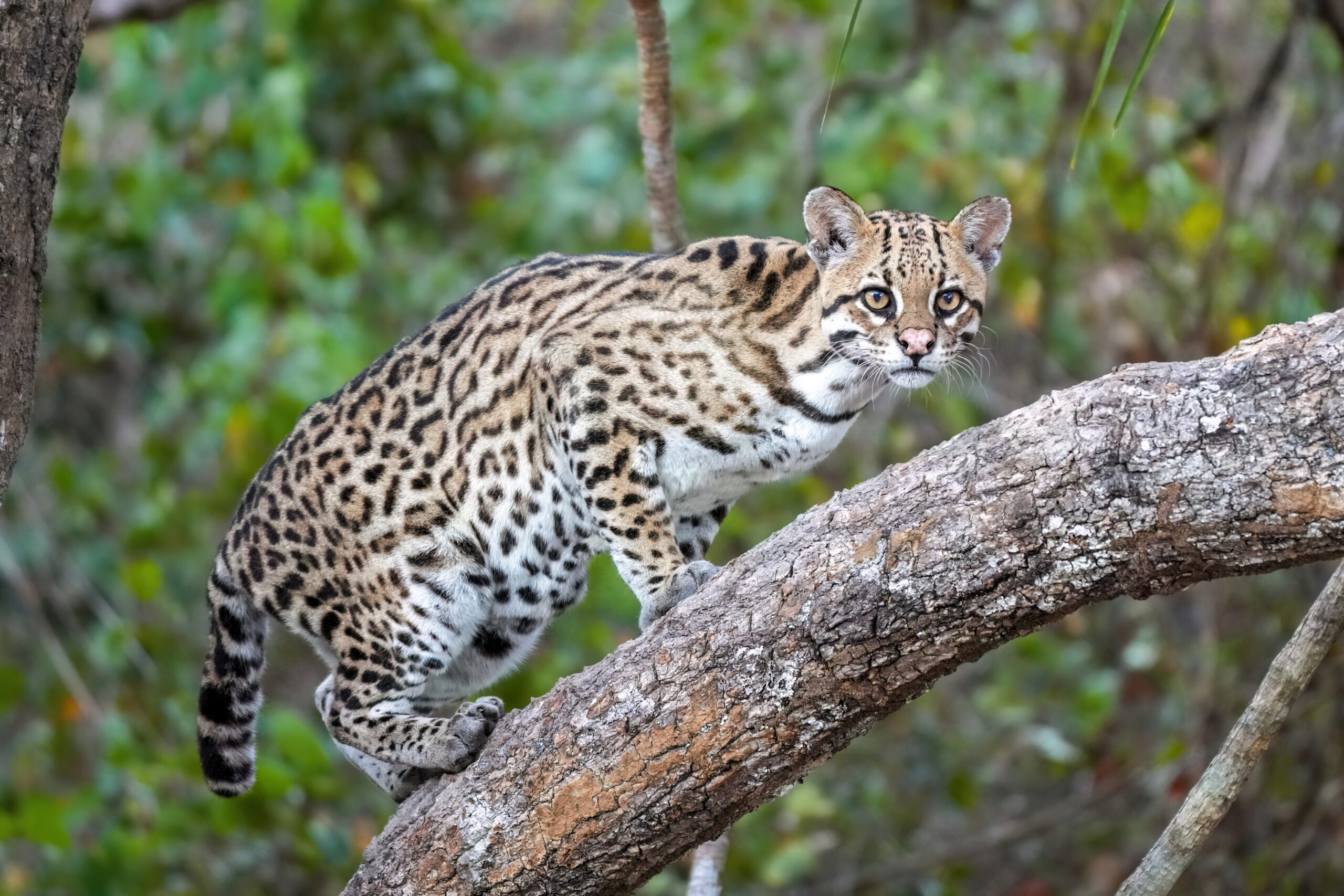 Photo Credit: Giles Laurent / Wikimedia Commons
In the heart of the lush tropical jungles of Central and South America, the ocelot, scientifically known as Leopardus pardalis, prowls with a grace that captivates all who are lucky enough to catch a glimpse. With its sleek, muscular body adorned in a mesmerizing coat of golden fur marked by dark rosettes and stripes, this wild cat is often referred to as the painted leopard. The ocelot’s striking appearance is not just for show; it serves as perfect camouflage among the dappled sunlight filtering through the dense canopy, allowing it to blend seamlessly into its vibrant surroundings.
Scientists and nature enthusiasts alike are drawn to the ocelot not only for its beauty but also for its intriguing behaviors and vital role in the ecosystem. As a skilled nocturnal hunter, the ocelot is most active during the twilight hours, using its keen senses to stalk small mammals, birds, and reptiles. This agile feline plays a crucial part in maintaining the balance of its habitat, controlling prey populations and contributing to the intricate web of life. With its fascinating adaptations and the mysteries of its life in the wild, the ocelot invites us to explore the wonders of nature and the delicate connections that sustain it.
The ocelot, a strikingly beautiful wild cat, occupies a special place in the animal kingdom. Taxonomically, it belongs to the Kingdom Animalia, Phylum Chordata, Class Mammalia, Order Carnivora, Family Felidae, and Genus Leopardus. This classification highlights its close relationship with other cats, such as lions and domestic cats, while also showcasing its unique adaptations. Ocelots are known for their stunning coat, which features a pattern of dark spots and stripes that help them blend into their forested habitats. This camouflage is essential for their survival as they hunt small mammals, birds, and reptiles in the wild.
| Taxonomic Rank | Scientific Name | Meaning & Significance |
|---|---|---|
| Kingdom | Animalia | This name signifies that ocelots are part of the vast group of multicellular organisms that are capable of movement and responsive to their environment. |
| Phylum | Chordata | Chordata means “having a notochord,” a flexible rod that supports the body. Ocelots, like all chordates, have a backbone, which is a key feature of their anatomy. |
| Class | Mammalia | Mammalia refers to mammals, which are warm-blooded animals that have fur or hair and produce milk to feed their young. Ocelots are part of this group, showcasing their nurturing side. |
| Order | Carnivora | Carnivora means “meat-eaters.” Ocelots are skilled hunters, using their sharp teeth and claws to catch prey, which is a defining characteristic of this order. |
| Family | Felidae | Felidae is the family of cats, known for their retractable claws and keen senses. Ocelots share this family with other big and small cats, emphasizing their predatory nature. |
| Genus | Leopardus | Leopardus is derived from the Latin word for leopard, highlighting the ocelot’s spotted coat, which resembles that of its larger relatives. |
The classification of the ocelot reveals much about its evolutionary journey. As a member of the Felidae family, it shares a common ancestor with other cats, which dates back millions of years. This lineage has allowed the ocelot to develop specific traits suited for its environment, such as its beautiful coat and hunting skills. Understanding where the ocelot fits in the tree of life not only helps us appreciate its role in the ecosystem but also underscores the importance of conserving its habitats, ensuring that this captivating species continues to thrive in the wild.
The evolutionary journey of the ocelot stretches back millions of years, weaving through the rich tapestry of the Felidae family, which includes all modern cats. This captivating feline, scientifically known as Leopardus pardalis, has its roots in the ancient ancestors of cats that roamed the Earth during the late Miocene epoch, around 10 million years ago. As the world changed, so did these early felids, adapting to new environments and challenges, leading to the ocelot we recognize today.
The ocelot’s ancestors were small, agile predators that thrived in diverse habitats, from dense forests to open grasslands. Over time, they developed key traits that would help them survive in various ecosystems. One significant transition was the development of a more specialized hunting technique, allowing them to stalk and ambush prey effectively. This shift was crucial as it enabled them to exploit a wider range of food sources, from small mammals to birds and reptiles. As the climate fluctuated and habitats transformed, these early cats adapted their physical features, such as their size and coat patterns, to blend into their surroundings, enhancing their stealth and hunting prowess.
These evolutionary adaptations have been vital for the ocelot’s survival in the wild. Their ability to camouflage allows them to ambush prey, while their agility helps them navigate complex environments. By being solitary, they minimize competition for resources, and their nocturnal lifestyle enables them to hunt when their prey is most vulnerable. Together, these traits have ensured that the ocelot remains a successful predator in the diverse ecosystems of Central and South America, showcasing the incredible power of evolution in shaping life on our planet.
The ocelot is a stunning wild cat that captures the imagination with its sleek, muscular body and striking patterns. With a graceful build, it typically weighs between 11.5 to 16 kilograms, or about 25 to 35 pounds. This medium-sized feline boasts a long, slender tail and powerful legs, making it an agile hunter in its natural habitat. Its overall appearance is both elegant and fierce, embodying the spirit of the wild.
| Feature | Description |
|---|---|
| Weight | 11.5 kg – 16 kg (25 lbs – 35 lbs) |
| Skin Type | Fur |
| Most Distinctive Feature | Rosettes, spots, and stripes on fur |
The ocelot’s fur is a masterpiece of nature, adorned with beautiful rosettes, spots, and stripes that serve a vital purpose. These patterns not only make the ocelot visually striking but also provide excellent camouflage in the dappled light of its forest home. This ability to blend into the surroundings helps the ocelot stalk its prey, whether it be small mammals or birds. Each feature of this feline is finely tuned for survival, showcasing the incredible adaptations that have evolved over time.
The ocelot thrives in a variety of habitats that paint a vivid picture of its life in the wild. Imagine lush tropical jungles filled with towering trees, vibrant plants, and a symphony of sounds from birds and insects. These dense forests provide the perfect cover for this elusive feline, allowing it to stalk its prey with stealth and grace. Ocelots can also be found in open grasslands and marshes, where they navigate through tall grasses and wetlands, showcasing their adaptability to different environments.
The climate where ocelots make their home is typically warm and humid, which is ideal for their survival. They prefer areas with plenty of vegetation, as this not only provides shelter but also abundant food sources. The tropical jungles offer a rich ecosystem filled with small mammals, birds, and reptiles, while grasslands and marshes provide a different set of hunting opportunities. These environments often experience seasonal rains, creating a lush landscape that supports a diverse range of wildlife.
To thrive in these varied habitats, ocelots have developed several remarkable adaptations. Their beautiful spotted coats not only serve as camouflage, helping them blend into the dappled light of the forest floor, but also allow them to remain hidden from both prey and potential threats. Ocelots are agile climbers, using their sharp claws to scale trees and escape danger or to hunt birds and small mammals. Their keen senses of sight and hearing make them excellent nocturnal hunters, allowing them to navigate and thrive in the shadows of their vibrant homes.
The ocelot leads a life that is both intriguing and strategic, primarily active during the twilight hours of dusk and dawn. This nocturnal and crepuscular lifestyle means that it prefers to hunt and explore when the world is dimly lit, allowing it to blend into its surroundings. During the day, ocelots often find a cozy spot to rest, camouflaged among the foliage or nestled in the underbrush. As night falls, they become alert and agile, prowling through their territory in search of small mammals, birds, and reptiles to satisfy their hunger.
While ocelots are solitary animals, they do have interesting social behaviors that help them navigate their world. Each ocelot establishes its own territory, which it marks with scent markings to communicate with others. These markings serve as a way to signal to other ocelots that the area is occupied, helping to avoid confrontations. Although they prefer to be alone, ocelots may occasionally cross paths with others, especially during mating season. Their interactions are often brief, as they respect each other’s space and maintain a certain distance.
| Behavior Type | Description |
|---|---|
| Activity Patterns | Ocelots are primarily nocturnal and crepuscular, meaning they are most active during the night and twilight hours. |
| Social Structure | Ocelots are solitary animals, each maintaining its own territory to avoid competition for resources. |
| Communication Methods | They use scent markings to communicate territory boundaries and may also vocalize to signal their presence to others. |
The behaviors of the ocelot are finely tuned to ensure its survival in the wild. By being active during the quieter hours of the day, it can hunt more effectively while avoiding larger predators. Its solitary nature allows it to minimize competition for food, while its keen sense of smell and ability to communicate through scent markings help it navigate its territory. Together, these behaviors create a well-adapted lifestyle that enables the ocelot to thrive in its diverse habitats.
The ocelot is a carnivore, which means it primarily eats meat. This agile feline has a varied diet that includes small mammals, birds, and reptiles. Ocelots are skilled hunters, using their keen senses and stealthy movements to stalk and ambush their prey. They often hunt alone, relying on their sharp eyesight and acute hearing to locate food, especially during the twilight hours when they are most active.
| Dietary Aspect | Details |
|---|---|
| Diet Type | Carnivore |
| Favorite Foods | Rodents, lizards, and small deer |
| Prey Items | Small mammals, birds, and reptiles |
| Hunting Strategies | Stalking and ambushing prey, primarily at dusk and dawn |
This diet plays a crucial role in the ocelot’s ecology and daily routine. By preying on a variety of animals, ocelots help maintain the balance of their ecosystems, controlling rodent populations and influencing the dynamics of their habitats. Their solitary hunting behavior allows them to adapt to different environments, ensuring they can find food even in challenging conditions. This adaptability not only shapes their survival but also enriches the biodiversity of the areas they inhabit.
When it comes to mating, ocelots are quite the romantic adventurers! Their breeding season typically peaks during the warmer months, when food is plentiful and the nights are filled with the sounds of nature. During this time, males will often engage in vocalizations and scent-marking to attract females. Once a female is ready to mate, she will signal her interest through specific behaviors, and the pair will engage in a courtship that can last several days. This dance of love is not just about finding a partner; it’s also about ensuring the survival of their future kittens.
| Reproductive Aspect | Details |
|---|---|
| Gestation Period | 79 – 85 days |
| Average Litter Size | 2 |
| Age of Sexual Maturity | 2 – 3 years |
| Name of Young | Kitten |
Once the kittens are born, the mother ocelot takes on the role of a dedicated caregiver. She will find a safe, secluded den, often in dense vegetation, to protect her young from potential threats. The kittens are born blind and helpless, relying entirely on their mother for warmth, food, and protection. As they grow, the mother teaches them essential survival skills, such as hunting and climbing. By the time they reach about two to three months old, the kittens begin to explore their surroundings, gradually gaining independence. This nurturing phase is crucial, as it helps shape them into the skilled hunters they will become as adults, ready to take on the world just like their mother.
The ocelot plays a vital role in its ecosystem, sitting comfortably in the middle of the food web. As a skilled predator, it helps control populations of small mammals, birds, and reptiles. However, this beautiful feline faces several dangers that threaten its survival, making it a crucial species to protect.
To defend itself against these threats, the ocelot has developed several clever survival strategies. Its excellent camouflage, with spots and stripes that blend into the dappled light of the forest, allows it to remain hidden from both predators and prey. Additionally, ocelots are solitary animals, which means they often avoid confrontations by staying out of sight. Their agility and stealth make them exceptional hunters, allowing them to thrive even in challenging environments. By understanding these dangers and the ocelot’s remarkable adaptations, we can appreciate the importance of conserving their habitats and ensuring their survival in the wild.
A keystone species is an organism that has a disproportionately large impact on its environment relative to its abundance. In simpler terms, if you remove a keystone species, the entire ecosystem can change dramatically. The ocelot, with its role as a predator in various habitats, qualifies as a keystone species. By maintaining the balance of its ecosystem, the ocelot helps ensure that many other species can thrive.
Ocelots are solitary hunters that primarily feed on small mammals, birds, and reptiles. This diet is crucial for controlling the populations of these animals. For instance, by preying on rodents, ocelots help prevent overpopulation, which can lead to the depletion of vegetation and other resources. In tropical jungles, where ocelots roam, their hunting habits can influence the distribution of prey species, allowing plants and other animals to flourish in a balanced environment.
Moreover, ocelots contribute to the health of their ecosystems by serving as indicators of environmental quality. Because they require large territories and specific habitats, the presence of ocelots often signals a healthy ecosystem. When ocelots thrive, it suggests that their habitat is rich in biodiversity and resources, benefiting countless other species that share their environment.
If ocelots were to disappear from their habitats, the consequences could be severe. Without these skilled predators, populations of small mammals and birds could explode, leading to overgrazing and depletion of vegetation. This imbalance would ripple through the ecosystem, affecting not just the plants and animals that share the ocelot’s home, but also the larger predators that rely on those smaller species for food. The loss of ocelots would ultimately disrupt the intricate web of life, highlighting just how vital they are to their ecosystems.
The ocelot plays a crucial role in its ecosystem, acting as both a predator and a participant in the intricate web of life. Found in tropical jungles, grasslands, and marshes, this agile feline helps maintain the balance of its environment. By preying on small mammals, birds, and reptiles, the ocelot influences the populations of these species, ensuring that no single group becomes too dominant. This balance is essential for the health of the ecosystem, as it allows for a diverse range of plants and animals to thrive.
| Ecosystem Service | Impact |
|---|---|
| Population Control | Regulates numbers of prey species, preventing overpopulation. |
| Seed Dispersal | Indirectly aids in plant reproduction by dispersing seeds through its diet. |
| Habitat Maintenance | Encourages biodiversity by supporting a variety of species in its territory. |
| Food Source for Other Predators | Serves as prey for larger predators, contributing to the food web. |
The ocelot’s influence can be seen in specific examples throughout its habitat. For instance, by hunting small mammals like rodents, the ocelot helps keep their populations in check. This is important because too many rodents can lead to overgrazing of vegetation, which can harm plant life and disrupt the entire ecosystem. Additionally, as ocelots consume fruits and plants while hunting, they may inadvertently help with seed dispersal, allowing new plants to grow in different areas. This process supports the growth of diverse plant species, which in turn provides food and shelter for other animals.
The broader ecological importance of the ocelot cannot be overstated. As a keystone species, its presence is vital for maintaining the health and stability of its ecosystem. Without ocelots, the balance of predator and prey would be disrupted, leading to potential declines in biodiversity. This beautiful wild cat not only enriches its environment but also serves as a reminder of the interconnectedness of all living things. By protecting the ocelot and its habitat, we help ensure a thriving ecosystem for generations to come.
In the vibrant world of nature, animals often form intricate relationships that can be classified into different types, such as mutualism, commensalism, and parasitism. These relationships, known as symbiosis, highlight the interconnectedness of life. For instance, mutualistic relationships benefit both species involved, while commensal relationships help one species without harming the other. Parasitic relationships, on the other hand, benefit one species at the expense of another. The ocelot, a solitary and skilled predator, interacts with various species in its tropical jungle, grassland, and marsh habitats, showcasing the diverse ways life can intertwine.
| Species/Type | Relationship Type | Description |
|---|---|---|
| Birds (e.g., oxpeckers) | Commensal | Ocelots may share their habitat with birds that feed on parasites found on their fur. The birds benefit by getting a meal, while the ocelots are not significantly affected. |
| Small mammals (e.g., rodents) | Predatory | Ocelots hunt small mammals, which are crucial for their diet. This relationship is predatory, where the ocelot benefits by obtaining food, while the small mammals are harmed. |
| Plants (e.g., trees and shrubs) | Mutualistic | Ocelots rely on dense vegetation for cover while hunting. In return, their movement through these plants can help disperse seeds, benefiting the plant species. |
These relationships have evolved over time, shaped by the needs and behaviors of the species involved. The ocelot’s role as a predator helps maintain the balance of its ecosystem, while its interactions with other species can promote biodiversity. By sharing their habitat with birds and relying on plants for cover, ocelots contribute to a dynamic web of life that supports various organisms. Understanding these connections not only highlights the ocelot’s importance in its environment but also reminds us of the delicate balance that sustains all life on Earth.
The ocelot is a captivating wild cat that often surprises those who take the time to learn about it. With its striking appearance and intriguing behaviors, this feline is more than just a pretty face in the animal kingdom.
The ocelot has long been a source of fascination for humans, woven into the cultural fabric of many societies. Historically, these beautiful cats have appeared in folklore and art, symbolizing mystery and grace. Indigenous peoples in Central and South America revered the ocelot, often associating it with strength and agility. Their striking coat, marked with rosettes and stripes, has made them a target for the fashion industry, leading to their portrayal as exotic and desirable. This connection between ocelots and humanity has evolved over time, reflecting our changing attitudes toward wildlife and conservation.
In contemporary times, the relationship between ocelots and humans is complex. While many people admire these cats and support conservation efforts, habitat destruction and poaching remain significant threats. Ocelots are often caught in the crossfire of human expansion, as their natural habitats are cleared for agriculture and urban development. Some communities have embraced ocelots as symbols of wildlife conservation, promoting eco-tourism that allows people to observe these elusive cats in their natural environment. However, conflicts can arise when ocelots prey on livestock, leading to tensions between farmers and wildlife advocates.
As we look to the future, the relationship between ocelots and humanity holds both promise and challenges. Increased awareness of the importance of biodiversity and the role of keystone species like the ocelot can lead to more effective conservation strategies. By fostering a deeper understanding of these magnificent cats, we can work towards a harmonious coexistence that benefits both wildlife and human communities. The journey ahead will require collaboration, education, and a commitment to preserving the natural world for generations to come.
The ocelot, a stunning wild cat known for its beautiful coat and agile movements, currently holds a conservation status of “Least Concern.” This means that, overall, the species is not facing immediate extinction threats. With an estimated population size of around 800,000 individuals, ocelots are relatively abundant compared to many other wildlife species. However, while their numbers are stable, ongoing monitoring is essential to ensure they remain safe in their natural habitats.
| Conservation Factor | Status/Details |
|---|---|
| IUCN Status | Least Concern |
| Estimated Population Size | Approximately 800,000 |
| Population Trend | Stable |
Despite their current stable status, ocelots face several significant threats that could impact their future. Habitat loss is one of the most pressing issues, as forests and wetlands are cleared for agriculture and urban development. This not only reduces the space where ocelots can live and hunt but also fragments their populations, making it harder for them to find mates. Additionally, poaching and illegal wildlife trade pose risks, as these beautiful cats are sometimes hunted for their striking fur.
Conservation efforts are underway to protect ocelots and their habitats. Organizations are working to preserve and restore natural areas, ensuring that ocelots have the space they need to thrive. Education programs are also being implemented to raise awareness about the importance of these wild cats and the ecosystems they inhabit. With continued efforts and support, the outlook for ocelots remains hopeful, allowing future generations to appreciate these magnificent felines in the wild.
| Question | Answer |
|---|---|
| What is the habitat of the Ocelot? | Ocelots are found in a variety of habitats, including tropical jungles, grasslands, and marshes. They prefer areas with dense vegetation that provide cover for hunting and resting. |
| What do Ocelots eat? | Ocelots are carnivores, which means they primarily eat meat. Their diet includes small mammals, birds, reptiles, and even fish, showcasing their adaptability as hunters. |
| How do Ocelots behave in the wild? | Ocelots are mostly solitary animals, meaning they like to live alone except during mating season or when a mother is raising her young. They are also nocturnal, which means they are most active at night, using their keen senses to hunt. |
| How do Ocelots reproduce? | Ocelots typically mate once a year, and after a gestation period of about 70 to 80 days, the female gives birth to one to three kittens. The mother takes care of her young for several months, teaching them essential survival skills. |
| What threats do Ocelots face? | While Ocelots are currently listed as Least Concern, they still face threats from habitat loss due to deforestation and human encroachment. Additionally, they are sometimes hunted for their beautiful fur. |
| What are some interesting characteristics of Ocelots? | One of the most distinctive features of Ocelots is their beautiful coat, which is covered in rosettes, spots, and stripes. This unique pattern helps them blend into their surroundings, making them excellent hunters. |
| How do Ocelots communicate? | Ocelots communicate through a variety of vocalizations, including growls, meows, and purrs. They also use scent marking to establish territory and communicate with other Ocelots. |