Taxonomy & Classification
- Kingdom
- Animalia
- Phylum
- Chordata
- Class
- Aves
- Order
- Charadriiformes
- Family
- Jacanidae
- Genus
- Hydrophasianus
- Species
- Hydrophasianus chirurgus

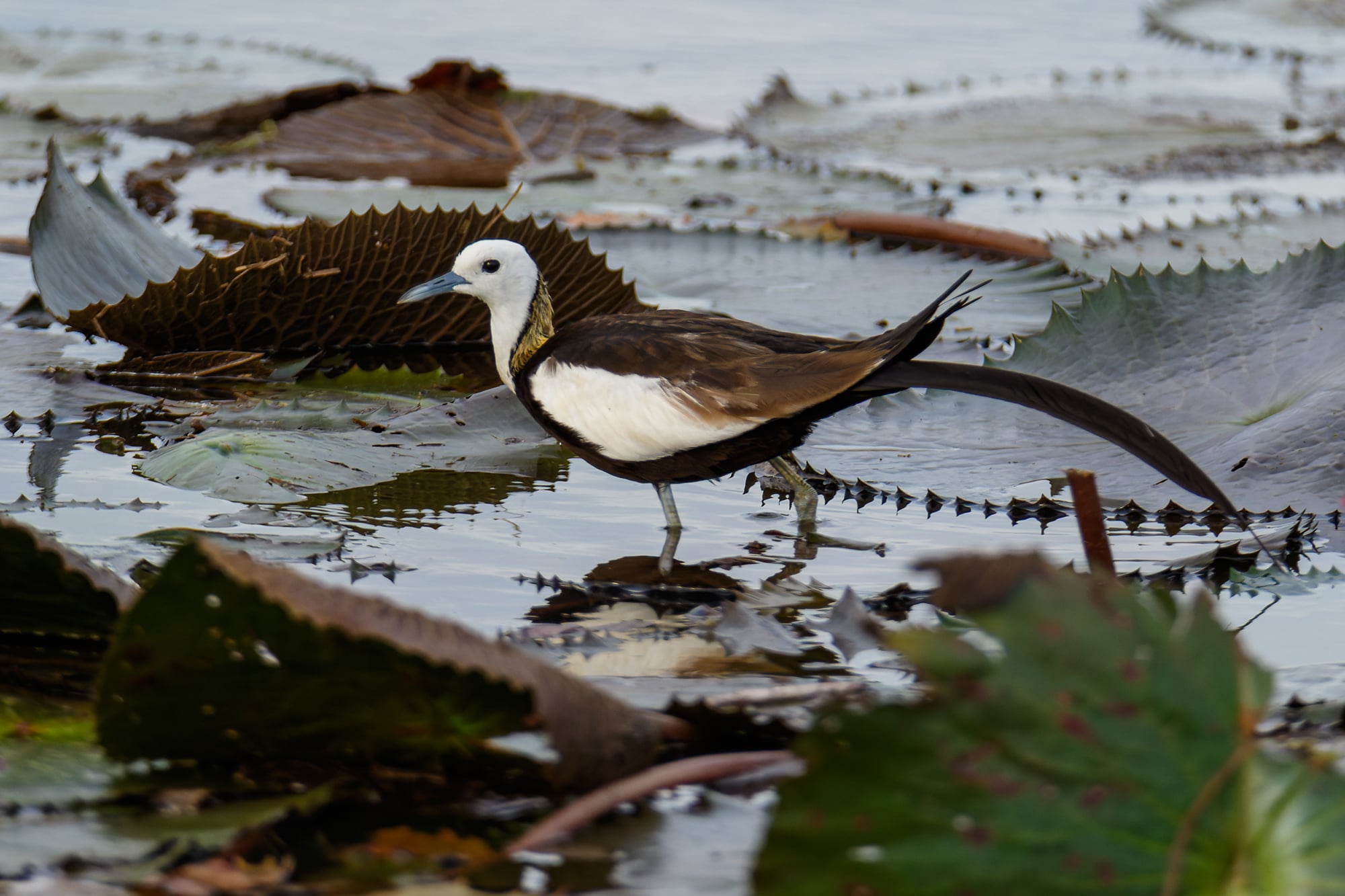 Photo Credit: MPF / Wikimedia Commons
In the shimmering wetlands of South Asia, the Pheasant-tailed Jacana, or Hydrophasianus chirurgus, glides gracefully across the water’s surface, its long, elegant tail trailing behind like a feathered ribbon. With striking white wings tipped in black and a vibrant chestnut body, this bird is a true spectacle of nature. As it navigates the lush landscape of floating vegetation, the jacana’s unique adaptations allow it to walk on lily pads and other delicate surfaces, making it a master of its watery domain.
What makes the Pheasant-tailed Jacana particularly captivating to scientists and nature enthusiasts alike is not just its stunning appearance, but also its intriguing behaviors. During the breeding season, males perform elaborate courtship displays, showcasing their vibrant plumage and acrobatic skills to attract females. This dynamic dance is a testament to the jacana’s role in its ecosystem, where it helps maintain the balance of life in the wetlands. As we explore the world of the Pheasant-tailed Jacana, we will uncover the secrets of its habitat, diet, and the vital role it plays in the intricate web of life that thrives in these enchanting wetlands.
The Pheasant-tailed Jacana is a captivating bird that occupies a special place in the animal kingdom. Taxonomically, it belongs to the Kingdom Animalia, Phylum Chordata, Class Aves, Order Charadriiformes, Family Jacanidae, and Genus Hydrophasianus. What sets this bird apart is its striking appearance and remarkable adaptations for life in wetland habitats. With its long toes and elongated tail feathers, the Pheasant-tailed Jacana is perfectly designed for walking on floating vegetation, a skill that few birds possess. This unique ability allows it to thrive in marshy environments, where it forages for insects and seeds while gracefully navigating the water’s surface.
| Taxonomic Rank | Scientific Name | Meaning & Significance |
|---|---|---|
| Kingdom | Animalia | This name signifies that the Pheasant-tailed Jacana is part of the vast group of multicellular organisms that are primarily heterotrophic, meaning they consume other organisms for energy. |
| Phylum | Chordata | Chordata refers to animals that have a notochord, a flexible rod that supports the body. In birds, this structure is replaced by a backbone, which is crucial for their flight and mobility. |
| Class | Aves | Aves is the class that includes all birds. This classification highlights the Pheasant-tailed Jacana’s feathers, beak, and ability to lay eggs, which are key characteristics of birds. |
| Order | Charadriiformes | This order includes shorebirds and waders. The Pheasant-tailed Jacana’s lifestyle in wetlands connects it to other birds that share similar habitats and feeding behaviors. |
| Family | Jacanidae | Jacanidae is the family of jacanas, known for their long toes and unique adaptations for walking on water plants. This name reflects their specialized lifestyle in aquatic environments. |
| Genus | Hydrophasianus | Hydrophasianus combines Greek roots meaning “water” and “to appear,” emphasizing the jacana’s affinity for watery habitats and its striking presence among the reeds and lilies. |
The classification of the Pheasant-tailed Jacana reveals much about its evolutionary journey. As a member of the Charadriiformes order, it shares a lineage with other shorebirds, indicating a long history of adaptation to wetland ecosystems. Its unique physical traits, such as long toes and a distinctive tail, have evolved to enhance its survival in these environments. This bird’s ability to walk on floating vegetation not only showcases its specialized adaptations but also highlights the intricate relationships between species and their habitats throughout evolutionary time. Understanding its place in the tree of life helps us appreciate the diversity and complexity of avian life on our planet.
The Pheasant-tailed Jacana, a striking bird known for its long, elegant tail and vibrant plumage, has a rich evolutionary history that stretches back millions of years. This bird belongs to the family Jacanidae and the genus Hydrophasianus, which have adapted to life in wetland habitats across South Asia. The evolutionary journey of the Pheasant-tailed Jacana is a tale of adaptation and survival, shaped by the challenges of its environment.
The ancestors of the Pheasant-tailed Jacana were likely small, wading birds that inhabited marshy areas. Over time, these birds underwent significant changes to thrive in their aquatic surroundings. One major transition was the development of long, slender toes that allow them to walk on floating vegetation without sinking. This adaptation is crucial for navigating the often unstable surfaces of their wetland homes. Additionally, their striking coloration evolved as a means of attracting mates, with males displaying vibrant feathers during the breeding season to impress females.
The adaptations of the Pheasant-tailed Jacana have been vital for its survival in the dynamic ecosystems of wetlands. Their long toes enable them to exploit floating vegetation, while their vibrant colors enhance reproductive success. With strong flight capabilities and a flexible diet, these birds can navigate the challenges of their environment, ensuring their place in the rich tapestry of avian life. As they continue to thrive, the Pheasant-tailed Jacana stands as a testament to the power of evolution in shaping life on Earth.
The Pheasant-tailed Jacana is a stunning sight to behold, with its graceful form and eye-catching colors. This bird has a slender body that measures about 10 to 12 inches long, making it a medium-sized member of the avian world. Its most striking feature is its long, flowing tail, which resembles that of a peacock, giving it an air of elegance as it glides over the water. The jacana’s legs are long and spindly, perfectly adapted for walking on floating vegetation, allowing it to navigate its wetland habitat with ease.
| Feature | Description |
|---|---|
| Weight | 4 to 7 ounces |
| Skin Type | Feathers |
| Most Distinctive Feature | White wings with black tips |
The Pheasant-tailed Jacana’s features work together beautifully to enhance its survival in wetland environments. Its lightweight body and long legs allow it to walk on lily pads and other floating plants without sinking, while its striking white wings with black tips help it blend into the dappled light of its habitat. This camouflage is crucial for avoiding predators, while its vibrant colors attract potential mates during the breeding season. Together, these adaptations make the Pheasant-tailed Jacana not just a visual delight, but a master of its watery domain.
The Pheasant-tailed Jacana thrives in the lush, vibrant world of freshwater wetlands. Imagine a landscape dotted with shimmering ponds and marshy areas, where tall grasses sway gently in the breeze. These wetlands are alive with the sounds of chirping insects and the rustle of leaves, creating a perfect backdrop for this elegant bird. The jacana glides gracefully over the water, its long toes allowing it to walk on floating vegetation, making it a master of its watery domain.
The climate in these regions is typically warm and humid, providing the ideal conditions for the jacana’s habitat. Wetlands flourish in areas with abundant rainfall, which helps create the shallow waters and rich plant life that the jacana needs. These environments are often teeming with life, from colorful fish to buzzing insects, all contributing to a vibrant ecosystem. The jacana enjoys a tropical climate, where temperatures remain mild throughout the year, allowing it to thrive without the stress of extreme weather.
To adapt to its specific habitat, the Pheasant-tailed Jacana has developed some fascinating traits. Its long, slender toes act like natural snowshoes, enabling it to walk on delicate lily pads and other floating plants without sinking. This adaptation not only helps it find food but also provides a safe place to nest away from predators. With its striking plumage and unique behaviors, the jacana is perfectly suited to life in the wetlands, showcasing the beauty of nature’s design.
The Pheasant-tailed Jacana leads a lively and engaging daily life, filled with activities that reflect its vibrant personality. As a diurnal bird, it rises with the sun, flitting across the shimmering waters of its wetland habitat. Throughout the day, you can find it foraging for food, which mainly consists of insects and plant matter. With its long toes, this bird walks gracefully on floating vegetation, expertly balancing as it searches for tasty morsels. The Pheasant-tailed Jacana is also known for its striking courtship displays, where males perform elaborate dances to attract females, showcasing their colorful plumage and impressive tail feathers.
Social behavior plays a significant role in the life of the Pheasant-tailed Jacana. These birds are often seen in small groups, where they engage in playful interactions and establish social bonds. Their group dynamics are fascinating; they communicate through a variety of calls and body language, which helps maintain harmony within the flock. During breeding season, males may become more territorial, defending their chosen nesting sites while still participating in group activities. This social structure not only enhances their chances of finding mates but also provides safety in numbers against potential predators.
| Behavior Type | Description |
|---|---|
| Foraging | Pheasant-tailed Jacanas search for insects and plant matter while walking on floating vegetation. |
| Social Interaction | They often gather in small groups, engaging in playful behaviors and establishing bonds. |
| Communication | These birds use a mix of calls and body language to communicate with each other. |
| Courtship Displays | Males perform elaborate dances to attract females, showcasing their vibrant plumage. |
| Territorial Behavior | During breeding season, males defend nesting sites while still participating in group activities. |
The behaviors of the Pheasant-tailed Jacana are not just for show; they are essential for survival. By foraging in groups, these birds increase their chances of finding food while also keeping an eye out for predators. Their social interactions help strengthen bonds that are crucial during breeding, ensuring that they can raise their young in a safe environment. The combination of their striking displays and cooperative behaviors creates a dynamic lifestyle that allows the Pheasant-tailed Jacana to thrive in its watery world.
The Pheasant-tailed Jacana has a diverse diet that primarily consists of small aquatic creatures and plant matter. This bird is a carnivore, meaning it mainly eats meat, but it also enjoys a variety of seeds. The jacana forages in shallow waters, using its long toes to walk on floating vegetation, which allows it to reach its food without sinking. With a keen eye, it spots insects, small fish, snails, and even crabs, snatching them up with quick, precise movements.
| Dietary Aspect | Details |
|---|---|
| Diet Type | Carnivore |
| Favorite Foods | Insects, small fish, snails, worms, crabs, mollusks, and seeds |
| Prey Items | Insects, small fish, snails, crabs, and mollusks |
| Hunting/Foraging Strategies | Forages in shallow waters, walks on floating vegetation, and uses keen eyesight to spot prey |
This varied diet plays a crucial role in the Pheasant-tailed Jacana’s ecology and daily routine. By feeding on a mix of aquatic animals and plant seeds, it helps maintain the balance of its wetland habitat. The jacana’s foraging behavior not only supports its own health but also contributes to the overall ecosystem, as it helps control insect populations and disperses plant seeds. This interconnectedness highlights the importance of each species in the vibrant tapestry of life in wetlands.
During the breeding season, which typically occurs in the warmer months, the Pheasant-tailed Jacana engages in a captivating courtship display. Males are known for their elaborate performances, showcasing their striking plumage and long tails to attract females. These displays often involve intricate dances and vocalizations, creating a vibrant spectacle in their wetland habitats. Once a female selects a mate, they form a bond that leads to nesting and raising their young together.
| Reproductive Aspect | Details |
|---|---|
| Gestation Period | Approximately 3 weeks |
| Litter Size | 3 to 5 eggs |
| Age of Maturity | 2 years |
| Name of Young | Chicks |
After the eggs hatch, the Pheasant-tailed Jacana parents take on the important role of caring for their chicks. These young birds are precocial, meaning they are relatively mature and mobile shortly after hatching. They can leave the nest and begin foraging for food almost immediately, guided by their attentive parents. The adults continue to protect and teach their chicks until they are fully capable of fending for themselves, which usually occurs as they approach maturity at around two years old. This nurturing process is vital for the survival of the young, ensuring they develop into strong, independent adults ready to thrive in their wetland homes.
The Pheasant-tailed Jacana plays a vital role in its ecosystem, often found in the wetlands of South Asia. As a medium-sized bird, it occupies a niche in the food web where it feeds on small aquatic creatures and plant matter. This diet places it in a position where it is both a predator of tiny organisms and prey for larger animals. Understanding its place in the food web helps us appreciate the delicate balance of life in its wetland habitat.
To survive against these threats, the Pheasant-tailed Jacana has developed several clever strategies. Its long legs allow it to walk on floating vegetation, making it difficult for predators to reach. When danger approaches, it often relies on its ability to blend into the environment, using its colorful plumage as camouflage among the vibrant plants. Additionally, this bird is known for its quick flight, which helps it escape from aerial threats. By staying alert and using its natural defenses, the Pheasant-tailed Jacana continues to thrive in its watery world.
A keystone species is an organism that has a disproportionately large impact on its environment relative to its abundance. This means that if a keystone species were to disappear, the entire ecosystem could change dramatically. The Pheasant-tailed Jacana, with its unique role in freshwater wetlands, qualifies as a keystone species. Its presence influences the dynamics of its habitat, making it an essential player in maintaining ecological balance.
The Pheasant-tailed Jacana thrives in lush wetlands, where it forages for small aquatic creatures and plant matter. By feeding on these organisms, it helps control their populations, preventing any one species from overwhelming the ecosystem. This bird also plays a crucial role in seed dispersal. As it moves through the wetlands, it consumes seeds and then excretes them in different locations, promoting plant diversity. This process is vital for the health of the wetland, as diverse plant life supports various other species, from insects to larger mammals.
Moreover, the Pheasant-tailed Jacana is a social bird, often seen in groups. This behavior not only enhances its foraging efficiency but also provides safety in numbers. When they gather, they create a lively atmosphere that attracts other wildlife, contributing to the overall biodiversity of the area. Their courtship displays, characterized by elaborate dances, also play a role in attracting mates and ensuring the continuation of their species, which is essential for maintaining the population balance in their habitat.
If the Pheasant-tailed Jacana were to vanish from its habitat, the consequences could be severe. Without this bird, the populations of small aquatic creatures could surge, leading to overgrazing of plant life. This imbalance would reduce plant diversity, which in turn would affect the many species that rely on those plants for food and shelter. The wetlands could become less vibrant and less resilient, ultimately altering the entire ecosystem. The loss of the Pheasant-tailed Jacana would not just mean the disappearance of a beautiful bird; it would signal a significant shift in the delicate balance of life within its watery home.
The Pheasant-tailed Jacana is a fascinating bird that plays a crucial role in its freshwater wetland habitat. This vibrant species thrives in areas filled with shallow ponds and marshy landscapes, where it forages for food and raises its young. By occupying this ecological niche, the Pheasant-tailed Jacana helps maintain the balance of its environment, influencing both plant and animal life in significant ways.
| Ecosystem Service | Impact |
|---|---|
| Seed Dispersal | Helps spread aquatic plant seeds, promoting plant diversity. |
| Prey Regulation | Controls populations of small aquatic creatures, maintaining a balanced food web. |
| Habitat Creation | Encourages the growth of vegetation in wetlands, providing shelter for other species. |
The Pheasant-tailed Jacana influences its ecosystem in several specific ways. For instance, as it walks on floating vegetation, it inadvertently helps to disperse seeds of various aquatic plants. This not only supports the growth of these plants but also creates a rich habitat for other wildlife. Additionally, by feeding on small aquatic animals, such as insects and crustaceans, the jacana helps regulate their populations, ensuring that no single species overwhelms the ecosystem. This balance is vital for the health of the wetland environment.
The broader ecological importance of the Pheasant-tailed Jacana cannot be overstated. As a keystone species, its presence is essential for the stability of the wetland ecosystem. If this bird were to disappear, the effects would ripple through the food web, potentially leading to overpopulation of certain species and a decline in plant diversity. By supporting both plant and animal life, the Pheasant-tailed Jacana helps maintain the intricate web of life that characterizes these vibrant ecosystems, showcasing the interconnectedness of all living things.
In the intricate web of life, symbiosis refers to the close and often long-term interactions between different species. These relationships can take many forms, including mutualism, where both species benefit, parasitism, where one benefits at the expense of the other, and commensalism, where one benefits while the other is neither helped nor harmed. The Pheasant-tailed Jacana, a striking bird of the wetlands, engages in various ecological relationships that highlight the interconnectedness of life in its habitat.
| Species/Type | Relationship Type | Description |
|---|---|---|
| Water Hyacinth | Mutualistic | The Pheasant-tailed Jacana often nests among the floating leaves of water hyacinth, which provides safety from predators while the plant benefits from the nutrients in the bird’s droppings. |
| Small Fish | Commensal | As the jacana forages in shallow waters, it stirs up sediment, making it easier for small fish to find food. The fish benefit from this disturbance, while the jacana is unaffected. |
| Snakes | Parasitic | While not a direct relationship, snakes may prey on the eggs of the jacana, illustrating the challenges the bird faces in its environment. This relationship is detrimental to the jacana. |
The evolution of these relationships showcases the dynamic nature of ecosystems. Over time, the Pheasant-tailed Jacana has adapted to thrive in its wetland habitat, forming partnerships that enhance its survival. By nesting among water hyacinths, it not only secures a safe place for its young but also contributes to the health of the plant. Meanwhile, the interactions with small fish highlight how species can benefit from each other in unexpected ways. Understanding these connections helps us appreciate the delicate balance of nature and the importance of preserving these vibrant ecosystems.
The Pheasant-tailed Jacana is a stunning bird that captivates anyone lucky enough to spot it in its natural habitat. With its striking appearance and fascinating behaviors, this bird is full of surprises that even seasoned nature enthusiasts might not know.
The Pheasant-tailed Jacana has long been a source of intrigue and admiration for humans, particularly in regions where it resides, such as South Asia. Historically, this bird has been featured in local folklore and art, symbolizing beauty and grace. Its striking appearance and unique behaviors have inspired stories and cultural expressions, making it a beloved figure in the communities that share its wetland habitat. The jacana’s ability to walk on floating vegetation, thanks to its long toes, has often been seen as a metaphor for navigating life’s challenges, resonating deeply with human experiences.
In contemporary times, the relationship between the Pheasant-tailed Jacana and humanity has evolved, reflecting both cooperation and conflict. Conservation efforts are underway to protect the wetlands that serve as the jacana’s home, as these ecosystems face threats from urban development and pollution. However, conflicts can arise when agricultural practices encroach on these habitats, leading to habitat loss for the jacana. While domestication is not a factor for this wild bird, its presence in wetlands often draws the attention of birdwatchers and nature enthusiasts, fostering a growing appreciation for its role in the ecosystem.
As we look to the future, the relationship between the Pheasant-tailed Jacana and humanity holds promise. With increased awareness of environmental issues, there is hope for stronger conservation initiatives that protect both the jacana and its wetland habitat. By fostering a deeper understanding of this bird’s ecological role, we can work together to ensure that future generations will continue to marvel at its beauty and grace. The journey ahead will require collaboration, respect for nature, and a commitment to preserving the delicate balance of our shared ecosystems.
The Pheasant-tailed Jacana is currently classified as “Least Concern” by the International Union for Conservation of Nature (IUCN). This means that, at present, the species is not facing an immediate threat of extinction. However, its population is estimated to be less than 100,000 individuals, which raises some concerns about its long-term viability. While the overall trend appears stable, ongoing monitoring is essential to ensure that this beautiful bird continues to thrive in its wetland habitats.
| Conservation Factor | Status/Details |
|---|---|
| IUCN Status | Least Concern |
| Estimated Population Size | Less than 100,000 |
| Population Trend | Stable |
The main threats to the Pheasant-tailed Jacana stem from habitat loss and degradation. Wetlands, where these birds thrive, are often drained for agriculture or urban development. Pollution from agricultural runoff can also harm the delicate ecosystems that support their food sources. Additionally, climate change poses a significant risk, as rising temperatures and altered rainfall patterns can disrupt the wetland habitats that are crucial for their survival.
Conservation efforts are underway to protect the Pheasant-tailed Jacana and its habitat. Organizations are working to raise awareness about the importance of wetlands and the species that depend on them. By promoting sustainable land-use practices and restoring degraded wetlands, conservationists aim to create a safer environment for these striking birds. With continued efforts and public support, the outlook for the Pheasant-tailed Jacana remains hopeful, ensuring that future generations can enjoy the sight of this elegant bird gliding across the water.
| Question | Answer |
|---|---|
| What is the habitat of the Pheasant-tailed Jacana? | The Pheasant-tailed Jacana thrives in freshwater wetlands, which are areas where water covers the soil for part of the year. These habitats provide the perfect environment for the jacana to find food and build nests among the floating vegetation. |
| What does the Pheasant-tailed Jacana eat? | This bird is a carnivore, meaning it primarily eats small insects and other invertebrates. It forages by walking on lily pads and other floating plants, using its long toes to help it balance and avoid sinking. |
| How does the Pheasant-tailed Jacana behave? | Pheasant-tailed Jacanas are known for their unique walking style, which allows them to move gracefully across the water's surface. They are also quite social and can often be seen in small groups, especially during feeding times. |
| How does the Pheasant-tailed Jacana reproduce? | During the breeding season, male Pheasant-tailed Jacanas perform elaborate courtship displays to attract females. After mating, the female lays eggs in a nest built on floating vegetation, and the male takes on the role of incubating the eggs and caring for the chicks. |
| What threats do Pheasant-tailed Jacanas face? | While the Pheasant-tailed Jacana is currently listed as Least Concern, it still faces threats from habitat destruction and pollution. Wetland drainage for agriculture and urban development can reduce their living space and food sources. |
| What is an interesting characteristic of the Pheasant-tailed Jacana? | One of the most distinctive features of the Pheasant-tailed Jacana is its striking white wings with black tips. This beautiful coloration not only makes them stand out but also plays a role in their courtship displays. |
| Are Pheasant-tailed Jacanas migratory? | Pheasant-tailed Jacanas are generally not migratory birds. They tend to stay in their preferred wetland habitats year-round, although they may move to different areas within their range in search of food or suitable nesting sites. |