Taxonomy & Classification
- Kingdom
- Animalia
- Phylum
- Chordata
- Class
- Reptilia
- Order
- Squamata
- Family
- Viperidae
- Genus
- Bitis
- Species
- Bitis arietans

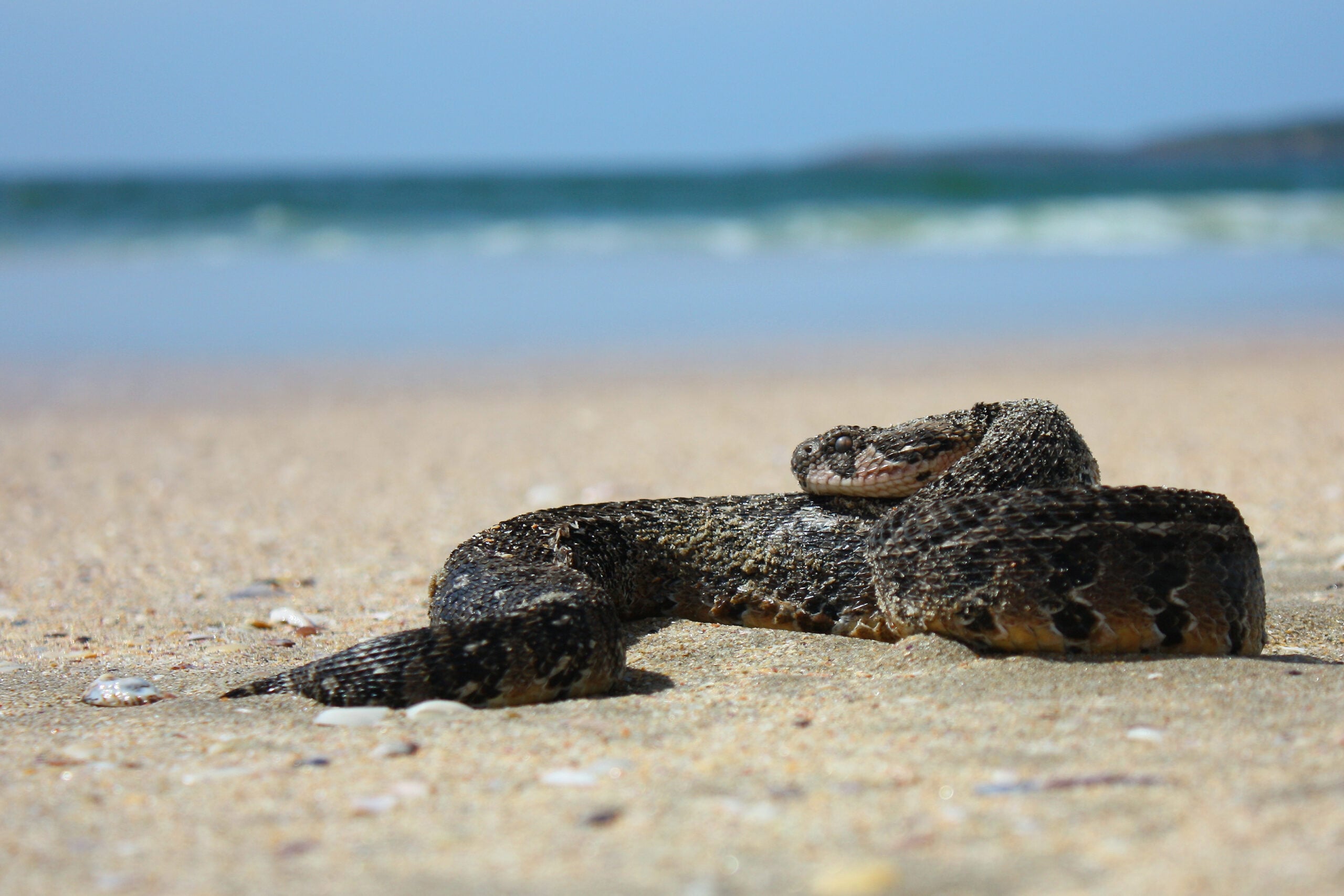
In the sun-drenched savannas of Africa, the Puff Adder, or Bitis arietans, lies coiled among the grasses, a master of camouflage. With its thick, heavy body and striking patterns of browns and yellows, this snake blends seamlessly into its surroundings, making it a formidable predator. Puff Adders are known for their distinctive triangular heads and large, expressive eyes, which give them an air of both beauty and danger. Scientists and nature enthusiasts alike are captivated by this snake, not only for its stunning appearance but also for its fascinating behaviors and vital role in the ecosystem.
As the day begins, the Puff Adder basks in the warmth of the African sun, its body absorbing heat to fuel its activities. This snake is a carnivore, feasting on a diet that includes rodents, frogs, and even birds. Its method of hunting is as intriguing as its looks; it relies on a potent venom to subdue its prey, a feature that has earned it a reputation as one of Africa’s most dangerous snakes. Yet, despite its fearsome reputation, the Puff Adder plays a crucial role in maintaining the balance of its habitat, controlling populations of small mammals and birds. Join us as we explore the life of the Puff Adder, uncovering the secrets of its world and the importance of this remarkable reptile in the grand tapestry of nature.
The Puff Adder, known scientifically as Bitis arietans, holds a significant place in the animal kingdom. As a member of the Viperidae family, which includes many venomous snakes, the Puff Adder is particularly notable for its ability to blend into its environment. This snake is found across much of Africa, thriving in diverse habitats from savannas to forests. Its distinctive ability to puff up its body when threatened, creating a larger appearance, is not just a clever defense mechanism but also a key feature that sets it apart from other snakes.
| Taxonomic Rank | Scientific Name | Meaning & Significance |
|---|---|---|
| Kingdom | Animalia | This name signifies that the Puff Adder belongs to the broad group of multicellular organisms that are typically motile and consume organic material. |
| Phylum | Chordata | Chordata means “having a notochord,” a flexible rod that supports the body, which is a characteristic of all vertebrates, including the Puff Adder. |
| Class | Reptilia | Reptilia refers to reptiles, a class of cold-blooded animals that lay eggs and have scales, like the Puff Adder’s tough, protective skin. |
| Order | Squamata | Squamata means “scaly,” highlighting the Puff Adder’s scaly skin, which is essential for its survival in various environments. |
| Family | Viperidae | This family includes vipers and pit vipers, known for their long, hinged fangs that allow them to deliver venom effectively, a key feature of the Puff Adder. |
| Genus | Bitis | The name Bitis is derived from the Greek word for “snake,” emphasizing its identity as a true snake within the viper family. |
The Puff Adder’s classification reveals much about its evolutionary journey. As a member of the Viperidae family, it shares a common ancestor with other venomous snakes, showcasing adaptations that have allowed it to thrive in various habitats. Its unique physical traits, such as its ability to puff up and its specialized fangs, highlight the evolutionary pressures it has faced, including predation and competition for food. Understanding where the Puff Adder fits in the tree of life not only enriches our knowledge of this fascinating species but also illustrates the intricate web of relationships that connect all living organisms.
The evolutionary journey of the Puff Adder, or Bitis arietans, stretches back millions of years, tracing its lineage to ancient reptiles that roamed the Earth long before the age of dinosaurs. This snake is part of the Viperidae family, which has adapted and diversified over time, leading to the unique characteristics we see today. The Puff Adder’s ancestors were likely similar to other early snakes, evolving in response to their environments and the challenges they faced.
As the Puff Adder evolved, it underwent significant changes that enhanced its survival. One of the most notable transitions was the development of its potent venom, which allows it to immobilize prey quickly. This adaptation is crucial for a snake that relies on ambush tactics, waiting patiently for unsuspecting animals to come close. Additionally, the Puff Adder’s stocky body and distinctive patterning provide excellent camouflage in its natural habitat, helping it blend into the dry grasses and rocky terrains of Africa. Over time, these adaptations have made the Puff Adder a highly effective predator.
These evolutionary adaptations have played a vital role in the Puff Adder’s success as a species. By developing effective hunting strategies and physical traits that enhance its ability to survive in diverse environments, the Puff Adder has thrived across much of Africa. Its combination of stealth, strength, and specialized features ensures that it remains a formidable predator in the wild, showcasing the incredible power of evolution in shaping life on our planet.
The Puff Adder is a striking snake that commands attention with its robust body and distinctive features. Its thick, heavy-set form can reach lengths of up to 4 feet, making it one of the larger snakes in its habitat. The Puff Adder’s head is broad and triangular, giving it a formidable appearance. Its skin is covered in a pattern of intricate scales that not only add to its beauty but also serve important functions in its survival.
| Feature | Description |
|---|---|
| Size | Can grow up to 4 feet long |
| Color | Typically brown or yellowish with dark brown or black markings |
| Skin Type | Covered in tough, protective scales |
| Head Shape | Broad and triangular, enhancing its striking look |
These features work together to create a perfect blend of beauty and function. The Puff Adder’s coloration allows it to blend seamlessly into its surroundings, providing excellent camouflage against the sandy and rocky terrains it inhabits. This stealthy appearance is crucial for ambushing prey, as it relies on surprise to catch small mammals and birds. The thick scales not only protect it from potential threats but also help it navigate through rough environments. Together, these characteristics make the Puff Adder a master of survival in the wild.
The Puff Adder thrives in a variety of habitats across Africa, painting a vivid picture of life in the wild. This snake is often found in savannas, grasslands, and even rocky hillsides, where it can blend seamlessly into its surroundings. The ground is usually covered with dry grasses and scattered shrubs, providing both shelter and hunting grounds. With its ability to camouflage, the Puff Adder can lie in wait for unsuspecting prey, making the most of its environment.
The Puff Adder prefers warm climates, typically found in areas where temperatures can soar during the day. It enjoys a dry environment, often thriving in regions with low rainfall. These snakes are most active during the cooler hours of the day, such as early morning and late afternoon, when they can hunt without overheating. The combination of warmth and dryness is essential for their survival, as it helps regulate their body temperature and supports their hunting strategies.
Adaptation is key to the Puff Adder’s success in these habitats. Its coloration allows it to blend into the dry grasses and rocky terrain, making it nearly invisible to both predators and prey. This snake has also developed a unique defensive behavior; when threatened, it can puff up its body, making it appear larger and more intimidating. This clever trick, combined with its potent venom, ensures that the Puff Adder remains a formidable presence in its environment, perfectly suited to the challenges of its home.
The Puff Adder leads a life that is both intriguing and essential to its survival in the wild. Each day begins with the sun rising over the African landscape, warming the ground where this snake often basks. Puff Adders are primarily crepuscular, meaning they are most active during the early morning and late afternoon. During these times, they hunt for small mammals, birds, and even amphibians, using their keen sense of smell and heat-sensing pits to locate prey. After a successful meal, they may spend hours digesting, coiled up in a sunny spot or hidden among rocks and vegetation.
While Puff Adders are generally solitary creatures, they do have interesting interactions with their environment. They are not known to form social groups, preferring to live alone. However, during the mating season, males may engage in combat displays to win the attention of females. These encounters can be quite dramatic, with snakes intertwining and pushing against each other. Outside of mating, Puff Adders communicate primarily through body language and scent marking, using their unique patterns and movements to signal their presence to others.
| Behavior Type | Description |
|---|---|
| Activity Patterns | Puff Adders are crepuscular, hunting primarily at dawn and dusk. They spend the rest of the day basking or hiding. |
| Social Structure | These snakes are solitary, preferring to live alone except during mating season. |
| Communication Methods | Puff Adders use body language and scent marking to communicate, especially during mating rituals. |
The behaviors of the Puff Adder are finely tuned to ensure its survival in the wild. By being solitary, it reduces competition for food and minimizes the risk of attracting predators. Its crepuscular activity allows it to take advantage of cooler temperatures while hunting, and its unique communication methods help it navigate the challenges of finding a mate. Each aspect of its daily life is a testament to the adaptability and resilience of this fascinating snake, making it a true survivor in the diverse ecosystems of Africa.
The Puff Adder is a carnivore, meaning it primarily eats meat. This snake has a diverse diet that includes a variety of prey such as rodents, frogs, birds, insects, and even other reptiles. Puff Adders are ambush predators, which means they rely on stealth and patience to catch their meals. They often lie in wait, camouflaged among the grasses and rocks, until an unsuspecting animal comes close enough for them to strike with their quick and powerful bite.
| Dietary Aspect | Details |
|---|---|
| Diet Type | Carnivore |
| Favorite Foods | Rodents, frogs, birds, insects, and other reptiles |
| Prey Items | Small mammals, amphibians, avian species, and various reptiles |
| Hunting/Foraging Strategies | Ambush predator; relies on camouflage and patience to strike |
The Puff Adder’s diet plays a crucial role in its ecological niche. By preying on a variety of animals, it helps control populations of rodents and other small creatures, maintaining a balance in its habitat. This snake’s hunting strategy also influences its daily routine, as it spends much of its time resting and waiting for the perfect moment to strike. In this way, the Puff Adder is not just a predator but an important player in the intricate web of life in the African ecosystems it inhabits.
The mating behavior of the Puff Adder is as captivating as its appearance. During the breeding season, which typically occurs in the warmer months, males engage in a fascinating courtship ritual. They may engage in combat dances, where two males intertwine and push against each other, showcasing their strength and agility. This display is not just for show; it helps determine which male will mate with the female. Once a male successfully attracts a female, they will mate, and the female will later give birth to live young, a trait known as viviparity.
| Reproductive Aspect | Details |
|---|---|
| Gestation Period | Approximately 5 to 6 months |
| Litter Size | 10 to 30 young |
| Age of Maturity | 2 to 3 years |
| Name of Young | Neonates |
After birth, the Puff Adder’s young, known as neonates, are independent and ready to face the world. They emerge fully formed, measuring about 12 to 15 inches long, and are equipped with venom from the moment they are born. This venom helps them hunt small prey, which is crucial for their survival. Unlike some other snake species, Puff Adders do not provide parental care after giving birth. Instead, the neonates must quickly learn to navigate their environment, find food, and avoid predators. As they grow, they will shed their skin several times, a process called ecdysis, allowing them to grow and develop into the impressive adults they are destined to become.
The Puff Adder, or Bitis arietans, plays a crucial role in its ecosystem, sitting comfortably in the middle of the food web. As a predator, it helps control populations of small mammals, birds, and other creatures. However, it is not without its own challenges. This snake faces various threats from both natural predators and human activities, which can impact its survival.
To defend itself against these dangers, the Puff Adder has developed several survival strategies. Its excellent camouflage allows it to blend into its surroundings, making it hard for predators to spot. When threatened, it can puff up its body, creating a larger appearance and warning potential attackers. Additionally, its venom is a powerful deterrent, capable of immobilizing prey and deterring larger threats. By using these tactics, the Puff Adder navigates the challenges of its environment, showcasing the delicate balance of life in the wild.
A keystone species is an organism that has a disproportionately large impact on its environment relative to its abundance. In the case of the Puff Adder, or Bitis arietans, this snake does indeed play a keystone role in its ecosystem. By controlling the populations of various prey species and serving as a food source for larger predators, the Puff Adder helps maintain the balance of its habitat, ensuring that no single species dominates the landscape.
The Puff Adder’s ecological impact is significant. As a carnivore, it primarily feeds on small mammals, birds, and reptiles. By preying on these animals, the Puff Adder helps regulate their populations. For instance, if rodent numbers were to rise unchecked, they could overgraze vegetation, leading to habitat degradation. The Puff Adder’s hunting habits keep these populations in check, promoting a healthier ecosystem.
Moreover, the Puff Adder is also a vital food source for larger predators, such as birds of prey and some mammals. These predators rely on the Puff Adder as part of their diet, creating a link in the food web that supports various species. Without the Puff Adder, these larger animals might struggle to find enough food, which could lead to declines in their populations as well.
The Puff Adder also contributes to the nutrient cycle in its environment. When it consumes prey, it helps break down organic matter, returning nutrients to the soil through its waste. This process supports plant growth, which in turn provides habitat and food for countless other species.
If the Puff Adder were to disappear from its ecosystem, the consequences could be severe. Without this snake to keep prey populations in check, small mammals and birds could multiply rapidly, leading to overgrazing and habitat destruction. This imbalance would not only affect the Puff Adder’s prey but also the larger predators that depend on it for food. Ultimately, the loss of the Puff Adder could trigger a cascade of changes, threatening the health and diversity of the entire ecosystem.
The Puff Adder, known scientifically as Bitis arietans, occupies a vital ecological niche in its African habitats. As a carnivorous snake, it plays a key role in controlling the populations of various small mammals, birds, and insects. By preying on these animals, the Puff Adder helps maintain a balance in the ecosystem, ensuring that no single species becomes too dominant. This balance is crucial for the health of the environment, as it allows for a diverse range of species to thrive.
| Ecosystem Service | Impact |
|---|---|
| Population Control | Regulates numbers of small mammals and birds, preventing overpopulation. |
| Food Source | Serves as prey for larger predators, contributing to the food web. |
| Soil Health | Influences the distribution of prey species, which can affect soil quality through their activities. |
| Seed Dispersal | Indirectly aids in plant growth by controlling herbivore populations that consume seeds. |
The Puff Adder’s influence extends beyond just its role as a predator. For instance, by keeping rodent populations in check, it helps protect crops and vegetation from being overgrazed. This is particularly important in agricultural areas where farmers rely on healthy plants for their livelihoods. Additionally, the Puff Adder itself becomes a food source for larger animals, such as birds of prey and some mammals, further integrating it into the food web. Its presence can indicate a healthy ecosystem, as a diverse range of species often coexists in areas where Puff Adders thrive.
Understanding the Puff Adder’s role highlights its broader ecological importance. As a keystone species, its impact on the environment is significant, even if it may not be the most abundant creature in its habitat. The balance it helps maintain supports a variety of life forms, from plants to larger predators. By studying the Puff Adder and its interactions within the ecosystem, we gain valuable insights into the intricate web of life that sustains our planet. Protecting such species is essential for preserving biodiversity and ensuring the health of ecosystems for future generations.
In the intricate web of life, symbiosis refers to the close interactions between different species, which can take on various forms. These relationships can be mutualistic, where both species benefit; parasitic, where one benefits at the expense of the other; or commensal, where one benefits while the other is neither helped nor harmed. The Puff Adder, a fascinating snake native to Africa, engages in several ecological relationships that highlight the complexity of its environment and the interconnectedness of life.
| Species/Type | Relationship Type | Description |
|---|---|---|
| Birds (e.g., oxpeckers) | Mutualistic | Oxpeckers feed on ticks and parasites found on the Puff Adder’s skin, providing relief to the snake while enjoying a meal. |
| Small mammals (e.g., rodents) | Parasitic | The Puff Adder preys on small mammals, benefiting from the energy gained while the prey suffers a loss of life. |
| Plants (e.g., grasses) | Commensal | The Puff Adder often hides among grasses and shrubs, which provide cover and protection without affecting the plants. |
These relationships have evolved over time, shaped by the needs and behaviors of the species involved. The mutualistic bond with birds like oxpeckers showcases how cooperation can lead to benefits for both parties, while the predatory nature of the Puff Adder highlights the balance of life and death in the ecosystem. The commensal relationship with plants illustrates how animals can utilize their surroundings for safety without causing harm. Together, these interactions not only support the Puff Adder’s survival but also contribute to the health and stability of its habitat, reminding us of the delicate balance that sustains life in the wild.
The Puff Adder, known scientifically as Bitis arietans, is a captivating snake that holds many secrets within its scales. This fascinating reptile is not just another snake; it has unique adaptations and behaviors that make it stand out in the wild.
The Puff Adder, or Bitis arietans, has long been a part of human history, woven into the cultural fabric of many African societies. Historically, this snake has been both feared and revered. In some cultures, it symbolizes danger and death due to its potent venom, while in others, it is seen as a guardian of the land. Ancient stories and folklore often feature the Puff Adder, highlighting its role in the natural world and its interactions with humans. These encounters have shaped perceptions, leading to a complex relationship that balances respect and caution.
In modern times, the relationship between Puff Adders and humans continues to evolve. As urban areas expand into natural habitats, encounters between people and these snakes have become more common. Conservation efforts are underway to protect the Puff Adder and its environment, recognizing its importance in maintaining ecological balance. However, conflicts arise when people fear for their safety, leading to the killing of these snakes. Education about the Puff Adder’s behavior and ecological role is crucial in reducing fear and promoting coexistence. Unlike domesticated animals, Puff Adders cannot be tamed, but understanding their habits can help mitigate dangerous encounters.
As we look to the future, the relationship between Puff Adders and humanity holds promise for greater understanding and respect. By fostering a sense of curiosity and appreciation for these snakes, we can work towards a harmonious coexistence. Education and conservation efforts will be key in ensuring that both humans and Puff Adders can thrive in shared landscapes. With continued awareness, we can transform fear into fascination, allowing us to celebrate the Puff Adder as a vital part of our natural world.
The Puff Adder, or Bitis arietans, currently holds a conservation status of “Least Concern” according to the International Union for Conservation of Nature (IUCN). This means that, at present, the species is not facing an immediate threat of extinction. Population estimates suggest that Puff Adders are relatively stable across their range in Africa, although localized declines may occur due to various environmental pressures.
| Conservation Factor | Status/Details |
|---|---|
| IUCN Status | Least Concern |
| Population Estimates | Stable in many areas |
| Trend Direction | Stable |
Despite their current stable status, Puff Adders face several threats that could impact their populations in the future. Habitat loss due to agricultural expansion and urban development is a significant concern. As humans encroach on their natural habitats, these snakes may find it increasingly difficult to find food and shelter. Additionally, persecution by humans, often due to fear of their venomous bite, can lead to unnecessary killings.
Conservation efforts are underway to ensure the Puff Adder continues to thrive in its natural environment. Education programs aimed at reducing fear and misunderstanding about these snakes are crucial. By promoting awareness of their ecological role and the importance of biodiversity, conservationists hope to foster a more harmonious relationship between humans and Puff Adders. With continued efforts, the outlook for this fascinating species remains positive, allowing it to play its vital role in the ecosystems of Africa.
| Question | Answer |
|---|---|
| What is the habitat of the Puff Adder? | The Puff Adder is commonly found in a variety of habitats across sub-Saharan Africa. It prefers dry savannas, grasslands, and rocky areas where it can easily blend in with its surroundings. |
| What does the Puff Adder eat? | This snake is a carnivore, meaning it primarily eats other animals. Its diet mainly consists of small mammals, birds, and sometimes amphibians, which it ambushes using its excellent camouflage. |
| How does the Puff Adder behave? | Puff Adders are known for their defensive behavior. When threatened, they can puff up their bodies and hiss loudly, which is a warning to potential predators. They are generally nocturnal, meaning they are most active at night. |
| How does the Puff Adder reproduce? | Puff Adders are ovoviviparous, which means they give birth to live young rather than laying eggs. A female can give birth to 20 to 50 baby snakes at a time, usually in late summer. |
| What threats do Puff Adders face? | While Puff Adders are currently listed as Least Concern, they face threats from habitat destruction and human encroachment. Additionally, they are often killed out of fear or misunderstanding, despite their important role in the ecosystem. |
| What are some interesting characteristics of the Puff Adder? | The Puff Adder is known for its distinctive pattern of dark and light scales, which helps it blend into its environment. It also has a unique ability to deliver a potent venom, which it uses to subdue its prey. |
| How can you identify a Puff Adder? | Puff Adders are typically stout and have a triangular-shaped head. They can grow up to 4 feet long and have a distinctive pattern of dark brown or gray scales with lighter markings, making them easily recognizable in the wild. |