Taxonomy & Classification
- Kingdom
- Animalia
- Phylum
- Chordata
- Class
- Aves
- Order
- Charadriiformes
- Family
- Alcidae
- Genus
- Fratercula
- Species
- Fratercula arctica

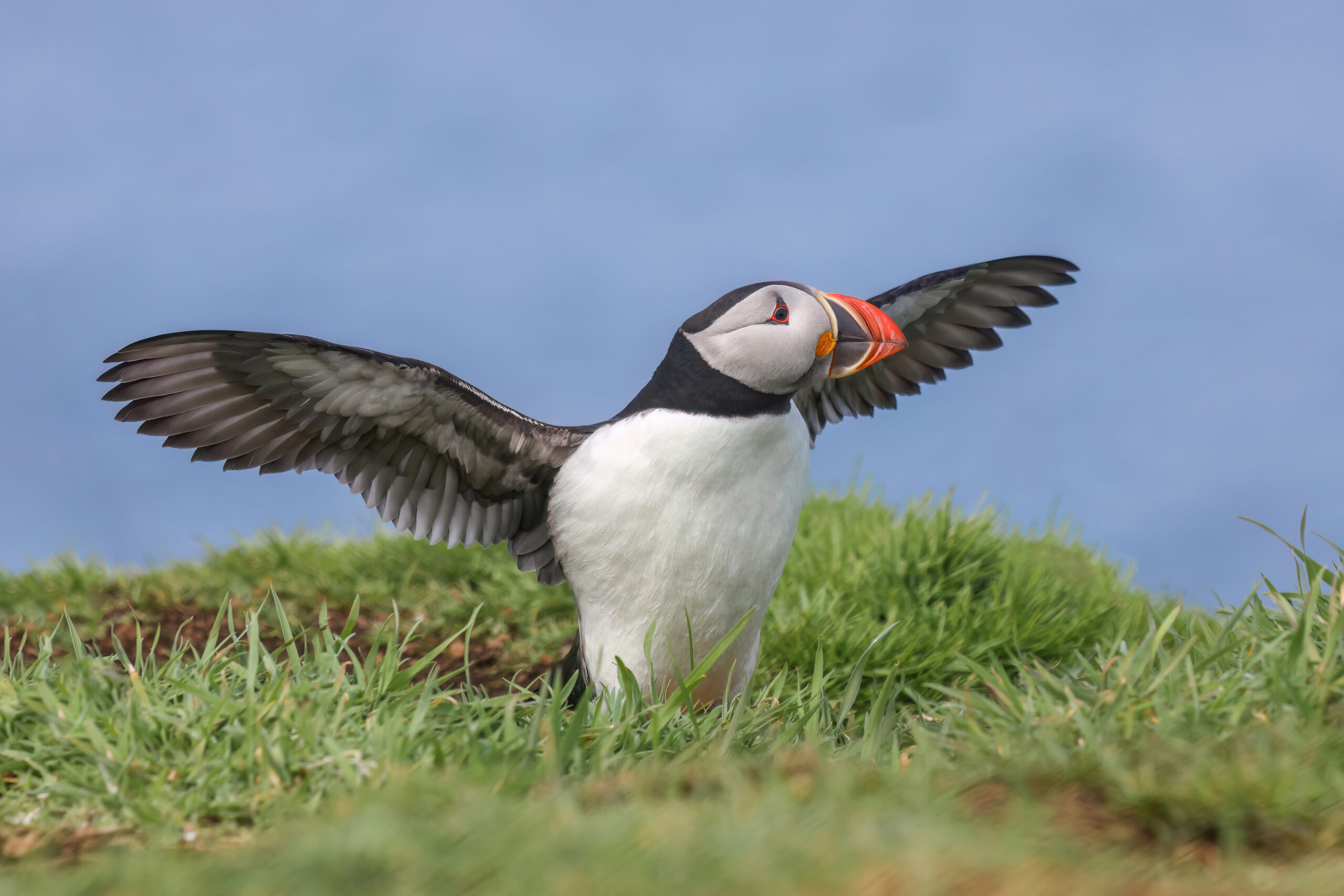 Photo Credit: Romaniviatores / Wikimedia Commons
Meet the Atlantic Puffin, or Fratercula arctica, a delightful seabird that captures the hearts of nature lovers everywhere. Imagine standing on a rugged cliff overlooking the churning sea, where these charming birds flit about, their colorful beaks glowing like jewels against the blue sky. With their stout bodies and striking black and white plumage, puffins are not just a feast for the eyes; they are also remarkable divers, expertly plunging into the ocean to catch small fish like sandeels and herring.
What makes puffins particularly fascinating is their vibrant beak, which is not just for show. During the breeding season, their beaks become even more colorful, showcasing bright oranges and yellows that signal their readiness to mate. This dazzling display is a key part of their courtship rituals, drawing in potential partners with a splash of color and charm. Puffins are social creatures, often nesting in large colonies on steep coastal cliffs, where they create burrows to raise their young. As we explore the world of puffins, we will uncover their unique behaviors, their role in the ecosystem, and the challenges they face in a changing environment. Join us on this adventure to learn more about these captivating birds and the vital role they play in our oceans.
The puffin, a charming seabird known for its colorful beak and striking appearance, occupies a special place in the animal kingdom. Taxonomically, it belongs to the Kingdom Animalia, which includes all animals, and is classified under the Phylum Chordata, meaning it has a backbone. Puffins are part of the Class Aves, which encompasses all birds, and they fall under the Order Charadriiformes, a group that includes shorebirds and gulls. Within this order, puffins are members of the Family Alcidae, which consists of diving birds known for their ability to swim underwater. The Genus Fratercula, which translates to “little brother,” reflects their social nature and distinctive appearance. Puffins are not just visually captivating; they also have unique adaptations that allow them to thrive in their marine environments.
| Taxonomic Rank | Scientific Name | Meaning & Significance |
|---|---|---|
| Kingdom | Animalia | This name signifies that puffins are part of the vast group of multicellular organisms known as animals. |
| Phylum | Chordata | Chordata means “having a cord,” referring to the notochord, a flexible rod that supports the body, which all members of this phylum possess at some stage of development. |
| Class | Aves | Aves is the Latin word for birds, highlighting puffins’ feathered bodies and ability to fly. |
| Order | Charadriiformes | This name comes from the Greek word for “shore,” indicating that many birds in this order are found near coastlines and are adapted to aquatic life. |
| Family | Alcidae | Alcidae refers to the group of seabirds known as alcids, which are characterized by their strong swimming abilities and often colorful plumage. |
| Genus | Fratercula | Fratercula means “little brother” in Latin, a nod to the puffin’s social behavior and the resemblance of its colorful beak to a jester’s cap. |
The classification of puffins reveals much about their evolutionary journey. As members of the Charadriiformes order, puffins share a lineage with various shorebirds, indicating a long history of adaptation to coastal environments. Their unique features, such as their vibrant beaks and excellent diving skills, have evolved to help them thrive in the ocean. Understanding where puffins fit in the tree of life not only highlights their biological connections but also emphasizes the intricate web of relationships that define the natural world. Each taxonomic rank tells a story of survival, adaptation, and the remarkable diversity of life on our planet.
The evolutionary journey of the puffin stretches back millions of years, weaving through the tapestry of time and adaptation. Puffins belong to the family Alcidae, which includes a variety of seabirds that have evolved to thrive in marine environments. Their ancestors roamed the Earth during the late Eocene epoch, around 40 million years ago, when the climate was warmer and the oceans teemed with life. Over time, these birds adapted to the challenges of their coastal habitats, leading to the puffins we recognize today.
The puffin’s lineage showcases significant evolutionary transitions. Early ancestors were likely more similar to other seabirds, but as they adapted to life on the water, they developed specialized features. One major transition was the evolution of their distinctive beak, which became larger and more colorful during the breeding season. This vibrant beak not only attracts mates but also helps puffins catch fish, their primary food source. Additionally, their body shape became more streamlined, allowing for efficient swimming and diving.
These adaptations have been crucial for puffins’ survival in their often harsh marine environments. The colorful beak not only plays a role in reproduction but also signals health and vitality, which is vital for attracting mates. Their swimming and diving abilities allow them to exploit food resources effectively, while their speed in the air helps them escape from potential threats. Together, these traits have enabled puffins to thrive in their coastal habitats, making them a beloved symbol of the ocean’s vibrant life.
The puffin is a delightful sight, with its compact body and vibrant features that make it stand out against the backdrop of the ocean. This seabird has a sturdy, rounded shape, perfect for diving and swimming. Its short wings are adapted for quick, agile movements in the water, while its webbed feet help it navigate through the waves. Puffins are not just cute; they are built for life at sea, with a body structure that balances both grace and functionality.
| Feature | Description |
|---|---|
| Weight | 368.5g – 481.9g (13oz – 17oz) |
| Skin Type | Feathers |
| Most Distinctive Feature | Brightly coloured, triangular bill |
The puffin’s bright, triangular bill is not just for show; it plays a crucial role in attracting mates and catching fish. During the breeding season, the bill becomes even more vibrant, showcasing its health and vitality. The feathers covering its body provide insulation against chilly ocean waters, keeping the puffin warm while it dives for food. Together, these features create a bird that is not only visually stunning but also perfectly adapted to thrive in its marine environment.
The puffin calls the sea and coastal regions of the Northern Hemisphere its home, where it thrives in the cool, salty air. Picture steep cliffs rising dramatically from the ocean, dotted with grassy ledges and rocky outcrops. These areas are often alive with the sounds of waves crashing and seabirds calling, creating a lively atmosphere. Puffins nest in burrows, which they dig into the soft earth or find in crevices, providing a cozy spot for raising their young away from predators.
Puffins prefer regions with a temperate climate, where the weather is cool and breezy. They are well-suited to areas that experience a mix of sunshine and rain, as these conditions help support the rich marine life they depend on for food. The ocean waters around their nesting sites are often teeming with fish, which puffins catch with their agile diving skills. These birds are also sensitive to changes in their environment, making them indicators of ocean health.
To thrive in their coastal habitats, puffins have developed several clever adaptations. Their wings are short and strong, allowing them to flap rapidly while diving underwater to catch fish. Their colorful beaks, which are especially vibrant during the breeding season, help attract mates and signal health. Puffins are also excellent at navigating the rocky cliffs where they nest, using their keen eyesight to spot potential dangers and their strong feet to grip the uneven surfaces. These adaptations make puffins not just survivors, but also a delightful part of the marine ecosystem.
Puffins lead lively and engaging daily lives, filled with activities that revolve around their coastal habitats. As diurnal birds, they are most active during the day, rising with the sun to embark on their adventures. Their mornings often begin with a hearty breakfast, diving into the ocean to catch fish, which are their primary food source. Puffins are excellent swimmers, using their wings to propel themselves underwater, where they can chase after small fish like herring and sand eels. After a busy morning of fishing, they spend the afternoons preening their feathers, a crucial activity that keeps them waterproof and warm.
Socially, puffins are quite the community-oriented birds. They thrive in colonies, often nesting in large groups on steep cliffs or grassy slopes. This social structure provides safety in numbers, as there are many eyes to spot potential predators. Puffins communicate with each other through a variety of sounds, including grunts and whistles, which help them maintain their bonds and coordinate activities. During the breeding season, they engage in elaborate courtship displays, showcasing their vibrant beaks and performing synchronized movements to attract mates.
| Behavior Type | Description |
|---|---|
| Activity Patterns | Puffins are diurnal, meaning they are active during the day, primarily fishing in the morning and preening in the afternoon. |
| Social Structure | They live in colonies, which provide safety from predators and enhance social interactions. |
| Communication Methods | Puffins use a range of vocalizations, including grunts and whistles, to communicate with each other and strengthen social bonds. |
The behaviors of puffins are not just charming; they are essential for their survival. By living in colonies, puffins can better protect themselves from predators, while their communication skills help them coordinate activities and maintain strong social ties. Their daily routines, from fishing to preening, ensure they remain healthy and ready to face the challenges of their environment. In the vibrant world of puffins, every action plays a vital role in the dance of life along the rugged coastlines they call home.
Puffins are carnivorous birds that primarily feast on small fish, making them skilled hunters of the sea. Their diet mainly consists of sandeels, herring, and sprat, which they catch with impressive diving skills. Puffins are known for their unique feeding behavior; they can dive up to 60 meters (about 200 feet) underwater to pursue their slippery prey. With their specialized beaks, they can hold multiple fish at once, allowing them to gather food efficiently for themselves and their chicks.
| Dietary Aspect | Details |
|---|---|
| Diet Type | Carnivore |
| Favorite Foods | Sandeel, Herring, Sprat |
| Prey Items | Small fish |
| Hunting/Foraging Strategies | Dives up to 60 meters, catches multiple fish in beak |
The puffin’s diet plays a crucial role in its ecology and daily routine. By feeding on small fish, puffins help maintain the balance of marine ecosystems, ensuring that fish populations remain healthy. Their foraging habits also influence their breeding success, as they need to gather enough food to feed their chicks during the nesting season. This connection between diet and survival highlights the puffin’s role as both a predator and a vital part of its coastal habitat.
Puffins are known for their colorful beaks and charming personalities, but their mating behavior is equally captivating. During the breeding season, which typically occurs in late spring to early summer, puffins engage in elaborate courtship displays. These displays often include synchronized swimming and mutual preening, where they groom each other’s feathers. This bonding ritual helps strengthen their pair bonds, as puffins are monogamous, meaning they usually mate with the same partner for several breeding seasons. Once they have chosen their mate, they will return to the same nesting site year after year, often on steep cliffs or burrows.
| Reproductive Aspect | Details |
|---|---|
| Gestation Period | Approximately 6 weeks |
| Litter Size | 1 egg |
| Age of Maturity | 4 – 5 years |
| Name of Young | Chick |
Once the single egg is laid, both parents take turns incubating it, ensuring it stays warm and safe. After about six weeks, the chick hatches, and the real adventure begins. Puffin chicks are born covered in downy feathers and are quite helpless at first. However, they grow quickly, relying on their parents for food, which consists mainly of small fish. The parents are dedicated caregivers, bringing back meals to the nest and feeding their chick until it is ready to fledge, or leave the nest. By the time the young puffin is ready to take its first flight, it has developed the skills needed to thrive in the wild, marking the beginning of its journey as an independent seabird.
Puffins play a vital role in the marine food web, acting as both predators and prey. These charming seabirds feast on small fish, which helps keep fish populations in check. However, they are also vulnerable to various threats, making their survival a delicate balance within their ecosystem. As they dive and hunt for food, puffins must remain vigilant against the dangers lurking in the waters and skies around them.
To defend themselves against these threats, puffins have developed several clever survival strategies. When faced with predators, they often nest in hard-to-reach cliffside burrows, making it difficult for larger birds and mammals to access their young. Puffins are also agile swimmers, using their wings to propel themselves underwater, allowing them to escape from danger quickly. By staying alert and adapting to their environment, puffins continue to thrive despite the challenges they face.
A keystone species is an organism that has a disproportionately large impact on its environment relative to its abundance. This means that if it were removed, the ecosystem would change dramatically. Puffins, with their unique role in marine ecosystems, can indeed be considered a keystone species. Their presence influences various aspects of their habitat, from the populations of fish they prey on to the health of the coastal areas they inhabit.
Puffins primarily feed on small fish like sandeels, herring, and sprat. By hunting these fish, they help regulate their populations, preventing any one species from becoming too dominant. This balance is crucial for maintaining a healthy marine ecosystem. When puffins dive into the ocean to catch their meals, they also contribute to nutrient cycling. Their droppings, rich in nitrogen, fertilize the surrounding land, promoting plant growth on coastal cliffs. This, in turn, supports a variety of other wildlife, creating a vibrant community of organisms.
Moreover, puffins are social birds that nest in colonies. Their nesting habits create a unique environment for other species. The burrows they dig for their eggs can be used by other animals, such as rabbits and various insects, providing shelter and promoting biodiversity. Additionally, puffins serve as an indicator species, meaning their health reflects the overall condition of the marine environment. If puffins are thriving, it often indicates that the ecosystem is in good shape.
If puffins were to disappear from their ecosystems, the consequences would be significant. Fish populations could surge unchecked, leading to imbalances that could harm other marine life. The coastal areas would suffer from reduced nutrient input, affecting plant growth and the animals that rely on those plants. Furthermore, the loss of puffins would disrupt the intricate web of relationships they support, potentially leading to declines in other species that depend on the same habitat. In essence, the absence of puffins would ripple through the ecosystem, highlighting just how vital these charming seabirds are to their environment.
The puffin plays a vital role in its ecosystem, acting as a bridge between the ocean and the land. This charming seabird thrives in the sea and coastal regions of the Northern Hemisphere, where it forages for small fish and interacts with various marine and terrestrial species. By feeding on fish like sandeels and herring, puffins help regulate fish populations, ensuring a balanced marine environment. Their presence influences not just the fish they consume but also the broader community of animals that depend on these fish for survival.
| Ecosystem Service | Impact |
|---|---|
| Fish Population Control | Puffins help maintain healthy fish populations by preying on smaller fish species. |
| Nutrient Cycling | Their droppings enrich the soil, promoting plant growth on coastal cliffs. |
| Prey for Predators | Puffins serve as a food source for larger birds and marine mammals. |
| Habitat Creation | Their burrowing nests can create spaces for other species to thrive. |
Puffins are not just charming to look at; they have a significant influence on their environment. For instance, their feeding habits help control the populations of small fish, which can prevent overpopulation and the depletion of resources in the ocean. Additionally, puffin droppings, rich in nutrients, fertilize the soil on coastal cliffs, encouraging the growth of grasses and plants. This, in turn, supports a variety of other wildlife, creating a vibrant ecosystem where many species can flourish.
The ecological importance of puffins extends beyond their immediate surroundings. As a keystone species, their presence is crucial for maintaining the balance of their ecosystem. If puffins were to disappear, the effects would ripple through the food web, impacting not only the fish they eat but also the predators that rely on them. By understanding the puffin’s role, we gain insight into the intricate connections that sustain life in coastal environments, reminding us of the delicate balance that exists in nature.
In the intricate web of life, symbiosis refers to the close interactions between different species, which can take on various forms. These relationships can be mutualistic, where both species benefit; parasitic, where one benefits at the expense of the other; or commensal, where one benefits while the other is neither helped nor harmed. Puffins, with their vibrant personalities and social nature, engage in several fascinating partnerships with other species, showcasing the beauty of ecological relationships.
| Species/Type | Relationship Type | Description |
|---|---|---|
| Seabirds (e.g., gulls) | Commensal | Puffins often nest in colonies alongside other seabirds like gulls. While the gulls may not gain any direct benefit, they provide a level of protection from predators, as the presence of multiple species can deter threats. |
| Fish (e.g., sandeels) | Mutualistic | Puffins rely on fish like sandeels for food, and in turn, their hunting helps maintain fish populations by keeping them healthy and balanced. This relationship supports the overall health of the marine ecosystem. |
| Marine algae | Mutualistic | While not a direct partnership, puffins contribute to the nutrient cycle in their habitats. Their droppings enrich the soil, promoting the growth of marine algae, which in turn supports various marine life. |
Through the ages, these relationships have evolved, shaped by the needs and behaviors of the species involved. Puffins have adapted to thrive in their coastal environments, forming bonds that enhance their survival and the health of their ecosystems. By working together, whether through protection, food sources, or nutrient cycling, puffins and their partners create a dynamic and balanced natural world, illustrating the interconnectedness of life.
Puffins are not just adorable birds with colorful beaks; they are full of surprises that make them truly captivating. Here are some intriguing facts that showcase their unique traits and behaviors.
Puffins have long captured the imagination of humans, weaving their way into our history and culture. These charming seabirds, with their striking beaks and playful personalities, have been featured in folklore and art across various cultures. In some coastal communities, puffins were once a source of food, while their feathers and eggs were collected for clothing and sustenance. This historical connection has fostered a sense of admiration and respect for puffins, making them symbols of the rugged beauty of the sea and the resilience of nature.
Today, the relationship between puffins and humanity is evolving, shaped by both conservation efforts and challenges. As climate change and habitat loss threaten their populations, many organizations are working tirelessly to protect these birds and their nesting sites. In some areas, puffin colonies are monitored closely, and educational programs are in place to raise awareness about their plight. However, conflicts can arise, particularly when puffins nest near human activities, leading to concerns about disturbance and predation from introduced species. While puffins are not domesticated, their interactions with humans are increasingly significant as we strive to coexist with the natural world.
Looking ahead, the future of the puffin-human relationship hinges on our ability to balance conservation with development. As we become more aware of the impact of our actions on the environment, there is hope that we can create a sustainable coexistence. By protecting puffins and their habitats, we not only preserve a beloved species but also ensure that future generations can enjoy the wonder of these remarkable birds. Together, we can foster a deeper connection with nature, celebrating the beauty and importance of puffins in our world.
The puffin, with its vibrant beak and playful demeanor, currently holds a conservation status of “Least Concern” according to the International Union for Conservation of Nature (IUCN). However, this cheerful seabird is facing challenges, as its population is on a downward trend. While puffins are not considered endangered at this moment, the decline in their numbers raises concerns about their long-term survival and the health of their marine habitats.
| Conservation Factor | Status/Details |
|---|---|
| IUCN Status | Least Concern |
| Estimated Population Size | Decreasing |
| Trend Direction | Declining |
The main threats to puffins stem from a combination of environmental changes and human activities. Climate change is altering ocean temperatures and fish populations, which can disrupt the puffin’s food supply. Additionally, pollution, particularly plastic waste, poses a significant risk as it can be ingested by puffins or contaminate their habitats. Overfishing also impacts the availability of their primary prey, making it harder for these birds to find enough food to thrive.
Conservation efforts are underway to help puffins and their habitats. Organizations are working to monitor puffin populations and protect their nesting sites, especially on islands where they breed. Public awareness campaigns aim to educate people about the importance of keeping oceans clean and sustainable fishing practices. With continued efforts and support, there is hope that puffin populations can stabilize and even recover, ensuring that these delightful birds continue to grace our coastlines for generations to come.
| Question | Answer |
|---|---|
| Where do puffins live? | Puffins are found in sea and coastal regions, particularly in the North Atlantic Ocean. They prefer rocky cliffs and islands where they can nest safely away from predators. |
| What do puffins eat? | Puffins are carnivores, which means they primarily eat fish. They dive underwater to catch small fish like herring and sand eels, using their wings to swim. |
| How do puffins behave? | Puffins are social birds that often gather in large colonies during the breeding season. They are known for their playful nature, often seen diving and swimming together in the ocean. |
| How do puffins reproduce? | Puffins typically mate for life and return to the same nesting site each year. They lay one egg in a burrow, which they dig into the ground, and both parents take turns incubating the egg until it hatches. |
| What threats do puffins face? | While puffins are currently listed as Least Concern, they face threats from climate change, overfishing, and habitat loss. Changes in ocean temperature can affect their food supply, making survival more challenging. |
| What is a distinctive feature of puffins? | Puffins are easily recognized by their brightly colored, triangular bills. This striking feature is especially vibrant during the breeding season, making them a favorite among bird watchers. |
| Can puffins fly? | Yes, puffins are capable fliers! They can reach speeds of up to 55 miles per hour and often fly in flocks, using their wings to navigate the air with agility. |