Taxonomy & Classification
- Kingdom
- Animalia
- Phylum
- Chordata
- Class
- Aves
- Order
- Passeriformes
- Family
- Fringillidae
- Genus
- Haemorhous
- Species
- Haemorhous purpureus

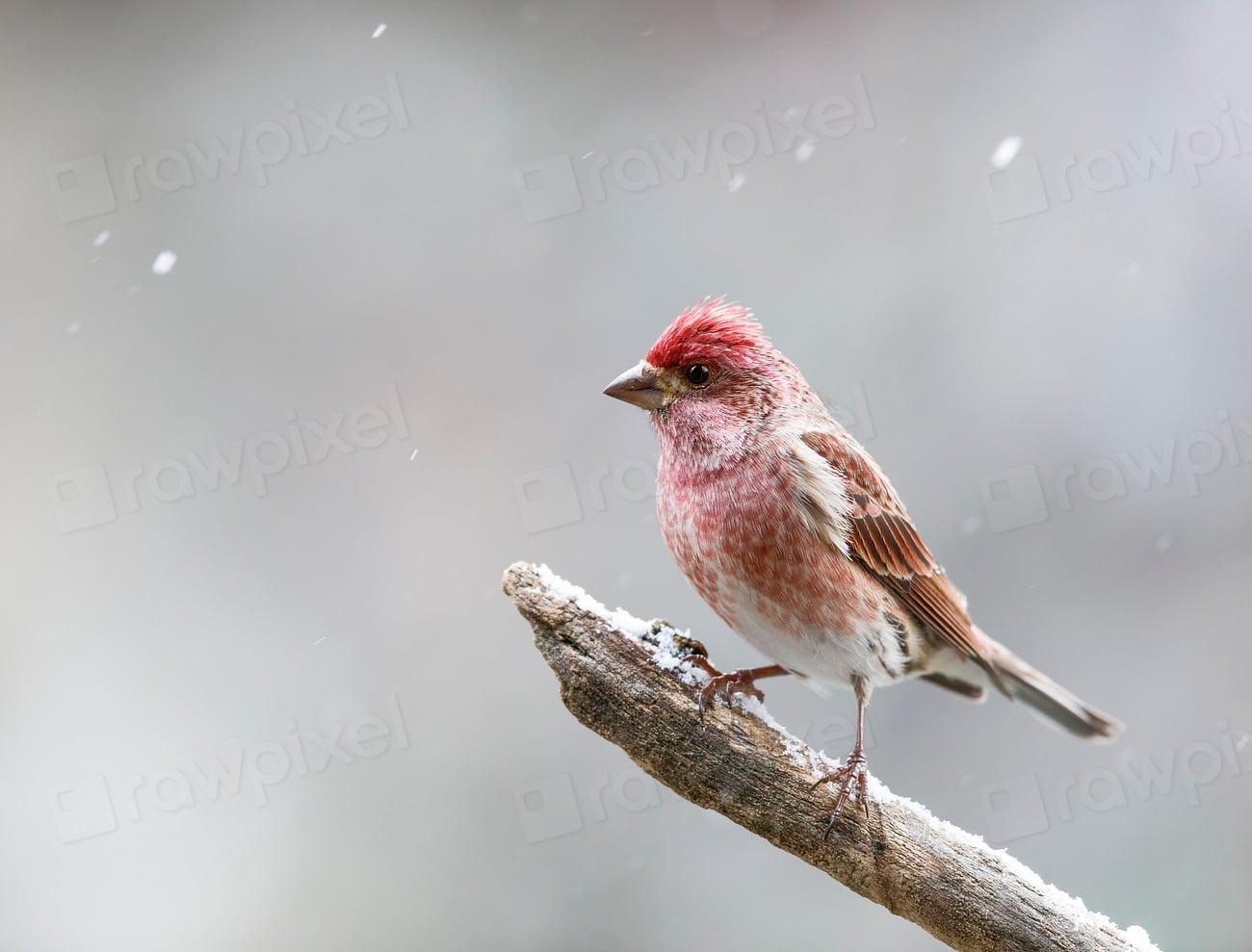 Photo Credit: National Park Service / Rawpixel
In the heart of North America’s woodlands, the Purple Finch, scientifically known as Haemorhous purpureus, flits gracefully among the branches, painting the air with its cheerful song. With its striking raspberry-red plumage, especially prominent in males, this small bird captures the attention of anyone lucky enough to spot it. The females, more subtly adorned in earthy browns and streaks, are equally enchanting, showcasing nature’s ability to blend beauty with practicality. These vibrant colors not only serve as a visual delight but also play a crucial role in their mating rituals, where males sing sweet melodies to attract potential partners.
As the sun rises, casting a golden hue over the forest, the Purple Finch begins its day, hopping from branch to branch in search of seeds and insects. This adaptable little bird thrives in diverse habitats, from lush coniferous forests to bustling urban gardens, making it a familiar sight for nature enthusiasts and casual observers alike. Scientists are captivated by the Purple Finch not just for its beauty, but also for its role in the ecosystem. As a seed eater, it helps control plant populations, while also serving as a food source for various predators. Join us as we explore the fascinating life of the Purple Finch, uncovering its behaviors, diet, and the vital role it plays in the natural world.
The Purple Finch, a charming little bird, holds a special place in the tree of life. Scientifically classified within the kingdom Animalia, it belongs to the phylum Chordata, which includes all animals with a backbone. As a member of the class Aves, or birds, the Purple Finch showcases the vibrant colors and melodious songs that many birdwatchers adore. Its order, Passeriformes, is the largest group of birds, often referred to as perching birds or songbirds. What makes the Purple Finch particularly interesting is its genus, Haemorhous, which hints at its striking plumage and social behavior, setting it apart from other finches.
| Taxonomic Rank | Scientific Name | Meaning & Significance |
|---|---|---|
| Kingdom | Animalia | This name comes from the Latin word for “animal,” highlighting that these organisms are living beings that can move and respond to their environment. |
| Phylum | Chordata | Derived from the Greek word “chordē,” meaning “string,” this term refers to the notochord, a flexible rod that supports the body in all chordates, including the Purple Finch. |
| Class | Aves | This Latin term simply means “birds,” emphasizing the unique characteristics of feathers and beaks that define this class. |
| Order | Passeriformes | From the Latin “passer,” meaning “sparrow,” this order includes birds that are often small and known for their singing abilities, like the Purple Finch. |
| Family | Fringillidae | This name comes from the Latin word “fringilla,” meaning “finch,” which reflects the family’s diverse group of seed-eating birds, including the Purple Finch. |
| Genus | Haemorhous | Derived from the Greek words “haima,” meaning “blood,” and “oros,” meaning “mountain,” this name may refer to the bird’s reddish plumage and its habitat in mountainous regions. |
Understanding the Purple Finch’s classification reveals much about its evolutionary journey. As a member of the Fringillidae family, it shares a common ancestry with other finches, which have adapted to various environments and diets over millions of years. The unique traits of the Purple Finch, such as its vibrant coloration and social behavior, are not just beautiful; they are also adaptations that have helped it thrive in diverse habitats. This classification not only highlights its biological connections but also tells a story of survival and adaptation in the ever-changing tapestry of nature.
The evolutionary journey of the Purple Finch stretches back millions of years, weaving through the rich tapestry of avian history. This small bird, belonging to the family Fringillidae, has adapted and thrived in various environments across North America. Its ancestors roamed the earth during a time when the continents were shifting, and forests were expanding, creating new habitats for birds to explore and inhabit.
The Purple Finch’s lineage can be traced to early finches that emerged around 30 million years ago. These ancestral forms were likely small, seed-eating birds that began to diversify as they adapted to different ecological niches. Over time, the Purple Finch evolved distinct characteristics that set it apart from its relatives. One major transition was the development of its vibrant plumage, which not only serves as a visual delight but also plays a role in attracting mates. The shift from a more muted coloration to the striking purple hues we see today reflects the pressures of sexual selection, where brighter colors can signal health and vitality.
These evolutionary adaptations have been crucial for the survival of the Purple Finch. The vibrant plumage not only aids in reproduction but also helps establish territory among males. Its specialized beak allows it to exploit a wide range of seeds, ensuring a steady food supply. Furthermore, the bird’s adaptability to different habitats means it can find shelter and resources in both natural and urban settings. Together, these traits have enabled the Purple Finch to flourish in a world that is constantly changing.
The Purple Finch is a delightful sight, embodying the essence of nature’s artistry. This small bird, about the size of a sparrow, boasts a robust body that is both compact and sturdy. Its most striking feature is the vibrant red plumage that adorns the males, creating a splash of color against the greens and browns of its forest habitat. The females, while less flamboyant, wear a more subdued brown and streaked appearance, allowing them to blend seamlessly into their surroundings. With a short, conical beak designed for cracking seeds, the Purple Finch is perfectly equipped for its diet, making it a true marvel of adaptation.
| Feature | Description |
|---|---|
| Weight | 25 grams |
| Color | Vibrant red plumage in males; brown and streaked in females |
| Body Structure | Compact and sturdy |
| Beak Type | Short and conical, ideal for seed cracking |
The combination of these features not only makes the Purple Finch visually captivating but also plays a crucial role in its survival. The bright red plumage of the males is essential for attracting mates during the breeding season, while the more camouflaged females can evade predators as they nest. Their strong beaks allow them to efficiently access seeds, which are a primary food source. Together, these characteristics create a harmonious balance that enables the Purple Finch to thrive in its environment, showcasing the beauty and complexity of nature’s design.
The Purple Finch thrives in a variety of habitats, painting a picture of life in both lush forests and bustling urban areas. Imagine walking through a vibrant woodland, where tall trees stretch toward the sky, their leaves whispering in the breeze. Here, the Purple Finch flits among the branches, its cheerful song blending with the rustling leaves. In cities, these birds adapt to the human landscape, finding refuge in parks and gardens, where they can still enjoy the beauty of nature amidst the concrete.
This adaptable bird prefers climates that offer a mix of seasonal changes. It enjoys areas with warm summers and cold winters, which are typical in many parts of North America. The Purple Finch is often found in regions where the temperature can fluctuate, allowing it to thrive in both temperate and boreal forests. These environments provide the necessary food sources and nesting sites that the finch needs to survive and raise its young.
The Purple Finch has developed several clever adaptations to make the most of its habitats. In forests, it expertly navigates through branches, using its strong beak to crack open seeds and berries. In urban settings, it has learned to forage in gardens and parks, taking advantage of the food provided by humans. This flexibility in diet and habitat choice allows the Purple Finch to flourish in a variety of environments, showcasing its resilience and resourcefulness in the face of changing landscapes.
The Purple Finch starts its day with the soft light of dawn, flitting from branch to branch in search of breakfast. These birds are primarily seed eaters, favoring the seeds of conifers and other trees. As the sun rises, you might see them perched high, using their sharp beaks to crack open seeds. Throughout the day, they engage in a variety of activities, from foraging for food to preening their feathers, ensuring they stay clean and ready for flight. Their vibrant songs fill the air, a delightful soundtrack to their daily adventures, as they communicate with one another and establish their territory.
Socially, Purple Finches are quite engaging. They often form small flocks, especially during the non-breeding season. These groups can consist of family members or other nearby finches, creating a lively atmosphere as they interact. Within these flocks, they exhibit a hierarchy, where dominant birds may have first access to food sources. Communication is key in these social structures; they use a variety of chirps and whistles to convey messages, whether it’s to warn of predators or to signal the presence of food. This social behavior not only strengthens their bonds but also enhances their survival in the wild.
| Behavior Type | Description |
|---|---|
| Foraging | Purple Finches search for seeds and berries, using their strong beaks to crack open tough shells. |
| Social Structure | They form small flocks, often with family members, establishing a hierarchy within the group. |
| Communication | These birds use a range of chirps and whistles to communicate, helping them stay connected and alert to dangers. |
| Preening | Regularly cleaning their feathers is essential for maintaining insulation and flight efficiency. |
The behaviors of the Purple Finch are not just charming; they are vital for survival. By foraging in groups, they can find food more efficiently and keep an eye out for predators. Their social interactions help them build strong relationships, which can be crucial during breeding seasons when cooperation is needed for raising young. Through their songs and calls, they maintain communication, ensuring that every member of the flock is aware of their surroundings. In this way, the Purple Finch exemplifies how social behavior and daily activities intertwine to create a thriving life in the wild.
The Purple Finch has a diverse diet that reflects its adaptability and resourcefulness. As an omnivore, it enjoys a mix of plant-based foods and insects, allowing it to thrive in various environments. These birds are particularly fond of seeds, especially those from conifers, and they also relish berries and fruits when in season. Their feeding behavior is quite interesting; they often forage in trees and shrubs, using their strong beaks to crack open seeds and access the nutritious morsels inside.
| Dietary Aspect | Details |
|---|---|
| Diet Type | Omnivore |
| Favorite Foods | Seeds, berries, fruits |
| Prey Items | Insects |
| Hunting/Foraging Strategies | Forages in trees and shrubs, uses strong beak to crack seeds |
This varied diet not only sustains the Purple Finch but also plays a crucial role in its ecological niche. By consuming seeds and fruits, these birds help in seed dispersal, promoting plant growth in their habitats. Their insect-eating habits also contribute to controlling insect populations, making them valuable allies in maintaining the balance of their ecosystems. As they flit through the trees, their daily routine of foraging and feeding shapes not just their survival but also the health of the environments they inhabit.
As spring arrives, the Purple Finch engages in a lively courtship ritual that sets the stage for reproduction. Males sing sweet, melodic tunes to attract females, showcasing their vibrant plumage. This mating behavior is crucial, as it helps establish bonds between partners. The breeding season typically begins in late April and can extend into August, depending on the region. During this time, pairs work together to find the perfect nesting site, often in coniferous trees or shrubs, where they can raise their young in safety.
| Reproductive Aspect | Details |
|---|---|
| Gestation Period | About 12-14 days |
| Litter Size | 3-6 eggs |
| Age of Maturity | About 1 year |
| Name of Young | Fledglings |
Once the eggs hatch, both parents take on the important role of caregivers. They work tirelessly to feed their fledglings, bringing them a diet rich in seeds and insects to help them grow strong. The young birds develop quickly, learning to fly and forage for food within a few weeks. As they mature, they begin to exhibit the beautiful colors and songs of adult Purple Finches. This nurturing environment is essential for their survival, ensuring that the next generation can thrive in the wild.
The Purple Finch occupies a vital role in the food web, serving as both a seed-eater and a prey species. This small bird helps control plant populations by consuming seeds, while also providing nourishment for various predators. Its presence in forests and urban areas makes it an integral part of the ecosystem, contributing to the balance of nature.
To survive these threats, the Purple Finch employs several clever strategies. When faced with predators, it often relies on its ability to blend into the foliage, making it harder to spot. Additionally, these birds are known for their alertness; they frequently watch for danger while feeding. Their social nature also plays a role, as they often flock together, providing safety in numbers. By staying vigilant and using their environment to their advantage, Purple Finches can navigate the challenges of their world.
A keystone species is a vital part of its ecosystem, meaning its presence has a significant impact on the environment and other living things. The Purple Finch, with its charming song and adaptable nature, plays an important role in its habitat, but it may not be classified as a true keystone species. While it contributes to the balance of its ecosystem, its absence would not lead to the collapse of that system, unlike species that are essential for maintaining the structure of their communities.
The Purple Finch primarily feeds on seeds, particularly those from coniferous trees, which helps control plant populations and promotes biodiversity. By consuming seeds, these birds prevent certain plants from becoming overly dominant, allowing a variety of species to thrive. This seed-eating behavior also aids in the dispersal of seeds, as some seeds pass through their digestive systems and are deposited in new locations, giving rise to new plants. In urban environments, the Purple Finch adapts its diet to include seeds from ornamental plants, further integrating into human-altered landscapes.
Additionally, the Purple Finch serves as a food source for various predators, including hawks and cats. This connection highlights its role in the food web, where it helps sustain the populations of these larger animals. Furthermore, the presence of Purple Finches can indicate the health of their environment. A thriving population often suggests a balanced ecosystem, while a decline may signal underlying issues, such as habitat loss or pollution.
If the Purple Finch were to disappear, the effects would ripple through its ecosystem. Without these birds to manage seed populations, certain plants could become overly abundant, potentially choking out other species and reducing biodiversity. This imbalance could affect the animals that rely on those plants for food and shelter, leading to a decline in their populations as well. Additionally, the absence of Purple Finches would leave a gap in the food web, impacting predators that depend on them for sustenance. Overall, the loss of this small bird would create a chain reaction, altering the delicate balance of its environment.
The Purple Finch plays a crucial role in its ecosystem, acting as both a seed disperser and a food source for various predators. This small bird thrives in forests and urban areas, showcasing its adaptability to different environments. By feeding on seeds and insects, the Purple Finch helps maintain the balance of plant populations and contributes to the overall health of its habitat. Its presence is a testament to the interconnectedness of life, where each species, no matter how small, has a part to play in the grand tapestry of nature.
| Ecosystem Service | Impact |
|---|---|
| Seed Dispersal | Helps in the growth of new plants by spreading seeds across various areas. |
| Pest Control | Reduces insect populations by feeding on them, promoting a healthier environment. |
| Food Source | Serves as prey for larger birds and mammals, supporting the food web. |
| Pollination | While primarily seed eaters, they can also aid in pollination by visiting flowering plants. |
The influence of the Purple Finch extends beyond its immediate actions. For instance, as it forages for seeds, it inadvertently helps to control the growth of certain plant species, ensuring that no single type dominates the landscape. This balance is vital for maintaining biodiversity, which is essential for a resilient ecosystem. Additionally, by consuming insects, the Purple Finch plays a role in keeping pest populations in check, which can benefit both plants and other animals in the area. Its melodic songs also contribute to the vibrant soundscape of its habitat, enriching the experience of nature for all who encounter it.
In a broader ecological context, the Purple Finch exemplifies the intricate relationships that define ecosystems. As a keystone species, its activities influence not just the plants and insects around it, but also the larger animals that rely on it for food. By supporting various ecological functions, the Purple Finch helps sustain the health and diversity of its environment. This small bird reminds us that every creature, no matter how seemingly insignificant, plays a vital role in the web of life, highlighting the importance of conservation and respect for all living things.
In the intricate web of life, symbiosis refers to the close interactions between different species, which can take many forms. These relationships can be mutualistic, where both species benefit, parasitic, where one benefits at the other’s expense, or commensal, where one benefits while the other is neither helped nor harmed. The Purple Finch, a delightful bird known for its vibrant plumage and melodious song, engages in various ecological relationships that highlight the interconnectedness of nature.
| Species/Type | Relationship Type | Description |
|---|---|---|
| Conifer Trees | Mutualistic | The Purple Finch feeds on the seeds of conifer trees, helping to control their populations while also aiding in seed dispersal when it drops seeds in new locations. |
| Insects | Mutualistic | By consuming insects, the Purple Finch helps to keep insect populations in check, benefiting the plants that might otherwise suffer from overgrazing. |
| Brood Parasites (like Cowbirds) | Parasitic | While not a direct relationship, Purple Finches can fall victim to brood parasites, where another bird lays its eggs in their nests, leading to competition for resources. |
| Urban Environments | Commensal | In urban areas, Purple Finches often find food sources in gardens and parks, benefiting from human activity without significantly impacting people. |
These relationships have evolved over time, shaped by the needs and behaviors of the species involved. The mutualistic interactions between the Purple Finch and conifer trees or insects demonstrate a beautiful balance where both parties thrive. Meanwhile, the challenges posed by brood parasites highlight the complexities of survival in nature. As the Purple Finch adapts to its environment, it continues to play a vital role in maintaining the health of its ecosystem, showcasing the dynamic interplay of life that surrounds us.
The Purple Finch is a captivating bird that enchants nature lovers with its vibrant colors and delightful songs. This small avian wonder is full of surprises that reveal the intricate connections within our ecosystems.
The Purple Finch has long been a part of human culture, captivating our imaginations with its vibrant plumage and melodious songs. Historically, these birds have been admired by birdwatchers and nature enthusiasts alike. In many regions, they symbolize the arrival of spring, bringing joy and a sense of renewal. Their presence in literature and art reflects humanity’s deep connection to nature, reminding us of the beauty that surrounds us. As we observe these charming birds, we often find ourselves inspired by their resilience and adaptability.
In today’s world, the relationship between Purple Finches and humans is evolving. As urban areas expand, these birds have adapted to new environments, often seen flitting about in parks and gardens. However, this adaptation comes with challenges. Habitat loss due to deforestation and urbanization poses a threat to their populations. Conservation efforts are underway to protect their habitats and ensure their survival. Additionally, some people find joy in feeding these birds, creating a bond that fosters appreciation for wildlife. Yet, conflicts can arise when these birds invade gardens or bird feeders, leading to a complex relationship that balances admiration with the need for coexistence.
Looking ahead, the future of the Purple Finch and humanity’s relationship holds promise. As awareness of environmental issues grows, more people are becoming advocates for wildlife conservation. By fostering a deeper understanding of these birds and their role in our ecosystems, we can work together to create a harmonious coexistence. With continued efforts to protect their habitats and promote appreciation for nature, the Purple Finch can remain a cherished part of our world for generations to come.
The Purple Finch is currently classified as “Least Concern” by the International Union for Conservation of Nature (IUCN). This means that, at present, the species does not face an immediate threat of extinction. With an estimated population size of around 6.4 million individuals, the Purple Finch enjoys a stable presence across its range. However, while the overall population appears healthy, local trends can vary, and some regions may experience fluctuations due to environmental changes.
| Conservation Factor | Status/Details |
|---|---|
| IUCN Status | Least Concern |
| Estimated Population Size | 6.4 million |
| Population Trend | Stable |
Despite its current stable status, the Purple Finch faces several challenges that could impact its future. Habitat loss is a significant threat, as urban development and deforestation reduce the natural spaces these birds rely on for nesting and feeding. Additionally, climate change poses risks by altering food availability and migration patterns. As temperatures rise, the delicate balance of ecosystems can shift, potentially leading to declines in local populations.
Conservation efforts are underway to ensure the Purple Finch continues to thrive. Organizations are working to protect and restore habitats, promoting the growth of native plants that provide food and shelter. Birdwatching communities also play a vital role by monitoring populations and raising awareness about the importance of preserving natural spaces. With ongoing efforts and public support, the outlook for the Purple Finch remains hopeful, allowing future generations to enjoy the beauty and song of this charming bird.
| Question | Answer |
|---|---|
| What is the habitat of the Purple Finch? | Purple Finches are commonly found in forests and urban environments. They enjoy areas with plenty of trees, which provide them with food and nesting sites. |
| What do Purple Finches eat? | Purple Finches are omnivores, meaning they eat both plants and animals. Their diet mainly consists of seeds, fruits, and insects, which they find in their natural habitats. |
| How do Purple Finches behave? | Purple Finches are known for their social behavior, often seen in small flocks. They are also quite vocal, using a variety of chirps and songs to communicate with each other. |
| How do Purple Finches reproduce? | During the breeding season, female Purple Finches build nests in trees, usually in a fork or on a branch. They lay about 3 to 5 eggs, which they incubate for around two weeks before the chicks hatch. |
| What threats do Purple Finches face? | While Purple Finches are currently listed as Least Concern, they face threats from habitat loss and climate change. Urban development can reduce their natural habitats, making it harder for them to find food and nesting sites. |
| What is a distinctive feature of the Purple Finch? | The most distinctive feature of the Purple Finch is its striking red-colored plumage, especially in males. This vibrant color helps them attract mates and is a key identifier for birdwatchers. |
| Are Purple Finches migratory? | Purple Finches are partially migratory, with some populations moving south during the winter months. However, many stay in their breeding areas if food is available, making their migration patterns somewhat unpredictable. |