Taxonomy & Classification
- Kingdom
- Animalia
- Phylum
- Chordata
- Class
- Reptilia
- Order
- Testudines
- Family
- Testudinidae
- Genus
- Astrochelys
- Species
- Astrochelys radiata

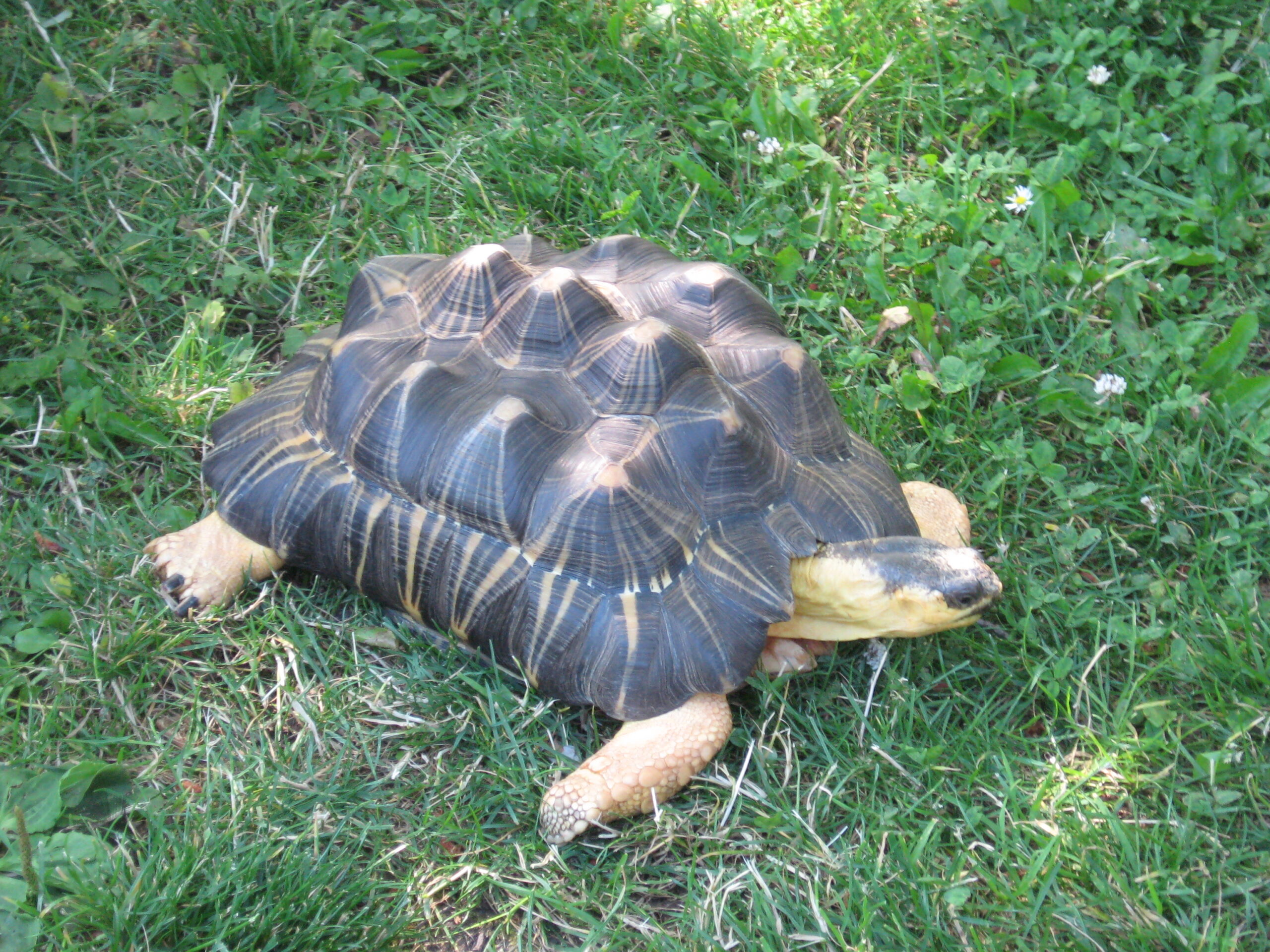 Photo Credit: Flickr upload bot / Wikimedia Commons
In the sun-drenched forests of southern Madagascar, the Radiated Tortoise, or Astrochelys radiata, slowly makes its way across the dry, cracked earth. With a shell that looks like a masterpiece of nature, its dome-shaped carapace is adorned with striking yellow and black patterns that radiate outward like the rays of the sun. This stunning design not only captivates the eyes of nature lovers but also serves a purpose, helping the tortoise blend into its environment while warding off potential predators. As it ambles through the underbrush, nibbling on grasses and succulent fruits, the Radiated Tortoise embodies a peaceful existence, a living testament to the beauty and complexity of life on our planet.
Scientists and nature enthusiasts alike are drawn to the Radiated Tortoise for more than just its breathtaking appearance. This remarkable reptile plays a vital role in its ecosystem, acting as a keystone species that helps maintain the balance of plant life in its habitat. By munching on various vegetation, it contributes to the health of the dry tropical forests, ensuring that the vibrant tapestry of life continues to thrive. However, the Radiated Tortoise faces significant challenges, as it is classified as Critically Endangered due to habitat loss and poaching. As we explore the world of Astrochelys radiata, we uncover not only its fascinating biology and behavior but also the urgent need for conservation efforts to protect this extraordinary creature and its home.
The Radiated Tortoise, known scientifically as Astrochelys radiata, holds a special place in the tree of life. This enchanting reptile is part of the kingdom Animalia, which includes all animals, and it belongs to the phylum Chordata, meaning it has a backbone. As a member of the class Reptilia, it shares traits with other reptiles like snakes and lizards. What sets the Radiated Tortoise apart is its stunning shell, adorned with striking yellow and black patterns that resemble the rays of the sun. This beautiful design not only makes it a visual marvel but also plays a role in its survival, helping it blend into its environment in Madagascar, its native home.
| Taxonomic Rank | Scientific Name | Meaning & Significance |
|---|---|---|
| Kingdom | Animalia | This name signifies that the Radiated Tortoise is part of the vast group of multicellular organisms known as animals. |
| Phylum | Chordata | Chordata means “having a cord,” referring to the notochord, a flexible rod that supports the body, which all members of this group possess at some stage of development. |
| Class | Reptilia | Reptilia comes from the Latin word “reptilis,” meaning “to creep,” highlighting the movement style of these cold-blooded animals. |
| Order | Testudines | Testudines is derived from the Latin word “testudo,” meaning “tortoise,” and it encompasses all turtles and tortoises, known for their protective shells. |
| Family | Testudinidae | This family name refers to tortoises, emphasizing their terrestrial lifestyle and adaptations for life on land. |
| Genus | Astrochelys | Astrochelys combines the Greek words “astron,” meaning “star,” and “chelys,” meaning “tortoise,” which reflects the star-like pattern on its shell. |
| Species | radiata | Radiata means “radiating,” referring to the distinctive rays on the tortoise’s shell that radiate outward, much like the sun’s rays. |
The classification of the Radiated Tortoise reveals much about its evolutionary journey. As a member of the Testudinidae family, it shares a common ancestor with other tortoises, showcasing adaptations that have allowed it to thrive in Madagascar’s unique ecosystems. Its striking shell not only serves as a defense mechanism but also highlights the evolutionary pressures that shape species in isolated environments. Understanding its taxonomic position helps us appreciate the intricate web of life and the importance of conserving such extraordinary animals, which are increasingly threatened by habitat loss and poaching.
The evolutionary journey of the Radiated Tortoise, or Astrochelys radiata, stretches back millions of years, tracing its lineage to ancient reptiles that roamed the Earth during the age of dinosaurs. These tortoises are part of the family Testudinidae, which includes all tortoises, and they have adapted to their environment in Madagascar, where they have thrived for thousands of years. The story of the Radiated Tortoise is one of survival, adaptation, and the intricate dance of evolution.
The ancestors of the Radiated Tortoise were likely similar to other early tortoises that emerged around 200 million years ago. These early reptiles began to develop hard shells, a crucial adaptation that provided protection from predators. Over time, as the climate and ecosystems changed, the Radiated Tortoise evolved distinct features that set it apart from its relatives. One major transition was the development of its striking shell pattern, which not only serves as camouflage among the dry grasses and shrubs of Madagascar but also plays a role in attracting mates.
These adaptations have been vital for the survival of the Radiated Tortoise in Madagascar’s unique ecosystem. The ability to camouflage with its beautifully patterned shell helps it evade predators, while its specialized diet allows it to thrive on the limited vegetation available. With a slow metabolism, this tortoise can endure periods of drought, making it well-suited to its environment. Together, these evolutionary traits have enabled the Radiated Tortoise to persist through the ages, showcasing the wonders of nature’s ingenuity.
The Radiated Tortoise is a stunning example of nature’s artistry, captivating anyone who lays eyes on it. With a shell that resembles a work of art, this tortoise boasts a dome-shaped carapace adorned with striking yellow and black patterns. Its body is sturdy and compact, designed for a life spent mostly on land. The tortoise’s limbs are thick and powerful, allowing it to navigate its environment with surprising agility, while its head is small and features a beak-like mouth, perfect for munching on the vegetation that makes up its diet.
| Feature | Description |
|---|---|
| Weight | 2.2kg – 16kg (4.9lbs – 35lbs) |
| Skin Type | Scales |
These physical traits work together to create a tortoise that is not only beautiful but also well-adapted to its environment. The hard, patterned shell serves as a protective barrier against predators, while the tortoise’s weight allows it to remain grounded and stable on uneven terrain. Its scaled skin helps retain moisture, which is crucial for survival in the dry habitats of Madagascar, where it is native. Together, these features enable the Radiated Tortoise to thrive in its unique ecosystem, showcasing the incredible ways in which form and function intertwine in the animal kingdom.
The Radiated Tortoise thrives in the sun-drenched landscapes of southern Madagascar, where dry tropical forests create a unique and vibrant habitat. Picture a world filled with tall, swaying trees, their leaves rustling gently in the warm breeze. The ground is often covered with a mix of sandy soil and scattered rocks, providing the perfect environment for these tortoises to roam. Sunlight filters through the canopy, casting playful shadows on the forest floor, where the tortoises can often be seen munching on the lush grasses and succulent plants that grow in this arid paradise.
This region experiences a tropical climate, characterized by distinct wet and dry seasons. The dry season can be quite harsh, with temperatures soaring during the day, while nights can be cooler. The Radiated Tortoise has adapted to these conditions, relying on the moisture from the vegetation to stay hydrated. They thrive in areas where the sun shines brightly, but they also seek shelter under bushes or in the shade of trees to escape the heat when necessary.
The Radiated Tortoise has developed several clever adaptations to survive in its specific habitat. Its beautiful, patterned shell not only serves as a protective armor but also helps it blend into the dappled light of the forest floor. This camouflage is essential for avoiding predators. Additionally, the tortoise’s diet consists mainly of grasses and leaves, which are abundant in its dry tropical forest home. By being able to consume a variety of plant materials, the Radiated Tortoise can thrive even when food sources fluctuate with the seasons.
The Radiated Tortoise leads a life that is both tranquil and methodical. As a diurnal species, it is most active during the day, basking in the warm sun and foraging for food. These tortoises enjoy a diet primarily made up of grasses, fruits, and flowers, which they munch on slowly and deliberately. Their daily routine often includes periods of sunbathing, where they soak up the sun’s rays to help regulate their body temperature. This basking behavior is crucial, as it allows them to maintain their energy levels for the day ahead.
While Radiated Tortoises are generally solitary creatures, they do have interesting social interactions, especially during the mating season. Males may engage in head-bobbing displays to attract females, showcasing their strength and vitality. Although they prefer to roam alone, they can sometimes be seen in small groups, particularly when food is abundant. These brief gatherings allow them to communicate through subtle body language and movements, helping them establish their place in the social hierarchy, even if it is temporary.
| Behavior Type | Description |
|---|---|
| Activity Patterns | Radiated Tortoises are diurnal, meaning they are active during the day, engaging in basking and foraging. |
| Social Structure | Primarily solitary, they may gather in small groups during mating season or when food is plentiful. |
| Communication Methods | They communicate through body language, including head-bobbing and other subtle movements, especially during courtship. |
The behaviors of the Radiated Tortoise are finely tuned to ensure their survival in the wild. By basking in the sun, they maintain the energy needed for foraging and navigating their environment. Their solitary nature allows them to avoid competition for resources, while their occasional social interactions help them find mates and establish temporary bonds. This balance of independence and social behavior is key to thriving in the unique ecosystems of Madagascar, where every day is a new adventure in the life of a Radiated Tortoise.
The Radiated Tortoise is a dedicated herbivore, meaning it primarily eats plants. This tortoise has a particular fondness for a variety of vegetation, including grasses, fruits, and flowers. With its strong, beak-like jaws, it can easily munch on tough plant material. During the day, the tortoise roams its habitat, using its keen sense of smell to locate tasty treats. It often spends hours foraging, carefully selecting the most nutritious and flavorful options to satisfy its appetite.
| Dietary Aspect | Details |
|---|---|
| Diet Type | Herbivore |
| Favorite Foods | Grasses, fruits, and flowers |
| Prey Items | Primarily plant-based, no animal prey |
| Hunting/Foraging Strategies | Uses smell to locate food, forages during the day |
The diet of the Radiated Tortoise plays a crucial role in its ecology and daily routine. By consuming a variety of plants, it helps maintain the health of its habitat, promoting the growth of new vegetation. This foraging behavior not only sustains the tortoise but also supports the ecosystem by dispersing seeds through its droppings. As it moves through the dry tropical forests of Madagascar, the tortoise contributes to the balance of its environment, showcasing the interconnectedness of life in this vibrant ecosystem.
When it comes to the mating rituals of the Radiated Tortoise, the breeding season is a time of excitement and activity. Typically, this season occurs during the warmer months, when the sun shines brightly over Madagascar. Males engage in a fascinating courtship display, which includes head bobbing and gentle nudging of the females. This behavior helps establish dominance and attract a mate. Once a female is receptive, she will lay her eggs in a carefully dug nest, often in sandy soil, where they can be protected from the elements.
| Reproductive Aspect | Details |
|---|---|
| Gestation Period | Approximately 120 days |
| Litter Size | 3 to 12 eggs |
| Age of Maturity | 15 – 20 years |
| Name of Young | Hatchling |
After the eggs are laid, the female leaves them to incubate on their own. The hatchlings emerge after about four months, ready to face the world. These tiny tortoises are vulnerable at this stage, relying on their natural instincts to survive. They are born with a hard shell, which provides some protection, but they must be cautious of predators. As they grow, they begin to forage for food, learning to navigate their environment. Over the years, with the right conditions and care, these hatchlings will mature into the stunning adults that embody the beauty of the Radiated Tortoise.
The Radiated Tortoise plays a vital role in its ecosystem, primarily as a herbivore that helps maintain the balance of plant life in its habitat. By munching on various grasses and fruits, it contributes to seed dispersal, which is essential for the growth of new plants. However, this beautiful tortoise faces numerous dangers that threaten its survival in the wild.
To defend itself against these threats, the Radiated Tortoise has developed several survival strategies. When faced with danger, it can retreat into its hard shell, which acts as a protective barrier against predators. This behavior is crucial, especially since its slow movement makes it vulnerable. Additionally, the tortoise’s natural camouflage, with its striking shell patterns blending into the dry forest floor, helps it avoid detection. By relying on these defensive behaviors, the Radiated Tortoise continues to navigate the challenges of its environment, showcasing the resilience of nature.
A keystone species is an organism that has a disproportionately large impact on its environment relative to its abundance. In the case of the Radiated Tortoise, or Astrochelys radiata, this tortoise indeed qualifies as a keystone species in its native habitat of southern Madagascar. Its role is crucial for maintaining the ecological balance of the dry tropical forests where it resides.
The Radiated Tortoise primarily feeds on a variety of plants, including grasses, fruits, and flowers. By consuming these plants, it helps control their growth and distribution. This grazing behavior prevents any single species from dominating the landscape, allowing for a diverse array of plant life to flourish. This diversity is essential, as it supports various other species, from insects to birds, that rely on these plants for food and shelter.
Moreover, the tortoise contributes to seed dispersal. As it munches on fruits, it inadvertently helps spread seeds throughout its environment. When the tortoise excretes these seeds, they can germinate in new locations, promoting plant growth in areas where they might not have otherwise thrived. This process is vital for the regeneration of the forest and the overall health of the ecosystem.
The Radiated Tortoise also plays a role in soil health. By digging and foraging, it helps aerate the soil, which improves water infiltration and nutrient cycling. Healthy soil is the foundation for a thriving ecosystem, supporting not just plants but also the myriad of organisms that depend on them.
If the Radiated Tortoise were to disappear, the consequences would ripple through its ecosystem. Without this tortoise, certain plant species could become overabundant, choking out others and reducing biodiversity. The loss of seed dispersal would hinder the growth of new plants, leading to a decline in forest regeneration. Ultimately, the entire ecosystem could suffer, affecting not just plants but also the animals that depend on them for survival. The disappearance of this tortoise would mark a significant shift in the delicate balance of its habitat, highlighting just how vital it is to the health of its environment.
The Radiated Tortoise, or Astrochelys radiata, occupies a crucial ecological niche in the dry tropical forests of southern Madagascar. As a herbivore, this tortoise plays a significant role in shaping its environment. By feeding on a variety of plants, including grasses and fruits, it helps control plant growth and maintain the balance of its ecosystem. This gentle giant not only influences the vegetation but also creates habitats for other species, making it an essential player in its community.
| Ecosystem Service | Impact |
|---|---|
| Plant Grazing | Controls plant growth and promotes biodiversity |
| Seed Dispersal | Helps spread seeds through its droppings, aiding plant reproduction |
| Soil Aeration | Burrowing behavior loosens soil, improving water infiltration |
| Habitat Creation | Provides shelter and food for other species through its foraging |
The influence of the Radiated Tortoise extends beyond its immediate diet. For instance, as it grazes on various plants, it prevents any single species from dominating the landscape. This grazing behavior encourages a diverse array of plant life, which in turn supports a variety of insects, birds, and other animals. Additionally, when the tortoise consumes fruits, it helps in seed dispersal. The seeds pass through its digestive system and are deposited in new locations, allowing plants to grow in different areas and enhancing the overall health of the forest.
The broader ecological importance of the Radiated Tortoise cannot be overstated. As a keystone species, its presence is vital for maintaining the structure and function of its ecosystem. Without this tortoise, the delicate balance of plant and animal life in its habitat could be disrupted, leading to a decline in biodiversity. Protecting the Radiated Tortoise is not just about saving a single species; it is about preserving the intricate web of life that thrives in Madagascar’s dry tropical forests. By ensuring the survival of this remarkable tortoise, we help safeguard the future of its entire ecosystem.
In the intricate web of life, symbiosis plays a vital role in shaping ecosystems. Symbiosis refers to the close interactions between different species, which can be beneficial, harmful, or neutral. These relationships can take many forms, such as mutualism, where both species gain advantages, parasitism, where one benefits at the other’s expense, and commensalism, where one species benefits while the other is neither helped nor harmed. The Radiated Tortoise, native to Madagascar, engages in various ecological partnerships that highlight the complexity of its environment.
| Species/Type | Relationship Type | Description |
|---|---|---|
| Birds (e.g., Madagascar Pygmy Kingfisher) | Mutualistic | These birds often perch on the tortoise’s shell, helping to remove parasites while gaining a vantage point for spotting predators. |
| Plants (e.g., grasses and fruits) | Mutualistic | The tortoise helps disperse seeds through its droppings, promoting plant growth while feeding on their leaves and fruits. |
| Insects (e.g., ants) | Commensal | Ants may inhabit the tortoise’s shell, benefiting from the protection it offers without affecting the tortoise. |
The evolution of these relationships showcases the dynamic interactions that have developed over time. As the Radiated Tortoise forages and moves through its habitat, it inadvertently supports the survival of various species, creating a network of interdependence. These partnerships not only enhance the tortoise’s own well-being but also contribute to the health of the entire ecosystem. By understanding these connections, we can appreciate the delicate balance of nature and the importance of preserving such unique relationships in the wild.
The Radiated Tortoise is not just a beautiful reptile; it is a fascinating creature with many surprising traits that make it stand out in the animal kingdom. Here are some intriguing facts that will surely captivate nature enthusiasts of all ages.
The Radiated Tortoise, or Astrochelys radiata, has long been intertwined with human culture, particularly in Madagascar, where it is native. Historically, these tortoises have been revered in local traditions and folklore, often symbolizing longevity and resilience. Their striking, star-patterned shells have made them a subject of fascination, leading to their depiction in art and stories. In some communities, they are seen as a connection to the land and its history, embodying the spirit of Madagascar’s unique biodiversity.
Today, the relationship between the Radiated Tortoise and humanity is complex and often fraught with challenges. As their natural habitat faces threats from deforestation and agricultural expansion, conservation efforts have become crucial. Organizations are working tirelessly to protect these tortoises from poaching and illegal pet trade, which have significantly reduced their populations. However, conflicts arise as local communities sometimes view these tortoises as competitors for resources, leading to tensions. While some people are dedicated to preserving the species, others may inadvertently contribute to its decline through habitat destruction or hunting.
As we look to the future, the relationship between the Radiated Tortoise and humanity holds both promise and peril. With increased awareness and education, there is hope for a more harmonious coexistence. By fostering a sense of stewardship among local communities and promoting sustainable practices, we can help ensure that these magnificent tortoises continue to thrive in their natural habitat. The journey ahead will require collaboration and commitment, but together, we can protect the Radiated Tortoise and the rich tapestry of life it represents.
The Radiated Tortoise, known scientifically as Astrochelys radiata, is currently classified as Critically Endangered. This status indicates that the species faces an extremely high risk of extinction in the wild. Unfortunately, the population of these tortoises is on a downward trend, which raises significant concerns for their future. Conservationists and researchers are working diligently to understand and address the factors contributing to this decline.
| Conservation Factor | Status/Details |
|---|---|
| IUCN Status | Critically Endangered |
| Population Estimates | Declining |
| Trend Direction | Decreasing |
The main threats to the Radiated Tortoise stem from habitat loss and illegal poaching. As Madagascar’s forests are cleared for agriculture and development, these tortoises lose their natural homes. Additionally, they are often hunted for their meat and shells, which are highly valued in local markets. This combination of factors has led to a significant reduction in their numbers, making it crucial to take action to protect them.
Conservation efforts are underway to help the Radiated Tortoise recover. Organizations are working to establish protected areas and promote sustainable land use practices that benefit both the tortoises and local communities. Education programs are also being implemented to raise awareness about the importance of preserving this species. While the outlook remains challenging, there is hope that with continued efforts, the Radiated Tortoise can be saved from the brink of extinction.
| Question | Answer |
|---|---|
| What is the natural habitat of the Radiated Tortoise? | The Radiated Tortoise lives in dry tropical forests, primarily found in Madagascar. These forests provide the warm temperatures and shelter that these tortoises need to thrive. |
| What do Radiated Tortoises eat? | Radiated Tortoises are herbivores, which means they primarily eat plants. Their diet consists of grasses, leaves, and fruits, making them important for their ecosystem by helping to spread seeds. |
| How do Radiated Tortoises behave in the wild? | These tortoises are generally solitary creatures, preferring to roam alone in their habitat. They are known for their slow movements and can often be seen basking in the sun to regulate their body temperature. |
| How do Radiated Tortoises reproduce? | Radiated Tortoises mate during the rainy season, which is when food is abundant. Females lay eggs in nests dug into the ground, and after about 120 days, the baby tortoises hatch and begin their journey in the wild. |
| What are the main threats to Radiated Tortoises? | Radiated Tortoises face several threats, including habitat loss due to deforestation and illegal poaching for the pet trade. Their conservation status is critically endangered, meaning they are at a very high risk of extinction. |
| What are some interesting characteristics of Radiated Tortoises? | One of the most striking features of the Radiated Tortoise is its beautiful shell, which has a unique star pattern. This pattern not only makes them visually stunning but also helps them blend into their environment, providing some protection from predators. |
| How long can Radiated Tortoises live? | Radiated Tortoises can live for a very long time, often reaching ages of 50 years or more in the wild. Some individuals in captivity have been known to live over 100 years, making them one of the longest-living reptiles. |