Taxonomy & Classification
- Kingdom
- Animalia
- Phylum
- Chordata
- Class
- Chondrichthyes
- Order
- Lamniformes
- Family
- Odontaspididae
- Genus
- Carcharias

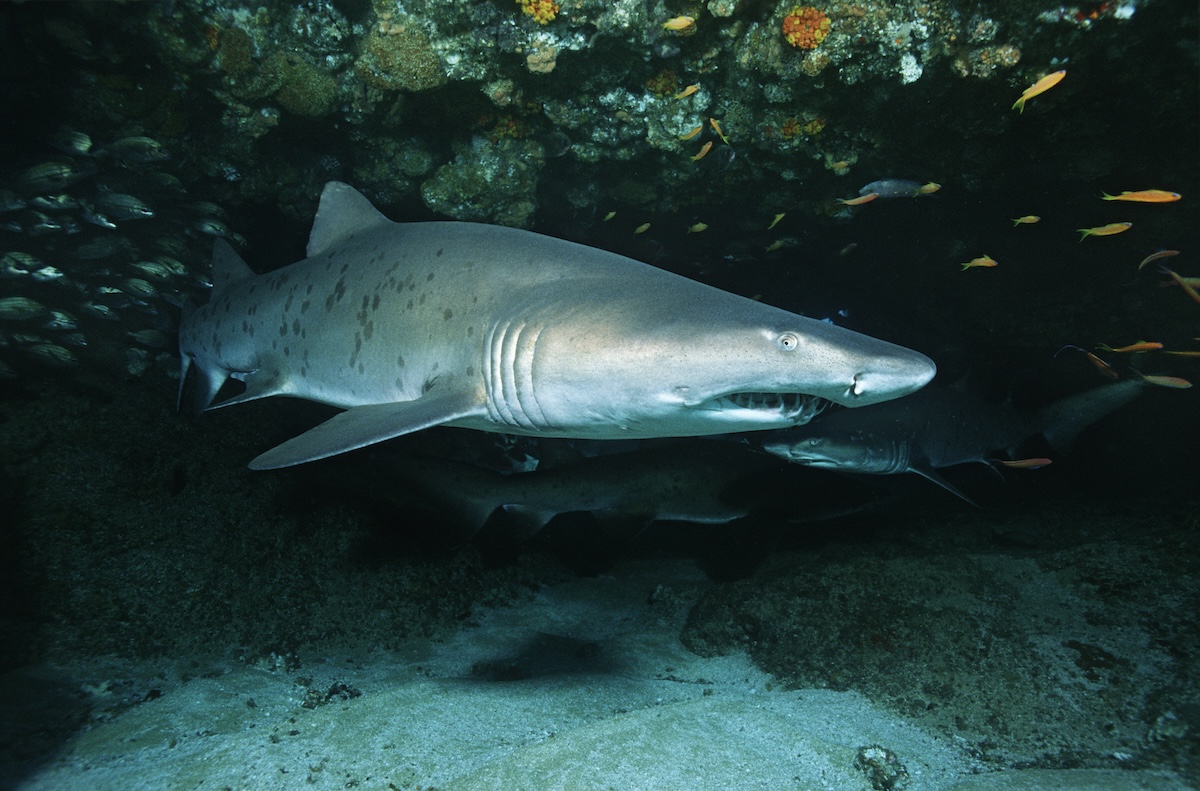 Photo Credit: londondeposit at Deposit Photos
In the shimmering depths of the ocean, the Sand Tiger Shark, or Carcharias taurus, glides gracefully through the water, embodying both elegance and power. With its long, slender body and distinctive, toothy grin, this shark is a sight to behold. Its unique appearance, featuring a mouth full of protruding teeth that seem to be perpetually on display, captures the imagination of both scientists and ocean enthusiasts alike. These features not only make it visually striking but also serve a purpose, as they help the Sand Tiger Shark catch its prey in the bustling underwater world.
Imagine a sunlit reef where the gentle waves dance above, casting playful shadows on the sandy ocean floor. Here, the Sand Tiger Shark finds its home, often resting in caves or lurking near rocky outcrops. This fascinating predator is primarily nocturnal, meaning it comes alive at night, hunting for bony fish, crustaceans, and even other sharks. As it prowls the depths, it plays a crucial role in maintaining the balance of marine ecosystems, acting as both predator and prey. With a history that stretches back over 100 million years, the Sand Tiger Shark is not just a survivor; it is a living link to the ancient oceans, captivating our curiosity and reminding us of the wonders that lie beneath the waves.
The Sand Tiger Shark holds a special place in the tree of life, showcasing a blend of ancient lineage and modern adaptation. This fascinating species belongs to the class Chondrichthyes, which includes all sharks and rays, characterized by their cartilaginous skeletons instead of bones. What sets the Sand Tiger Shark apart is its unique appearance, with long, slender bodies and a mouth full of sharp, protruding teeth that give it a somewhat fearsome look. Despite its intimidating grin, this shark is known for its relatively docile nature, often swimming near the ocean floor in search of prey.
| Taxonomic Rank | Scientific Name | Meaning & Significance |
|---|---|---|
| Kingdom | Animalia | This name signifies that Sand Tiger Sharks are part of the vast group of multicellular organisms known as animals, which are characterized by their ability to move and respond to their environment. |
| Phylum | Chordata | Chordata means “having a notochord,” a flexible rod that supports the body. In sharks, this structure is replaced by a backbone made of cartilage, highlighting their evolutionary adaptation. |
| Class | Chondrichthyes | This term translates to “cartilage fish,” emphasizing the shark’s skeleton, which is made of cartilage rather than bone, a trait that has allowed them to thrive for millions of years. |
| Order | Lamniformes | Lamniformes means “shark-like,” indicating that this order includes many of the larger, more streamlined sharks, known for their speed and hunting prowess. |
| Family | Odontaspididae | This family name comes from the Greek word “odous,” meaning tooth, and “aspis,” meaning shield, referring to the distinctive teeth of these sharks that are adapted for catching slippery prey. |
| Genus | Carcharias | The name Carcharias is derived from the Greek word “karcharos,” meaning sharp, which aptly describes the shark’s formidable teeth and predatory nature. |
The classification of the Sand Tiger Shark reveals much about its evolutionary journey. As a member of the Chondrichthyes class, it shares a lineage that dates back over 400 million years, making it one of the oldest surviving groups of vertebrates. This ancient heritage is reflected in its unique adaptations, such as its cartilaginous skeleton and specialized teeth, which have allowed it to thrive in diverse marine environments. Understanding its taxonomic position not only highlights its biological characteristics but also connects us to the broader story of life in our oceans, showcasing the incredible resilience and adaptability of these magnificent creatures.
The evolutionary journey of the Sand Tiger Shark stretches back over 100 million years, placing it among the ancient denizens of our oceans. This species, scientifically known as Carcharias taurus, has roots that trace back to the time of the dinosaurs. As the Earth transformed through various geological epochs, so too did the ancestors of the Sand Tiger Shark, adapting to the ever-changing marine environments.
The Sand Tiger Shark’s ancestors were part of a group known as Odontaspididae, which emerged during the Late Cretaceous period. These early sharks were characterized by their elongated bodies and sharp teeth, traits that would evolve over time. As the oceans shifted and diversified, these sharks adapted to become more efficient hunters. One significant transition was the development of a more streamlined body shape, allowing for swifter movement through the water. This adaptation was crucial for catching prey in a world filled with competition.
The adaptations of the Sand Tiger Shark have been vital for its survival in a dynamic ocean ecosystem. Their specialized teeth and buoyancy control allow them to thrive as ambush predators, while their unique hunting strategies enable them to capture prey effectively. As they continue to navigate the challenges of their environment, these ancient sharks remind us of the intricate dance of evolution that shapes life in our oceans.
The Sand Tiger Shark is a striking figure in the ocean, with a body that exudes both power and grace. Its elongated shape is reminiscent of a torpedo, designed for swift movement through the water. With a mouth full of sharp, pointed teeth that often protrude even when its jaws are closed, this shark has a fierce appearance that can be both intimidating and captivating. Its skin, rough to the touch, is covered in tiny, tooth-like structures called dermal denticles, which help reduce drag as it swims.
| Feature | Description |
|---|---|
| Weight | 110 to 660.79 pounds |
| Skin Type | Rough |
| Most Distinctive Feature | Gulps air to keep buoyant |
The combination of these features plays a crucial role in the Sand Tiger Shark’s survival. Its ability to gulp air allows it to maintain buoyancy, helping it to hover effortlessly in the water without expending too much energy. This adaptation is particularly useful when hunting for prey, as it can remain still and stealthy, waiting for the perfect moment to strike. The rough texture of its skin not only aids in swimming efficiency but also provides protection against potential predators and parasites. Together, these characteristics make the Sand Tiger Shark a master of its underwater domain.
The Sand Tiger Shark thrives in the warm embrace of shallow tropical and temperate waters, often found near sandy bottoms and rocky reefs. Picture a sunlit ocean where the waves gently lap against the shore, creating a perfect playground for these sharks. They prefer areas where the water is clear, allowing them to hunt and explore their surroundings with ease. This habitat is not just a home; it’s a bustling community filled with colorful fish, vibrant corals, and other marine life.
The Sand Tiger Shark enjoys a variety of climates, but it particularly favors regions where the water temperature is warm and stable. These sharks are often found in areas with a temperature range of about 18 to 28 degrees Celsius (64 to 82 degrees Fahrenheit). They thrive in environments that provide plenty of sunlight, which helps support the diverse ecosystems they inhabit. The shallow waters also offer a rich supply of prey, making it an ideal hunting ground.
Adaptation is key to the Sand Tiger Shark’s success in these habitats. With their elongated bodies and powerful fins, they are built for agility, allowing them to navigate through rocky crevices and around coral formations. Their unique ability to gulp air helps them maintain buoyancy, enabling them to hover effortlessly in the water column. This skill not only aids in hunting but also allows them to conserve energy while they rest. In these vibrant coastal waters, the Sand Tiger Shark has truly made a name for itself as a master of its domain.
The Sand Tiger Shark leads a life that is both intriguing and essential to its survival in the ocean. As a primarily nocturnal hunter, it spends its days resting in caves or on the ocean floor, conserving energy for the night ahead. When the sun sets, this shark becomes more active, gliding through the water with a graceful yet powerful motion. It hunts for fish and invertebrates, using its keen sense of smell to detect prey from a distance. The Sand Tiger Shark’s unique ability to gulp air allows it to stay buoyant, making it easier to navigate the underwater landscape.
Socially, Sand Tiger Sharks exhibit a mix of solitary and group behaviors. While they are often seen alone, they can also gather in small groups, especially during mating season. These gatherings are not permanent; rather, they are temporary alliances formed for specific purposes. Communication among these sharks is subtle, relying on body language and the positioning of their fins. When they are in close proximity, they may engage in gentle nudges or changes in swimming patterns, signaling their intentions to one another.
| Behavior Type | Description |
|---|---|
| Activity Patterns | Nocturnal hunting, resting during the day, and using buoyancy to navigate. |
| Social Structure | Primarily solitary but can form temporary groups during mating. |
| Communication Methods | Body language and fin positioning to convey intentions. |
The behaviors of the Sand Tiger Shark are finely tuned to ensure its survival in a dynamic marine environment. By resting during the day, it conserves energy for nighttime hunts, maximizing its chances of catching prey. The ability to form temporary groups during mating enhances reproductive success, while subtle communication helps maintain harmony among individuals. Together, these behaviors create a balance that allows the Sand Tiger Shark to thrive in its underwater world.
The Sand Tiger Shark is a carnivore, meaning it primarily eats meat. This shark has a diverse diet that includes bony fish, other sharks, crustaceans, squid, and even skates and rays. With its keen sense of smell and excellent eyesight, the Sand Tiger Shark is well-equipped to hunt in the ocean’s depths. It often uses a strategy called ambush predation, where it waits patiently for its prey to come close before striking with speed and precision. This method allows it to catch a variety of marine animals, making it a versatile and effective hunter.
| Dietary Aspect | Details |
|---|---|
| Diet Type | Carnivore |
| Favorite Foods | Bony fish, crustaceans, squid |
| Prey Items | Other sharks, skates, rays |
| Hunting Strategies | Ambush predation, using stealth and speed |
The diet of the Sand Tiger Shark plays a crucial role in its ecological niche. By preying on various marine species, it helps maintain the balance of the ocean ecosystem. This shark’s hunting habits also influence the population dynamics of its prey, ensuring that no single species becomes too dominant. As it navigates its underwater world, the Sand Tiger Shark’s feeding behavior shapes not only its own daily routine but also the health of the marine environment it inhabits.
When it comes to mating, Sand Tiger Sharks have a rather interesting approach. During the breeding season, which typically occurs in the warmer months, males engage in a unique courtship ritual. They often display their strength by swimming alongside females and gently biting their fins. This behavior helps establish dominance and attract a mate. Once a female has chosen a partner, the two will mate, and the female will carry the developing embryos for a significant period.
| Reproductive Aspect | Details |
|---|---|
| Gestation Period | Eight to twelve months |
| Litter Size | Two to twelve pups |
| Age of Maturity | About 5 to 6 years |
| Name of Young | Pups |
After the long gestation period, the female Sand Tiger Shark gives birth to live young, known as pups. These pups are born fully formed and ready to swim away, which is crucial for their survival. Interestingly, Sand Tiger Sharks practice a form of intrauterine cannibalism, where the stronger embryos consume their weaker siblings while still in the womb. This may sound harsh, but it ensures that the strongest pups are born, increasing their chances of survival in the wild. Once they are born, the pups are on their own, quickly learning to navigate the ocean and hunt for food, gradually growing into the majestic adults they are destined to become.
The Sand Tiger Shark plays a vital role in the ocean’s food web, acting as both predator and prey. Positioned near the top of this web, it helps maintain the balance of marine ecosystems by controlling the populations of its prey, which includes various fish and invertebrates. However, despite its formidable presence, the Sand Tiger Shark faces several dangers that threaten its survival.
To defend itself against these threats, the Sand Tiger Shark employs a mix of strategies. While it may not be the fastest swimmer, it uses its keen senses to detect changes in the water and locate prey. When faced with danger, it often relies on its size and intimidating appearance to ward off potential threats. Additionally, by resting in caves or on the ocean floor during the day, it minimizes encounters with larger predators. These behaviors help the Sand Tiger Shark navigate the challenges of its environment, ensuring its place in the ocean’s intricate tapestry of life.
A keystone species is an organism that has a disproportionately large impact on its environment relative to its abundance. In the case of the Sand Tiger Shark, this species does indeed qualify as a keystone player in its ecosystem. By maintaining the balance of marine life, it influences the structure and health of its habitat, making it essential for the overall functioning of the oceanic community.
Sand Tiger Sharks are top predators, which means they help control the populations of other marine animals. By preying on bony fish, crustaceans, and even other sharks, they prevent any one species from becoming too dominant. This predatory behavior promotes biodiversity, allowing various species to thrive. For example, when Sand Tiger Sharks hunt, they often target the weaker or sick individuals in a fish population. This not only keeps the fish populations healthy but also ensures that the ecosystem remains balanced.
Moreover, Sand Tiger Sharks contribute to the health of coral reefs and other marine habitats. By regulating the populations of their prey, they help maintain the delicate balance of these ecosystems. If their prey were to overpopulate, it could lead to overgrazing of vital habitats like seagrass beds and coral reefs, which are crucial for many marine species. Thus, the presence of Sand Tiger Sharks indirectly supports the entire marine food web.
If Sand Tiger Sharks were to disappear from their habitats, the consequences could be dire. Without these apex predators, the populations of their prey could explode, leading to overgrazing and depletion of essential marine habitats. This imbalance would not only affect the species that rely on these habitats for survival but could also ripple through the entire ecosystem, ultimately impacting human communities that depend on healthy oceans for food and recreation. The loss of Sand Tiger Sharks would signify a loss of balance, highlighting just how crucial they are to the marine world.
The Sand Tiger Shark plays a crucial role in its marine ecosystem, acting as a keystone species that helps maintain the balance of life beneath the waves. Found in shallow tropical and temperate waters, this shark is not just a predator; it influences the entire community of organisms around it. By preying on various fish and invertebrates, the Sand Tiger Shark helps regulate populations, ensuring that no single species dominates the ecosystem. This balance is vital for the health of coral reefs and other marine habitats, where diverse life forms thrive.
| Ecosystem Service | Impact |
|---|---|
| Population Control | Regulates the numbers of prey species, preventing overpopulation. |
| Habitat Maintenance | Supports the health of coral reefs by controlling herbivore populations. |
| Nutrient Cycling | Contributes to the flow of nutrients through the food web. |
| Prey for Other Species | Serves as a food source for larger predators, maintaining the food web. |
The influence of the Sand Tiger Shark extends beyond its immediate hunting habits. For instance, by keeping the populations of smaller fish in check, it allows for a more diverse range of species to flourish. This diversity is essential for the resilience of coral reefs, which rely on a balanced ecosystem to thrive. When the Sand Tiger Shark is present, it helps ensure that herbivorous fish, which graze on algae, do not overpopulate and disrupt the delicate balance of the reef. This interaction highlights the interconnectedness of marine life, where the presence of one species can significantly impact many others.
In a broader ecological context, the Sand Tiger Shark’s role is vital for the overall health of ocean ecosystems. As a top predator, it helps maintain the structure of marine communities, ensuring that various species can coexist. The loss of such a key player could lead to cascading effects, where the imbalance disrupts not only the shark’s prey but also the entire food web. By understanding the importance of the Sand Tiger Shark, we can appreciate the intricate relationships that sustain life in our oceans and the need to protect these magnificent creatures for future generations.
In the intricate web of ocean life, symbiosis plays a vital role in shaping the relationships between different species. Symbiosis refers to the close interactions between organisms, which can be beneficial, harmful, or neutral. These relationships can be mutualistic, where both species gain advantages; parasitic, where one benefits at the expense of the other; or commensal, where one benefits while the other is neither helped nor harmed. The Sand Tiger Shark, known for its impressive presence in the ocean, engages in various ecological relationships that highlight the interconnectedness of marine life.
| Species/Type | Relationship Type | Description |
|---|---|---|
| Remoras | Commensal | Remoras attach themselves to the Sand Tiger Shark, gaining transportation and access to food scraps without harming the shark. |
| Cleaner Wrasse | Mutualistic | These small fish clean parasites and dead skin off the Sand Tiger Shark, benefiting from a meal while keeping the shark healthy. |
| Other Sharks | Intraspecific Competition | While not a direct partnership, Sand Tiger Sharks may compete with other shark species for food in shared habitats. |
The evolution of these relationships showcases the adaptability and resilience of species like the Sand Tiger Shark. Over time, these interactions have developed to enhance survival and efficiency in the ocean. For instance, the partnership with cleaner wrasse not only helps the shark maintain its health but also provides a steady food source for the wrasse. Such relationships illustrate the delicate balance of marine ecosystems, where cooperation and competition coexist, ultimately benefiting the diverse life forms that inhabit our oceans.
The Sand Tiger Shark is a captivating inhabitant of our oceans, known for its unique adaptations and intriguing behaviors. Here are some surprising facts that showcase just how remarkable this species truly is.
The Sand Tiger Shark has long captured the imagination of humans, weaving its way into our history and culture. Ancient mariners often spoke of these formidable creatures, sometimes mistaking them for monsters of the deep. In various cultures, they have been depicted in art and folklore, symbolizing strength and resilience. Their unique appearance, with long, pointed teeth that protrude even when their mouths are closed, has made them a subject of fascination and fear. This cultural significance reflects humanity’s complex relationship with the ocean and its inhabitants, where awe often mingles with trepidation.
Today, interactions between Sand Tiger Sharks and humans are evolving, shaped by both conservation efforts and conflicts. As awareness of marine ecosystems grows, many organizations are working to protect these sharks and their habitats. However, conflicts arise from fishing practices and habitat destruction, which threaten their populations. While Sand Tiger Sharks are not typically targeted for sport fishing, they can become entangled in nets or caught accidentally. Some aquariums have even taken steps to domesticate these sharks for educational purposes, allowing people to learn about their biology and importance in marine ecosystems.
Looking ahead, the future of the relationship between Sand Tiger Sharks and humanity hinges on our ability to balance conservation with responsible interaction. As we deepen our understanding of these ancient creatures, we have the opportunity to foster a more respectful coexistence. By prioritizing sustainable practices and supporting conservation efforts, we can ensure that future generations will not only admire the Sand Tiger Shark from afar but also appreciate its vital role in the health of our oceans. Together, we can create a world where both humans and sharks thrive.
The Sand Tiger Shark, known scientifically as Carcharias taurus, is currently classified as Vulnerable by the International Union for Conservation of Nature (IUCN). This status indicates that the species faces a high risk of extinction in the wild. Recent estimates suggest that the population has decreased by about 20 percent over the last decade, primarily due to human activities. As these sharks are often targeted for their fins and meat, their numbers are dwindling, raising concerns about their future in our oceans.
| Conservation Factor | Status/Details |
|---|---|
| IUCN Status | Vulnerable |
| Population Estimates | Unknown |
| Population Trend | Decreased by 20% in the last decade |
The main threats to the Sand Tiger Shark stem from overfishing and habitat degradation. These sharks are often caught unintentionally in fishing gear, a practice known as bycatch, which can lead to significant population declines. Additionally, their slow reproductive rate makes it difficult for their numbers to recover once they are overfished. Coastal development and pollution also threaten their habitats, further complicating their survival.
Conservation efforts are underway to protect the Sand Tiger Shark and its habitat. Many countries have implemented regulations to limit fishing and protect critical breeding areas. Public awareness campaigns aim to educate people about the importance of these sharks in maintaining healthy marine ecosystems. While the outlook for the Sand Tiger Shark remains uncertain, ongoing conservation initiatives provide hope for a brighter future, allowing these magnificent creatures to thrive once more in our oceans.
| Question | Answer |
|---|---|
| Where do Sand Tiger Sharks live? | Sand Tiger Sharks are found in shallow tropical and temperate waters close to the shore. They prefer sandy or rocky bottoms, often near reefs, where they can hunt for food. |
| What do Sand Tiger Sharks eat? | These sharks are carnivores, meaning they primarily eat meat. Their diet includes fish, squid, and crustaceans, which they hunt using their keen sense of smell and sharp teeth. |
| How do Sand Tiger Sharks behave? | Sand Tiger Sharks are known for their unique behavior of gulping air to stay buoyant in the water. They are generally solitary but can sometimes be seen swimming in small groups, especially during mating season. |
| How do Sand Tiger Sharks reproduce? | Sand Tiger Sharks have a fascinating reproductive process called ovoviviparity. This means that the eggs hatch inside the female's body, and she gives birth to live young, usually around two to four pups at a time. |
| What threats do Sand Tiger Sharks face? | Sand Tiger Sharks are classified as vulnerable due to overfishing and habitat loss. They are often caught accidentally in fishing nets and are targeted for their fins, which are used in shark fin soup. |
| What is a unique characteristic of Sand Tiger Sharks? | One of the most distinctive features of Sand Tiger Sharks is their ability to gulp air. This helps them maintain buoyancy, allowing them to hover in the water without expending much energy. |
| Are Sand Tiger Sharks dangerous to humans? | While Sand Tiger Sharks have sharp teeth and a fierce appearance, they are generally not considered a threat to humans. They are known to be relatively docile and often avoid contact with people. |