Taxonomy & Classification
- Kingdom
- Animalia
- Phylum
- Chordata
- Class
- Mammalia
- Order
- Carnivora
- Family
- Felidae
- Genus
- Felis
- Species
- Felis catus

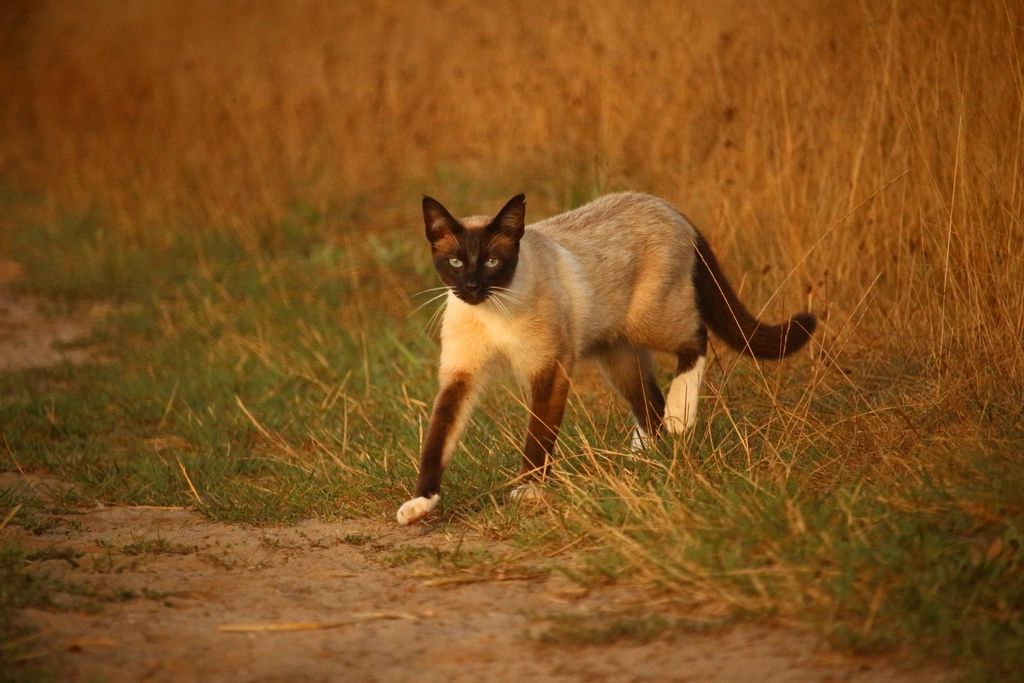 Photo Credit: Rawpixel
In the sun-drenched streets of Southeast Asia, the Siamese cat, scientifically known as Felis catus, weaves through bustling markets and quiet temples, captivating all who encounter its striking presence. With its sleek, elongated body and striking blue almond-shaped eyes, this breed stands out like a jewel against the vibrant backdrop of its tropical habitat. The Siamese is not just a pretty face; its short coat, marked by darker points on the ears, face, paws, and tail, tells a story of adaptation and elegance that has fascinated scientists and cat lovers alike for centuries.
These enchanting felines are known for their playful and social nature, often forming strong bonds with their human companions. Their vocalizations, a series of melodious meows and chirps, add to their charm, making them one of the most communicative breeds. As they explore their surroundings, their curiosity drives them to investigate every nook and cranny, showcasing their intelligence and agility. The Siamese cat’s rich history, intertwined with human culture, and its vibrant personality make it a beloved companion and a subject of endless fascination in the animal kingdom. Join us as we delve deeper into the world of the Siamese cat, exploring its unique traits, behaviors, and the special role it plays in our lives.
The Siamese cat, a striking and social breed, occupies a special place in the animal kingdom. Taxonomically, it belongs to the Kingdom Animalia, which includes all animals, and is classified under the Phylum Chordata, meaning it has a backbone. Within this framework, the Siamese is part of the Class Mammalia, which encompasses all mammals, and the Order Carnivora, a group that includes meat-eating animals like dogs and bears. Its family, Felidae, is home to all cats, both big and small. The Siamese is particularly known for its striking blue almond-shaped eyes, short coat with color points, and vocal personality, making it a beloved companion for many.
| Taxonomic Rank | Scientific Name | Meaning & Significance |
|---|---|---|
| Kingdom | Animalia | This name comes from the Latin word for “animal,” highlighting that Siamese cats are part of the vast group of living organisms that are multicellular and capable of movement. |
| Phylum | Chordata | Derived from the Greek word “chordē,” meaning “string,” this term refers to the notochord, a flexible rod that is a key feature in the development of vertebrates, including the Siamese. |
| Class | Mammalia | This classification comes from the Latin word “mamma,” meaning “breast,” indicating that Siamese cats, like all mammals, nurse their young with milk. |
| Order | Carnivora | From the Latin “carnivorus,” meaning “meat-eating,” this term reflects the dietary habits of the Siamese, which, like other cats, are primarily carnivorous. |
| Family | Felidae | This name is derived from the Latin word “felis,” meaning “cat,” and it encompasses all species of cats, emphasizing the Siamese’s close relationship with other felines. |
| Genus | Felis | Also from Latin, “felis” means “cat,” and it signifies the small to medium-sized cats, including the domestic Siamese, which share common traits and behaviors. |
Understanding the Siamese cat’s classification reveals much about its evolutionary journey. As a member of the Felidae family, it shares a common ancestor with other cats, which dates back millions of years. This lineage has shaped its physical characteristics and behaviors, such as its social nature and vocalizations. The Siamese’s unique traits, like its striking color points and affectionate demeanor, are not just random; they are the result of adaptations that have developed over time, making it a fascinating example of how evolution shapes the lives of animals.
The Siamese cat’s evolutionary journey is a captivating tale that stretches back thousands of years. Originating in Southeast Asia, these cats have a rich history intertwined with human culture, particularly in Thailand, where they were revered as sacred animals. The timeline of their evolution reveals a blend of natural selection and human influence, shaping them into the elegant and sociable companions we know today.
The ancestors of the Siamese can be traced to the wildcats of the region, specifically the Asian leopard cat, which is part of the Felidae family. Over time, these wildcats adapted to their environments, developing traits that would later be favored by humans. One major transition occurred when these cats began to live alongside people, leading to a domestication process that emphasized their friendly and social behaviors. This shift allowed them to thrive in human households, where their striking appearance and playful nature made them beloved pets.
The adaptations of the Siamese cat have played a crucial role in their survival and popularity. Their unique coloration not only serves a practical purpose but also makes them visually striking, attracting human attention. Their vocalizations and social behaviors foster strong relationships with people, ensuring they remain cherished companions. As they continue to evolve alongside humans, the Siamese cat exemplifies the beautiful interplay between nature and nurture, showcasing how adaptability can lead to a thriving existence in a world shared with us.
The Siamese cat is a stunning blend of elegance and athleticism, captivating anyone who lays eyes on it. With a slender, elongated body, this breed exudes grace and agility. Their long legs and sleek frame allow them to move with a fluidity that is almost mesmerizing. The head is a distinctive wedge shape, tapering to a fine point, which gives them an air of sophistication. Their large, almond-shaped blue eyes are striking against their short, fine coat, making them look both alert and inquisitive.
| Feature | Description |
|---|---|
| Weight | 8-15 lbs |
| Skin Type | Hair |
| Body Structure | Slender and elongated |
| Head Shape | Wedge-shaped with a pointed muzzle |
| Eye Color | Striking blue |
| Coat Type | Short and fine |
These physical features are not just for show; they serve important purposes in the life of a Siamese cat. Their lightweight bodies and long legs make them agile hunters, allowing them to pounce and chase with ease. The wedge-shaped head and large eyes enhance their vision, helping them spot potential prey or threats from a distance. The short coat, while beautiful, also helps them stay cool in warmer climates, a nod to their origins in Southeast Asia. Together, these characteristics create a breed that is not only visually stunning but also perfectly adapted to its environment.
The Siamese cat is a breed that thrives in a variety of environments, but it is most commonly associated with the warm, tropical regions of Southeast Asia. Picture sun-drenched streets and bustling markets, where these cats weave through the legs of locals, their striking blue eyes glinting in the sunlight. They are often found lounging in cozy corners of homes, enjoying the company of their human companions, or perched on walls, surveying their surroundings with curiosity. This breed has a strong connection to its roots, often seen in the vibrant culture and lively atmosphere of its native land.
Siamese cats flourish in warm climates, preferring temperatures that are comfortably high. They are not built for cold weather, as their short coats do not provide much insulation. These cats enjoy sunny spots where they can bask and soak up the heat, making them well-suited for tropical and subtropical environments. The humidity of their native regions also plays a role in their comfort, as they are accustomed to the moist air that accompanies warmer temperatures.
Over time, Siamese cats have adapted beautifully to their habitats. Their sleek bodies and short fur help them stay cool in the heat, while their playful and social nature allows them to thrive in bustling communities. They have developed a keen ability to communicate with humans, often using their distinctive vocalizations to express their needs and desires. This adaptability not only makes them beloved pets but also allows them to navigate the diverse environments they inhabit, from busy urban areas to quiet rural settings.
Siamese cats lead vibrant and engaging daily lives, filled with playful antics and curious explorations. As the sun rises, these lively felines stretch and groom themselves, preparing for a day of adventure. They are known for their high energy levels, often darting around the house or yard, chasing after toys or imaginary prey. Their keen senses make them excellent hunters, and they love to investigate every nook and cranny of their environment. Whether it’s climbing to a high perch or lounging in a sunny spot, their day is a mix of activity and relaxation.
Social behavior is a cornerstone of the Siamese cat’s life. These cats are incredibly affectionate and thrive on companionship, whether with humans or other pets. They are known to form strong bonds with their families, often following their favorite people from room to room. Siamese cats communicate through a variety of vocalizations, including their signature loud meows, which can express everything from hunger to a desire for attention. Their social structure is often fluid, allowing them to adapt to different living situations, whether in a bustling household or a quieter environment.
| Behavior Type | Description |
|---|---|
| Activity Patterns | Siamese cats are active and playful, engaging in short bursts of energy followed by periods of rest. They enjoy interactive play and mental stimulation. |
| Social Structure | These cats are highly social and often prefer the company of humans or other pets. They thrive in environments where they receive plenty of attention. |
| Communication Methods | Siamese cats are vocal and expressive, using a range of meows, purrs, and even chirps to communicate their needs and feelings. |
The behaviors of Siamese cats are not just charming; they play a crucial role in their survival. Their social nature helps them form strong bonds that can provide safety and support. By communicating effectively, they can alert their companions to danger or express their needs, ensuring they receive care and attention. This blend of playfulness and social interaction not only enriches their lives but also enhances their ability to thrive in a variety of environments.
Siamese cats are omnivores, which means they enjoy a varied diet that includes both animal and plant-based foods. Their feeding behavior is quite adaptable, allowing them to thrive in different environments. While they are known for their love of meat, they also appreciate the occasional vegetable or grain. This flexibility in diet helps them obtain the nutrients they need to stay healthy and energetic.
| Dietary Aspect | Details |
|---|---|
| Diet Type | Omnivore |
| Favorite Foods | Meat, fish, and some vegetables |
| Prey Items | Small rodents, birds, and insects |
| Hunting/Foraging Strategies | Stalking and pouncing, often using stealth |
The Siamese cat’s diverse diet plays a crucial role in its ecology and daily routine. By being omnivorous, these cats can adapt to various food sources, which is especially important in changing environments. Their hunting skills, characterized by stealth and agility, not only help them catch prey but also keep them active and engaged. This adaptability ensures that Siamese cats can thrive alongside humans, often finding their meals in our homes while still retaining their natural instincts.
Siamese cats have a captivating mating ritual that often takes place during the warmer months, typically from spring to early fall. During this breeding season, females become more vocal and affectionate, attracting potential mates with their distinctive meows and playful behavior. Males, in turn, engage in a series of courtship displays, showcasing their agility and charm. This lively interaction sets the stage for a successful pairing, leading to the creation of a new generation of these enchanting felines.
| Reproductive Aspect | Details |
|---|---|
| Gestation Period | Approximately 64-67 days |
| Litter Size | Average of 4 kittens |
| Age of Maturity | About 5-12 months |
| Name of Young | Kittens |
Once the kittens are born, the mother cat takes on the vital role of caregiver. She provides warmth, nourishment, and protection, ensuring her young ones thrive in their early days. The kittens are born blind and deaf, relying entirely on their mother for survival. As they grow, they begin to explore their surroundings, developing their playful personalities. By the time they reach maturity, usually around 5 to 12 months, they are ready to embark on their own adventures, carrying forward the legacy of their striking breed. The bond between mother and kittens is a beautiful example of nurturing in the animal kingdom, showcasing the Siamese cat’s affectionate nature.
Siamese cats, with their striking appearance and lively personalities, hold a special place in the human world, but they also face dangers in their environment. As domesticated animals, they are not at the top of the food web, but they can still encounter various threats. While they may not have natural predators in the same way wild animals do, they are vulnerable to certain dangers that can impact their safety and well-being.
To defend themselves against these threats, Siamese cats rely on a mix of instinct and learned behaviors. Their agility allows them to dart away quickly when danger approaches, while their keen senses help them detect potential risks. Additionally, their vocal nature can serve as a warning to alert humans or other animals nearby. By staying alert and using their natural instincts, Siamese cats can navigate their world with a blend of caution and curiosity, ensuring their survival in a variety of environments.
A keystone species is an organism that plays a critical role in maintaining the structure of an ecosystem. Its presence or absence can significantly impact the environment and the other species that inhabit it. While the Siamese cat is beloved for its companionship and charm, it does not qualify as a keystone species. Instead, it is primarily a domesticated animal that thrives alongside humans, rather than in a wild ecosystem where it would exert a profound influence.
Even though Siamese cats are not keystone species, they still have an ecological impact, particularly in urban and suburban environments. As omnivores, they help control populations of small rodents and insects, which can otherwise become pests. By hunting these animals, Siamese cats contribute to a balance in the local ecosystem, preventing overpopulation that could lead to the spread of disease or damage to crops.
Moreover, their playful and curious nature encourages interaction with their environment, which can lead to increased awareness of local wildlife. When people observe their Siamese cats engaging with nature, they may become more interested in conservation efforts and the health of their surroundings. This connection can foster a sense of responsibility toward protecting local habitats and the creatures that live there.
If Siamese cats were to disappear from our neighborhoods, the effects might not be immediately obvious, but they would ripple through the ecosystem. Without these cats to help manage rodent populations, we could see a surge in these small mammals, leading to increased competition for food and resources. This imbalance could disrupt local ecosystems, affecting not just the rodents but also the plants and animals that rely on a stable environment. In essence, while the Siamese cat may not be a keystone species, its presence still plays a role in the intricate web of life that surrounds us.
The Siamese cat, with its vibrant personality and social nature, plays a significant role in shaping its ecosystem, especially in the environments where it thrives. As an omnivore, it contributes to the balance of local food webs by controlling populations of small animals and insects while also benefiting from a varied diet that includes both animal and plant matter. This adaptability allows the Siamese to fit into various ecological niches, influencing the dynamics of their surroundings.
| Ecosystem Service | Impact |
|---|---|
| Population Control | Helps manage the numbers of rodents and insects, preventing overpopulation. |
| Seed Dispersal | Contributes to plant growth by spreading seeds through its diet. |
| Soil Aeration | When digging, it helps aerate the soil, promoting healthier plant growth. |
| Human Companionship | Enhances human well-being, leading to more green spaces and gardens. |
In urban and rural settings alike, Siamese cats influence their environments in various ways. For instance, by hunting small rodents, they help keep these populations in check, which can reduce the spread of disease and protect crops. Additionally, as they roam and explore, they may inadvertently assist in seed dispersal, allowing new plants to take root in different areas. Their playful nature often encourages humans to create more green spaces, gardens, and parks, which can further enhance local biodiversity.
The broader ecological importance of the Siamese cat extends beyond its immediate surroundings. As a keystone species, its presence can significantly impact the health of ecosystems. By maintaining balance in prey populations and encouraging plant growth, Siamese cats contribute to a thriving environment that supports a variety of other species. Their interactions with humans also foster a deeper appreciation for nature, reminding us of the interconnectedness of all living things.
In the intricate web of life, symbiosis refers to the close and often long-term interactions between different species. These relationships can take many forms, including mutualism, where both species benefit, parasitism, where one benefits at the expense of the other, and commensalism, where one benefits while the other is neither helped nor harmed. Understanding these ecological relationships helps us appreciate the balance of nature and the roles various species play in their environments.
| Species/Type | Relationship Type | Description |
|---|---|---|
| Humans | Mutualistic | Siamese cats often form strong bonds with humans, providing companionship while receiving care and food in return. |
| Other Domestic Animals | Commensal | In multi-pet households, Siamese cats may coexist with dogs or other cats, benefiting from social interaction without significantly impacting the other animals. |
| Parasites (e.g., fleas) | Parasitic | Fleas can infest Siamese cats, feeding on their blood and causing discomfort, which is harmful to the cats. |
These relationships have evolved over time, shaped by the needs and behaviors of the species involved. The bond between Siamese cats and humans, for instance, has deep roots in history, as these cats were once revered in Southeast Asia. Their social nature makes them excellent companions, which has led to a mutually beneficial relationship. Meanwhile, interactions with other animals can vary, highlighting the adaptability of Siamese cats in different environments. Understanding these dynamics not only enriches our knowledge of Siamese cats but also emphasizes the importance of preserving the delicate balance of ecosystems where all species thrive together.
Siamese cats are not just beautiful companions; they are also full of surprises that can intrigue any nature enthusiast. Here are some captivating facts about these elegant felines that showcase their unique traits and history.
The relationship between Siamese cats and humanity is steeped in history and cultural significance. Originating in Southeast Asia, these elegant felines were once revered in ancient Siam, now known as Thailand. They were often associated with royalty and were believed to bring good fortune. In fact, Siamese cats were so valued that they were sometimes kept in temples, where they were treated with the utmost respect. This deep-rooted connection has made them symbols of grace and beauty, captivating the hearts of people around the world.
Today, the interactions between Siamese cats and humans have evolved, reflecting both harmony and conflict. As beloved pets, Siamese cats are known for their affectionate and social nature, often forming strong bonds with their owners. However, their playful and curious behavior can sometimes lead to challenges, especially in households with other pets. Additionally, as urban areas expand, these cats face threats from habitat loss and environmental changes. Conservation efforts are increasingly important to ensure that these charming animals continue to thrive alongside humans.
As we look to the future, the bond between Siamese cats and humans is likely to deepen. With growing awareness of animal welfare and conservation, more people are advocating for responsible pet ownership and the protection of these beautiful creatures in their natural habitats. By fostering a respectful and caring relationship, we can ensure that Siamese cats continue to enrich our lives while also thriving in the world around us.
The conservation status of Siamese cats is currently not listed by the International Union for Conservation of Nature (IUCN). This means that they are not considered endangered or threatened at this time. However, population trends can vary based on factors such as breeding practices and demand for this popular breed. While they are widely loved and kept as pets around the world, it is essential to monitor their numbers to ensure they remain healthy and stable.
| Conservation Factor | Status/Details |
|---|---|
| IUCN Status | Not Listed |
| Population Estimates | Not specifically quantified |
| Trend Direction | Stable, but requires monitoring |
Despite their current stable status, Siamese cats face several threats that could impact their future. One of the main concerns is overbreeding, which can lead to health issues and genetic problems. Additionally, as a popular breed, they are often targeted by irresponsible breeders who prioritize profit over the well-being of the animals. This can result in a decline in the overall health and genetic diversity of the breed. Furthermore, the increasing number of stray and abandoned cats in urban areas can also pose challenges for Siamese cats, as they may compete for resources and face dangers from the environment.
Conservation efforts for Siamese cats focus on responsible breeding practices and promoting awareness about the importance of adopting pets from shelters. Organizations and breeders are encouraged to prioritize the health and well-being of the cats over profit. By educating potential pet owners about the responsibilities of cat ownership and the importance of spaying and neutering, we can help ensure that Siamese cats continue to thrive. With ongoing efforts and a commitment to their welfare, the outlook for this beloved breed remains positive.
| Question | Answer |
|---|---|
| What is the natural habitat of Siamese? | Siamese cats are originally from Thailand, which was once known as Siam. They thrive in warm environments and are often found in homes, where they can enjoy the company of humans and other pets. |
| What do Siamese cats eat? | Siamese cats are omnivores, meaning they eat both animal and plant-based foods. A balanced diet for them includes high-quality cat food, which provides the necessary nutrients, along with occasional treats like cooked chicken or fish. |
| What is the behavior of Siamese cats like? | Siamese cats are known for their playful and social nature. They are very vocal and enjoy interacting with their human companions, often following them around the house and seeking attention. |
| How do Siamese cats reproduce? | Siamese cats reach sexual maturity around five to twelve months of age. Female Siamese cats can have multiple litters each year, with an average of three to six kittens per litter, and they are known for being attentive mothers. |
| What threats do Siamese cats face? | While Siamese cats are not currently listed as endangered, they can face threats from overpopulation and abandonment. Additionally, like all pets, they are at risk from diseases and accidents if not properly cared for. |
| What are some interesting characteristics of Siamese cats? | Siamese cats are famous for their striking blue almond-shaped eyes and their unique color points on their ears, face, paws, and tail. They also have a short, sleek coat that requires minimal grooming, making them a popular choice for many cat lovers. |
| Are Siamese cats good pets for families? | Yes, Siamese cats are often great pets for families. Their friendly and affectionate nature makes them wonderful companions for children and adults alike, and they usually get along well with other pets. |