Taxonomy & Classification
- Kingdom
- Animalia
- Phylum
- Chordata
- Class
- Aves
- Order
- Strigiformes
- Family
- Strigidae
- Genus
- Bubo
- Species
- Bubo scandiacus

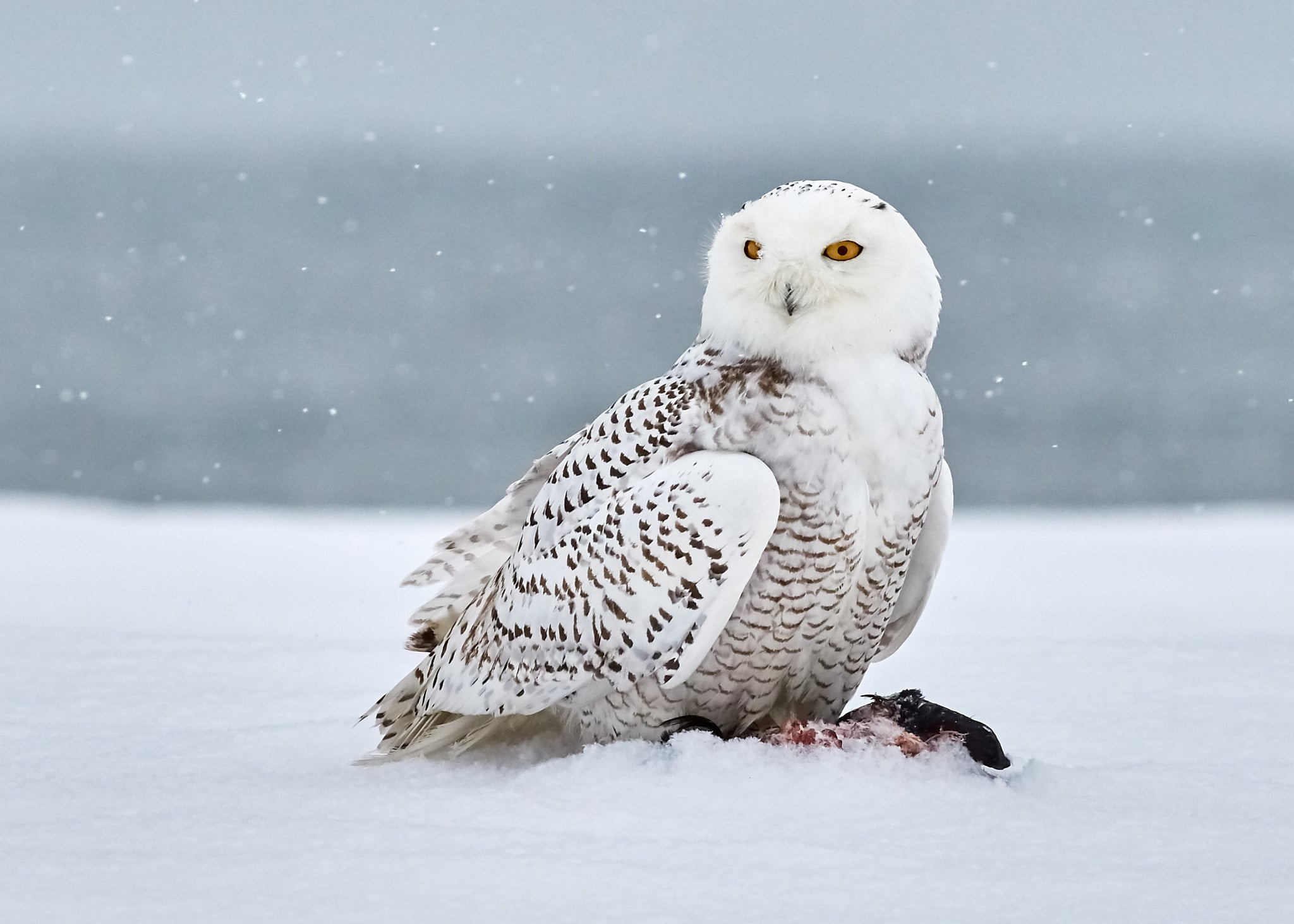 Photo Credit: Jongsun Lee / Wikimedia
In the heart of the Arctic tundra, where the landscape is a canvas of white and the air is crisp and clear, the Snowy Owl, scientifically known as Bubo scandiacus, reigns supreme. With its stunning white feathers speckled with dark spots, this majestic bird blends seamlessly into its icy surroundings, making it a master of camouflage. Its large, round head and striking yellow eyes give it an almost otherworldly appearance, captivating the hearts of scientists and nature lovers alike. The Snowy Owl is not just a pretty face; it plays a vital role in its ecosystem, helping to keep populations of small mammals in check, particularly lemmings and voles.
As the sun dips below the horizon, the Snowy Owl awakens from its daytime slumber, ready to hunt under the shimmering stars. With a wingspan that can reach up to 60 inches, it glides silently through the night, a ghostly figure against the snowy backdrop. This nocturnal lifestyle, combined with its keen eyesight and exceptional hearing, makes it a formidable predator. The Snowy Owl’s fascinating behaviors and adaptations to the harsh Arctic environment have drawn the attention of researchers, who study its life cycle, hunting techniques, and the impact of climate change on its habitat. Join us as we explore the enchanting world of the Snowy Owl, uncovering the secrets of this extraordinary bird and its place in the natural world.
The Snowy Owl, a striking bird known for its brilliant white plumage and piercing yellow eyes, occupies a special place in the animal kingdom. Taxonomically, it belongs to the Kingdom Animalia, which includes all animals, and is classified under the Phylum Chordata, meaning it has a backbone. As a member of the Class Aves, or birds, the Snowy Owl is part of the Order Strigiformes, which encompasses all owls. Within this order, it falls into the Family Strigidae, known as the “true owls.” Its Genus, Bubo, highlights its size and hunting prowess. What makes the Snowy Owl particularly captivating is its adaptation to life in the Arctic, where it thrives in extreme cold and has developed unique hunting strategies to catch its prey.
| Taxonomic Rank | Scientific Name | Meaning & Significance |
|---|---|---|
| Kingdom | Animalia | This name signifies that Snowy Owls are part of the vast group of multicellular organisms that are heterotrophic, meaning they consume other organisms for energy. |
| Phylum | Chordata | Chordata refers to animals with a notochord, a flexible rod that supports the body, which in vertebrates like the Snowy Owl develops into a backbone. |
| Class | Aves | Aves is the class that includes all birds, characterized by feathers, beaks, and the ability to lay eggs, which are essential for reproduction. |
| Order | Strigiformes | This order includes all owls, known for their nocturnal habits and specialized adaptations for hunting in low light. |
| Family | Strigidae | Strigidae, or true owls, are recognized for their round faces and silent flight, which help them sneak up on prey. |
| Genus | Bubo | The name Bubo is derived from Latin, meaning “owl,” and is often associated with larger owls, emphasizing the Snowy Owl’s impressive size and hunting skills. |
The classification of the Snowy Owl reveals much about its evolutionary journey. As a member of the Strigiformes order, it shares common ancestors with other owls, showcasing adaptations that have allowed it to thrive in harsh environments. Its unique features, such as its white feathers for camouflage in snowy landscapes and its keen eyesight for hunting, highlight the evolutionary pressures it has faced. Understanding its place in the tree of life not only deepens our appreciation for this magnificent bird but also illustrates the intricate connections among all living organisms.
The evolutionary journey of the Snowy Owl stretches back millions of years, tracing its lineage through the vast tapestry of avian history. This magnificent bird, scientifically known as Bubo scandiacus, is part of the Strigidae family, which includes all true owls. The ancestors of modern owls began to emerge during the late Eocene epoch, around 40 million years ago, as they adapted to various ecological niches across the globe. Over time, these early birds evolved into specialized hunters, honing their skills to thrive in diverse environments.
The Snowy Owl’s ancestors were likely small, forest-dwelling birds of prey that gradually adapted to the open tundra and Arctic regions. As they spread northward, they developed key traits that would define their survival in harsh climates. One major transition was the shift from a primarily nocturnal lifestyle to a more flexible hunting schedule, allowing them to take advantage of the long daylight hours during summer months in the Arctic. This adaptability was crucial for finding food in an environment where prey availability fluctuated dramatically with the seasons.
The adaptations of the Snowy Owl have been vital for its survival in one of the planet’s most extreme environments. The combination of insulation, camouflage, and hunting prowess allows this magnificent bird to not only endure the cold but also to thrive as a top predator in the Arctic ecosystem. As climate change continues to impact their habitat, these evolutionary traits will be crucial for their resilience in the face of new challenges.
The Snowy Owl is a breathtaking sight, embodying the essence of winter’s beauty. With a wingspan that can stretch up to 60 inches, this majestic bird stands tall at about 24 to 30 inches in height. Its body is robust and powerful, designed for both soaring through the frigid Arctic skies and hunting with precision. The Snowy Owl’s striking white feathers, often speckled with dark spots, create a stunning contrast against the snowy landscapes it calls home. Its large, round head is crowned with bright yellow eyes that seem to glow, giving it an air of wisdom and mystery.
| Feature | Description |
|---|---|
| Height | 60cm – 75cm (24in – 30in) |
| Weight | 1.1kg – 2kg (2.4lbs – 4.4lbs) |
| Skin Type | Feathers |
These physical features are not just for show; they play crucial roles in the Snowy Owl’s survival. The thick layer of feathers provides excellent insulation against the biting cold, keeping the bird warm in its icy habitat. The white coloration helps it blend seamlessly into the snowy environment, making it a stealthy predator. Those keen yellow eyes are perfectly adapted for spotting prey from great distances, allowing the Snowy Owl to hunt effectively even in low-light conditions. Together, these characteristics create a perfect blend of beauty and functionality, ensuring the Snowy Owl thrives in its challenging Arctic home.
The Snowy Owl calls the vast, icy expanses of the Arctic tundra its home. This unique habitat is characterized by wide-open spaces, low vegetation, and a landscape that seems to stretch endlessly under a blanket of snow. Here, the ground is often frozen, and the sky is a brilliant blue, providing a stunning backdrop for these magnificent birds. The tundra is not just a cold desert; it is alive with the sounds of nature, where the Snowy Owl can be seen gliding gracefully over the terrain, searching for its next meal.
Snowy Owls thrive in environments that experience extreme cold, often with temperatures plunging well below freezing. They prefer areas with minimal tree cover, allowing them to spot prey from great distances. The tundra’s short summers bring a burst of life, with migratory birds and small mammals becoming abundant. This seasonal change is crucial, as it provides the Snowy Owl with ample food sources during the breeding season, when they need to feed their young.
To survive in such harsh conditions, Snowy Owls have developed several remarkable adaptations. Their thick feathers provide excellent insulation against the cold, while their white plumage offers camouflage against the snowy landscape, helping them blend in while hunting. Additionally, their keen eyesight allows them to spot prey from high above, and their powerful talons are perfectly designed for catching small mammals like lemmings. These adaptations make the Snowy Owl a true master of its frigid domain, perfectly suited to life in the Arctic tundra.
The daily life of a Snowy Owl is a blend of hunting, resting, and surveying its vast, snowy territory. These magnificent birds are primarily nocturnal, meaning they are most active during the night. As dusk falls, they take to the skies, using their keen eyesight to spot small mammals like lemmings and voles. With their powerful wings, they glide silently over the frozen landscape, ready to swoop down on unsuspecting prey. During the day, they often perch on high points, such as fence posts or rocky outcrops, where they can keep a watchful eye on their surroundings while soaking up the sun.
Snowy Owls are generally solitary creatures, preferring to hunt and live alone. However, during the breeding season, they may come together to form temporary pairs. These pairs work together to raise their young, showcasing a brief but important social bond. Communication among Snowy Owls is subtle yet effective. They use a variety of vocalizations, including hoots and screeches, to express their needs or warn off intruders. While they may not flock together like some other bird species, they do share their territory with other owls, maintaining a respectful distance to avoid conflict.
| Behavior Type | Description |
|---|---|
| Activity Patterns | Nocturnal hunting, daytime resting, and perching for observation. |
| Social Structure | Primarily solitary, with temporary pairs during breeding season. |
| Communication Methods | Vocalizations such as hoots and screeches to convey messages. |
The behaviors of the Snowy Owl are finely tuned to ensure their survival in the harsh Arctic environment. By being solitary hunters, they reduce competition for food, allowing them to thrive even in challenging conditions. Their ability to communicate effectively, even without forming large groups, helps them maintain their territory and protect their young. Each aspect of their daily life, from hunting at night to resting during the day, plays a crucial role in their success as one of nature’s most captivating birds.
The Snowy Owl is a carnivore, which means it primarily eats meat. Its diet mainly consists of small mammals, particularly lemmings and voles, which are abundant in its Arctic habitat. These owls are skilled hunters, using their keen eyesight and excellent hearing to locate prey even in the dim light of the tundra. They often hunt from a perch, scanning the ground for movement, and then swoop down silently to catch their meal. This hunting strategy allows them to be effective predators in their cold, open environment.
| Dietary Aspect | Details |
|---|---|
| Diet Type | Carnivore |
| Favorite Foods | Lemmings, voles, and occasionally fish |
| Prey Items | Small mammals like lemmings and voles |
| Hunting/Foraging Strategies | Hunts from a perch, using keen eyesight and hearing to locate prey |
The Snowy Owl’s diet plays a crucial role in its ecology and daily routine. By primarily feeding on lemmings and voles, it helps regulate these populations, maintaining a balance in the ecosystem. This relationship is vital, especially in the harsh Arctic environment where food sources can be scarce. The owl’s hunting habits also dictate its daily activities, as it must spend significant time searching for food to sustain itself in the cold. Thus, the Snowy Owl is not just a beautiful bird; it is an essential player in the intricate web of life in the tundra.
As winter approaches, Snowy Owls engage in a captivating courtship ritual that sets the stage for their breeding season. Males perform impressive aerial displays, soaring and diving to attract females. Once a pair forms, they establish a nesting territory, often on the ground in the tundra, where they can find a safe spot to raise their young. The breeding season typically begins in late March to early April, coinciding with the availability of food, which is crucial for the survival of their chicks.
| Reproductive Aspect | Details |
|---|---|
| Gestation Period | About 32 to 34 days |
| Litter Size | 3 to 7 eggs |
| Age of Maturity | About 1 year |
| Name of Young | Owlets |
Once the eggs hatch, the female takes on the primary role of caregiver, fiercely protecting her owlets while the male hunts for food. The young owlets are covered in soft down feathers, making them look fluffy and adorable. As they grow, they begin to develop their adult feathers and learn essential skills like flying and hunting. Parental care is vital during this time, as the owlets rely on their parents for nourishment and guidance. By late summer, the young Snowy Owls are ready to venture out on their own, equipped with the skills they need to thrive in the wild.
The Snowy Owl plays a vital role in the Arctic food web, where it sits near the top as a predator. This majestic bird primarily hunts small mammals, especially lemmings, which are abundant in its icy habitat. However, like all animals, the Snowy Owl faces various dangers that threaten its survival. Understanding these threats helps us appreciate the delicate balance of life in the Arctic.
To defend itself against these threats, the Snowy Owl has developed several survival strategies. Its white plumage provides excellent camouflage against the snowy landscape, making it harder for predators to spot. Additionally, Snowy Owls are known for their keen eyesight and silent flight, allowing them to hunt effectively and avoid danger. When threatened, they can also become aggressive, using their sharp talons to fend off attackers. These adaptations are crucial for navigating the challenges of their harsh environment, ensuring that these magnificent birds continue to thrive in the wild.
A keystone species is an organism that has a disproportionately large impact on its environment relative to its abundance. In simpler terms, if you remove a keystone species from an ecosystem, it can cause significant changes or even collapse. The Snowy Owl, with its role as a top predator in the Arctic tundra, qualifies as a keystone species. Its presence helps maintain the balance of the ecosystem, influencing the populations of various prey species and, in turn, the health of the entire habitat.
Snowy Owls primarily hunt small mammals, especially lemmings and voles, which are crucial to the tundra ecosystem. By controlling the populations of these rodents, Snowy Owls prevent overgrazing of vegetation, which can lead to habitat degradation. When lemming numbers are high, Snowy Owls thrive, but if their populations decline, the owls may struggle to find food. This dynamic relationship illustrates how the Snowy Owl’s hunting habits directly affect the balance of life in its environment.
Additionally, the Snowy Owl serves as an indicator species. This means that changes in its population can signal shifts in the health of the ecosystem. For example, if Snowy Owl numbers decline, it may indicate that lemming populations are also falling, possibly due to climate change or habitat loss. This connection highlights the owl’s role in monitoring the overall health of the Arctic tundra.
If the Snowy Owl were to disappear from its habitat, the consequences could be severe. Without this top predator, lemming populations could explode, leading to overgrazing of the tundra’s delicate vegetation. This unchecked growth could disrupt the entire food web, affecting not only the plants but also other animals that rely on a balanced ecosystem. The loss of the Snowy Owl would ripple through the Arctic tundra, demonstrating just how vital this magnificent bird is to its environment.
The Snowy Owl plays a crucial role in its ecosystem, particularly within the Arctic tundra. As a top predator, it helps maintain the balance of small mammal populations, especially lemmings and voles. By controlling these populations, the Snowy Owl ensures that the ecosystem remains healthy and diverse. Its presence indicates a well-functioning environment, as these owls thrive in areas where prey is abundant and the habitat is intact.
| Ecosystem Service | Impact |
|---|---|
| Population Control | Regulates the numbers of small mammals, preventing overpopulation. |
| Food Source for Other Predators | Serves as prey for larger birds and mammals, contributing to the food web. |
| Indicator of Ecosystem Health | Reflects the overall condition of the Arctic tundra environment. |
| Nutrient Cycling | Contributes to nutrient distribution through its hunting and waste. |
The influence of the Snowy Owl extends beyond just hunting. For instance, when lemming populations are high, these owls can thrive, leading to a boom in their numbers. However, if lemming populations decline, the Snowy Owl may struggle to find food, which can lead to a decrease in its population. This dynamic relationship highlights the interconnectedness of species within the tundra. Additionally, the remains of its prey contribute nutrients back into the soil, enriching the ecosystem and supporting plant life.
The broader ecological importance of the Snowy Owl cannot be overstated. As a keystone species, its presence is vital for maintaining the balance of the Arctic tundra. The health of this ecosystem is essential not only for the Snowy Owl but also for countless other species that rely on the same habitat. By understanding and protecting the Snowy Owl, we also safeguard the intricate web of life that thrives in one of the planet’s most extreme environments.
In the intricate web of life, symbiosis refers to the close interactions between different species, which can take on various forms. These relationships can be mutualistic, where both species benefit, parasitic, where one benefits at the other’s expense, or commensal, where one benefits while the other is neither helped nor harmed. The Snowy Owl, with its striking appearance and vital role in the Arctic ecosystem, engages in several fascinating ecological relationships that highlight the interconnectedness of life in its frigid habitat.
| Species/Type | Relationship Type | Description |
|---|---|---|
| Lemmings | Mutualistic | While lemmings are a primary food source for Snowy Owls, their population dynamics can influence the owls’ breeding success. Healthy lemming populations lead to better reproductive outcomes for the owls. |
| Arctic Fox | Commensal | Snowy Owls and Arctic Foxes often share the same hunting grounds. While the owls hunt for small mammals, the foxes may scavenge on leftovers, benefiting from the owl’s hunting success without affecting the owl. |
| Parasites (like ticks) | Parasitic | Snowy Owls can host various parasites, which can weaken them. These parasites benefit by feeding on the owl’s blood, but the owls suffer from reduced health and vigor. |
The evolution of these relationships showcases the delicate balance of nature. Over time, Snowy Owls have adapted to their environment, forming connections that enhance their survival and reproductive success. The mutualistic relationship with lemmings is particularly crucial, as it ensures a steady food supply, while the commensal interactions with Arctic Foxes illustrate how species can coexist and benefit from one another’s presence. Understanding these dynamics not only enriches our appreciation of the Snowy Owl but also highlights the importance of preserving their Arctic habitat, where these relationships thrive.
The Snowy Owl is not just a beautiful bird; it is a fascinating creature with many surprising traits that make it stand out in the animal kingdom. Here are some intriguing facts that will captivate nature enthusiasts of all ages.
The Snowy Owl has long captivated human imagination, appearing in folklore and cultural stories across the globe. In many Indigenous cultures of the Arctic, this striking bird is seen as a symbol of wisdom and protection. Historical encounters between humans and Snowy Owls often evoke a sense of wonder, as these majestic creatures glide silently through the winter landscape. Their ethereal presence has inspired art, literature, and even mythology, where they are sometimes depicted as messengers or guardians of the night. This deep-rooted connection highlights the Snowy Owl’s significance in human culture, transcending mere observation to become a part of our shared narrative.
In contemporary times, the relationship between Snowy Owls and humans has evolved, marked by both conservation efforts and challenges. As climate change alters their Arctic habitat, these owls face threats that require our attention. Conservationists are working tirelessly to monitor their populations and protect their breeding grounds. However, conflicts can arise, especially when Snowy Owls venture into urban areas in search of food, leading to potential dangers for both the birds and humans. While domestication of Snowy Owls is not common, some people have attempted to keep them as pets, which raises ethical questions about their well-being and the impact on wild populations.
Looking ahead, the future of the Snowy Owl and humanity’s relationship will depend on our commitment to conservation and understanding. As climate change continues to impact their Arctic home, it is crucial for us to advocate for policies that protect these magnificent birds and their habitats. By fostering a sense of stewardship and respect for wildlife, we can ensure that future generations will not only witness the beauty of Snowy Owls but also appreciate their vital role in the ecosystem. Together, we can create a world where humans and Snowy Owls thrive side by side, sharing the wonders of nature.
The Snowy Owl is currently classified as Vulnerable, indicating that its population is at risk of decline. While these magnificent birds are still found across the Arctic tundra, their numbers are not as stable as they once were. Population estimates suggest that there are between 100,000 to 1 million individuals worldwide, but this range reflects uncertainty due to their remote habitats and the challenges of conducting thorough surveys. The trend for Snowy Owls is concerning, as they face various threats that could impact their future.
| Conservation Factor | Status/Details |
|---|---|
| IUCN Status | Vulnerable |
| Population Estimates | 100,000 to 1 million |
| Trend Direction | Declining |
One of the main threats to Snowy Owls is climate change, which is altering their Arctic habitat. As temperatures rise, the tundra is changing, affecting the availability of their primary prey, such as lemmings. Additionally, habitat loss due to human activities, like mining and development, poses a significant risk. These factors can lead to food shortages and increased competition for resources, making survival more challenging for these beautiful birds.
Conservation efforts are underway to help protect Snowy Owls and their habitats. Organizations are working to monitor their populations and study their behaviors to better understand their needs. Public awareness campaigns aim to educate people about the importance of preserving the Arctic ecosystem. With continued efforts and a focus on mitigating climate change, there is hope that Snowy Owls can thrive in the wild for generations to come.
| Question | Answer |
|---|---|
| Where do Snowy Owls live? | Snowy Owls primarily inhabit the Arctic tundra, which is a cold, treeless region. They can also be found in open woodland areas within this habitat, where they can easily spot their prey. |
| What do Snowy Owls eat? | Snowy Owls are carnivores, meaning they eat meat. Their diet mainly consists of small mammals, especially lemmings, but they will also hunt birds and other small animals when necessary. |
| How do Snowy Owls behave? | Snowy Owls are known for their unique hunting style, often sitting quietly and watching for movement. They are mostly active at night, but can also be seen during the day, especially in the winter when food is scarce. |
| How do Snowy Owls reproduce? | During the breeding season, which occurs in late spring, female Snowy Owls lay between 3 to 11 eggs in a nest made on the ground. The female incubates the eggs for about 32 days, while the male provides food for her and the chicks once they hatch. |
| What threats do Snowy Owls face? | Snowy Owls are currently classified as vulnerable, facing threats from climate change, habitat loss, and declining prey populations. Human activities, such as hunting and habitat destruction, also pose risks to their survival. |
| What are some interesting characteristics of Snowy Owls? | One fascinating feature of Snowy Owls is their striking white feathers, which help them blend into their snowy environment. They also have excellent vision and hearing, making them skilled hunters in low-light conditions. |
| Can Snowy Owls fly silently? | Yes, Snowy Owls have specialized feathers that allow them to fly silently. This adaptation helps them sneak up on their prey without being detected, making them even more effective hunters. |