Taxonomy & Classification
- Kingdom
- Animalia
- Phylum
- Arthropoda
- Class
- Insecta
- Order
- Hemiptera
- Family
- Fulgoridae
- Genus
- Lycorma
- Species
- Lycorma delicatula

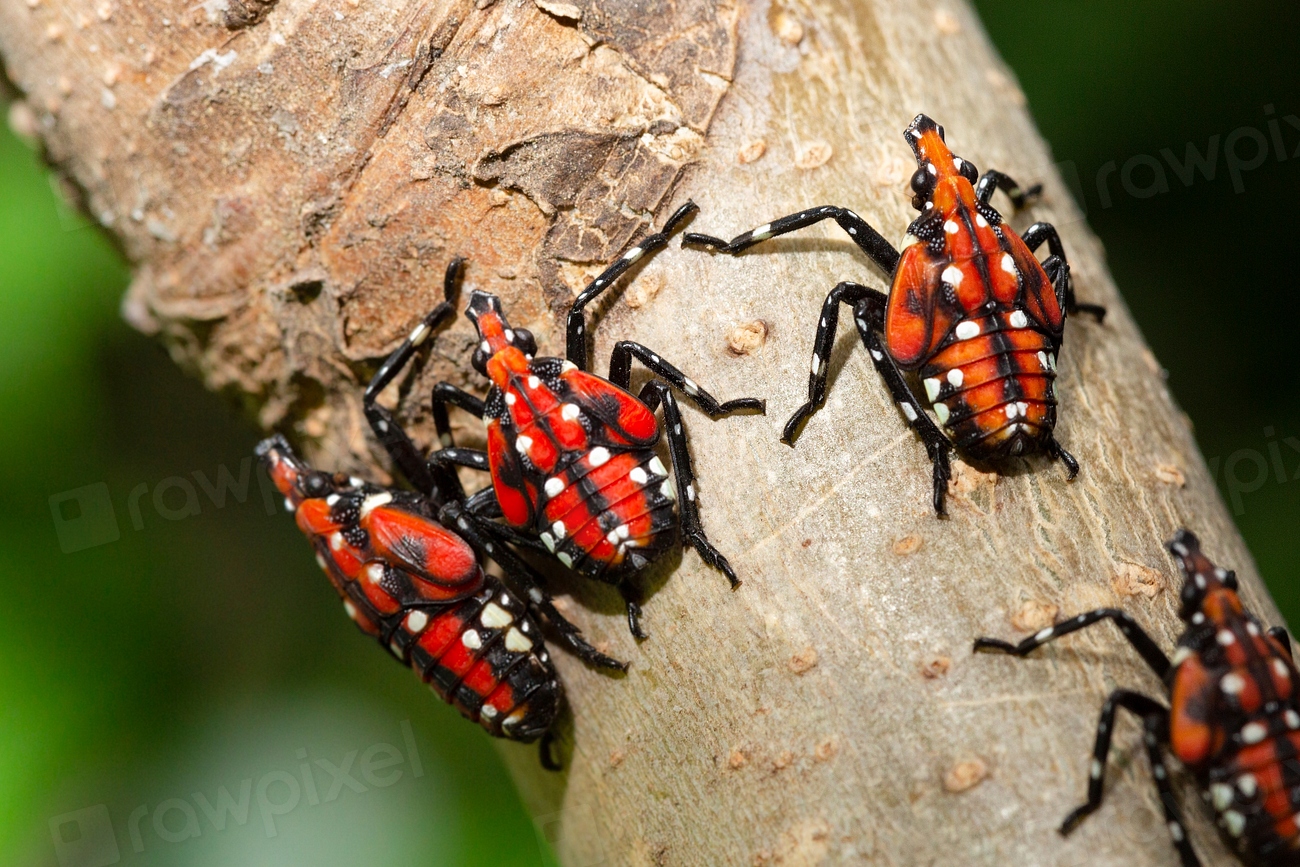 Photo Credit: U.S. Department of Agriculture / Rawpixel
In the lush woodlands of the eastern United States, the Spotted Lanternfly, or Lycorma delicatula, flits about, capturing the attention of anyone lucky enough to spot it. This small insect, measuring just a few centimeters in length, is a vibrant spectacle with its striking patterns and colors. Its wings are a canvas of deep reds and blacks, adorned with distinctive white spots that shimmer in the sunlight. As it rests on tree trunks or dances among the leaves, the Spotted Lanternfly showcases its unique beauty, making it a favorite among nature enthusiasts and scientists alike.
What makes the Spotted Lanternfly particularly intriguing is not just its appearance but also its role in the ecosystem. This sap-sucking insect thrives in habitats rich in hardwoods, where it uses specialized mouthparts to pierce the bark of trees and access the sugary fluids within. While it may seem harmless, its feeding habits can have significant impacts on the plants it inhabits, leading to a complex relationship with the environment. As we delve deeper into the world of Lycorma delicatula, we will explore its fascinating life cycle, behaviors, and the challenges it faces in its quest for survival, revealing the intricate connections that bind this colorful insect to the natural world.
The Spotted Lanternfly, scientifically known as Lycorma delicatula, occupies a distinctive place in the tree of life. This striking insect belongs to the kingdom Animalia, which includes all animals, and is classified under the phylum Arthropoda, the group that encompasses invertebrates with exoskeletons, segmented bodies, and jointed limbs. What sets the Spotted Lanternfly apart is its vibrant coloration and unique life cycle, which includes a striking transformation from a black and white nymph to a beautifully patterned adult. This metamorphosis not only showcases the wonders of nature but also highlights the Spotted Lanternfly’s role in its ecosystem, particularly as a sap-sucking insect that can impact plant health.
| Taxonomic Rank | Scientific Name | Meaning & Significance |
|---|---|---|
| Kingdom | Animalia | This name signifies that the Spotted Lanternfly is part of the vast group of multicellular organisms known as animals. |
| Phylum | Arthropoda | Derived from Greek, meaning “jointed feet,” this classification highlights the Spotted Lanternfly’s jointed legs and exoskeleton, typical of insects. |
| Class | Insecta | This term comes from the Latin word for “cut,” referring to the segmented body structure of insects, including the Spotted Lanternfly. |
| Order | Hemiptera | Meaning “half-wing,” this name reflects the unique structure of the wings of this order, which includes the Spotted Lanternfly and its relatives. |
| Family | Fulgoridae | This family name is derived from the Latin word “fulgor,” meaning “brightness,” which relates to the vibrant colors of many members, including the Spotted Lanternfly. |
| Genus | Lycorma | This name is thought to be derived from the Greek word for “to be light,” possibly referring to the delicate appearance of the insect. |
| Species | delicatula | This species name means “delicate” in Latin, aptly describing the Spotted Lanternfly’s fragile and intricate body structure. |
The classification of the Spotted Lanternfly reveals much about its evolutionary journey. As a member of the Hemiptera order, it shares common ancestry with other sap-sucking insects, which have adapted to thrive in various environments. Its unique features, such as its striking coloration and life cycle, not only help it survive but also play a role in its interactions with plants and other organisms. Understanding its taxonomic position helps scientists and enthusiasts alike appreciate the intricate web of life and the evolutionary processes that shape the diversity of species we see today.
The evolutionary journey of the Spotted Lanternfly, or Lycorma delicatula, stretches back millions of years, intertwining with the rich tapestry of life on Earth. This insect is part of the Fulgoridae family, which has ancient roots, dating back to the time when dinosaurs roamed the planet. As the world changed, so did the ancestors of the Spotted Lanternfly, adapting to new environments and challenges, leading to the vibrant species we see today.
The ancestors of the Spotted Lanternfly were likely small, sap-sucking insects that thrived in lush, prehistoric forests. Over time, they developed specialized mouthparts, known as stylets, which allowed them to pierce plant tissues and extract nutrients more efficiently. This adaptation was crucial for survival, as it enabled them to exploit a variety of plant species. As they evolved, they also developed a unique ability to produce honeydew, a sugary substance that attracts other insects and can even foster relationships with ants, providing protection in exchange for food.
The adaptations of the Spotted Lanternfly have played a vital role in its survival and success. Its ability to blend into its surroundings, coupled with its striking warning colors, helps it evade predators while attracting beneficial relationships with other species. By feeding on a variety of plants and producing honeydew, it not only secures its own nourishment but also creates a network of interactions that enhance its chances of thriving in different habitats. As this insect continues to adapt, it remains a testament to the power of evolution in shaping life on Earth.
The Spotted Lanternfly is a small but eye-catching insect that captures attention with its vibrant colors and unique shape. Measuring just a few centimeters in length, this insect has a slender body that tapers towards the back. Its most striking feature is its wings, which can display a beautiful blend of pink and tan hues. When perched, the wings fold neatly over its body, creating a delicate silhouette that can easily be mistaken for a flower petal or a leaf. The Spotted Lanternfly’s exoskeleton, a hard outer covering that protects its body, adds to its intriguing appearance, making it a true marvel of nature.
| Feature | Description |
|---|---|
| Size | Typically around 1 inch (2.5 cm) long |
| Weight | Less than 1 gram |
| Color | Wings are pink or tan, with black spots |
| Skin Type | Exoskeleton, providing protection |
The combination of its lightweight body and colorful wings serves several important purposes for the Spotted Lanternfly. The bright colors can help it blend into its surroundings, making it less visible to predators. Additionally, the exoskeleton not only protects it from physical harm but also helps it retain moisture, which is crucial for survival. Together, these features create a well-adapted insect that thrives in its environment, showcasing the beauty and complexity of nature’s designs.
The Spotted Lanternfly thrives in a world filled with trees, where it finds both shelter and sustenance. This colorful insect prefers habitats rich in hardwoods, particularly those that provide the sap it loves to feed on. Imagine a sun-dappled forest or a bustling urban area with plenty of trees—these are the perfect places for the Spotted Lanternfly to call home. Its vibrant presence adds a splash of color to the green canopies, making it a striking sight against the backdrop of leaves.
The Spotted Lanternfly flourishes in warm, temperate climates, where the seasons bring a mix of sunshine and rain. It enjoys areas with mild winters and hot summers, which help it grow and reproduce. These insects are particularly fond of environments that offer a variety of tree species, as they rely on specific plants for food. The right balance of moisture and warmth creates an ideal setting for their life cycle, allowing them to thrive and multiply.
Adaptation is key to the Spotted Lanternfly’s success in its chosen habitats. With its ability to blend into the bark of trees and its preference for feeding on the sap of certain plants, it has developed strategies to evade predators. The Spotted Lanternfly’s life cycle is synchronized with the seasons, ensuring that it emerges when conditions are just right for feeding and reproduction. This clever adaptation allows it to make the most of its environment, turning trees into a bustling home filled with life.
The Spotted Lanternfly leads a life that revolves around the search for food and the quest for mates. During the day, these insects are often found perched on tree trunks or leaves, using their specialized mouthparts to suck the sap from plants. This feeding behavior is crucial, as it provides the energy they need to grow and reproduce. As the sun sets, they become less active, retreating to safer spots to rest. Their daily activities are closely tied to the availability of their favorite food sources, particularly the sap of the Tree of Heaven, which is a preferred host plant.
While Spotted Lanternflies are primarily solitary creatures, they do exhibit some interesting social behaviors, especially during mating season. Males and females come together to find partners, often congregating in small groups. This temporary gathering allows them to communicate through subtle movements and pheromones, which are chemical signals that help attract mates. Although they do not form long-lasting social bonds, these brief interactions are essential for reproduction. Once mating occurs, the female lays her eggs in masses that can contain up to 50 eggs, ensuring the next generation has a chance to thrive.
| Behavior Type | Description |
|---|---|
| Feeding | Spotted Lanternflies use their specialized mouthparts to extract sap from trees, which provides essential nutrients for growth. |
| Mating | During mating season, males and females gather in small groups to find partners, using pheromones to communicate. |
| Resting | At night, they seek shelter in safe spots to avoid predators, becoming less active until the next day. |
The behaviors of the Spotted Lanternfly are finely tuned to ensure their survival in a world filled with challenges. By feeding on sap, they gain the energy needed for reproduction, while their mating rituals help secure the continuation of their species. Even though they are solitary for most of their lives, their brief social interactions during mating season play a crucial role in their life cycle. This combination of feeding, resting, and mating strategies allows them to thrive in their preferred habitats, making them a resilient part of the ecosystem.
The Spotted Lanternfly primarily feeds on plant sap, making it a herbivore. It uses its specialized mouthparts, called stylets, to pierce the bark of trees and access the sugary fluid inside. This feeding behavior is not just a casual snack; it plays a crucial role in the insect’s life cycle and overall health. By consuming sap, the Spotted Lanternfly obtains the nutrients it needs to grow and reproduce, while also leaving behind a sticky substance known as honeydew, which can attract other insects and promote the growth of sooty mold on plants.
| Dietary Aspect | Details |
|---|---|
| Diet Type | Herbivore |
| Favorite Foods | Tree sap from hardwoods, especially the Tree of Heaven (Ailanthus altissima) |
| Prey Items | None, as it does not consume other animals |
| Hunting/Foraging Strategies | Uses stylets to pierce tree bark and extract sap |
This sap-sipping lifestyle significantly influences the Spotted Lanternfly’s ecology and daily routine. By feeding on the sap of various trees, it can impact plant health and even alter local ecosystems. The honeydew it excretes can lead to the growth of sooty mold, which can cover leaves and hinder photosynthesis, the process plants use to make their food. Thus, the Spotted Lanternfly’s diet not only sustains its life but also plays a role in shaping the environment around it.
The Spotted Lanternfly has a fascinating mating ritual that takes place during the warmer months, typically from late spring to early summer. Males and females engage in a courtship dance, where they flutter around each other, showcasing their vibrant colors. Once they find a mate, the female lays her eggs in masses that resemble a gray, putty-like substance. This breeding season is crucial for the continuation of their species, as it sets the stage for the next generation of these striking insects.
| Reproductive Aspect | Details |
|---|---|
| Gestation Period | 5 – 8 months |
| Litter Size | Up to 50 eggs per mass |
| Age of Maturity | 2 – 4 months after hatching |
| Name of Young | Nymphs |
After the eggs hatch, the young Spotted Lanternflies emerge as nymphs, small and wingless versions of their adult counterparts. These nymphs go through several stages, known as instars, as they grow and develop. During this time, they feed on plant sap, just like adults, and gradually gain their distinctive colors and patterns. Interestingly, the nymphs do not receive any parental care after hatching, but they are equipped with the instincts needed to thrive on their own. As they mature, they will eventually transform into adults, ready to continue the cycle of life.
The Spotted Lanternfly, or Lycorma delicatula, plays a curious role in its ecosystem. As a sap-sucking insect, it primarily feeds on the fluids of various plants, which can make it a target for a range of predators. However, its most significant threat comes from humans, who often see this colorful insect as a pest due to the damage it can cause to crops and trees. This puts the Spotted Lanternfly in a precarious position within the food web, where it must navigate both natural predators and human intervention.
To survive these dangers, the Spotted Lanternfly has developed some clever defensive behaviors. For instance, when threatened, it can quickly take flight, using its wings to escape predators. Additionally, its vibrant colors may serve as a warning to potential attackers, signaling that it could be unpalatable or harmful. By combining these strategies, the Spotted Lanternfly continues to navigate the challenges of its environment, balancing its role in the ecosystem while facing the threats that loom around it.
A keystone species is an organism that has a disproportionately large impact on its environment relative to its abundance. These species play a crucial role in maintaining the structure of an ecosystem. The Spotted Lanternfly, or Lycorma delicatula, does not fit the traditional definition of a keystone species. While it does influence its surroundings, its role is more about disruption than balance, particularly due to its feeding habits and the damage it causes to plants.
The Spotted Lanternfly primarily feeds on the sap of trees, using its specialized mouthparts to pierce the bark and extract the sugary fluid. This feeding behavior can weaken trees, making them more susceptible to disease and other pests. For example, when these insects infest a tree, they can cause significant stress, leading to reduced growth and even death in severe cases. This not only affects the individual trees but can also alter the entire forest ecosystem, as trees provide habitat and food for countless other species.
Moreover, the Spotted Lanternfly produces a sticky substance known as honeydew, which can attract other insects like ants and wasps. This honeydew can also lead to the growth of sooty mold, a black fungus that covers leaves and blocks sunlight. When leaves can’t photosynthesize effectively, the health of the entire plant community suffers. This cascading effect can disrupt the food web, impacting herbivores and the predators that rely on them.
If the Spotted Lanternfly were to disappear, the immediate effects might seem beneficial for the trees it infests. However, the absence of this insect could lead to a shift in the dynamics of the ecosystem. Other pests might fill the void left behind, potentially causing even greater harm to the trees. Additionally, the intricate relationships between plants and the insects that feed on them would be altered, leading to unforeseen consequences in the ecosystem. In nature, every species, even those that seem harmful, plays a role in the complex web of life.
The Spotted Lanternfly, known scientifically as Lycorma delicatula, plays a significant role in its ecosystem, particularly in the habitats where it thrives—primarily among trees. This sap-sucking insect has a unique ecological niche, feeding on the fluids of various plants, which can lead to both direct and indirect effects on the environment. By extracting sap, it influences the health of the trees it inhabits, creating a ripple effect that can impact other species and the overall ecosystem.
| Ecosystem Service | Impact |
|---|---|
| Herbivory | Reduces tree health by feeding on sap, potentially leading to tree stress or death. |
| Food Source | Serves as prey for natural predators, contributing to the food web. |
| Honeydew Production | Excretes honeydew, which can attract other insects and promote fungal growth. |
| Plant Community Dynamics | May alter plant community composition by favoring certain species over others. |
The influence of the Spotted Lanternfly extends beyond its immediate feeding habits. For instance, when it feeds on trees, it produces a sticky substance known as honeydew. This sugary excretion can attract other insects, such as ants and wasps, which may further disrupt the local ecosystem. Additionally, the honeydew can lead to the growth of sooty mold, a black fungus that can cover leaves and block sunlight, ultimately affecting photosynthesis—the process by which plants make their food. This chain reaction can alter the balance of plant life in the area, impacting not just the trees but also the animals that depend on them.
Understanding the broader ecological importance of the Spotted Lanternfly is crucial. As a herbivore, it plays a role in shaping plant communities, which in turn affects the animals that rely on those plants for food and shelter. Its presence can signal changes in the ecosystem, serving as a reminder of the interconnectedness of life. By studying this insect, scientists can gain insights into the health of forest ecosystems and the potential impacts of invasive species, making the Spotted Lanternfly a key player in the ongoing story of our natural world.
In the intricate web of life, symbiosis refers to the close and often long-term interactions between different species. These relationships can take many forms, including mutualism, where both species benefit, parasitism, where one benefits at the expense of the other, and commensalism, where one benefits while the other is neither helped nor harmed. The Spotted Lanternfly, or Lycorma delicatula, engages in various ecological relationships that highlight the complexity of its interactions with other organisms in its environment.
| Species/Type | Relationship Type | Description |
|---|---|---|
| Ants | Mutualistic | Spotted Lanternflies produce a sugary substance called honeydew, which attracts ants. In return, ants protect the lanternflies from predators. |
| Fungi | Commensal | Some fungi may grow on the honeydew excreted by Spotted Lanternflies, benefiting from the sugar without affecting the lanternflies. |
| Birds | Parasitic | Birds may prey on Spotted Lanternflies, benefiting from the food source while the lanternflies suffer from predation. |
These relationships have evolved over time, shaped by the needs and behaviors of the species involved. The mutualistic bond between Spotted Lanternflies and ants is a prime example of how cooperation can enhance survival. By providing ants with a food source, the lanternflies gain protection from potential threats. Meanwhile, the commensal relationship with fungi shows how some species can thrive on the byproducts of others without causing harm. Understanding these connections helps us appreciate the delicate balance of ecosystems and the roles that each species plays in maintaining that balance.
The Spotted Lanternfly, a vibrant and intriguing insect, has captured the attention of scientists and nature lovers alike. With its striking appearance and unique behaviors, this insect offers a wealth of surprising facts that reveal its fascinating role in the ecosystem.
The Spotted Lanternfly, known scientifically as Lycorma delicatula, has a history that intertwines with human culture and agriculture. Originally native to Asia, this colorful insect made its way to the United States in 2014, likely hitching a ride on imported goods. Its striking appearance has sparked curiosity and fascination, but it has also become a symbol of ecological concern. In many cultures, insects like the Spotted Lanternfly are seen as omens or messengers, reflecting humanity’s long-standing relationship with the natural world. However, as this insect began to spread, it transformed from a cultural curiosity into a significant agricultural pest, particularly affecting crops like grapes and hardwoods.
Today, interactions between humans and the Spotted Lanternfly are complex and often fraught with conflict. Farmers and landowners are on high alert, as these insects can cause severe damage to plants by feeding on their sap. This has led to various conservation efforts aimed at controlling their population and protecting valuable crops. In some areas, communities have come together to raise awareness about the Spotted Lanternfly, organizing workshops and educational programs. However, the challenge remains: how to balance the need for pest control with the desire to maintain a healthy ecosystem. This delicate dance between conservation and conflict highlights the ongoing struggle humans face in managing invasive species.
Looking ahead, the future of the relationship between humans and the Spotted Lanternfly will likely continue to evolve. As scientists learn more about this insect’s behavior and ecology, new strategies for managing its population may emerge. The challenge will be to find solutions that protect both agricultural interests and the delicate balance of local ecosystems. By fostering a sense of stewardship and understanding, humans can work towards a future where they coexist with the Spotted Lanternfly, turning a potential threat into an opportunity for learning and growth in the natural world.
The Spotted Lanternfly, or Lycorma delicatula, currently holds a conservation status of “Not Listed” according to the International Union for Conservation of Nature (IUCN). This means that it has not been evaluated for potential extinction risk. However, its population trends are concerning, especially in regions where it has become an invasive species. Since its introduction to North America, the Spotted Lanternfly has spread rapidly, leading to significant ecological and economic impacts.
| Conservation Factor | Status/Details |
|---|---|
| IUCN Status | Not Listed |
| Population Estimates | Not quantified; invasive populations are expanding |
| Trend Direction | Increasing in areas where introduced |
The main threats to the Spotted Lanternfly stem from its invasive nature. Originally from Asia, this insect has no natural predators in North America, allowing its populations to grow unchecked. It feeds on the sap of various trees, particularly the economically important tree of heaven (Ailanthus altissima). This feeding behavior not only weakens the trees but can also lead to the spread of sooty mold, which can harm other plants and disrupt local ecosystems. As it continues to spread, the Spotted Lanternfly poses a significant threat to agriculture, particularly in vineyards and orchards.
Conservation efforts are underway to manage the Spotted Lanternfly’s spread and mitigate its impacts. Various states have implemented control measures, including public awareness campaigns and targeted pesticide applications. Researchers are also studying potential biological control methods, which involve using natural predators to keep the population in check. The outlook for the Spotted Lanternfly remains uncertain, but with continued efforts and public cooperation, there is hope for managing its impact on North American ecosystems.
| Question | Answer |
|---|---|
| What is the habitat of the Spotted Lanternfly? | The Spotted Lanternfly primarily inhabits trees, especially those that produce a sweet sap. They are often found on hardwood trees like the Tree of Heaven, which is their favorite, but they can also be seen on other types of trees. |
| What does the Spotted Lanternfly eat? | This insect is a herbivore, meaning it feeds on plant material. Its diet mainly consists of the sap from trees, which it extracts using its specialized mouthparts, called stylets, that pierce the plant tissue. |
| How does the Spotted Lanternfly behave? | The Spotted Lanternfly is known for its unique behavior of hopping and flying short distances. They are often seen in groups, especially when feeding, and can be quite active during warm days. |
| How does the Spotted Lanternfly reproduce? | Spotted Lanternflies reproduce by laying eggs in masses that resemble a gray, putty-like substance. Each female can lay up to 50 to 60 eggs at a time, and these eggs hatch in the spring, leading to a new generation of nymphs. |
| What are the threats posed by the Spotted Lanternfly? | While the Spotted Lanternfly is not currently listed as endangered, it poses a significant threat to agriculture and ecosystems. Its feeding can weaken trees and plants, leading to reduced growth and even death, which can disrupt local habitats. |
| What are some interesting characteristics of the Spotted Lanternfly? | One of the most distinctive features of the Spotted Lanternfly is its striking wings, which can be pink or tan with black spots. This colorful appearance not only makes them easy to identify but also helps them blend into their surroundings when resting. |
| Where did the Spotted Lanternfly originate? | The Spotted Lanternfly is native to Asia, particularly China and India. It was first discovered in the United States in Pennsylvania in 2014 and has since spread to several other states, raising concerns among farmers and environmentalists. |