Taxonomy & Classification
- Kingdom
- Animalia
- Phylum
- Arthropoda
- Class
- Insecta
- Order
- Coleoptera
- Family
- Lucanidae
- Genus
- Lucanus

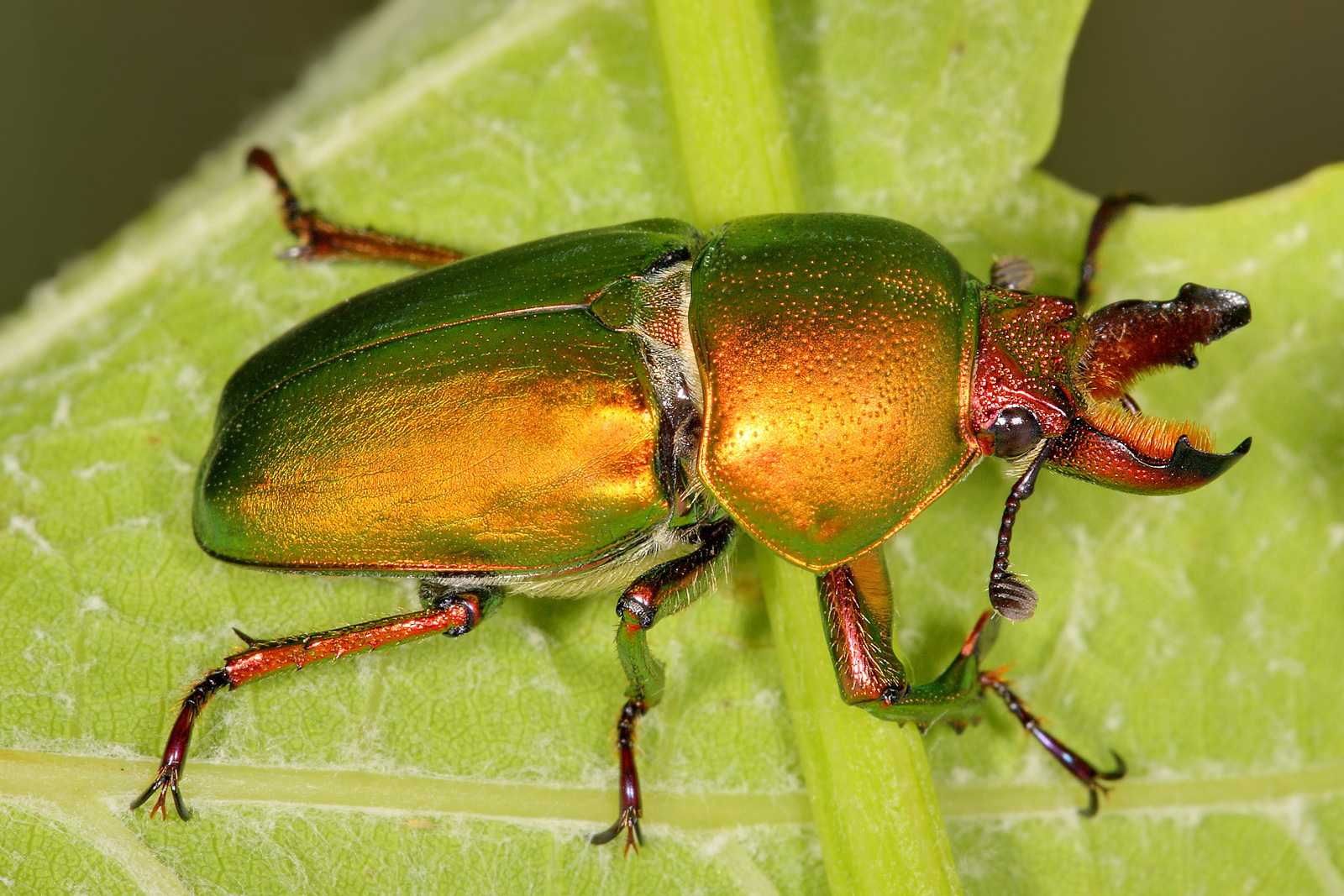 Photo Credit: Fir0002 / Wikimedia Commons
In the heart of a sun-dappled forest, the stag beetle, known scientifically as Lucanus cervus, emerges from the shadows of decaying wood. With its impressive, antler-like mandibles, this remarkable insect captures the imagination of anyone lucky enough to spot it. The stag beetle’s robust body, typically measuring between one to two inches long, glistens in shades of deep brown and black, making it a striking figure against the vibrant greens of its woodland home. As dusk settles, these beetles come alive, their strong jaws clicking in a symphony of nature, as they search for food and mates.
What makes the stag beetle particularly intriguing to scientists and nature enthusiasts alike is not just its appearance but its role in the ecosystem. These beetles are essential decomposers, breaking down rotting wood and recycling nutrients back into the soil. Their life cycle is a fascinating journey, beginning with the female laying around 30 eggs in loose soil, where the larvae will thrive on decaying plant matter. As they grow, they contribute to the health of their environment, showcasing the interconnectedness of life in the forest. With their rich evolutionary history and unique adaptations, stag beetles remind us of the wonders of the natural world, inviting us to explore and appreciate the intricate web of life that surrounds us.
The stag beetle, a captivating member of the animal kingdom, holds a special place in the tree of life. Classified within the Kingdom Animalia, Phylum Arthropoda, Class Insecta, Order Coleoptera, Family Lucanidae, and Genus Lucanus, these beetles are known for their impressive mandibles, which resemble the antlers of a stag. This striking feature not only makes them visually distinctive but also plays a crucial role in their mating rituals and territorial disputes. Stag beetles are a prime example of how evolution shapes physical traits for survival and reproduction.
| Taxonomic Rank | Scientific Name | Meaning & Significance |
|---|---|---|
| Kingdom | Animalia | This name comes from the Latin word for “animal,” highlighting that these organisms are living beings that can move and respond to their environment. |
| Phylum | Arthropoda | Derived from Greek, meaning “jointed feet,” this term refers to the jointed limbs and segmented bodies that characterize this diverse group of invertebrates. |
| Class | Insecta | From the Latin word “insectum,” meaning “cut into sections,” this name reflects the segmented body structure of insects, which includes three main parts: the head, thorax, and abdomen. |
| Order | Coleoptera | This term comes from the Greek words “koleos,” meaning “sheath,” and “pteron,” meaning “wing.” It refers to the hard, protective wing covers that beetles possess. |
| Family | Lucanidae | Named after the Latin word “lucanus,” which refers to the stag beetle’s genus, this family is known for its large mandibles and striking appearance. |
| Genus | Lucanus | This name is derived from the Latin word for “stag,” emphasizing the impressive antler-like mandibles that are a hallmark of these beetles. |
Understanding the stag beetle’s classification reveals much about its evolutionary journey. As part of the vast and varied group of insects, stag beetles have adapted over millions of years to thrive in their environments. Their unique physical traits, such as the formidable mandibles, not only serve practical purposes in their lives but also illustrate the intricate dance of evolution, where form and function intertwine. This classification helps us appreciate the rich tapestry of life on Earth and the remarkable adaptations that allow species like the stag beetle to flourish.
The evolutionary journey of the stag beetle stretches back millions of years, with its ancestors first appearing during the Late Cretaceous period, around 100 million years ago. This was a time when dinosaurs roamed the Earth, and flowering plants were just beginning to emerge. As the world changed, so did the stag beetle, adapting to new environments and challenges, ultimately leading to the diverse species we see today.
The ancestors of modern stag beetles were likely small, unassuming insects that lived in decaying wood and leaf litter. Over time, they evolved into larger forms, developing impressive mandibles—those large, jaw-like structures that resemble antlers. These adaptations were crucial for survival, as they allowed males to engage in fierce battles for mates. The evolution of these mandibles is a prime example of sexual selection, where traits that help in attracting partners become more pronounced over generations. As the climate shifted and forests expanded, stag beetles adapted to various habitats, leading to the rich diversity within the Lucanidae family.
The adaptations of the stag beetle have been key to its survival in a changing world. The large mandibles not only help in mating battles but also serve as a defense mechanism against predators. Their robust exoskeleton provides protection, while their unique life cycle allows them to take advantage of different resources throughout their development. By feeding on decaying wood, stag beetles contribute to the health of their ecosystems, making them not just survivors, but important players in the natural world.
The stag beetle is a striking insect that captures attention with its impressive form. Its body is robust and elongated, typically measuring around 1 to 2 inches long. The most eye-catching feature is the male’s enormous mandibles, which resemble antlers and can be quite intimidating. These mandibles are not just for show; they play a crucial role in mating displays and battles with other males. The beetle’s exoskeleton, a hard outer shell, glistens in shades of brown and black, providing both protection and a touch of elegance.
| Feature | Description |
|---|---|
| Weight | Up to 0.5 grams |
| Skin Type | Exoskeleton |
| Most Distinctive Feature | Massive mandibles of the male |
These features work together to enhance the stag beetle’s survival in its natural habitat. The exoskeleton not only shields it from predators but also helps retain moisture, which is vital for its survival. The impressive mandibles serve multiple purposes: they are used in combat to assert dominance and attract mates, showcasing the male’s strength and fitness. This combination of physical traits makes the stag beetle a fascinating example of how form and function intertwine in the animal kingdom.
Stag beetles thrive in a variety of habitats that paint a vivid picture of nature’s diversity. These fascinating insects can be found in loose soil, which allows them to dig and burrow with ease. They often make their homes in forests, where the rich, decaying wood provides both shelter and food. Grasslands and even arid deserts can also be part of their territory, showcasing their adaptability to different environments. The interplay of sunlight filtering through leaves and the earthy scent of the forest floor creates a perfect backdrop for these remarkable beetles.
Stag beetles prefer climates that offer a mix of warmth and moisture. They thrive in areas where the temperature is mild, as extreme cold can be detrimental to their survival. These beetles are often found in regions with a good amount of rainfall, which helps maintain the loose soil they need for burrowing. The presence of decaying wood is also crucial, as it provides both a habitat and a food source. This combination of factors creates an ideal environment for stag beetles to flourish.
To survive in their diverse habitats, stag beetles have developed several adaptations. Their strong mandibles, or jaws, are perfect for chewing through tough wood, allowing them to access nutrients that many other insects cannot. Additionally, their ability to burrow into the ground helps them escape predators and harsh weather conditions. This remarkable skill set enables them to thrive in various environments, from lush forests to dry grasslands, showcasing their resilience and versatility in the natural world.
Stag beetles lead intriguing lives filled with daily activities that revolve around their natural instincts. As dusk falls, these beetles emerge from their hiding spots, often found under leaf litter or in decaying wood. Their primary activities include foraging for food, which mainly consists of tree sap and decaying plant matter. During the warmer months, they are most active at night, using their keen sense of smell to locate food sources. Males can often be seen engaging in battles for territory or mates, showcasing their impressive mandibles, which resemble antlers. This behavior is not just for show; it plays a crucial role in their survival and reproduction.
Socially, stag beetles are generally solitary creatures. Unlike many insects that thrive in colonies, stag beetles prefer to roam alone, marking their territory and searching for food without the need for a group. However, during mating season, males may encounter one another, leading to competitive displays. These encounters can involve grappling with their formidable jaws, a display of strength that helps determine which male will win the chance to mate. While they do not form social structures like some other insects, their interactions during this time are vital for ensuring the continuation of their species.
| Behavior Type | Description |
|---|---|
| Foraging | Stag beetles search for tree sap and decaying plant matter, primarily at night. |
| Territorial Displays | Males engage in battles using their large mandibles to establish dominance and attract mates. |
| Solitary Living | Stag beetles typically live alone, preferring to navigate their environment independently. |
| Mating Rituals | During mating season, males may encounter each other, leading to competitive displays for female attention. |
The behaviors of stag beetles are finely tuned to ensure their survival in the wild. By foraging at night, they avoid many predators that are active during the day. Their solitary nature allows them to minimize competition for resources, while their impressive displays during mating season help secure their genetic legacy. Each interaction, whether it’s a battle for territory or a search for food, plays a vital role in the life of a stag beetle, ensuring that they thrive in their diverse habitats.
Stag beetles are primarily herbivores, meaning they mainly eat plant material. Their diet consists of rotting wood, fruits, and sap. These beetles have strong mandibles, or jaws, that help them chew through tough materials like decaying wood. They play an important role in their ecosystem by breaking down this organic matter, which helps recycle nutrients back into the soil.
| Dietary Aspect | Details |
|---|---|
| Diet Type | Herbivore |
| Favorite Foods | Rotting wood, fruits, and sap |
| Prey Items | Primarily plant materials |
| Hunting/Foraging Strategies | Using strong mandibles to chew through decaying wood and access sap |
This diet not only shapes the stag beetle’s daily routine but also influences the health of its habitat. By feeding on rotting wood, these beetles help decompose dead trees, making way for new growth. Their foraging activities contribute to the overall balance of the ecosystem, ensuring that nutrients are returned to the soil for other plants and animals to thrive. In this way, stag beetles are not just consumers; they are vital players in the cycle of life.
When it comes to mating, stag beetles put on quite a show! During the breeding season, which typically occurs in late spring to early summer, males engage in fierce battles for the attention of females. They use their impressive mandibles, which resemble antlers, to wrestle with rivals. The victor earns the right to mate, and once a female is ready, she will lay her eggs in decaying wood or soil, providing a perfect environment for the young to thrive.
| Reproductive Aspect | Details |
|---|---|
| Gestation Period | A few days |
| Average Litter Size | 100 |
| Age of Maturity | 1 to 2 years |
| Name of Young | Larvae |
After the eggs hatch, the larvae emerge and begin their journey of growth. These young stag beetles, known as larvae, spend their time munching on decaying wood and organic matter, which provides them with the nutrients they need to develop. This stage can last for one to two years, during which they undergo several molts, shedding their skin as they grow. Interestingly, stag beetles do not receive direct parental care after the eggs are laid, but the choice of a safe, nutrient-rich environment for the eggs ensures that the larvae have a good start in life. Eventually, they will pupate, transforming into adults ready to emerge and continue the cycle of life.
Stag beetles play an important role in their ecosystems, serving as both herbivores and prey. They help break down decaying wood and other plant materials, recycling nutrients back into the soil. However, they are also part of the food web, meaning they have their own set of predators that rely on them for survival. This delicate balance highlights the interconnectedness of nature, where every species, big or small, has a role to play.
To defend themselves against these threats, stag beetles have developed several survival strategies. Their impressive mandibles, or jaws, are not just for eating; they can also be used to ward off predators. When threatened, a stag beetle may display its large jaws in a show of strength, deterring potential attackers. Additionally, their dark, hard exoskeleton provides protection from physical harm. By blending into their surroundings and remaining still, they can avoid detection, making them masters of camouflage in the leaf litter where they reside.
A keystone species is an organism that has a disproportionately large impact on its environment relative to its abundance. This means that if it were removed, the ecosystem would change dramatically. The stag beetle, with its unique role in breaking down decaying wood and recycling nutrients, qualifies as a keystone species in its ecosystem. Its presence supports various other life forms, making it an essential player in maintaining ecological balance.
Stag beetles contribute significantly to their habitats by feeding on rotting wood and plant material. This process helps decompose organic matter, returning vital nutrients to the soil. As they munch on decaying wood, they create spaces for other organisms, like fungi and bacteria, to thrive. These tiny life forms are crucial for breaking down complex materials, further enriching the soil and promoting plant growth. In this way, stag beetles act as nature’s recyclers, ensuring that nutrients are available for new life.
Moreover, stag beetles serve as a food source for various predators, including birds and small mammals. Their presence in the food web supports these animals, which rely on them for sustenance. If stag beetles were to vanish, the predators that depend on them would face food shortages, potentially leading to declines in their populations. This ripple effect could disrupt the entire ecosystem, highlighting the interconnectedness of life.
If stag beetles were to disappear, the consequences would be far-reaching. The decomposition process would slow down, leading to a buildup of dead plant material and a decline in soil quality. This would affect plant growth, which in turn would impact the herbivores that rely on those plants for food. The entire food web could become unbalanced, demonstrating just how vital these small beetles are to the health of their ecosystems. Without them, the vibrant tapestry of life would be at risk, reminding us of the importance of every species, no matter how small.
The stag beetle occupies a vital ecological niche, acting as both a herbivore and a decomposer. By feeding on decaying wood, fruits, and sap, these beetles help break down organic matter, returning essential nutrients to the soil. This process not only enriches the earth but also supports the growth of plants, creating a healthier environment for various organisms. Their presence in forests, grasslands, and even deserts highlights their adaptability and importance in maintaining ecosystem balance.
| Ecosystem Service | Impact |
|---|---|
| Nutrient Recycling | Breaks down decaying plant material, enriching the soil. |
| Food Source | Serves as prey for birds and other predators, supporting the food web. |
| Soil Aeration | Burrowing behavior helps aerate the soil, improving water infiltration. |
| Pollination | While not primary pollinators, they can assist in the pollination of certain plants. |
Stag beetles influence their environment in several specific ways. For instance, their feeding habits help decompose wood, which is crucial for forest health. As they munch on rotting logs, they create habitats for other organisms, like fungi and microorganisms, that thrive in decaying matter. Additionally, their burrowing activities aerate the soil, allowing water and nutrients to penetrate deeper, which benefits plant roots. This interconnectedness illustrates how stag beetles contribute to a thriving ecosystem.
The broader ecological importance of stag beetles cannot be overstated. As keystone species, their role in nutrient cycling and soil health supports a diverse array of life. Without them, the balance of their ecosystems could shift dramatically, leading to declines in plant growth and the animals that depend on those plants. By understanding and appreciating the stag beetle’s contributions, we can better recognize the intricate web of life that sustains our planet.
In the intricate web of life, symbiosis plays a crucial role in shaping the relationships between different species. Symbiosis refers to the close interactions between organisms, which can be beneficial, harmful, or neutral. These relationships can take many forms, such as mutualism, where both species gain advantages, parasitism, where one benefits at the expense of the other, and commensalism, where one species benefits while the other is neither helped nor harmed. Understanding these connections helps us appreciate the delicate balance of ecosystems and the roles that various species play within them.
| Species/Type | Relationship Type | Description |
|---|---|---|
| Fungi (Mycorrhizae) | Mutualistic | Stag beetles may interact with fungi in the soil, where the fungi help decompose organic matter, making nutrients available for the beetles, while the beetles help spread the fungal spores. |
| Wood-decaying bacteria | Mutualistic | These bacteria break down rotting wood, which stag beetles feed on. In return, the beetles help aerate the soil, promoting a healthy environment for the bacteria. |
| Predatory insects (e.g., spiders) | Commensal | While stag beetles are not directly involved with predatory insects, their presence can attract these predators, which may help control other pest populations in the area. |
The evolution of these relationships showcases the adaptability and interconnectedness of life. Over time, stag beetles and their partners have developed ways to benefit from one another, creating a balance that supports their survival. By breaking down organic matter, stag beetles not only nourish themselves but also contribute to the health of their environment. This intricate dance of life highlights how species can thrive together, each playing a part in the grand story of nature.
Stag beetles are not just fascinating insects; they are also remarkable survivors with a rich history and unique adaptations. Here are some surprising facts that will surely intrigue nature enthusiasts of all ages.
Throughout history, stag beetles have captivated human imagination and culture. In many parts of the world, these striking insects have been symbols of strength and resilience. Ancient cultures revered them, often depicting them in art and folklore. In Japan, for instance, stag beetles are celebrated in traditional children’s games and are even kept as pets, showcasing their cultural significance. Their impressive mandibles, which resemble antlers, have inspired admiration and curiosity, leading to a long-standing relationship between humans and these remarkable insects.
Today, our interactions with stag beetles are multifaceted, ranging from conservation efforts to conflicts over habitat. As urbanization expands, the natural habitats of these beetles are increasingly threatened. Conservationists are working hard to protect their environments, recognizing the important role they play in ecosystems as decomposers. However, some people view stag beetles as pests, especially when they invade gardens or homes. Interestingly, there is also a growing trend of keeping stag beetles as pets, which has sparked interest in their care and breeding. This blend of admiration and conflict highlights the complex relationship we share with these fascinating insects.
Looking ahead, the future of our relationship with stag beetles will likely depend on our commitment to conservation and education. As we learn more about their ecological roles and the challenges they face, we can foster a deeper appreciation for these insects. By protecting their habitats and promoting awareness, we can ensure that future generations will continue to marvel at the beauty and significance of stag beetles in our world. Together, we can create a harmonious coexistence that benefits both humans and these extraordinary creatures.
The conservation status of the stag beetle is currently classified as endangered. This means that their populations are declining and they face significant risks to their survival. While exact population estimates can be challenging to determine, it is clear that these remarkable insects are becoming increasingly rare in many regions. Conservationists are closely monitoring their numbers, as the loss of habitat and other environmental pressures continue to threaten their existence.
| Conservation Factor | Status/Details |
|---|---|
| IUCN Status | Endangered |
| Population Estimates | Declining, specific numbers vary by region |
| Trend Direction | Negative |
The main threats to stag beetles stem from habitat loss and environmental changes. Urban development, agriculture, and deforestation have led to the destruction of the natural environments where these beetles thrive. Additionally, the use of pesticides can harm their populations by reducing the availability of food sources and directly affecting their health. Climate change also poses a risk, as shifting weather patterns can disrupt their life cycles and habitats.
Conservation efforts are underway to help protect stag beetles and their habitats. Organizations are working to raise awareness about the importance of these insects and the ecosystems they support. Initiatives include creating protected areas, promoting sustainable land use practices, and encouraging the planting of native trees and plants that provide food and shelter. With continued efforts and public support, there is hope that stag beetle populations can stabilize and even recover in the future.
| Question | Answer |
|---|---|
| What is the habitat of Stag Beetles? | Stag Beetles can be found in a variety of habitats, including loose soil in deserts, forests, and grasslands. They prefer areas where they can easily dig into the ground to find shelter and food. |
| What do Stag Beetles eat? | Stag Beetles are herbivores, meaning they primarily eat plant material. Their diet consists of decaying wood, leaves, and other organic matter, which provides them with the nutrients they need to grow and thrive. |
| How do Stag Beetles behave? | Stag Beetles are known for their unique behavior, especially during mating season. Males often engage in battles using their large mandibles to compete for females, showcasing their strength and size. |
| How do Stag Beetles reproduce? | During mating, male Stag Beetles use their impressive mandibles to attract females. After mating, the female lays her eggs in decaying wood or soil, where the larvae will develop and feed on the organic material. |
| What threats do Stag Beetles face? | Stag Beetles are currently classified as endangered due to habitat loss and environmental changes. Deforestation and urban development reduce their natural habitats, making it difficult for them to survive. |
| What is the most distinctive feature of Stag Beetles? | The most striking feature of male Stag Beetles is their massive mandibles, which resemble antlers. These mandibles are not only used for fighting but also play a role in attracting mates. |
| Are Stag Beetles dangerous to humans? | No, Stag Beetles are not dangerous to humans. While their mandibles may look intimidating, they are primarily used for display and fighting with other males, not for attacking humans. |