Taxonomy & Classification
- Kingdom
- Animalia
- Phylum
- Chordata
- Class
- Mammalia
- Order
- Carnivora
- Family
- Ursidae
- Genus
- Helarctos
- Species
- Helarctos malayanus

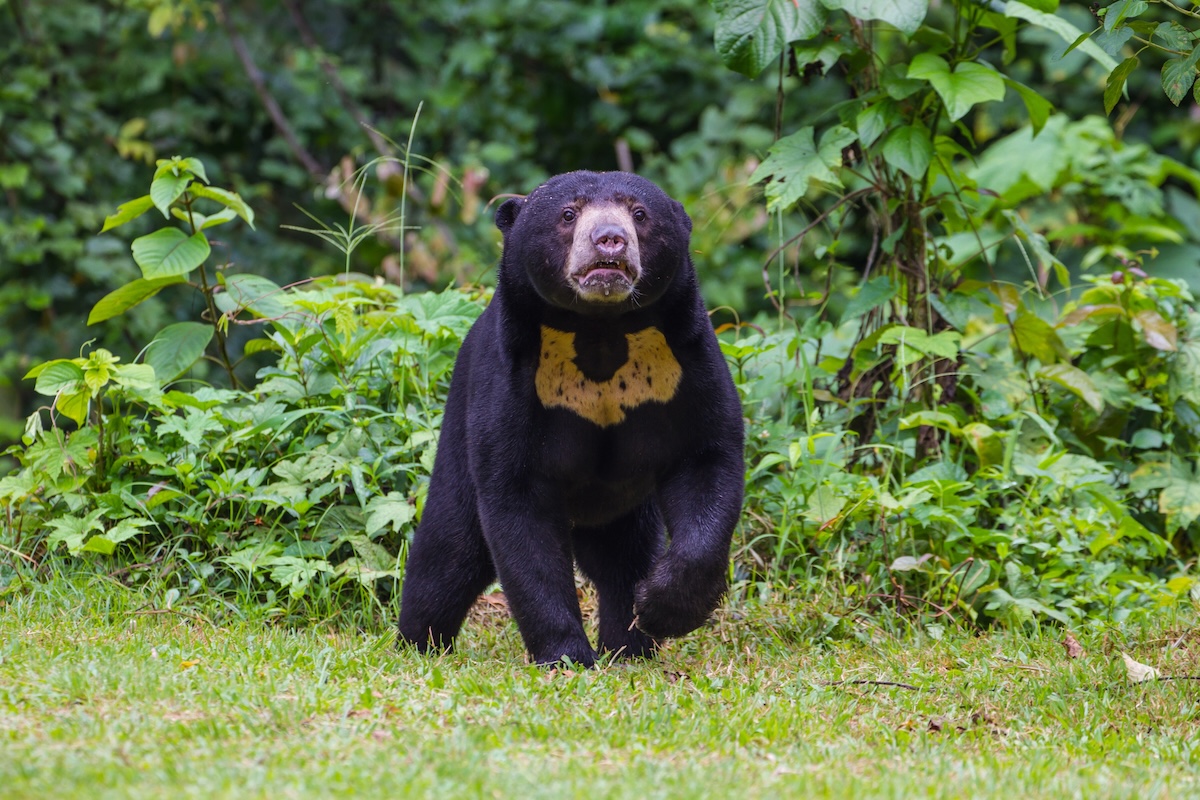 Photo Credit: sirichai2514 at Deposit Photos
In the heart of Southeast Asia’s lush tropical forests, the Sun Bear, or Helarctos malayanus, roams beneath a vibrant green canopy. This enchanting creature, the smallest member of the bear family, stands at about the height of a small child when on its hind legs, showcasing a sleek, glossy coat that ranges from deep black to a rich brown. Its most striking feature is the golden or white crescent-shaped patch on its chest, which resembles the sun rising over the horizon. This unique marking not only gives the Sun Bear its name but also serves as a captivating identifier for scientists and nature lovers alike.
As the sun filters through the dense foliage, illuminating the forest floor, the Sun Bear emerges to forage for its favorite treats. With a diet that includes fruits, insects, and honey, these bears are often called “honey bears” for their sweet tooth. Their long, curved claws are perfectly designed for climbing trees, allowing them to reach the juiciest fruits and honeycombs high above. This remarkable adaptability to their environment makes them a vital part of their ecosystem, helping to disperse seeds and maintain the health of their forest home. As we explore the life of the Sun Bear, we will uncover the secrets of its behavior, diet, and the challenges it faces in a rapidly changing world.
The Sun Bear, scientifically known as Helarctos malayanus, holds a special place in the tree of life. As the smallest member of the bear family, Ursidae, it showcases a blend of features that set it apart from its larger relatives. Found primarily in the tropical forests of Southeast Asia, this bear is not just notable for its size but also for its striking appearance, including a distinctive orange or cream-colored chest patch that resembles a rising sun. This unique marking, along with its long tongue—perfect for extracting honey from beehives—makes the Sun Bear a captivating subject of study in the animal kingdom.
| Taxonomic Rank | Scientific Name | Meaning & Significance |
|---|---|---|
| Kingdom | Animalia | This classification includes all animals, highlighting the Sun Bear’s status as a living organism that moves, eats, and interacts with its environment. |
| Phylum | Chordata | Chordata means “having a notochord,” a flexible rod that supports the body. This feature is present in all vertebrates, including the Sun Bear, which has a backbone. |
| Class | Mammalia | Mammalia refers to mammals, animals that nurse their young with milk. The Sun Bear, like all bears, is warm-blooded and has fur, which helps it regulate body temperature. |
| Order | Carnivora | Carnivora is the order that includes meat-eating mammals. While the Sun Bear has a varied diet, it is classified here due to its evolutionary lineage, which includes ancestors that primarily hunted for food. |
| Family | Ursidae | The family Ursidae encompasses all bears. The Sun Bear’s classification in this family highlights its shared characteristics with other bears, such as a strong sense of smell and a stocky build. |
| Genus | Helarctos | Helarctos comes from Greek, meaning “bear” and “sun.” This name reflects the bear’s unique sun-like chest marking and its habitat in sunny tropical regions. |
| Species | malayanus | This species name indicates the Sun Bear’s primary distribution in Malaysia and surrounding areas, emphasizing its connection to Southeast Asia. |
Understanding the Sun Bear’s taxonomic classification reveals much about its evolutionary history. As a member of the Ursidae family, it shares a common ancestor with other bears, which adapted to various environments over millions of years. The Sun Bear’s unique adaptations, such as its small size and specialized feeding habits, reflect the ecological niches it occupies in the dense forests of Southeast Asia. This classification not only helps scientists study its biology and behavior but also underscores the importance of conserving its habitat, ensuring that this extraordinary bear continues to thrive in the wild.
The evolutionary journey of the Sun Bear, or Helarctos malayanus, stretches back millions of years, weaving through the rich tapestry of life on Earth. This small bear, native to the tropical forests of Southeast Asia, is a product of a long line of ancestors that adapted to their environments in remarkable ways. The story of the Sun Bear is not just about survival; it’s about the intricate dance of evolution that has shaped its existence.
The ancestors of modern bears emerged around 38 million years ago, during the late Eocene epoch. These early bears were larger and more generalized in their diets, but as the world changed, so did they. Over time, some species began to adapt to specific habitats and food sources. The Sun Bear’s lineage diverged from other bears, likely around 5 to 10 million years ago, as it adapted to the dense, humid forests of Southeast Asia. This transition involved developing traits that allowed it to thrive in a unique ecological niche, where food sources like insects and fruit were abundant.
These adaptations have been crucial for the Sun Bear’s survival in its tropical habitat. The combination of physical traits and behavioral strategies allows it to exploit a variety of food sources, from honey to fruits and insects. As the forests of Southeast Asia face challenges from deforestation and climate change, the Sun Bear’s unique adaptations will be vital for its continued existence. Understanding this evolutionary story not only highlights the resilience of the Sun Bear but also emphasizes the importance of conserving its habitat for future generations.
The Sun Bear is a captivating sight, standing at about 1.2 to 1.5 meters tall when on its hind legs, which is roughly the height of a small child. With a weight ranging from 30 to 60 kilograms, or about 66 to 132 pounds, it has a compact and sturdy build. Its short, sleek fur is predominantly black, providing a striking contrast to its most distinctive feature: a bright yellow or orange U-shaped marking on its chest. This unique pattern not only adds to its charm but also makes it easily recognizable among the dense foliage of its tropical forest habitat.
| Feature | Description |
|---|---|
| Height | 1.2m – 1.5m (4ft – 5ft) |
| Weight | 30kg – 60kg (66lbs – 132lbs) |
| Skin Type | Fur |
| Most Distinctive Feature | Yellow or orange U-shaped marking on chest |
The combination of its size, weight, and striking coloration serves important survival purposes. The Sun Bear’s compact body allows it to navigate through the dense underbrush of its forest home with agility. Its short fur helps it stay cool in the humid tropical climate, while the U-shaped marking may play a role in communication with other bears, signaling identity or mood. Together, these features make the Sun Bear not just a beautiful animal, but also a well-adapted one, perfectly suited to thrive in its environment.
The Sun Bear thrives in the lush, vibrant world of lowland tropical forests. Imagine towering trees draped in thick vines, their leaves creating a green canopy that filters sunlight into a soft, dappled glow. Beneath this leafy roof, a rich tapestry of life unfolds, with colorful birds flitting through the branches and a chorus of insects buzzing in the underbrush. This habitat is not just beautiful; it’s a bustling ecosystem where the Sun Bear finds food, shelter, and companionship.
The climate in these tropical forests is warm and humid, with temperatures often hovering between 20 to 30 degrees Celsius (68 to 86 degrees Fahrenheit). Rainfall is abundant, with some areas receiving over 2000 millimeters (about 79 inches) of rain each year. This wet environment supports a diverse range of plant life, providing the Sun Bear with a variety of food sources, from fruits and honey to insects and small animals. The consistent warmth and moisture create a perfect setting for the Sun Bear to thrive.
To navigate this dense habitat, the Sun Bear has developed several clever adaptations. Its long, curved claws are perfect for climbing trees, allowing it to reach high branches where delicious fruits and honey are found. The bear’s short, sleek fur helps it stay cool in the humid heat, while its keen sense of smell guides it to food sources hidden beneath the forest floor. These traits not only help the Sun Bear survive but also make it an integral part of its ecosystem, as it helps disperse seeds and pollinate plants while foraging.
The Sun Bear’s daily life is a blend of activity and rest, shaped by its unique adaptations to the tropical forests it calls home. These bears are primarily diurnal, meaning they are most active during the day. As the sun rises, Sun Bears begin their search for food, using their keen sense of smell to locate fruits, insects, and honey. They are skilled climbers, often scaling trees to reach their favorite snacks. Throughout the day, they alternate between foraging, exploring their territory, and taking breaks to rest in the shade, especially during the hottest parts of the afternoon.
While Sun Bears are generally solitary animals, they do exhibit interesting social behaviors, particularly during mating season or when a mother is raising her cubs. Adult bears usually prefer to roam alone, marking their territory with scent to communicate their presence to others. However, mothers are fiercely protective of their young, teaching them essential survival skills. Cubs stay with their mothers for about two years, learning how to find food and navigate their environment. This bond is crucial for their development and survival in the wild.
| Behavior Type | Description |
|---|---|
| Activity Patterns | Sun Bears are diurnal, foraging for food during the day and resting in the shade during the hottest hours. |
| Social Structure | Primarily solitary, with mothers raising cubs for about two years before they become independent. |
| Communication Methods | They use scent marking to establish territory and communicate with other bears, especially during mating season. |
The behaviors of Sun Bears are finely tuned to ensure their survival in the wild. Their foraging habits allow them to find a diverse diet, while their solitary nature helps reduce competition for resources. The nurturing relationship between mothers and cubs is vital, as it equips the young bears with the skills they need to thrive on their own. By understanding their environment and adapting their behaviors, Sun Bears continue to navigate the challenges of their tropical habitat.
The Sun Bear is an omnivore, which means it enjoys a varied diet that includes both plants and animals. This small bear has a particular fondness for fruits, especially those that are ripe and juicy. It also has a sweet tooth for honey, which it skillfully extracts from beehives. In addition to these treats, Sun Bears munch on insects, adding a protein boost to their meals. Their feeding behavior is quite fascinating; they use their long, curved claws to dig into tree bark or tear apart logs, searching for hidden snacks.
| Dietary Aspect | Details |
|---|---|
| Diet Type | Omnivore |
| Favorite Foods | Fruits, honey, and insects |
| Prey Items | Honey, various insects |
| Hunting/Foraging Strategies | Uses long claws to dig and tear apart tree bark and logs |
This diverse diet plays a crucial role in the Sun Bear’s ecology and daily routine. By foraging for fruits and honey, they help disperse seeds throughout their habitat, promoting plant growth and maintaining the health of their forest ecosystem. Their unique feeding habits also mean they are constantly on the move, exploring their surroundings and adapting to the availability of food. This adaptability not only supports their survival but also enriches the vibrant tapestry of life in the tropical forests they inhabit.
When it comes to mating, Sun Bears have a rather intriguing approach. Their breeding season can vary, but it often peaks during the rainy months when food is plentiful. Males will engage in vocalizations and scent-marking to attract females, showcasing their strength and fitness. Once a female is ready to mate, she will signal her interest, and the pair will engage in a courtship that can last several days. This bonding period is essential, as it helps ensure a strong connection before the arrival of their young.
| Reproductive Aspect | Details |
|---|---|
| Gestation Period | 3 – 8 months |
| Average Litter Size | 2 |
| Age of Sexual Maturity | 3 – 4 years |
| Name of Young | Cub |
After the gestation period, which can last anywhere from three to eight months, the mother gives birth to her cubs, usually two at a time. These tiny, helpless cubs are born blind and rely entirely on their mother for warmth and nourishment. The mother Sun Bear is incredibly attentive, nursing her young and keeping them safe in a cozy den. As the cubs grow, they begin to explore their surroundings, learning essential survival skills from their mother. By the time they reach sexual maturity at around three to four years, they are well-equipped to navigate the challenges of life in the wild, continuing the cycle of life for this enchanting species.
The Sun Bear occupies a vital role in its ecosystem, often seen as both a forager and a prey species. As an omnivore, it helps maintain the balance of its tropical forest habitat by dispersing seeds and controlling insect populations. However, despite its important position, the Sun Bear faces numerous dangers that threaten its survival.
To defend itself against these threats, the Sun Bear has developed several survival strategies. Its sharp claws are not just for climbing trees; they also serve as powerful tools for digging and defending against predators. When threatened, Sun Bears can be surprisingly aggressive, using their strength and speed to escape danger. Additionally, their keen sense of smell helps them detect potential threats from a distance, allowing them to retreat to safety before trouble arises. By adapting to their environment and using their natural instincts, Sun Bears continue to navigate the challenges of their world.
A keystone species is an organism that plays a crucial role in maintaining the structure of its ecosystem. Its presence or absence can significantly impact the environment and the other species living there. The Sun Bear, known scientifically as Helarctos malayanus, qualifies as a keystone species in its tropical forest habitat. By influencing the populations of other species and contributing to the health of its ecosystem, the Sun Bear helps to create a balanced environment.
Sun Bears are vital for seed dispersal, which is essential for the growth of many plant species in their habitat. As they consume fruits, they inadvertently spread seeds through their droppings, allowing new plants to grow in different areas. This process not only helps maintain plant diversity but also supports the entire food web, as many animals rely on these plants for food and shelter. Additionally, Sun Bears dig into the ground to find insects and roots, aerating the soil in the process. This behavior promotes healthy soil, which is crucial for plant growth.
Moreover, Sun Bears serve as prey for larger predators, contributing to the balance of the food chain. Their presence supports the survival of species that rely on them for food, such as big cats. By being part of this intricate web of life, Sun Bears help ensure that various species can thrive in their shared environment.
If Sun Bears were to disappear from their ecosystem, the consequences would be profound. Without these bears, seed dispersal would decline, leading to fewer plants and a loss of biodiversity. This decline would ripple through the food web, affecting not only the plants but also the animals that depend on them for food and shelter. The balance of the ecosystem would be disrupted, potentially leading to the decline of other species and altering the forest’s overall health. In essence, the loss of the Sun Bear would create a chain reaction, highlighting just how interconnected life in the tropical forests truly is.
The Sun Bear, known scientifically as Helarctos malayanus, occupies a vital ecological niche in the lowland tropical forests of Southeast Asia. As the smallest member of the bear family, it plays a significant role in its environment, influencing both plant and animal life. With its unique adaptations and behaviors, the Sun Bear helps maintain the balance of its ecosystem, making it an essential player in the intricate web of life.
| Ecosystem Service | Impact |
|---|---|
| Seed Dispersal | By consuming fruits and excreting the seeds, Sun Bears help in the growth of new plants, promoting forest regeneration. |
| Soil Aeration | As they dig for insects and roots, Sun Bears aerate the soil, which improves water absorption and nutrient availability for plants. |
| Predator Control | By preying on smaller animals, they help regulate populations, ensuring a balanced ecosystem. |
| Food Source for Other Species | Sun Bears can be prey for larger predators, contributing to the food web dynamics. |
The influence of Sun Bears extends beyond their immediate actions. For instance, when they forage for honey or insects, they often strip bark from trees, which can create habitats for other species like insects and birds. Their love for fruits means they often travel long distances in search of food, inadvertently spreading seeds far and wide. This behavior not only helps in the growth of various plant species but also supports the diverse wildlife that depends on these plants for shelter and food.
The broader ecological importance of the Sun Bear cannot be overstated. As a keystone species, their presence is crucial for maintaining the health of their tropical forest habitat. Without them, the balance of the ecosystem could be disrupted, leading to a decline in plant diversity and the animals that rely on those plants. By understanding and protecting Sun Bears, we also safeguard the intricate relationships that sustain the vibrant life of the forests they inhabit.
In the intricate web of life, symbiosis plays a vital role in shaping ecosystems. This term refers to the close interactions between different species, which can be beneficial, harmful, or neutral. These relationships can be mutualistic, where both species gain advantages, parasitic, where one benefits at the other’s expense, or commensal, where one benefits while the other is neither helped nor harmed. The Sun Bear, with its unique lifestyle and habitat, engages in various ecological partnerships that highlight the interconnectedness of life in the tropical forests it inhabits.
| Species/Type | Relationship Type | Description |
|---|---|---|
| Fruit Trees | Mutualistic | Sun Bears help disperse seeds from the fruits they eat, promoting the growth of new trees, while benefiting from the nutritious fruit. |
| Termites | Commensal | While foraging for insects, Sun Bears may disturb termite mounds, allowing birds and other animals to access the exposed insects without affecting the bear. |
| Parasites (like ticks) | Parasitic | Ticks and other parasites feed on the Sun Bear’s blood, benefiting themselves while potentially harming the bear’s health. |
These relationships have evolved over time, shaped by the needs and behaviors of the species involved. The mutualistic bond between Sun Bears and fruit trees is a prime example of how one species can support another, creating a thriving environment for both. Meanwhile, the presence of parasites like ticks illustrates the darker side of these interactions, reminding us that not all relationships are beneficial. Understanding these connections helps us appreciate the delicate balance of nature and the roles each species plays in maintaining the health of their ecosystem.
The Sun Bear, a small yet captivating member of the bear family, is full of surprises that even seasoned nature enthusiasts might not know. These bears, native to the tropical forests of Southeast Asia, have some truly remarkable traits and behaviors that set them apart from their larger relatives.
The Sun Bear, known scientifically as Helarctos malayanus, has a long and storied relationship with humanity that dates back centuries. In many Southeast Asian cultures, these bears are often depicted in folklore and traditional stories, symbolizing strength and resilience. Historically, they have been both revered and feared, with their striking appearance and unique behaviors capturing the imagination of local communities. The Sun Bear’s distinctive golden chest mark, resembling a rising sun, has led to its name and has made it a subject of fascination in art and literature.
Today, the interactions between Sun Bears and humans are complex and multifaceted. As deforestation and habitat loss continue to threaten their natural environments, conservation efforts have become increasingly important. Organizations are working tirelessly to protect these bears and their habitats, often involving local communities in the process. However, conflicts can arise when Sun Bears venture into agricultural areas in search of food, leading to tensions between farmers and wildlife. Unlike some other bear species, Sun Bears are not domesticated, but they are sometimes kept in captivity for educational purposes or as part of rehabilitation programs.
As we look to the future, the relationship between Sun Bears and humanity holds both challenges and opportunities. With increasing awareness of environmental issues, there is hope that more people will advocate for the protection of these remarkable animals and their habitats. By fostering a deeper understanding of the Sun Bear’s role in the ecosystem, we can work together to ensure that future generations can appreciate and coexist with these fascinating creatures. The journey ahead will require collaboration, education, and a commitment to preserving the natural world for all its inhabitants.
The Sun Bear, known scientifically as Helarctos malayanus, is currently classified as Vulnerable by the International Union for Conservation of Nature (IUCN). This status indicates that the species faces a high risk of extinction in the wild. While exact population numbers are difficult to determine, it is clear that their numbers are declining due to various threats. The trend is concerning, as habitat loss and poaching continue to impact their survival.
| Conservation Factor | Status/Details |
|---|---|
| IUCN Status | Vulnerable |
| Estimated Population Size | Unknown |
| Population Trend | Declining |
The main threats to Sun Bears are habitat destruction and illegal hunting. As tropical forests are cleared for agriculture and urban development, these bears lose their homes and food sources. Additionally, poaching poses a significant risk, as Sun Bears are hunted for their body parts, which are used in traditional medicine, and for the illegal pet trade. These pressures not only reduce their numbers but also disrupt their natural behaviors and social structures.
Conservation efforts are underway to protect the Sun Bear and its habitat. Organizations are working to establish protected areas and promote sustainable land use practices. Education programs aim to raise awareness about the importance of Sun Bears in their ecosystems and the threats they face. With continued efforts and support from local communities, there is hope for the future of this remarkable species. By fostering a deeper understanding of their role in the environment, we can help ensure that Sun Bears thrive for generations to come.
| Question | Answer |
|---|---|
| What is the habitat of the Sun Bear? | Sun Bears primarily live in lowland tropical forests. These forests provide the dense cover and food sources they need to thrive, including fruits, insects, and honey. |
| What do Sun Bears eat? | Sun Bears are omnivores, which means they eat both plants and animals. Their diet includes fruits, honey, insects, and small vertebrates, making them quite versatile in their food choices. |
| How do Sun Bears behave in the wild? | Sun Bears are mostly solitary animals, meaning they prefer to live alone rather than in groups. They are also known for their excellent climbing skills, often using trees to find food or escape from danger. |
| How do Sun Bears reproduce? | Sun Bears typically mate during the rainy season, and after a gestation period of about 95 days, a female usually gives birth to one or two cubs. The cubs are born blind and rely on their mother for warmth and food. |
| What threats do Sun Bears face? | Sun Bears are classified as vulnerable due to habitat loss and poaching. Deforestation for agriculture and logging reduces their living space, while illegal hunting poses a direct threat to their population. |
| What is a unique characteristic of Sun Bears? | One of the most distinctive features of Sun Bears is the yellow or orange U-shaped marking on their chest. This unique marking helps to identify individual bears and is thought to play a role in communication. |
| Are Sun Bears good climbers? | Yes, Sun Bears are excellent climbers! Their long claws and strong limbs allow them to easily scale trees in search of food, such as honey or fruits, and to escape from predators. |