Taxonomy & Classification
- Kingdom
- Animalia
- Phylum
- Chordata
- Class
- Mammalia
- Order
- Carnivora
- Family
- Felidae
- Genus
- Panthera
- Species
- Panthera Tigris

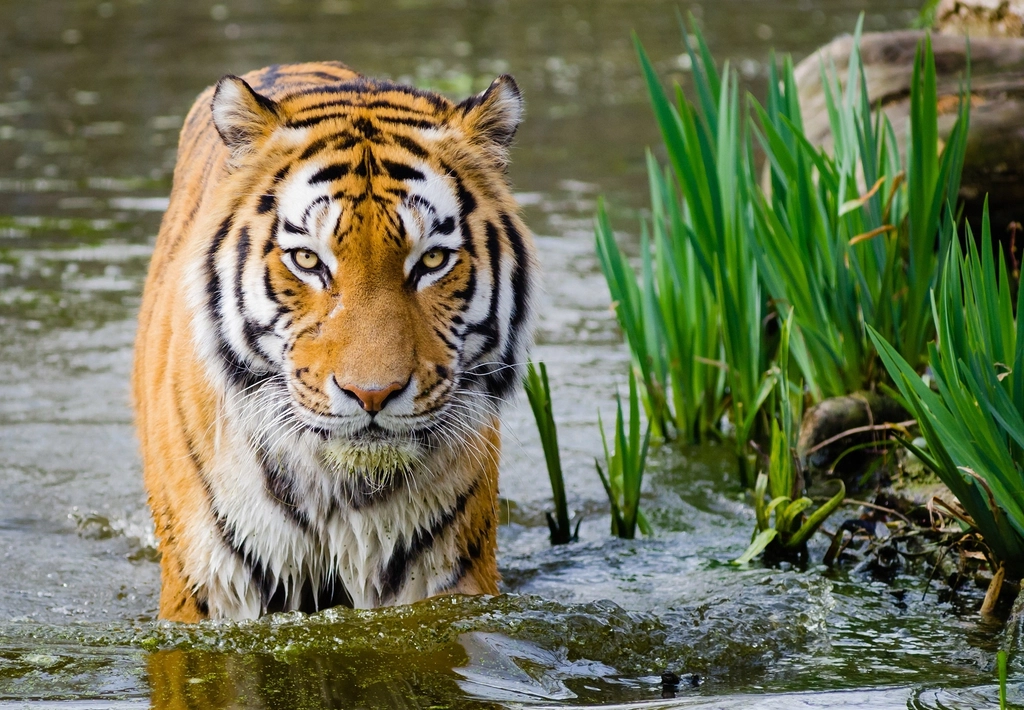 Photo Credit: Rawpixel
In the heart of Asia’s lush forests, the tiger, known scientifically as Panthera tigris, prowls with an elegance that captivates all who encounter it. With its striking orange coat adorned with bold black stripes, this magnificent feline is not just a feast for the eyes; it is a master of stealth and power. As the sun filters through the dense canopy, casting dappled shadows on the forest floor, the tiger moves silently, its keen senses attuned to the rustle of leaves and the distant calls of other wildlife. This solitary hunter embodies the wild spirit of its habitat, making it a subject of fascination for scientists and nature lovers alike.
Tigers are more than just beautiful animals; they play a crucial role in their ecosystems as apex predators. Their presence helps maintain the balance of the forest, controlling the populations of other species and ensuring a healthy environment. With powerful muscles and sharp retractable claws, they are built for both speed and strength, allowing them to take down prey much larger than themselves. As we explore the life of the tiger, from its hunting techniques to its social behaviors, we uncover the intricate web of life that surrounds this iconic creature, revealing why it has captured the human imagination for centuries.
The tiger, a magnificent symbol of strength and beauty, occupies a distinguished place in the tree of life. Scientifically classified within the Kingdom Animalia, the Phylum Chordata, and the Class Mammalia, tigers belong to the Order Carnivora, which includes all meat-eating mammals. Their family, Felidae, is home to the big cats, and the genus Panthera highlights their close relationship with other large felines like lions and leopards. What sets tigers apart is not just their striking orange coat with black stripes, but also their powerful build and solitary nature, making them apex predators in their habitats.
| Taxonomic Rank | Scientific Name | Meaning & Significance |
|---|---|---|
| Kingdom | Animalia | This name comes from the Latin word “animalis,” meaning “having breath” or “living.” It signifies all living organisms that are not plants or fungi. |
| Phylum | Chordata | Derived from the Greek word “chordē,” meaning “string,” this classification refers to animals with a notochord, a flexible rod that supports the body, which in vertebrates becomes the backbone. |
| Class | Mammalia | This term comes from the Latin “mamma,” meaning “breast.” It highlights that mammals are characterized by their ability to nurse their young with milk produced by mammary glands. |
| Order | Carnivora | From the Latin “carnivorus,” meaning “meat-eating,” this order includes animals that primarily consume flesh, showcasing their adaptations for hunting and consuming prey. |
| Family | Felidae | This name is derived from the Latin “felis,” meaning “cat.” It encompasses all true cats, emphasizing their shared traits like retractable claws and keen senses. |
| Genus | Panthera | Originating from the Greek word “panthera,” which refers to a large cat, this genus includes the biggest and most powerful felines, highlighting their strength and hunting prowess. |
Understanding the tiger’s classification reveals much about its evolutionary journey. As a member of the Felidae family, tigers share a common ancestor with other big cats, which adapted over millions of years to become the skilled hunters we see today. Their unique adaptations, such as powerful limbs and acute senses, have allowed them to thrive in diverse environments, from dense jungles to open grasslands. This classification not only showcases their biological connections but also emphasizes the importance of conserving these incredible animals and their habitats for future generations.
The evolutionary journey of the tiger stretches back millions of years, weaving through the tapestry of time and adaptation. Tigers belong to the family Felidae and the genus Panthera, which includes other big cats like lions and leopards. The story of the tiger begins around 2 to 3 million years ago, during the Pleistocene epoch, a time marked by dramatic climate changes and the emergence of large mammals. As the world transformed, so did the ancestors of modern tigers, adapting to new environments and challenges.
The earliest ancestors of tigers were small, tree-dwelling cats that roamed the forests of Asia. Over time, these ancestors evolved into larger, more powerful forms. One significant transition occurred when they adapted to a more terrestrial lifestyle, allowing them to hunt larger prey. This shift was crucial, as it set the stage for the development of the tiger’s impressive size and strength. As they spread across Asia, tigers adapted to various habitats, from dense jungles to open grasslands, each environment shaping their physical traits and hunting strategies.
These adaptations have been vital for the tiger’s survival in the wild. Their powerful muscles and sharp claws enable them to hunt effectively, while their striking stripes help them blend into their surroundings, making them stealthy predators. With acute senses, tigers can detect prey from great distances, ensuring they can find food even in dense forests. Their solitary nature allows them to thrive in diverse habitats, as they can establish and defend large territories. Together, these traits have made the tiger one of the most successful and iconic predators in the animal kingdom.
The tiger is a breathtaking embodiment of power and grace, with a body designed for both stealth and strength. Its muscular frame is built for agility, allowing it to move silently through its forested habitat. With a long, sturdy tail that aids in balance and sharp retractable claws for gripping, the tiger is a master of its environment. Its striking appearance, marked by a combination of vivid colors and patterns, makes it one of the most recognizable animals on the planet.
| Feature | Description |
|---|---|
| Weight | 267-300 kg (589-660 lbs) |
| Skin Type | Fur |
| Color | Orange with black stripes |
| Body Length | Up to 3.3 meters (10.8 feet) including the tail |
| Head Size | Broad with powerful jaws |
These physical features work together to create a formidable predator. The tiger’s weight and muscular build allow it to take down large prey, while its fur provides camouflage in the dappled light of the forest. The vibrant orange coat, adorned with bold black stripes, helps it blend seamlessly into its surroundings, making it nearly invisible to both prey and potential threats. Each element of the tiger’s form is a testament to its evolutionary adaptations, finely tuned for survival in the wild.
The tiger’s home is a vibrant tapestry of dense tropical forests, where sunlight filters through a thick canopy of leaves, creating a dappled dance of light and shadow on the forest floor. These lush environments are alive with the sounds of chirping birds, rustling leaves, and the distant calls of other wildlife. The underbrush is rich with ferns and shrubs, providing both cover and hunting grounds for this majestic predator. Here, the tiger reigns supreme, blending seamlessly into its surroundings with its striking orange coat and bold black stripes.
Tigers thrive in warm, humid climates, typically found in areas where rainfall is abundant. These regions often experience a tropical climate, with temperatures ranging from mild to hot throughout the year. The dense foliage not only provides shelter but also supports a rich diversity of prey, which is essential for the tiger’s survival. The combination of warmth and moisture creates an ideal environment for the growth of the plants and animals that make up the tiger’s ecosystem.
To navigate their lush habitats, tigers have developed several adaptations that enhance their hunting prowess. Their powerful limbs allow them to leap great distances, while their keen senses of sight and hearing help them detect prey even in the thickest underbrush. The tiger’s distinctive stripes serve as natural camouflage, breaking up its outline and allowing it to stalk silently through the forest. These adaptations make the tiger a master of its domain, perfectly suited to the challenges of life in the wild.
Tigers lead a life that is both solitary and strategic, filled with daily activities that revolve around their need for survival. As the sun rises, these majestic cats begin their day, often starting with a stretch and a yawn, shaking off the night’s rest. They spend a significant part of their day patrolling their territory, which can span several miles. This is crucial for marking their presence and ensuring that other tigers know where they stand. Hunting is another vital activity, and tigers are primarily nocturnal hunters, meaning they prefer to stalk their prey under the cover of darkness. Their keen senses and stealthy movements make them expert ambush predators, allowing them to catch animals like deer and wild boar.
While tigers are known for their solitary nature, they do exhibit interesting social behaviors, especially during mating season or when a mother is raising her cubs. Adult tigers typically prefer to live alone, but they communicate with one another through vocalizations, scent markings, and visual signals. These methods help them establish territory and avoid confrontations. When a female is ready to mate, she will attract males with her scent, leading to a brief but intense social interaction. Mother tigers are fiercely protective of their cubs, teaching them essential survival skills until they are old enough to fend for themselves.
| Behavior Type | Description |
|---|---|
| Activity Patterns | Tigers are primarily nocturnal, hunting at night and resting during the day. They patrol their territory and mark it with scent to communicate their presence. |
| Social Structure | Tigers are solitary animals, but they come together for mating and mothers raise their cubs alone. Adult males and females maintain separate territories. |
| Communication Methods | Tigers communicate through vocalizations like roars and growls, as well as scent markings and visual signals, which help them establish territory and avoid conflicts. |
The behaviors of tigers are finely tuned to ensure their survival in the wild. Their solitary lifestyle allows them to be stealthy hunters, while their communication methods help them navigate the challenges of their environment. By marking their territory and using their keen senses, tigers can avoid unnecessary confrontations and focus on what matters most: finding food and raising their young. This blend of independence and strategic social interaction is what makes the tiger a true survivor in the wild.
Tigers are carnivores, which means they primarily eat meat. Their diet is rich and varied, consisting mainly of large mammals. These powerful hunters are known for their stealth and strength, which they use to stalk and ambush their prey. Tigers often hunt alone, relying on their keen senses and powerful bodies to catch animals like deer, wild boar, and even cattle. This solitary hunting style allows them to be highly effective predators in their natural habitats.
| Dietary Aspect | Details |
|---|---|
| Diet Type | Carnivore |
| Favorite Foods | Deer, Wild Boar, Cattle |
| Prey Items | Large mammals such as deer and wild boar |
| Hunting Strategies | Stalking and ambushing prey using stealth and strength |
The diet of a tiger plays a crucial role in shaping its ecology and daily routine. By preying on large herbivores, tigers help maintain the balance of their ecosystems, preventing overpopulation of these species. Their solitary hunting habits mean they must be strategic in their movements, often resting and conserving energy between hunts. This not only influences their behavior but also impacts the dynamics of the forest, as their presence helps regulate the populations of other animals, creating a healthier environment for all.
When it comes to mating, tigers are quite the romantic adventurers! Their breeding season typically occurs between November and April, depending on their habitat. During this time, male tigers will roam their territories, searching for females. They communicate through vocalizations, scent markings, and even visual displays to attract a mate. Once a female is ready to breed, she will signal her interest, and the pair will engage in a series of courtship behaviors, which can last several days. This passionate dance of love is essential for ensuring the survival of their species.
| Reproductive Aspect | Details |
|---|---|
| Gestation Period | Approximately 93 to 112 days |
| Litter Size | Average of 3 |
| Age of Maturity | About 2 to 3 years |
| Name of Young | Cubs |
Once the cubs are born, they are completely dependent on their mother for survival. Tiger mothers are incredibly devoted, nurturing their young with great care. The cubs are born blind and weigh only about 2 to 3 pounds. For the first few weeks, they stay hidden in a den, which could be a cave or a thicket, to protect them from predators. As they grow, the mother teaches them essential skills like hunting and climbing. By the time they reach maturity at around 2 to 3 years old, these young tigers are ready to venture out on their own, carrying the legacy of their majestic lineage into the wild.
Tigers are apex predators, meaning they sit at the top of their food web. This powerful position allows them to control the populations of other animals in their habitat, helping to maintain a balanced ecosystem. However, despite their strength and hunting prowess, tigers face numerous dangers that threaten their survival.
To combat these threats, tigers have developed several defensive behaviors and survival strategies. They are masters of camouflage, using their striking stripes to blend into the dappled light of their forest homes. This stealth allows them to avoid detection by both prey and potential threats. Additionally, tigers are known for their powerful roars, which can communicate their presence to other tigers and establish territory. By being solitary and elusive, they minimize encounters with humans and other dangers, showcasing their adaptability in a rapidly changing world.
A keystone species is a vital part of its ecosystem, playing a crucial role in maintaining the structure and health of its environment. The tiger, with its powerful presence and predatory skills, qualifies as a keystone species. By regulating prey populations and influencing the behavior of other animals, tigers help to shape the ecosystems they inhabit, particularly in dense tropical forests.
Tigers primarily hunt large herbivores, such as deer and wild boar. By keeping these populations in check, they prevent overgrazing, which can lead to habitat degradation. For instance, if deer populations were to explode without the tiger’s predation, they would consume vast amounts of vegetation, disrupting the balance of plant life. This, in turn, affects other species that rely on those plants for food and shelter. Additionally, tigers often target the weaker or sick individuals in prey populations, which helps to ensure that only the healthiest animals reproduce, promoting a stronger gene pool.
Moreover, the presence of tigers can influence the behavior of other animals in their habitat. Many herbivores will alter their grazing patterns to avoid areas where tigers are active, allowing vegetation in those areas to flourish. This creates a more diverse plant community, which supports a wider variety of animal species. The intricate web of life in these ecosystems relies on the tiger’s role as a top predator, making its presence essential for ecological balance.
If tigers were to disappear from their ecosystems, the consequences would be dire. Without these apex predators, herbivore populations could surge uncontrollably, leading to overgrazing and the collapse of plant communities. This would not only diminish the habitat for countless other species but could also disrupt the entire food web. The loss of tigers would echo through the forest, altering the landscape and diminishing the rich tapestry of life that thrives in their presence. The health of the ecosystem would decline, showcasing just how critical these magnificent cats are to the natural world.
The tiger occupies a critical ecological niche as an apex predator in its dense tropical forest habitat. This majestic feline plays a vital role in maintaining the balance of its ecosystem. By controlling the populations of large herbivores, tigers help prevent overgrazing, which can lead to habitat degradation. Their solitary lifestyle allows them to roam vast territories, ensuring that they can hunt effectively and maintain their role in the food web.
| Ecosystem Service | Impact |
|---|---|
| Population Control | Regulates herbivore numbers, preventing overgrazing and promoting plant diversity. |
| Habitat Maintenance | Encourages healthy forest growth by influencing the movement and behavior of prey species. |
| Genetic Diversity | Supports the genetic health of prey populations by allowing only the fittest individuals to survive. |
| Tourism and Education | Attracts ecotourism, which can fund conservation efforts and raise awareness about biodiversity. |
Tigers influence their environment in several specific ways. For instance, by preying on large herbivores like deer and wild boar, they help maintain a balanced ecosystem. When tiger populations are healthy, they keep these herbivore numbers in check, which in turn allows vegetation to flourish. This creates a more diverse habitat that supports a variety of other species, from insects to birds. Additionally, the presence of tigers can encourage the growth of certain plant species that thrive in areas where herbivores are less abundant.
In a broader ecological context, the tiger’s role as a keystone species is essential for the health of its ecosystem. The loss of tigers can lead to a cascade of negative effects, disrupting the balance of life in their habitats. Without these powerful predators, herbivore populations can explode, leading to overgrazing and a decline in plant diversity. This not only affects the plants but also the countless other species that rely on a healthy forest for survival. Protecting tigers is not just about saving a single species; it is about preserving the intricate web of life that depends on their presence.
In the intricate web of life, symbiosis refers to the close and often long-term interactions between different species. These relationships can take many forms, including mutualism, where both species benefit, parasitism, where one benefits at the expense of the other, and commensalism, where one benefits while the other is neither helped nor harmed. Understanding these ecological relationships helps us appreciate the delicate balance of ecosystems, where every creature, including the majestic tiger, plays a vital role.
| Species/Type | Relationship Type | Description |
|---|---|---|
| Indian Peafowl | Commensalism | Peafowl often forage in areas where tigers hunt, benefiting from the disturbed ground and leftover prey without affecting the tigers. |
| Oxpecker Birds | Mutualism | These birds perch on tigers and eat ticks and parasites from their fur, providing the tigers relief while getting a meal. |
| Smaller Carnivores | Parasitism | Some smaller carnivores may scavenge on tiger kills, benefiting from the tiger’s hunting success while not contributing to the ecosystem. |
The evolution of these relationships showcases the adaptability and interconnectedness of species. Over time, tigers and their partners have developed these interactions to enhance their survival. For instance, the oxpecker birds not only help keep tigers healthy by removing pests, but they also gain food and a safe perch. Such partnerships illustrate how species can evolve together, creating a dynamic balance that benefits the entire ecosystem. By understanding these connections, we can better appreciate the role of tigers and their companions in the natural world.
Tigers are not just beautiful creatures; they are full of surprises that reveal their incredible adaptations and behaviors. Here are some astonishing facts that will captivate nature enthusiasts of all ages.
Throughout history, tigers have captivated human imagination and culture. These majestic animals have been revered in various societies, often symbolizing strength, courage, and beauty. In ancient cultures, tigers appeared in art, folklore, and mythology, representing both fear and admiration. For instance, in Chinese culture, the tiger is one of the twelve zodiac animals, embodying power and protection. However, this relationship has not always been harmonious. As humans expanded their territories, encounters with tigers often led to conflict, as these powerful predators sometimes preyed on livestock, leading to fear and misunderstanding.
Today, the relationship between tigers and humanity is complex and multifaceted. Conservation efforts are underway to protect these magnificent creatures from extinction, as their populations have dwindled due to habitat loss and poaching. Organizations around the world are working to create protected areas and promote sustainable practices that benefit both tigers and local communities. However, conflicts still arise, particularly in regions where human settlements encroach on tiger habitats. In some cases, tigers have been captured and kept in captivity, raising ethical questions about domestication and the role of humans in their lives.
Looking ahead, the future of the tiger-human relationship hinges on our ability to foster understanding and respect for these incredible animals. As awareness grows about the importance of biodiversity and the role tigers play in their ecosystems, there is hope for a more harmonious coexistence. By prioritizing conservation and promoting sustainable practices, we can ensure that future generations will not only admire tigers from afar but also appreciate their vital role in the natural world. Together, we can create a future where tigers thrive alongside humanity, enriching our lives and ecosystems alike.
The tiger is currently classified as endangered, a status that reflects the serious challenges this magnificent species faces. Once roaming across vast territories in Asia, their population has dramatically declined due to various human-induced factors. Recent estimates suggest that there are only about 3,900 tigers left in the wild. While some conservation efforts have shown promise, the overall trend remains concerning, with populations still vulnerable to threats.
| Conservation Factor | Status/Details |
|---|---|
| IUCN Status | Endangered |
| Population Estimates | Approximately 3,900 individuals |
| Trend Direction | Declining, with some localized increases due to conservation efforts |
The main threats to tigers are habitat loss, poaching, and human-wildlife conflict. As forests are cleared for agriculture and urban development, tigers lose their homes and hunting grounds. Poaching, driven by the illegal wildlife trade, targets tigers for their beautiful pelts and body parts, which are falsely believed to have medicinal properties. Additionally, as humans encroach on tiger territories, conflicts arise, often leading to tragic outcomes for both tigers and local communities.
Despite these challenges, there is hope for the future of tigers. Conservation organizations and governments are working tirelessly to protect their habitats and enforce anti-poaching laws. Initiatives like wildlife corridors help connect fragmented habitats, allowing tigers to roam freely and find mates. With continued efforts and global awareness, there is a chance to stabilize and even increase tiger populations, ensuring that these iconic animals remain a part of our world for generations to come.
| Question | Answer |
|---|---|
| What is the natural habitat of tigers? | Tigers primarily live in dense tropical forests, which provide them with the cover they need to stalk their prey. They can also be found in grasslands and mangrove swamps, showcasing their adaptability to different environments. |
| What do tigers eat? | Tigers are carnivores, meaning they primarily eat meat. Their diet consists of large ungulates, such as deer and wild boar, but they are also known to hunt smaller animals when necessary. |
| How do tigers behave in the wild? | Tigers are solitary animals, preferring to live and hunt alone rather than in groups. They are territorial and use scent markings to communicate with other tigers, establishing their presence in a specific area. |
| How do tigers reproduce? | Tigers typically mate every two to three years, with a gestation period of about 93 to 112 days. A female tiger usually gives birth to a litter of two to four cubs, which she raises alone until they are old enough to hunt. |
| What are the main threats to tigers? | Tigers face several threats, including habitat loss due to deforestation and poaching for their beautiful fur and body parts. Human-wildlife conflict also poses a significant risk, as expanding human populations encroach on their territories. |
| What are some interesting characteristics of tigers? | Tigers are the largest members of the cat family, with some weighing over 600 pounds! They are also known for their distinctive orange coat with black stripes, which helps them blend into their forest surroundings. |
| Are tigers social animals? | No, tigers are generally solitary creatures. They prefer to hunt and live alone, although they may come together during mating season or when a mother is raising her cubs. |