Taxonomy & Classification
- Kingdom
- Animalia
- Phylum
- Chordata
- Class
- Aves
- Order
- Accipitriformes
- Family
- Cathartidae
- Genus
- Cathartes
- Species
- Cathartes aura

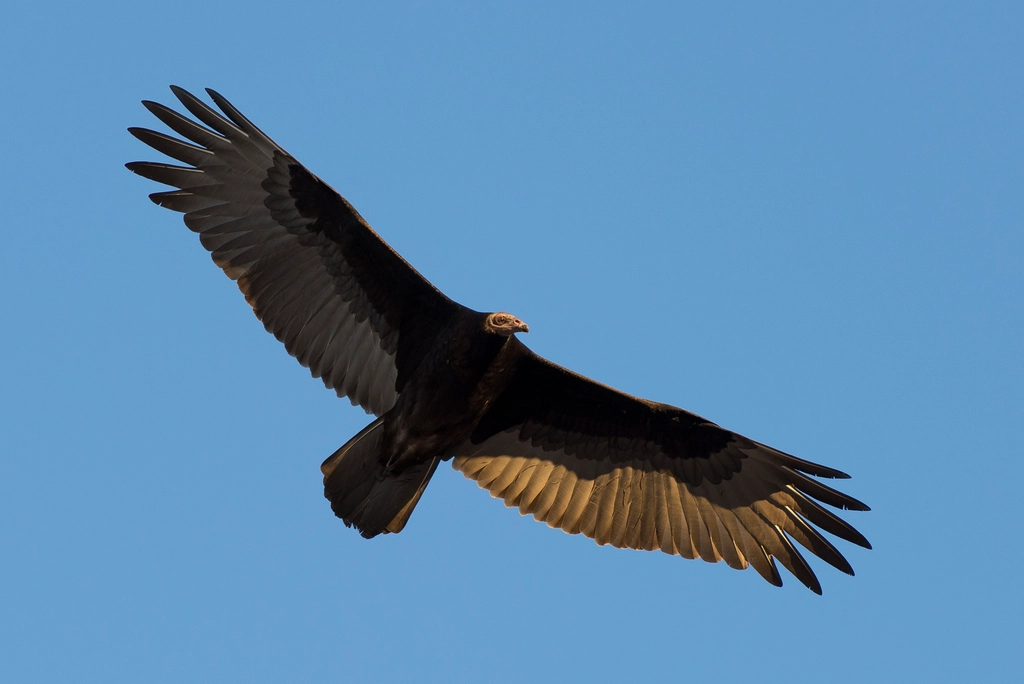 Photo Credit: National Park Service / Rawpixel
In the warm embrace of a late afternoon sun, the Turkey Vulture, known scientifically as Cathartes aura, soars gracefully above the landscape, its impressive wingspan stretching up to six feet. With a wingspan that rivals the size of a small child, this bird glides effortlessly on thermal currents, the invisible columns of warm air that lift it higher into the sky. Its dark plumage contrasts sharply with the bright blue above, while its distinctive red head, devoid of feathers, gives it a unique appearance that sets it apart from other birds. This striking feature not only helps the vulture stay clean while feasting on carrion, or dead animals, but also plays a role in regulating its body temperature.
Turkey Vultures are more than just their eye-catching looks; they are essential players in the ecosystem. As scavengers, they help keep the environment clean by consuming decaying animals, which might otherwise spread disease. Their keen sense of smell, a rarity among birds, allows them to detect the scent of rotting flesh from miles away. This remarkable ability, combined with their impressive flying skills, makes them a subject of fascination for scientists and nature enthusiasts alike. Observing a Turkey Vulture in its natural habitat is like witnessing a masterful performance, where each glide and swoop tells a story of survival and balance in the wild.
The Turkey Vulture, a captivating bird of prey, holds a special place in the tree of life. It belongs to the kingdom Animalia, which includes all animals, and is classified under the phylum Chordata, meaning it has a backbone. This bird is part of the class Aves, which encompasses all birds, and it falls under the order Accipitriformes, a group that includes hawks and eagles. What sets the Turkey Vulture apart is its remarkable ability to locate carrion, or dead animals, using its keen sense of smell. Unlike many birds of prey that rely primarily on sight, Turkey Vultures can detect the scent of decaying flesh from miles away, making them essential scavengers in their ecosystems.
| Taxonomic Rank | Scientific Name | Meaning & Significance |
|---|---|---|
| Kingdom | Animalia | This name signifies that Turkey Vultures are part of the vast group of multicellular organisms that consume organic material for energy. |
| Phylum | Chordata | Chordata means “having a notochord,” which refers to the flexible rod that supports the body in the early stages of development, a feature shared by all vertebrates. |
| Class | Aves | Aves is the Latin word for “birds,” highlighting the Turkey Vulture’s feathered body and ability to fly. |
| Order | Accipitriformes | This order includes birds of prey, emphasizing the Turkey Vulture’s role as a scavenger and its sharp talons, although it primarily feeds on carrion. |
| Family | Cathartidae | Cathartidae comes from the Greek word “kathartes,” meaning “cleanser,” which reflects the Turkey Vulture’s important ecological role in cleaning up dead animals. |
| Genus | Cathartes | This genus name is derived from the Greek word “katharsis,” meaning “purification,” again pointing to the bird’s scavenging habits that help maintain a healthy environment. |
The classification of the Turkey Vulture reveals much about its evolutionary history. As a member of the Cathartidae family, it shares a lineage with other New World vultures, which have adapted to a scavenging lifestyle. This adaptation has allowed them to thrive in various habitats across the Americas. The Turkey Vulture’s unique adaptations, such as its exceptional sense of smell and its ability to soar gracefully on thermal updrafts, showcase the evolutionary paths that have shaped this bird into a vital component of its ecosystem. By understanding its taxonomic position, we gain insight into the intricate web of life and the essential roles that scavengers play in maintaining balance in nature.
The evolutionary journey of the Turkey Vulture stretches back millions of years, weaving through the tapestry of time to reveal a bird finely tuned for survival. This scavenger, known scientifically as Cathartes aura, is part of the family Cathartidae, which includes other vultures and condors. The ancestors of modern vultures began to diverge from other birds of prey around 30 million years ago, adapting to a life that capitalizes on the availability of carrion, or dead animals, as a food source.
The early ancestors of the Turkey Vulture were likely similar to other raptors, but over time, they developed specific traits that set them apart. One major transition was the shift from a predatory lifestyle to scavenging, which required a keen sense of smell to locate decaying animals. Unlike many birds of prey that rely on sight, Turkey Vultures have an extraordinary olfactory system, allowing them to detect the scent of rotting flesh from miles away. This adaptation was crucial as it enabled them to find food sources that other predators might overlook.
The adaptations of the Turkey Vulture have been vital for its survival in diverse environments. By evolving to become efficient scavengers, they play an essential role in the ecosystem, helping to clean up the environment and prevent the spread of disease. Their unique features not only allow them to thrive in their niche but also highlight the incredible ways life can adapt to the challenges of survival.
The Turkey Vulture is a striking bird that captures attention with its impressive wingspan and distinctive features. With a body length of about 25 to 32 inches, it glides gracefully through the sky, often soaring high on thermal currents. Its long, broad wings stretch out to nearly six feet, allowing it to cover vast distances while searching for food. The most eye-catching aspect of this bird is its bald, red head, which stands out against its dark plumage. This unique appearance not only makes it easily recognizable but also plays a crucial role in its scavenging lifestyle.
| Feature | Description |
|---|---|
| Weight | 2 – 5 pounds |
| Skin Type | Feathers |
| Most Distinctive Feature | Bald, red head |
The Turkey Vulture’s features are not just for show; they serve important survival purposes. The bald head, for instance, helps keep the bird clean while feeding on carrion, or dead animals, as it prevents bacteria from getting trapped in feathers. Its dark feathers absorb heat from the sun, which is especially helpful during chilly mornings. Together, these adaptations make the Turkey Vulture a master of its environment, perfectly equipped to thrive as a scavenger in diverse habitats.
The Turkey Vulture thrives in a variety of habitats that paint a picture of open skies and diverse landscapes. Picture rolling farmlands dotted with patches of forest, where these birds can be seen soaring effortlessly on warm thermals. They also inhabit rangelands, where the grass sways gently in the breeze, providing a perfect backdrop for their scavenging lifestyle. This bird is often found in areas where it can easily spot its next meal from above, making its home in places that offer both food and space to roam.
Turkey Vultures prefer climates that range from temperate to tropical, allowing them to thrive in various environmental conditions. They are often found in areas with plenty of sunshine, which helps them warm up and take to the skies. These birds are not fans of extreme cold, so they tend to migrate to warmer regions during the winter months. Their adaptability to different climates is key to their survival, as they can find food sources in both rural and urban settings.
In their quest for survival, Turkey Vultures have developed remarkable adaptations that suit their habitats perfectly. Their keen eyesight allows them to spot carrion, or dead animals, from great heights, while their strong, broad wings enable them to glide effortlessly for hours without flapping. This energy-efficient flying is essential for covering large distances in search of food. Additionally, their bald heads help keep them clean while feeding, as it prevents feathers from getting soiled. These adaptations make the Turkey Vulture a master of its environment, perfectly suited to the diverse landscapes it calls home.
The Turkey Vulture leads a daily life that revolves around the search for food and the art of soaring through the skies. As dawn breaks, these birds take to the air, riding warm thermal currents that lift them high above the ground. With their keen eyesight, they scan the landscape for signs of carrion, which is the term for dead animals that they eat. Unlike many birds, Turkey Vultures do not have a melodious song; instead, they communicate through hisses and grunts, which can be heard when they are close to one another. Their day is a blend of soaring, searching, and occasionally resting on tree branches or rocky outcrops, where they can keep an eye on their surroundings.
Socially, Turkey Vultures exhibit interesting group dynamics. While they can often be seen alone, they are also known to gather in small groups, especially when feeding. This social behavior helps them locate food more efficiently, as one vulture’s keen eye can alert others to a potential meal. When they find a carcass, they may squabble over the best feeding spots, but they generally maintain a peaceful coexistence. Their communication is subtle yet effective, relying on body language and vocalizations to convey messages to one another. This social structure allows them to thrive in their environment, balancing solitary and group behaviors.
| Behavior Type | Description |
|---|---|
| Activity Patterns | Turkey Vultures soar on thermal currents, searching for carrion during the day and roosting at night. |
| Social Structure | They can be solitary or gather in small groups, especially when feeding, promoting efficient foraging. |
| Communication Methods | They use hisses and grunts to communicate, along with body language to express their intentions. |
The behaviors of Turkey Vultures are finely tuned to ensure their survival in the wild. By soaring high and using their excellent vision, they can locate food sources that might be hidden from the ground. Their social interactions not only help them find meals but also foster a sense of community among them. This blend of solitary and group behaviors, along with their unique communication methods, allows Turkey Vultures to thrive in diverse environments, playing a crucial role in the ecosystem as nature’s clean-up crew.
The Turkey Vulture is a dedicated scavenger, primarily feeding on the remains of dead animals, known as carcasses. This bird plays a crucial role in the ecosystem by helping to clean up the environment. With its keen sense of smell, which is quite rare among birds, the Turkey Vulture can detect the scent of decaying flesh from miles away. Once it locates a meal, it swoops down to feast, using its strong beak to tear into the carcass. This feeding behavior not only sustains the vulture but also prevents the spread of disease by disposing of dead animals.
| Dietary Aspect | Details |
|---|---|
| Diet Type | Carnivore |
| Favorite Foods | Carcasses of mammals and birds |
| Prey Items | Roadkill, livestock, and other dead animals |
| Hunting/Foraging Strategies | Soars high to spot carcasses, uses keen sense of smell to locate food |
The Turkey Vulture’s scavenging diet shapes its daily routine and ecological role significantly. By consuming dead animals, these birds help recycle nutrients back into the ecosystem, promoting a healthier environment. Their ability to find food through smell allows them to thrive in various habitats, ensuring that they can adapt to changing conditions. This unique feeding strategy not only supports their survival but also highlights the interconnectedness of life, where each species plays a part in maintaining the balance of nature.
When it comes to finding a mate, Turkey Vultures engage in a fascinating courtship display. During the breeding season, which typically occurs in late winter to early spring, males perform aerial acrobatics to attract females. They soar high in the sky, showcasing their impressive wingspan and graceful flight. Once a pair forms, they will often return to the same nesting site year after year, demonstrating a strong bond.
| Reproductive Aspect | Details |
|---|---|
| Gestation Period | Approximately 28 to 40 days |
| Litter Size | 1 to 3 eggs |
| Age of Maturity | 3 to 5 years |
| Name of Young | Chicks |
After the eggs hatch, the parents take on the important role of caregivers. Turkey Vulture chicks are born helpless and rely entirely on their parents for food and protection. The adults regurgitate partially digested food, mainly carrion, to feed their young. As the chicks grow, they develop feathers and learn to fly, usually taking their first flights around 10 to 12 weeks old. This nurturing process is crucial, as it helps the young vultures gain the skills they need to thrive in the wild. Eventually, they will leave the nest and begin their own journey, continuing the cycle of life in the skies.
The Turkey Vulture occupies a vital role in the food web as a scavenger, helping to maintain the balance of ecosystems by consuming dead animals. This bird’s diet primarily consists of carrion, which means it feeds on the remains of animals that have died from natural causes or accidents. By doing so, Turkey Vultures prevent the spread of disease and recycle nutrients back into the environment. However, despite their important ecological role, these birds face several dangers that threaten their survival.
To combat these threats, Turkey Vultures have developed several defensive behaviors. They often rely on their keen eyesight to spot danger from above, allowing them to avoid potential predators. When threatened, they may also resort to a surprising tactic: they can vomit their stomach contents, which can be both a defense mechanism and a way to lighten their load for a quick escape. Additionally, their ability to soar effortlessly on thermal currents helps them evade larger birds and navigate their environment with agility. Through these strategies, Turkey Vultures continue to thrive despite the challenges they face.
A keystone species is an organism that has a disproportionately large impact on its environment relative to its abundance. In simpler terms, if you remove a keystone species from an ecosystem, it can cause significant changes or even collapse. The Turkey Vulture qualifies as a keystone species due to its essential role in scavenging and nutrient cycling, which helps maintain the health of its ecosystem.
Turkey Vultures are nature’s clean-up crew. By primarily feeding on carrion, or dead animals, they help prevent the spread of disease. When an animal dies, it can attract harmful bacteria and pests. The Turkey Vulture swoops in, consuming the carcass and breaking down organic matter. This not only cleans the environment but also recycles nutrients back into the soil, promoting plant growth. For example, in farmland and rangeland habitats, their scavenging helps keep these areas healthy and thriving.
Moreover, Turkey Vultures have a unique digestive system that allows them to eat decaying flesh without getting sick. Their stomachs contain strong acids and enzymes that break down harmful pathogens. This means they can safely consume animals that might be dangerous for other scavengers. By doing so, they help control populations of other scavengers, ensuring a balanced ecosystem.
If Turkey Vultures were to disappear, the consequences would be dire. Without these scavengers, dead animals would accumulate, leading to increased disease and pest populations. This could disrupt the entire food web, affecting not just plants and animals, but also humans who rely on healthy ecosystems. The absence of Turkey Vultures would create a ripple effect, highlighting just how vital they are to the balance of nature.
The Turkey Vulture plays a vital role in its ecosystem, acting as nature’s clean-up crew. This scavenger thrives in various habitats, including farmland, forests, and rangelands, where it finds its primary food source: carrion, or dead animals. By consuming these carcasses, Turkey Vultures help prevent the spread of disease and maintain a healthy environment. Their unique adaptations, such as an excellent sense of smell and strong soaring abilities, allow them to locate food efficiently, making them essential players in the ecological balance.
| Ecosystem Service | Impact |
|---|---|
| Decomposition | Turkey Vultures break down dead animals, speeding up the decomposition process. |
| Disease Control | By consuming carrion, they reduce the risk of disease spread from decaying bodies. |
| Nutrient Recycling | Their feeding habits return nutrients to the soil, promoting plant growth. |
| Food Web Balance | As scavengers, they help maintain the balance of the food web by controlling populations of other species. |
Turkey Vultures influence their environment in several specific ways. For instance, when they feast on a carcass, they not only eliminate potential health hazards but also provide a food source for other scavengers, such as smaller birds and mammals. This interaction creates a ripple effect, supporting a diverse community of organisms. Additionally, their role in nutrient recycling enriches the soil, which benefits plants and, in turn, the herbivores that rely on those plants for food.
The broader ecological importance of Turkey Vultures cannot be overstated. As keystone species, their presence is crucial for maintaining the health of ecosystems. Without them, the balance would be disrupted, leading to an increase in disease and a decline in biodiversity. By understanding and appreciating the Turkey Vulture’s role, we can better recognize the interconnectedness of all living things and the importance of preserving our natural world.
In the intricate web of nature, symbiosis refers to the close relationships between different species, where they interact in various ways that can benefit one or both parties. These ecological relationships can take many forms, including mutualism, where both species gain advantages; commensalism, where one benefits while the other is neither helped nor harmed; and parasitism, where one species benefits at the expense of another. The Turkey Vulture, with its scavenging lifestyle, engages in several fascinating partnerships that highlight the interconnectedness of life in its environment.
| Species/Type | Relationship Type | Description |
|---|---|---|
| Other scavengers (like coyotes or raccoons) | Mutualistic | Turkey Vultures often follow these animals to carcasses, benefiting from their ability to locate food while also helping to clean up the remains. |
| Small birds (like crows) | Commensal | While Turkey Vultures feed on carrion, smaller birds may scavenge leftovers, gaining food without affecting the vulture. |
| Parasites (like ticks) | Parasitic | While Turkey Vultures can host parasites, these organisms benefit by feeding on the vulture’s blood, which can sometimes harm the bird. |
These relationships have evolved over time, shaped by the needs and behaviors of the species involved. The Turkey Vulture’s role as a scavenger not only helps it thrive but also supports the health of its ecosystem. By working alongside other scavengers, it enhances food availability for all, while smaller birds benefit from the leftovers. However, the presence of parasites serves as a reminder that not all relationships are beneficial. Understanding these dynamics helps us appreciate the delicate balance of nature and the vital roles each species plays in maintaining ecological harmony.
The Turkey Vulture is a fascinating bird that plays a crucial role in our ecosystems. With its striking appearance and unique behaviors, this scavenger is full of surprises that even seasoned nature enthusiasts might not know.
The Turkey Vulture has long been a part of human history, often evoking a mix of fascination and fear. In many cultures, these birds are seen as symbols of death and rebirth, reflecting their role as scavengers that consume carrion. Ancient civilizations, such as the Aztecs, revered them, associating them with the sun and the cycle of life. Their striking appearance and soaring flight have inspired stories and myths, making them a significant part of cultural narratives. As humans have encountered these birds throughout history, they have come to appreciate their ecological importance, recognizing that Turkey Vultures help keep our environments clean by disposing of dead animals.
Today, the relationship between Turkey Vultures and humanity is complex and multifaceted. While many people admire these birds for their role in the ecosystem, there are also challenges. In some areas, Turkey Vultures can be seen as a nuisance, particularly when they roost on buildings or vehicles, causing damage with their droppings. Conservation efforts are underway to protect these birds, as they face threats from habitat loss and poisoning from consuming carcasses contaminated with toxins. Education about their ecological role is crucial, helping to foster a better understanding of how these birds contribute to a healthy environment.
As we look to the future, the relationship between Turkey Vultures and humanity holds promise. With increased awareness and conservation efforts, we can work together to protect these remarkable birds and their habitats. By fostering a sense of respect and understanding, we can ensure that Turkey Vultures continue to soar through our skies, playing their essential role in maintaining the balance of our ecosystems. Embracing this connection can lead to a healthier planet for both wildlife and people alike.
The Turkey Vulture is currently classified as “Least Concern” by the International Union for Conservation of Nature (IUCN). This means that, overall, the species is not facing immediate threats that could lead to its extinction. In fact, the population of Turkey Vultures is estimated to be between 18 to 28 million individuals, showcasing a healthy and stable presence across their range. While some local populations may experience fluctuations, the overall trend for Turkey Vultures is positive, allowing them to thrive in various habitats.
| Conservation Factor | Status/Details |
|---|---|
| IUCN Status | Least Concern |
| Estimated Population Size | 18 – 28 million |
| Population Trend | Stable |
Despite their stable status, Turkey Vultures face several threats that could impact their populations. Habitat loss due to urban development and agricultural expansion can reduce the availability of suitable nesting and foraging areas. Additionally, they are vulnerable to poisoning from consuming carcasses contaminated with toxins, such as lead from bullet fragments or pesticides. Collisions with vehicles and power lines also pose risks, particularly as these birds soar at high altitudes while searching for food.
Conservation efforts for Turkey Vultures focus on habitat protection and public education about their ecological importance. Organizations are working to preserve open spaces and promote awareness of the benefits these birds provide as scavengers. By helping to maintain healthy ecosystems, Turkey Vultures contribute to the balance of nature. With continued support and awareness, the outlook for this remarkable bird remains bright, ensuring that future generations can enjoy their graceful presence in the skies.
| Question | Answer |
|---|---|
| What is the habitat of the Turkey Vulture? | Turkey Vultures are found in a variety of habitats, including farmland, forests, and rangelands. They prefer open areas where they can easily spot food from the sky, making them common sights in rural landscapes. |
| What do Turkey Vultures eat? | Turkey Vultures are carnivores, which means they primarily eat meat. They are scavengers, feeding mainly on dead animals, which helps keep the environment clean by disposing of carcasses. |
| How do Turkey Vultures behave? | Turkey Vultures are known for their soaring flight, often gliding on thermal updrafts to conserve energy. They have a keen sense of smell, which helps them locate food from great distances, a unique trait among birds. |
| How do Turkey Vultures reproduce? | Turkey Vultures typically mate for life and build their nests in secluded areas, such as caves or hollow trees. The female usually lays 2 to 3 eggs, and both parents take turns incubating them until they hatch. |
| What threats do Turkey Vultures face? | While Turkey Vultures are currently classified as Least Concern, they face threats from habitat loss and poisoning. They can accidentally ingest toxins from carcasses that have been treated with chemicals, which can be harmful to their health. |
| What is a distinctive feature of Turkey Vultures? | One of the most distinctive features of Turkey Vultures is their bald, red head. This unique characteristic helps keep them clean while feeding on carrion, as feathers can trap bacteria and dirt. |
| Are Turkey Vultures social animals? | Yes, Turkey Vultures are quite social and often gather in groups, especially when feeding. They communicate with each other through a variety of hisses and grunts, which helps maintain their social bonds. |