Taxonomy & Classification
- Kingdom
- Animalia
- Phylum
- Chordata
- Class
- Mammalia
- Order
- Chiroptera
- Family
- Phyllostomidae
- Genus
- Desmodus
- Species
- Desmodontinae

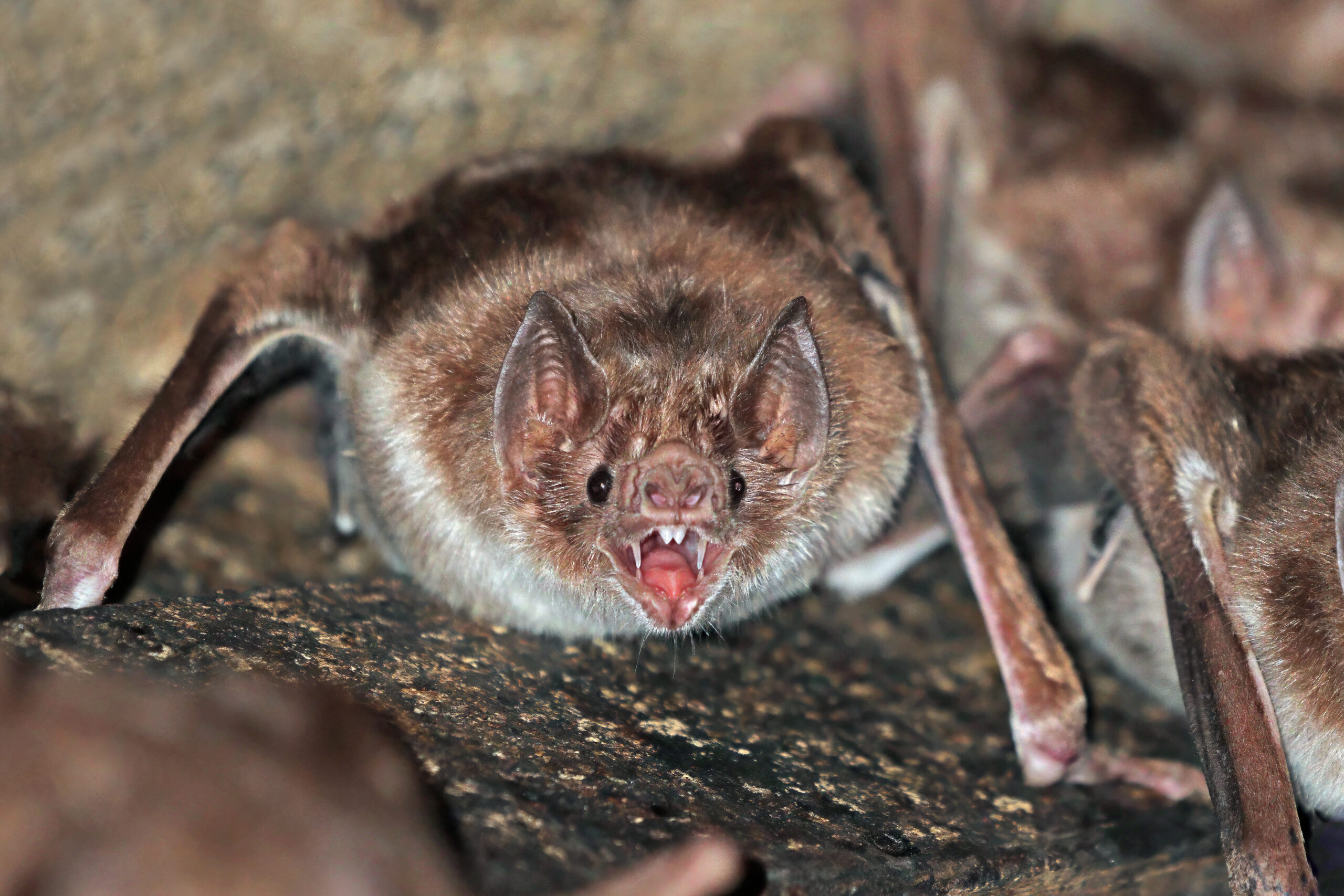 Photo Credit: Charlesjsharp / Wikimedia Commons
In the shadowy realms of the tropics, the vampire bat, known scientifically as Desmodus rotundus, flits through the night with an air of mystery. With its small, sleek body and a wingspan that can reach up to 10 inches, this bat is both captivating and a little eerie. Its most distinctive feature is its razor-sharp teeth, perfectly designed for its unusual diet: the blood of larger mammals. This unique feeding habit has sparked the curiosity of scientists and nature enthusiasts alike, as it challenges our understanding of what it means to be a predator.
As dusk settles over dense forests and sprawling grasslands, the vampire bat awakens from its daytime slumber, ready to embark on its nightly quest. Picture the bat gliding silently through the air, its keen senses guiding it toward unsuspecting prey. With a blend of grace and stealth, it approaches animals like livestock, using its specialized heat sensors to locate blood vessels just beneath the skin. This remarkable adaptation not only highlights the bat’s evolutionary journey but also its role in the ecosystem, where it occupies a niche that few other creatures dare to explore. Join us as we delve deeper into the world of the vampire bat, uncovering the secrets of its life, behavior, and the fascinating relationships it forms within its environment.
The vampire bat, a captivating member of the animal kingdom, occupies a distinctive position in the tree of life. Scientifically classified under the genus Desmodus, these bats are part of the family Phyllostomidae, which includes a variety of fruit and nectar-feeding bats. What sets vampire bats apart is their unique feeding behavior; they are one of the few mammals that feed exclusively on blood, a practice known as hematophagy. This unusual diet not only makes them intriguing but also highlights their specialized adaptations, such as heat sensors on their noses that help locate blood vessels in their prey.
| Taxonomic Rank | Scientific Name | Meaning & Significance |
|---|---|---|
| Kingdom | Animalia | This name signifies that vampire bats belong to the broad group of multicellular organisms that are heterotrophic, meaning they obtain their food from other living things. |
| Phylum | Chordata | Chordata refers to animals that have a notochord, a flexible rod that supports the body. In vertebrates like vampire bats, this structure develops into the spine. |
| Class | Mammalia | Mammalia indicates that vampire bats are warm-blooded, have fur, and nurse their young with milk, which is a defining characteristic of mammals. |
| Order | Chiroptera | Chiroptera means “hand-wing,” highlighting the bat’s unique wing structure, where the skin is stretched between elongated finger bones, allowing for agile flight. |
| Family | Phyllostomidae | This family name translates to “leaf-nosed bats,” referring to the distinctive leaf-like structures on their noses that aid in echolocation and navigation. |
| Genus | Desmodus | Desmodus comes from Greek, meaning “to suck,” which directly relates to the bat’s feeding behavior of drawing blood from its prey. |
Understanding the vampire bat’s classification reveals much about its evolutionary journey. As a member of the Chiroptera order, vampire bats share a common ancestor with all bats, which adapted to flight millions of years ago. Their specialized feeding habits and adaptations, such as their unique nose structures and blood-sucking capabilities, illustrate how evolution shapes species to thrive in specific ecological niches. This fascinating lineage not only highlights the diversity of life on Earth but also underscores the intricate relationships between organisms and their environments.
The evolutionary journey of the vampire bat is a tale that stretches back millions of years, weaving through the rich tapestry of life on Earth. These intriguing mammals belong to the family Phyllostomidae, which includes a variety of bats that have adapted to diverse diets and habitats. The vampire bat, specifically classified under the genus Desmodus, has evolved from ancestors that were primarily insectivorous, gradually shifting towards a more specialized diet that includes blood.
The story begins with early bats that emerged around 50 million years ago. These ancestors were small, flying mammals that primarily feasted on insects. Over time, some species within the Phyllostomidae family began to explore new food sources. This led to significant evolutionary changes, particularly in the vampire bat lineage. The transition from insect-eating to blood-feeding is a remarkable adaptation that required not only physical changes but also behavioral shifts. The vampire bat developed specialized teeth for making small incisions in the skin of their prey, typically livestock or other mammals. Their keen sense of smell and heat detection abilities also evolved, allowing them to locate blood vessels beneath the skin.
These adaptations have been crucial for the vampire bat’s survival in a world where competition for food can be fierce. By evolving to feed on blood, they have carved out a niche that few other animals occupy. Their specialized feeding techniques and social behaviors not only enhance their chances of finding food but also foster cooperation among individuals, ensuring that they thrive in their environments. The vampire bat’s evolutionary story is a testament to the power of adaptation and the intricate connections that bind all living beings.
The vampire bat presents a striking silhouette, embodying a blend of elegance and eeriness. With a wingspan that can stretch impressively, these small mammals measure between 7 to 9.5 centimeters in height, making them compact yet agile flyers. Their bodies are covered in soft fur, which can vary in color from a deep brown to a grayish hue, allowing them to blend into the shadows of their nocturnal habitats. The most notable aspect of their physical form is their razor-sharp front teeth, perfectly adapted for their feeding habits. These teeth are not just for show; they play a crucial role in their survival.
| Feature | Description |
|---|---|
| Height | 7cm – 9.5cm (2.75in – 3.75in) |
| Weight | 19g – 57g (0.7oz – 2oz) |
| Skin Type | Fur |
| Most Distinctive Feature | Razor-sharp front teeth |
These features work in harmony to enhance the vampire bat’s survival in the wild. Their lightweight bodies allow for agile flight, enabling them to navigate through dense vegetation with ease. The soft fur provides insulation, keeping them warm during cooler nights. Most importantly, those sharp teeth are essential for their feeding strategy, allowing them to make quick, precise incisions in the skin of their prey. This combination of traits not only aids in their hunting but also helps them thrive in their unique ecological niche.
The vampire bat thrives in the lush, warm embrace of tropical and subtropical regions. Picture dense forests, sprawling grasslands, and shadowy caves where these bats find refuge. As night falls, the air fills with the sounds of rustling leaves and distant animal calls, creating a perfect backdrop for the vampire bat’s nocturnal adventures. These habitats provide not only shelter but also a rich source of food, as the warm climate supports a variety of animals that the bats rely on for their unique diet.
Vampire bats prefer climates that are humid and warm, typically found in areas where temperatures remain mild throughout the year. They thrive in environments that offer plenty of vegetation, which helps maintain the moisture levels they need. These bats are particularly fond of regions where they can easily find their prey, such as livestock or wild mammals, which are often abundant in these lush landscapes.
To survive in their specific habitats, vampire bats have developed remarkable adaptations. Their keen sense of smell helps them locate warm-blooded animals even in the dark, while their specialized teeth allow them to make quick, precise incisions in the skin of their prey. Additionally, their ability to fly silently enables them to approach unsuspecting animals without being detected. These adaptations not only enhance their hunting skills but also ensure their survival in the vibrant ecosystems they call home.
As night descends, the vampire bat awakens from its slumber, ready to embark on its nightly adventures. These nocturnal mammals are most active after sunset, taking to the skies in search of food. With their keen senses, they navigate through the darkness, using echolocation to locate potential prey. Unlike many other bats, vampire bats have a specialized diet that consists mainly of blood, which they obtain from larger animals. Their feeding sessions are typically brief, allowing them to return to their roosts before dawn breaks.
Vampire bats are generally solitary creatures, often preferring to hunt alone rather than in groups. However, they do exhibit some interesting social behaviors. When they do come together, it’s often for grooming or resting. These interactions help strengthen social bonds, which can be crucial for their survival. Communication among vampire bats is also vital; they use a variety of sounds and body language to convey their needs and feelings. This social structure, while not as complex as that of some other species, plays an important role in their daily lives.
| Behavior Type | Description |
|---|---|
| Activity Patterns | Nocturnal foraging for blood, primarily from livestock or other mammals, using echolocation to navigate and locate prey. |
| Social Structure | Generally solitary, but may engage in social grooming and resting together to strengthen bonds. |
| Communication Methods | Utilizes a range of vocalizations and body language to express needs, establish territory, and maintain social connections. |
The behaviors of vampire bats are finely tuned to ensure their survival in the wild. By being nocturnal, they avoid many predators and can hunt when their prey is most vulnerable. Their solitary nature allows them to be stealthy hunters, while their occasional social interactions help them build essential relationships. This blend of independence and sociality, along with their unique feeding habits, makes vampire bats a fascinating example of adaptation in the animal kingdom.
The vampire bat is a carnivorous creature that has a rather unusual diet compared to most bats. Instead of munching on fruits or insects, these bats prefer to feast on the blood of larger mammals. They are known for their specialized feeding behavior, which involves using their sharp teeth to make small incisions in the skin of their prey. Once they have made a cut, they lap up the warm blood with their tongues. This unique method of feeding not only provides them with the nutrients they need but also allows them to remain relatively undetected by their unsuspecting victims.
| Dietary Aspect | Details |
|---|---|
| Diet Type | Carnivore |
| Favorite Foods | Blood from mammals |
| Prey Items | Cows, pigs, tapirs |
| Hunting/Foraging Strategies | Using sharp teeth to make small cuts and lapping up blood |
This blood-feeding diet plays a significant role in the vampire bat’s ecology and daily routine. By targeting larger mammals, they help regulate the populations of these animals, although their feeding can sometimes lead to infections in their prey. The vampire bat’s nocturnal lifestyle is perfectly adapted to its feeding habits, allowing it to hunt under the cover of darkness when its prey is less alert. This fascinating interplay between predator and prey highlights the complex relationships that exist in nature, showcasing how each species contributes to the balance of its ecosystem.
Vampire bats have a fascinating mating ritual that takes place during the breeding season, which typically occurs in the warmer months. Males engage in a variety of courtship behaviors to attract females, including vocalizations and displays of agility in flight. Once a pair has formed a bond, they will mate, and the female will carry the developing young for several months. This period of courtship and mating is crucial for ensuring the survival of the next generation.
| Reproductive Aspect | Details |
|---|---|
| Gestation Period | 3 – 4 months |
| Average Litter Size | 1 |
| Age of Sexual Maturity | 9 – 10 months |
| Name of Young | Pup |
After giving birth, the mother bat provides attentive care to her pup. This nurturing phase is vital, as the young vampire bat relies on its mother for warmth, protection, and nourishment. The pup will cling to its mother’s belly, where it can feed on her nutrient-rich milk. As the weeks pass, the young bat begins to grow stronger and more independent. By the time it reaches about 9 to 10 months of age, the pup is ready to take its first flights and explore the world, eventually becoming a fully mature vampire bat. This journey from helpless pup to skilled flyer is a remarkable transformation, showcasing the resilience and adaptability of these intriguing mammals.
The vampire bat plays a curious role in the food web, primarily as a predator of larger mammals. By feeding on the blood of animals like livestock, it occupies a niche that few other creatures dare to explore. However, this unique lifestyle also places it in the sights of various predators and environmental challenges that threaten its survival.
To defend itself against these threats, the vampire bat has developed several clever survival strategies. Its nocturnal habits help it avoid many predators that hunt during the day. Additionally, the bat’s ability to roost in dark, secluded areas provides a safe haven from larger animals. When threatened, vampire bats can also use their agility to quickly dart away, making it harder for predators to catch them. These adaptations, combined with their social behavior, such as roosting in groups, help ensure that vampire bats can continue to thrive in their environments despite the dangers they face.
A keystone species is an organism that has a disproportionately large impact on its environment relative to its abundance. This means that if it were to disappear, the ecosystem would change dramatically. The vampire bat, with its unique feeding habits and ecological interactions, can indeed be considered a keystone species in its habitat. By influencing the populations of other animals and the health of the ecosystem, these bats play a crucial role in maintaining balance.
Vampire bats primarily feed on the blood of larger mammals, which may sound gruesome, but this behavior has important ecological implications. By preying on animals like livestock, they help control populations of these larger mammals. This predation can prevent overgrazing, allowing vegetation to thrive and supporting a diverse range of plant and animal life. Additionally, the saliva of vampire bats contains anticoagulants, substances that prevent blood from clotting. This unique adaptation not only aids in their feeding but also has potential medical applications for humans, showcasing how their role extends beyond their immediate environment.
Furthermore, vampire bats contribute to nutrient cycling in their ecosystems. When they feed, they leave behind droppings that are rich in nutrients. These droppings can fertilize the soil, promoting plant growth and benefiting other species that rely on these plants for food and shelter. In this way, vampire bats indirectly support a variety of organisms, from insects to larger herbivores, creating a web of life that is interconnected and reliant on one another.
If vampire bats were to vanish from their ecosystems, the consequences could be significant. Without these bats, larger mammal populations might grow unchecked, leading to overgrazing and a decline in plant diversity. This could disrupt the entire food web, affecting not only herbivores but also the predators that rely on them. The loss of nutrient cycling would further degrade the health of the ecosystem, making it less resilient to changes. In essence, the disappearance of vampire bats would ripple through the environment, highlighting their vital role in maintaining ecological balance.
The vampire bat, a nocturnal marvel of the tropical and subtropical regions, plays a crucial role in its ecosystem. By feeding on the blood of larger mammals, these bats create a unique ecological niche. Their diet, which consists primarily of blood, may seem unusual, but it allows them to influence the populations of their prey and the health of the environments they inhabit. This interaction not only affects the animals they feed on but also ripples through the entire ecosystem, showcasing the interconnectedness of life.
| Ecosystem Service | Impact |
|---|---|
| Population Control | Regulates the numbers of larger mammals, preventing overpopulation. |
| Nutrient Cycling | Contributes to the decomposition process through waste, enriching the soil. |
| Food Source | Serves as prey for various predators, maintaining the food web. |
| Seed Dispersal | Indirectly aids in plant growth by promoting healthy animal populations. |
The influence of vampire bats extends beyond their immediate feeding habits. For instance, by preying on livestock, they can help maintain a balance in animal populations, which in turn affects vegetation and the overall health of their habitats. When these bats feed, they often leave behind small wounds that can become infected. This may seem harmful, but it can also lead to the natural selection of stronger, more resilient animals. Additionally, the waste produced by vampire bats contributes nutrients back into the soil, promoting plant growth and supporting a diverse array of life.
The broader ecological importance of vampire bats cannot be overstated. As a keystone species, their presence helps maintain the balance of their ecosystems. If vampire bats were to disappear, the consequences could be significant, leading to overpopulation of certain species and a decline in plant health. Their role in nutrient cycling and population control highlights the intricate web of life, where every species, no matter how small or seemingly strange, plays a vital part in the health of our planet. Understanding these connections encourages us to appreciate and protect the diverse ecosystems that sustain us all.
In the intricate web of life, symbiosis refers to the close interactions between different species, which can take on various forms. These relationships can be mutualistic, where both species benefit, parasitic, where one benefits at the expense of the other, or commensal, where one benefits while the other is neither helped nor harmed. The vampire bat, known for its blood-feeding habits, engages in several fascinating ecological relationships that highlight the complexity of nature.
| Species/Type | Relationship Type | Description |
|---|---|---|
| Cattle | Parasitic | The vampire bat feeds on the blood of cattle, gaining nourishment while causing harm to the host animal. |
| Birds (e.g., oxpeckers) | Commensal | Oxpeckers often perch on large mammals like cattle, eating ticks and parasites. While they benefit, the cattle are not significantly affected. |
| Other bats | Mutualistic | Vampire bats may share food with other bats in their roost, helping to ensure survival during lean times. |
These relationships have evolved over time, shaped by the needs and behaviors of the species involved. The vampire bat’s parasitic feeding strategy allows it to thrive in its environment, while the mutualistic sharing of food among bats fosters a sense of community and support. Meanwhile, the relationship with oxpeckers illustrates how different species can coexist, each playing a role in the ecosystem. Understanding these connections helps us appreciate the delicate balance of nature and the ways in which life forms adapt to one another.
Vampire bats are often misunderstood creatures, shrouded in mystery and intrigue. These small mammals have some surprising traits that make them truly remarkable in the animal kingdom.
Throughout history, vampire bats have captured the imagination of people around the world. These intriguing creatures, known for their blood-feeding habits, have often been depicted in folklore and popular culture as sinister beings. From Bram Stoker’s “Dracula” to various horror films, vampire bats symbolize fear and mystery. However, their real-life interactions with humans are far more complex. In many cultures, these bats have been both feared and revered, leading to a rich tapestry of stories that reflect humanity’s fascination with the natural world.
In modern times, the relationship between vampire bats and humans has evolved significantly. While these bats can pose challenges, particularly in agricultural settings where they may feed on livestock, they also play a vital role in their ecosystems. Conservation efforts are underway to protect their habitats and ensure their survival, as they are essential for maintaining the balance of their environments. Additionally, researchers are studying vampire bats to understand their unique adaptations, such as their ability to detect heat and their anticoagulant saliva, which could have medical applications for humans.
As we look to the future, the relationship between vampire bats and humanity holds both challenges and opportunities. With ongoing research and conservation efforts, there is hope for a more harmonious coexistence. By understanding these bats better, we can appreciate their role in the ecosystem while finding ways to mitigate conflicts. As we continue to explore the natural world, the story of the vampire bat reminds us of the delicate balance between fear and fascination, urging us to protect the wonders of nature for generations to come.
The conservation status of the vampire bat is currently classified as “Least Concern” by the International Union for Conservation of Nature (IUCN). This means that, at present, the species is not facing an immediate threat of extinction. Population estimates suggest that vampire bats are sustainable, indicating that their numbers are stable and not declining significantly. This is good news for these intriguing mammals, as it allows them to continue their unique role in the ecosystem without the pressing pressures that many other species face.
| Conservation Factor | Status/Details |
|---|---|
| IUCN Status | Least Concern |
| Estimated Population Size | Sustainable |
| Population Trend | Stable |
Despite their current stable status, vampire bats face several threats that could impact their future. Habitat loss is a significant concern, as deforestation and agricultural expansion reduce the areas where these bats can roost and hunt. Additionally, negative perceptions of vampire bats often lead to persecution by humans, who may view them as pests due to their blood-feeding habits. This misunderstanding can result in efforts to control or eliminate their populations, further jeopardizing their survival.
Conservation efforts are underway to ensure that vampire bats continue to thrive in their natural habitats. Education plays a crucial role in these initiatives, helping people understand the ecological importance of these bats and dispelling myths surrounding them. By promoting coexistence and protecting their habitats, conservationists aim to maintain the stable population of vampire bats. With continued awareness and action, the outlook for these fascinating creatures remains positive, allowing them to flourish in the wild for generations to come.
| Question | Answer |
|---|---|
| Where do vampire bats live? | Vampire bats are found in tropical and subtropical regions of the Americas. They prefer areas with plenty of livestock, as these animals provide an easy food source. |
| What do vampire bats eat? | Vampire bats are carnivores, meaning they primarily eat blood. They have razor-sharp front teeth that allow them to make small incisions in the skin of their prey, usually livestock like cows or horses. |
| How do vampire bats behave? | Vampire bats are social creatures that often roost in groups. They are known for their unique feeding behavior, where they will groom each other and share blood meals, showing a strong bond among their colony members. |
| How do vampire bats reproduce? | Vampire bats typically mate in the fall, and females give birth to a single pup after a gestation period of about seven months. The mother is very attentive, nursing her pup for several months until it can fly and feed on its own. |
| What threats do vampire bats face? | While vampire bats are currently listed as Least Concern, they face threats from habitat loss and human activities. Changes in land use can reduce their natural roosting sites and food sources. |
| What is an interesting characteristic of vampire bats? | One fascinating feature of vampire bats is their ability to detect heat. They have special heat sensors on their nose that help them locate blood vessels in their prey, making it easier to find a spot to feed. |
| Do vampire bats have any predators? | Yes, vampire bats can fall prey to larger birds, snakes, and even other mammals. Their nocturnal lifestyle helps them avoid many predators, but they are not completely safe. |