Taxonomy & Classification
- Kingdom
- Animalia
- Phylum
- Chordata
- Class
- Actinopterygii
- Order
- Scombriformes
- Family
- Scombridae
- Genus
- Acanthrocybium
- Species
- Acanthocybium solandri

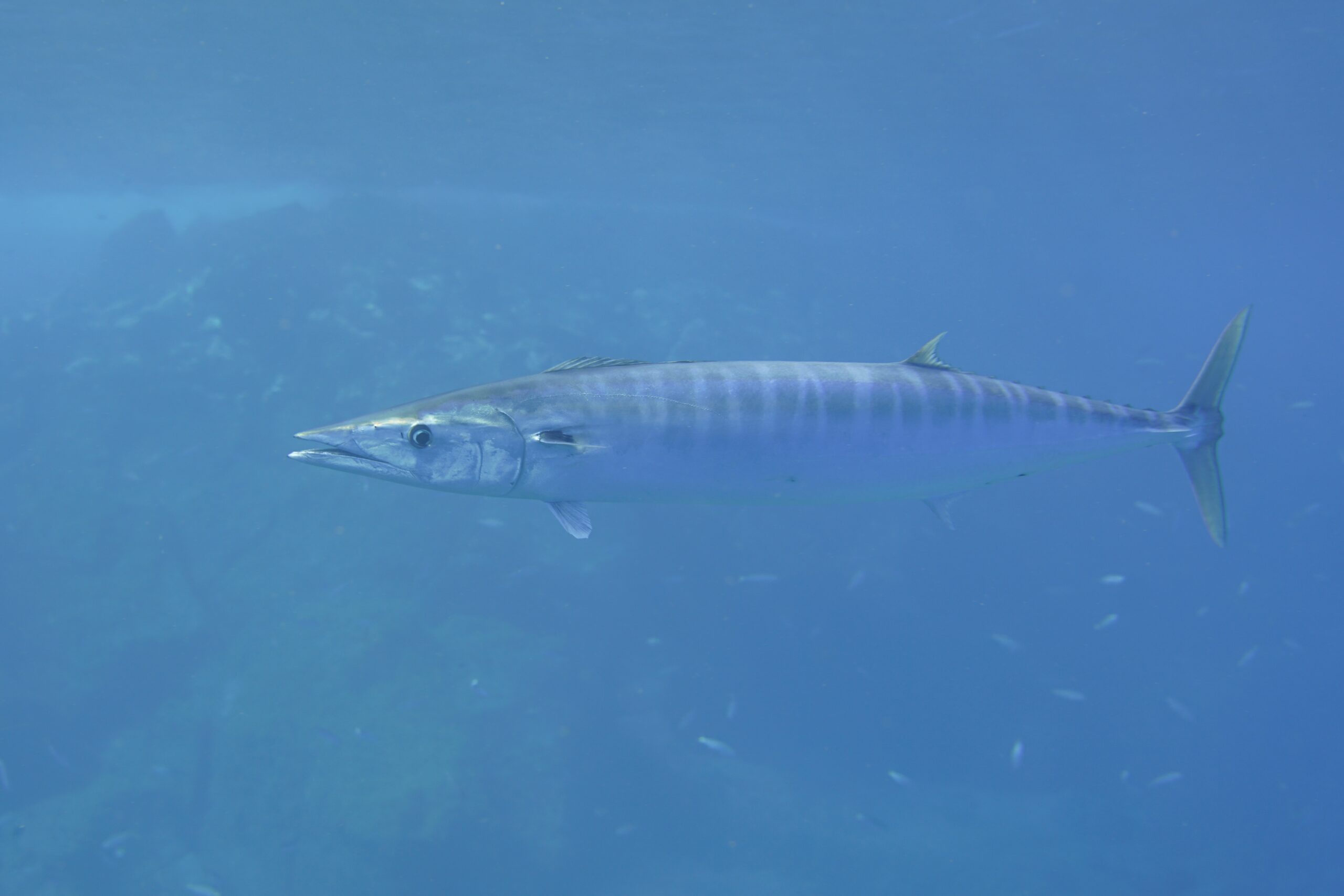 Photo Credit: Bommerer / Wikimedia Commons
In the shimmering blue expanse of the open ocean, the Wahoo fish, scientifically known as Acanthrocybium solandri, glides with an elegance that captivates all who encounter it. With its sleek, torpedo-shaped body and strikingly vibrant coloration, this fish is a true marvel of marine life. The Wahoo’s streamlined form is designed for speed, allowing it to dart through the water at astonishing rates, reaching up to 60 miles per hour. This incredible agility not only makes it a formidable predator but also a favorite among sport fishermen and ocean enthusiasts alike.
As the sun filters through the surface, illuminating the vibrant coral reefs and schools of smaller fish, the Wahoo hunts with precision and grace. Its keen eyesight and sharp teeth make it a masterful hunter, preying on fish, squid, and crustaceans. Scientists and nature lovers are drawn to the Wahoo not just for its beauty, but also for its vital role in the ocean’s ecosystem. As a top predator, it helps maintain the balance of marine life, showcasing the intricate web of relationships that define underwater habitats. Join us as we dive deeper into the world of the Wahoo fish, exploring its behavior, habitat, and the fascinating ways it interacts with its environment.
The Wahoo fish, known scientifically as Acanthrocybium solandri, occupies a fascinating niche in the tree of life. This sleek, fast-swimming fish belongs to the kingdom Animalia, which includes all animals, and is classified under the phylum Chordata, meaning it has a backbone. What sets the Wahoo apart is its incredible speed and agility, making it a top predator in the open ocean. With its streamlined body and sharp teeth, the Wahoo is perfectly adapted for hunting smaller fish, showcasing the wonders of evolution in action.
| Taxonomic Rank | Scientific Name | Meaning & Significance |
|---|---|---|
| Kingdom | Animalia | This term means “animals” in Latin, highlighting the Wahoo’s classification as a living organism that consumes organic material. |
| Phylum | Chordata | Derived from the Greek word “chordē,” meaning “string,” this refers to the Wahoo’s backbone, a key feature of this group. |
| Class | Actinopterygii | This class name means “ray-finned fishes,” indicating that the Wahoo has fins supported by bony rays, which help it navigate the water with grace. |
| Order | Scombriformes | This order includes fast-swimming fish, and the name reflects their streamlined bodies, perfect for life in the open ocean. |
| Family | Scombridae | This family name comes from the Greek word “scomber,” which refers to mackerel, highlighting the Wahoo’s close relationship with these speedy fish. |
| Genus | Acanthrocybium | This name combines “acantho,” meaning “spine,” and “cybium,” meaning “fish,” pointing to the Wahoo’s distinctive spiny fins. |
Understanding the Wahoo’s classification reveals much about its evolutionary journey. As a member of the Scombridae family, it shares a lineage with other agile fish like mackerels and tunas, all of which have adapted to thrive in similar marine environments. This evolutionary connection highlights the importance of speed and efficiency in the ocean, where survival often depends on the ability to outswim both prey and predators. The Wahoo’s unique adaptations not only showcase its role in the ecosystem but also tell a story of millions of years of evolution, shaping it into the remarkable fish we see today.
The evolutionary journey of the Wahoo fish, scientifically known as Acanthrocybium solandri, stretches back millions of years, tracing its lineage through the vast oceans of the world. This fish belongs to the family Scombridae, which includes other speedy swimmers like tuna and mackerel. The Scombridae family has evolved over time, adapting to various marine environments and developing traits that enhance their survival in the open sea.
Ancestral forms of the Wahoo can be traced to early bony fish that emerged during the late Cretaceous period, around 100 million years ago. These ancestors were likely small, agile fish that thrived in warm, shallow waters. As the oceans changed, so did the Wahoo’s ancestors, leading to significant evolutionary transitions. Over time, they developed streamlined bodies and powerful tails, allowing them to swim at incredible speeds. This adaptation was crucial for escaping predators and catching prey. The Wahoo’s lineage also saw the development of specialized gills that efficiently extract oxygen from water, enabling them to thrive in various oceanic conditions.
The adaptations of the Wahoo fish have played a vital role in its survival and success in the ocean. With its streamlined body and powerful tail, it can outpace predators and catch prey with ease. The ability to maintain a higher body temperature allows it to be more active and efficient in hunting, while its sharp teeth ensure it can grasp its slippery meals. Together, these traits make the Wahoo a formidable predator in the marine ecosystem, showcasing the wonders of evolution in action.
The Wahoo fish is a stunning sight to behold, gliding through the ocean with an elegance that captures the imagination. Its streamlined body is built for speed, tapering to a sharp point at the snout and a powerful tail that propels it through the water. With a length that can reach up to 8 feet, this fish is not just long but also impressively muscular, giving it the strength to chase down prey. The overall impression is one of agility and grace, making the Wahoo a true marvel of the marine world.
| Feature | Description |
|---|---|
| Color | Shining silver with iridescent blue highlights |
| Size | Can grow up to 8 feet long |
| Body Shape | Streamlined and elongated for swift movement |
| Skin Type | Smooth and sleek, reducing drag in the water |
| Tail | Powerful and forked, aiding in rapid acceleration |
These striking features work together to create a fish that is not only beautiful but also highly efficient in its environment. The shimmering silver and blue coloration helps the Wahoo blend into the ocean’s surface when viewed from above, providing camouflage from predators. Its streamlined shape and smooth skin minimize resistance as it darts through the water, allowing it to reach impressive speeds. The powerful tail is essential for quick bursts of acceleration, enabling the Wahoo to catch fast-moving prey like smaller fish. In the vast ocean, every aspect of its design plays a crucial role in survival, making the Wahoo a true champion of the sea.
The Wahoo fish thrives in the warm, blue waters of the open ocean, where sunlight dances on the surface and the currents create a vibrant underwater world. These fish prefer the pelagic zone, which is the part of the ocean that is not close to the shore or the sea floor. Here, they can be found darting through the water, often near reefs or floating structures, where they hunt for their favorite meals. The Wahoo’s habitat is a dynamic environment, filled with life and movement, making it an exciting place for this agile predator.
Wahoo fish are particularly fond of warm waters, typically found in temperatures ranging from 24 to 28 degrees Celsius (75 to 82 degrees Fahrenheit). They thrive in areas with good visibility and plenty of food, such as schools of smaller fish. The ocean currents in these regions help to bring nutrients and prey closer to the surface, creating a perfect hunting ground. The Wahoo’s preference for these warmer waters means they are often found in tropical and subtropical regions, where the climate is consistently inviting.
To survive in their specific habitats, Wahoo fish have developed impressive adaptations. Their streamlined bodies allow them to swim at incredible speeds, reaching up to 60 miles per hour, which is essential for catching fast-moving prey. Their keen eyesight helps them spot food from a distance, while their sharp teeth are perfect for gripping slippery fish. These adaptations not only make them efficient hunters but also enable them to navigate the vast and sometimes challenging ocean environment with ease.
The Wahoo fish leads a life filled with swift movements and strategic hunting. Typically found in the warm, open waters of the ocean, these fish are known for their incredible speed, reaching up to 60 miles per hour. Their daily activities revolve around hunting smaller fish, such as mackerel and tuna, which they pursue with agility and precision. Wahoos are most active during the day, using their keen eyesight to spot prey from a distance. They often rely on their speed and sharp teeth to catch their meals, making every hunt a thrilling chase.
While Wahoos are primarily solitary creatures, they do exhibit interesting social behaviors during certain times. They may be seen swimming alone or in small groups, especially when hunting. These gatherings can be temporary, as Wahoos often prefer to maintain their independence. When they do come together, it’s usually for feeding or during mating seasons. Communication among Wahoos is subtle, relying on body language and movements rather than vocalizations. Their streamlined bodies and swift motions convey messages about territory and readiness to mate.
| Behavior Type | Description |
|---|---|
| Activity Patterns | Wahoos are diurnal, meaning they are most active during the day, hunting for food and swimming at high speeds. |
| Social Structure | Primarily solitary, Wahoos may form small groups temporarily, especially during feeding or mating. |
| Communication Methods | They communicate through body language and swift movements, rather than sounds, to convey messages about territory and mating. |
The behaviors of the Wahoo fish are finely tuned to ensure their survival in the vast ocean. Their solitary nature allows them to be stealthy hunters, while their speed helps them evade predators. By understanding their environment and adapting their hunting strategies, Wahoos thrive in the competitive world of the open sea. Each day is a new adventure, filled with the challenges of finding food and navigating the waters, showcasing the incredible resilience of this remarkable fish.
The Wahoo fish is a true carnivore, meaning it primarily eats other animals. This agile predator has a diet that consists mainly of fish, squid, and crustaceans. With its impressive speed and keen eyesight, the Wahoo hunts with precision, often targeting schools of smaller fish. Its hunting strategy involves quick bursts of speed, allowing it to chase down prey and capture it with its sharp teeth. This dynamic feeding behavior not only sustains the Wahoo but also plays a vital role in maintaining the balance of marine ecosystems.
| Dietary Aspect | Details |
|---|---|
| Diet Type | Carnivore |
| Favorite Foods | Fish, squid, crustaceans |
| Prey Items | Smaller fish, squid, and various crustaceans |
| Hunting Strategies | Uses speed and agility to chase and capture prey |
The Wahoo’s diet significantly influences its role in the ocean’s food web. By preying on smaller fish and other marine animals, it helps regulate their populations, ensuring a healthy balance in the ecosystem. This predatory lifestyle also shapes the Wahoo’s daily routine, as it spends much of its time hunting and foraging in the open waters, always on the move and ready for its next meal.
The mating behavior of the Wahoo fish is as dynamic as its swimming style. During the breeding season, which typically occurs in warmer months, males engage in a series of energetic displays to attract females. These displays can include rapid swimming and circling, showcasing their strength and vitality. Once a female is ready to spawn, she releases her eggs into the water, where males fertilize them. This process is known as external fertilization, meaning the eggs are fertilized outside the female’s body, allowing for a large number of eggs to be produced at once.
| Reproductive Aspect | Details |
|---|---|
| Gestation Period | Unknown |
| Litter Size | Up to 1 million eggs |
| Age of Maturity | 2 to 3 years |
| Name of Young | Fry |
After the eggs are fertilized, they drift in the ocean currents, where they hatch into tiny fry. These young Wahoo fish are independent from the moment they emerge, relying on their instincts to find food and avoid predators. As they grow, they undergo several stages of development, gradually increasing in size and strength. While Wahoo do not exhibit parental care, their rapid growth and adaptability help them thrive in the open ocean. By the time they reach maturity at around two to three years, they are well-equipped to continue the cycle of life in the vast, blue waters they call home.
The Wahoo fish, known for its incredible speed and agility, plays a vital role in the ocean’s food web. As a top predator, it helps maintain the balance of marine ecosystems by controlling the populations of smaller fish and squid. However, despite its prowess in the water, the Wahoo faces various dangers that threaten its survival.
To defend itself against these threats, the Wahoo employs several survival strategies. Its remarkable speed allows it to dart away from predators in the blink of an eye, making it a challenging target. Additionally, Wahoo often swim in schools, which can confuse predators and provide safety in numbers. By staying alert and using their keen eyesight, these fish can spot danger from afar, giving them a better chance to escape.
A keystone species is a vital part of its ecosystem, meaning its presence has a significant impact on the environment and other organisms within it. The Wahoo fish, or Acanthrocybium solandri, is often considered a keystone species in its marine habitat. As a top predator, it plays a crucial role in maintaining the balance of the ocean’s food web, influencing the populations of various fish and invertebrates.
Wahoo fish are agile hunters, primarily feeding on smaller fish, squid, and crustaceans. By preying on these species, they help regulate their populations, preventing any one group from becoming too dominant. This balance is essential for the health of the ecosystem, as it allows for a diverse range of marine life to thrive. For example, if Wahoo fish were to decline in numbers, the populations of their prey could explode, leading to overgrazing of algae and other important marine plants. This could disrupt the entire food web, affecting not just the fish but also the larger predators that rely on them for food.
Additionally, Wahoo fish contribute to nutrient cycling in the ocean. When they hunt and consume prey, they help transfer energy through the food web. Their waste products also provide nutrients that support the growth of phytoplankton, the tiny plants that form the base of the marine food chain. This process is vital for sustaining the entire ecosystem, as phytoplankton are crucial for oxygen production and serve as food for many marine organisms.
If Wahoo fish were to disappear from their habitat, the consequences could be dire. Without these top predators, the populations of their prey would likely surge, leading to overpopulation and depletion of resources. This imbalance could result in a decline in biodiversity, as other species struggle to compete for food and space. Ultimately, the loss of Wahoo fish would ripple through the entire ecosystem, demonstrating just how interconnected life in the ocean truly is.
The Wahoo fish, scientifically known as Acanthrocybium solandri, plays a crucial role in its marine ecosystem. As a top predator, it occupies a unique ecological niche, helping to regulate the populations of smaller fish and other marine creatures. This balance is essential for maintaining the health of the ocean environment, as it ensures that no single species dominates the ecosystem. By controlling prey populations, the Wahoo contributes to the overall biodiversity of its habitat, allowing various species to thrive.
| Ecosystem Service | Impact |
|---|---|
| Population Control | Regulates the numbers of smaller fish and squid, preventing overpopulation. |
| Food Source | Serves as prey for larger marine animals, including sharks and larger fish. |
| Nutrient Cycling | Contributes to nutrient distribution through its feeding habits and waste. |
| Habitat Structure | Influences the distribution of other species in the pelagic zone. |
The Wahoo’s impact on its environment is evident in various ways. For instance, by preying on smaller fish and squid, it helps maintain a balanced food web. This balance is vital because if smaller fish populations grow unchecked, they can deplete resources and disrupt the entire ecosystem. Additionally, the Wahoo itself becomes a food source for larger predators, such as sharks and marlins, creating a dynamic interplay of life in the ocean. Its presence encourages a diverse range of species to inhabit the same waters, fostering a rich marine community.
The broader ecological importance of the Wahoo fish cannot be overstated. As a keystone species, its role extends beyond mere predation; it shapes the very structure of its ecosystem. By influencing the populations of various marine organisms, the Wahoo helps maintain the health and stability of oceanic environments. This intricate web of interactions highlights the interconnectedness of life in the sea, reminding us that every species, no matter how fast or fierce, plays a vital part in the grand tapestry of nature.
In the vibrant tapestry of ocean life, symbiosis plays a crucial role in shaping the relationships between different species. Symbiosis refers to the close interactions between organisms, which can be beneficial, harmful, or neutral. These ecological relationships can be classified into three main types: mutualism, where both species benefit; parasitism, where one species benefits at the expense of the other; and commensalism, where one species benefits while the other is neither helped nor harmed. Understanding these connections helps us appreciate the delicate balance of marine ecosystems, where every creature, including the Wahoo fish, has its part to play.
| Species/Type | Relationship Type | Description |
|---|---|---|
| Remora fish | Commensalism | Remoras attach themselves to the Wahoo fish, gaining transportation and access to food scraps without affecting the Wahoo. |
| Cleaner wrasse | Mutualism | Cleaner wrasses remove parasites from the Wahoo’s skin, benefiting from a meal while keeping the Wahoo healthy. |
| Parasitic copepods | Parasitism | These tiny crustaceans can attach to the Wahoo, feeding on its blood or tissue, which can harm the fish. |
The evolution of these relationships is a testament to nature’s ingenuity. Over time, species have adapted to form partnerships that enhance their survival and well-being. For instance, the Wahoo fish benefits from the cleaning services of wrasses, which help keep its skin free from harmful parasites. In return, the wrasses enjoy a steady food source. Meanwhile, the presence of remoras offers the Wahoo a form of companionship without any cost. These intricate interactions highlight how interconnected life in the ocean truly is, reminding us that every species, no matter how small, contributes to the health of the ecosystem.
The Wahoo fish, known for its dazzling appearance and incredible speed, is a captivating inhabitant of the ocean. Here are some surprising facts that showcase the wonders of this remarkable fish.
The Wahoo fish, known scientifically as Acanthrocybium solandri, has a rich history intertwined with human culture and cuisine. For centuries, this sleek predator has been a prized catch for fishermen across the globe, particularly in tropical and subtropical waters. In many coastal communities, the Wahoo is celebrated not just for its delicious, firm flesh but also for its speed and agility, which have made it a symbol of strength and skill in fishing lore. Traditional fishing methods often highlight the deep respect and connection between local cultures and the ocean, where the Wahoo plays a starring role in both sustenance and storytelling.
Today, the relationship between humans and Wahoo fish is evolving, shaped by both conservation efforts and the challenges of overfishing. As awareness grows about the importance of sustainable fishing practices, many organizations are working to protect Wahoo populations and their habitats. However, conflicts can arise, especially in regions where fishing is a vital economic activity. The balance between harvesting this magnificent fish and ensuring its survival is delicate. While some efforts focus on responsible fishing techniques, others explore the potential for aquaculture, or fish farming, to reduce pressure on wild populations.
As we look to the future, the relationship between humans and Wahoo fish holds both promise and responsibility. With continued efforts in conservation and sustainable practices, we can ensure that this remarkable species thrives in our oceans. By fostering a deeper understanding of the Wahoo’s role in marine ecosystems, we can create a harmonious balance that benefits both humanity and the natural world. The journey ahead invites us to explore, learn, and protect the wonders of the ocean, where the Wahoo fish continues to inspire awe and respect.
The Wahoo fish, scientifically known as Acanthrocybium solandri, currently holds a conservation status of “Least Concern” according to the International Union for Conservation of Nature (IUCN). This means that, at present, the species is not facing immediate threats that could lead to its extinction. However, while specific population estimates are not available, the overall trend suggests that Wahoo populations remain stable across their range in the warm waters of the world’s oceans.
| Conservation Factor | Status/Details |
|---|---|
| IUCN Status | Least Concern |
| Population Estimates | Not evaluated |
| Trend Direction | Stable |
Despite their current stable status, Wahoo fish face several threats that could impact their populations in the future. Overfishing is a significant concern, as these fish are highly sought after for their delicious meat and sport fishing appeal. Additionally, habitat degradation and changes in ocean conditions due to climate change can affect their breeding and feeding grounds. As top predators, Wahoos are also vulnerable to the decline of their prey species, which can disrupt the delicate balance of their marine ecosystem.
Conservation efforts for the Wahoo fish are essential to ensure their continued stability. While they are not currently endangered, monitoring their populations and implementing sustainable fishing practices can help protect them from future threats. Organizations and fisheries are encouraged to promote responsible fishing methods and to educate the public about the importance of maintaining healthy ocean ecosystems. With proactive measures, the outlook for the Wahoo fish remains positive, allowing future generations to appreciate this swift and stunning inhabitant of our oceans.
| Question | Answer |
|---|---|
| What is the habitat of the Wahoo fish? | The Wahoo fish is typically found in warm, tropical waters around the world. They prefer open ocean environments, often near reefs and islands, where they can hunt for food. |
| What does a Wahoo fish eat? | Wahoo are carnivores, meaning they primarily eat other fish. Their diet includes smaller fish like mackerel and tuna, as well as squid, which they catch with their speed and agility. |
| How does the Wahoo fish behave? | Wahoo are known for their incredible speed, making them one of the fastest fish in the ocean. They are solitary hunters, often swimming alone or in small groups, and they can be quite aggressive when hunting. |
| How do Wahoo fish reproduce? | Wahoo fish reproduce by spawning, which means they release eggs and sperm into the water. This usually happens in warmer months, and the fertilized eggs develop into larvae that drift with ocean currents. |
| What threats do Wahoo fish face? | While Wahoo are currently classified as Least Concern, they face threats from overfishing and habitat loss. Sustainable fishing practices are important to ensure their populations remain healthy. |
| What is a distinctive feature of the Wahoo fish? | The most distinctive feature of the Wahoo is its shining silver body with iridescent blue coloration. This beautiful appearance helps them blend into the ocean waters, making it easier to ambush prey. |
| Are Wahoo fish social or solitary? | Wahoo fish are generally solitary creatures. They prefer to hunt alone, although they may occasionally be seen in small groups, especially during spawning season. |