Taxonomy & Classification
- Kingdom
- Animalia
- Phylum
- Chordata
- Class
- Chondrichthyes
- Order
- Orectolobiformes
- Family
- Rhincodontidae
- Genus
- Rhincodon
- Species
- Rhincodon Typus

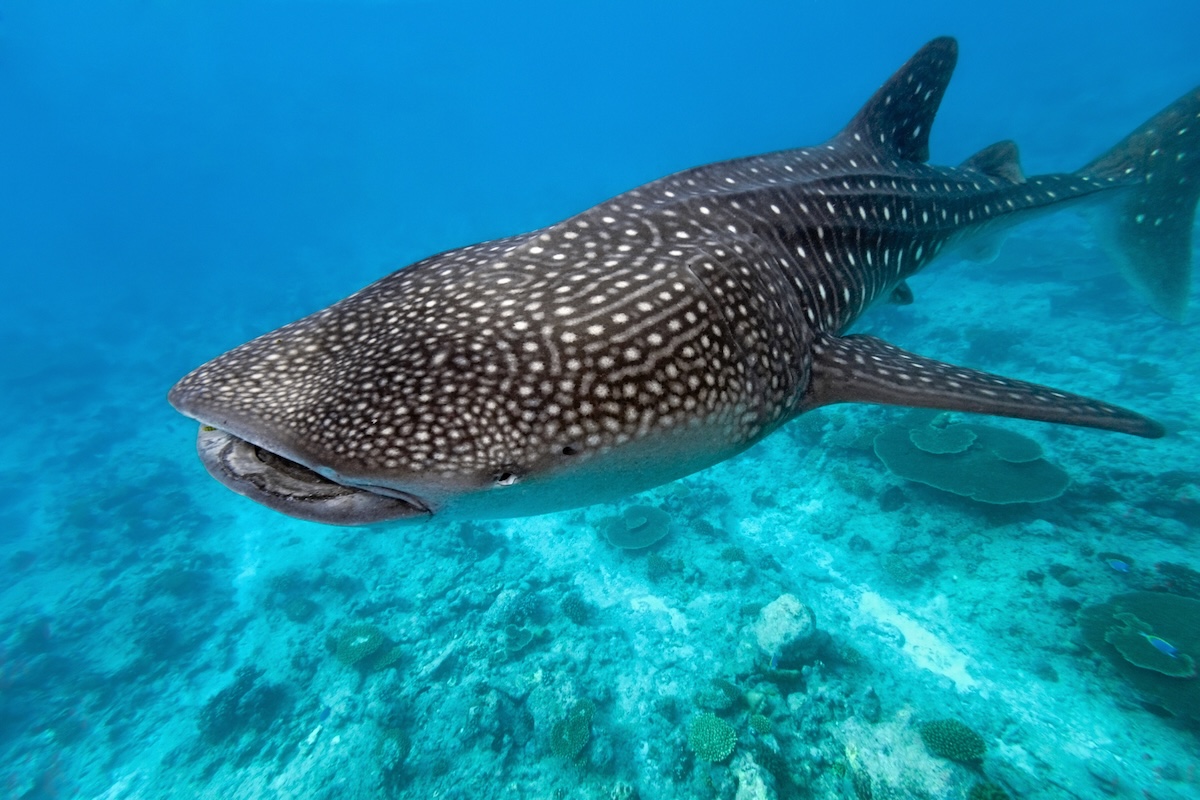 Photo Credit: criso at Deposit Photos
In the shimmering blue waters of the world’s oceans swims the whale shark, known scientifically as Rhincodon typus. This gentle giant, the largest fish on the planet, can grow up to an astonishing 60 feet long, gliding gracefully through the water like a massive, living submarine. With its distinctive pattern of white spots and stripes against a dark blue background, the whale shark is not just a sight to behold; it is a marvel of nature that captivates scientists and ocean enthusiasts alike.
Imagine diving into the warm, sunlit waters of a tropical reef, where the gentle currents carry you alongside this magnificent creature. As it filters the water, opening its enormous mouth to consume tiny plankton, you can’t help but feel a sense of wonder. Whale sharks are filter feeders, meaning they take in water and strain out their food, which includes not just plankton but also small fish and even eggs. This unique feeding method allows them to thrive in rich marine environments, making them a vital part of the ocean’s ecosystem. Their serene demeanor and impressive size have made them a symbol of ocean conservation, reminding us of the delicate balance of life beneath the waves.
The whale shark, a gentle giant of the ocean, holds a special place in the tree of life. As the largest fish in the world, it belongs to the Kingdom Animalia, which includes all animals, and is classified under the Phylum Chordata, known for creatures with a backbone. What sets the whale shark apart is not just its size, but also its unique feeding habits and docile nature. Unlike many of its relatives, this magnificent fish is a filter feeder, meaning it consumes tiny organisms like plankton by swimming with its mouth wide open. This behavior, combined with its striking pattern of spots and stripes, makes the whale shark a true marvel of the marine world.
| Taxonomic Rank | Scientific Name | Meaning & Significance |
|---|---|---|
| Kingdom | Animalia | This name signifies that whale sharks are part of the vast group of multicellular organisms known as animals. |
| Phylum | Chordata | Chordata means “having a cord,” referring to the notochord, a flexible rod that supports the body, which all members of this group possess at some stage of development. |
| Class | Chondrichthyes | This term translates to “cartilage fish,” highlighting that whale sharks, like all members of this class, have skeletons made of cartilage instead of bone. |
| Order | Orectolobiformes | This order includes carpet sharks, named for their flattened bodies and the way they often rest on the ocean floor, resembling a carpet. |
| Family | Rhincodontidae | The family name comes from the Greek words for “snout” and “tooth,” reflecting the whale shark’s distinctive flat head and its unique feeding method. |
| Genus | Rhincodon | This genus name combines Greek terms meaning “snout” and “tooth,” again emphasizing the whale shark’s unique mouth structure and feeding style. |
The classification of the whale shark reveals much about its evolutionary journey. As a member of the Chondrichthyes class, it shares a lineage with other cartilaginous fish like rays and skates, which have thrived in the oceans for hundreds of millions of years. Its position within the Orectolobiformes order indicates adaptations that allow it to thrive in diverse marine environments, from coastal waters to the open sea. Understanding where the whale shark fits in the tree of life not only highlights its unique characteristics but also underscores the intricate connections among all living beings in our planet’s rich tapestry of life.
The evolutionary journey of the whale shark stretches back millions of years, weaving through the tapestry of marine life. These magnificent creatures belong to the family Rhincodontidae and the genus Rhincodon. Their ancestors first appeared around 60 million years ago, during the late Cretaceous period, a time when dinosaurs roamed the Earth and the oceans were teeming with diverse life forms. As the planet changed, so did the whale shark, adapting to the shifting environments of the seas.
The early ancestors of whale sharks were likely smaller and more similar to other fish of their time. Over millions of years, they underwent significant changes, evolving from more traditional fish shapes into the broad, flat bodies we see today. This transformation allowed them to become efficient filter feeders, a major evolutionary leap that enabled them to thrive in various oceanic habitats. Their large mouths, which can measure up to five feet wide, evolved to scoop up vast amounts of plankton and small fish, showcasing a remarkable adaptation to their diet.
The adaptations of the whale shark have played a crucial role in its survival. Their enormous size not only protects them from many predators but also allows them to traverse vast oceanic expanses in search of food. The ability to filter feed has opened up a world of nutritional opportunities, enabling them to thrive in diverse marine environments. Their unique camouflage helps them evade larger predators, while their social behavior during feeding times enhances their chances of finding abundant food sources. Together, these traits have allowed the whale shark to flourish in the oceans for millions of years, making it a true marvel of evolution.
The whale shark is a breathtaking sight in the ocean, embodying both grace and grandeur. With its massive, streamlined body, it glides effortlessly through the water, reaching lengths of up to 60 feet or more. Its wide, flat head is adorned with a mouth that can stretch nearly five feet across, perfect for filtering tiny plankton from the water. The overall impression is one of gentle power, as this enormous fish moves with a calmness that belies its size.
| Feature | Description |
|---|---|
| Size | Can grow up to 60 feet (18 meters) long and weigh between 13,607 to 18,144 kg (15 to 20 tons). |
| Color | Typically a bluish-gray with a pattern of white spots and stripes, which helps with camouflage in the ocean. |
| Skin Type | Smooth skin that is tough and helps reduce drag as it swims. |
These features work together to create a creature perfectly adapted to its environment. The whale shark’s enormous size not only deters potential predators but also allows it to filter vast amounts of water for food. Its smooth skin minimizes resistance as it swims, enabling it to glide through the ocean with ease. The striking patterns of spots and stripes serve as natural camouflage, helping it blend into the dappled light of the ocean depths. Together, these characteristics make the whale shark a true marvel of the marine world, thriving in the vast blue expanse.
The whale shark calls the warm coastal waters and open ocean its home, where sunlight dances on the surface and the water is a vibrant blue. These gentle giants prefer areas rich in plankton, their favorite food, which drifts in the currents. Picture a serene underwater world, where the whale shark glides gracefully, its enormous body moving through the water like a slow-moving cloud. This habitat is not just a playground; it’s a buffet of tiny organisms that sustain these magnificent fish.
The whale shark thrives in warm waters, typically found in temperatures ranging from 70 to 80 degrees Fahrenheit. These conditions are essential for their survival, as they are ectothermic, meaning they rely on the surrounding water to regulate their body temperature. The gentle currents and nutrient-rich waters provide the perfect environment for feeding and breeding. In these warm, sunlit areas, the whale shark can easily find the plankton and small fish that make up its diet.
Adapted to its specific habitats, the whale shark has developed a unique feeding strategy. It swims with its mouth wide open, filtering water through its gills to capture tiny organisms. This filter-feeding technique allows it to thrive in areas where food is abundant. Additionally, its large size and distinctive pattern of spots help it blend into the ocean’s depths, providing some camouflage from potential threats. In this way, the whale shark has become a master of its environment, perfectly suited to life in the warm, inviting waters of our planet.
The daily life of a whale shark is a serene blend of swimming, feeding, and basking in the sun-dappled waters of the ocean. These gentle giants typically spend their days gliding through warm coastal areas and open seas, where they filter-feed on tiny organisms like plankton. With their mouths wide open, they take in water and filter out their food using specialized gill rakers, which act like a sieve. This leisurely feeding method allows them to consume vast amounts of food while expending minimal energy, making their daily routine both efficient and peaceful.
While whale sharks are primarily solitary creatures, they do exhibit interesting social behaviors, especially when it comes to feeding. Occasionally, they gather in small groups in areas rich in food, such as during plankton blooms. These gatherings can be a sight to behold, as multiple whale sharks swim together, each one gracefully maneuvering through the water. Communication among them is subtle; they may use body language and changes in swimming patterns to signal their presence or intentions. This social interaction, though limited, highlights their adaptability in finding food and navigating their environment.
| Behavior Type | Description |
|---|---|
| Feeding | Whale sharks filter-feed by swimming with their mouths open, capturing plankton and small fish. |
| Social Structure | Primarily solitary, but can form small groups during feeding events. |
| Communication | Utilizes body language and swimming patterns to interact with others, especially during feeding. |
The behaviors of whale sharks are finely tuned to ensure their survival in the vast ocean. Their solitary nature allows them to cover large areas in search of food, while their occasional gatherings during feeding times enhance their chances of finding abundant resources. By adapting their social interactions to the availability of food, whale sharks demonstrate a remarkable balance between independence and cooperation, ensuring they thrive in their underwater world.
Whale sharks are fascinating filter feeders, primarily consuming tiny organisms that drift through the ocean. As carnivores, they have a diet that mainly consists of plankton, krill, small fish, and even crabs. These gentle giants have evolved a unique feeding strategy that allows them to take in large volumes of water and filter out their food using specialized structures in their mouths called gill rakers. This method of feeding is not only efficient but also showcases their role as important players in the marine ecosystem.
| Dietary Aspect | Details |
|---|---|
| Diet Type | Carnivore |
| Favorite Foods | Plankton, krill, small fish, crabs |
| Prey Items | Various small marine organisms |
| Hunting/Foraging Strategies | Filter feeding using gill rakers |
The whale shark’s diet plays a crucial role in maintaining the health of marine ecosystems. By consuming vast amounts of plankton and other small organisms, they help regulate these populations, ensuring a balanced food web. Their feeding habits also influence their daily routines, as they often migrate to areas where food is abundant, showcasing their adaptability and connection to the ocean’s rhythms. This gentle giant not only survives on its diet but thrives, contributing to the vibrant life of the seas.
Whale sharks have a captivating mating ritual that takes place in warm, tropical waters. During the breeding season, which is not precisely defined but often occurs in the summer months, males engage in a unique behavior called “courtship.” This involves swimming closely around females, sometimes even bumping into them, as they display their strength and agility. The males can be quite persistent, showcasing their interest in a potential mate. This courtship can attract multiple males to a single female, creating a lively underwater dance.
| Reproductive Aspect | Details |
|---|---|
| Gestation Period | About 12 months |
| Litter Size | Average of 12 |
| Age of Maturity | Around 30 years |
| Name of Young | Pups |
Once the pups are born, they are independent from the start. Whale sharks do not exhibit parental care, which means the young are left to fend for themselves. These pups are born fully formed and ready to swim, often measuring about 2 feet long. As they grow, they navigate the vast ocean, learning to find food and avoid predators. Over time, they develop into the majestic adults we admire, reaching lengths of up to 60 feet. The journey from pup to adult is a remarkable adventure, filled with challenges and discoveries in the deep blue sea.
The whale shark occupies a unique position in the ocean’s food web. As the largest fish in the sea, it primarily feeds on tiny organisms like plankton, making it a filter feeder. This means it swims with its mouth wide open, allowing water to flow in and trapping food on specialized gill rakers. While they are not aggressive and pose no threat to humans, whale sharks still face dangers from various predators and environmental challenges.
Despite these threats, whale sharks have developed some fascinating survival strategies. They often swim in deeper waters to avoid larger predators and can dive to great depths when necessary. Their size alone can deter some would-be attackers, while their gentle nature allows them to coexist peacefully with many marine species. Additionally, they are known to migrate to areas with abundant food, ensuring they can find sustenance even in changing ocean conditions. These adaptations help them navigate the challenges of their environment, allowing them to thrive in the vast blue expanse of the ocean.
A keystone species is a vital part of its ecosystem, playing a crucial role in maintaining the structure and health of that environment. The whale shark, with its gentle nature and unique feeding habits, qualifies as a keystone species in its marine habitat. By influencing the populations of smaller organisms and contributing to the overall balance of the ocean, these magnificent creatures help sustain the ecosystems they inhabit.
Whale sharks primarily feed on plankton, small fish, and other tiny marine organisms. As filter feeders, they consume vast amounts of these creatures, which helps regulate their populations. This feeding behavior not only supports the health of the whale shark but also ensures that the plankton populations do not explode unchecked, which could lead to imbalances in the ecosystem. Additionally, by swimming through various ocean layers, whale sharks help circulate nutrients, promoting a rich and diverse marine environment.
Moreover, whale sharks serve as a food source for larger predators, including some species of sharks and orcas. Their presence in the food web supports a variety of marine life, creating a dynamic and interconnected community. When whale sharks migrate, they also contribute to the dispersal of nutrients across different regions of the ocean, further enhancing the productivity of these waters.
If whale sharks were to disappear, the consequences could be dire. Without these gentle giants, plankton populations might surge, leading to overgrowth and depletion of resources for other marine species. This imbalance could ripple through the food web, affecting everything from small fish to larger predators. Additionally, the loss of whale sharks would diminish the health of marine ecosystems, reducing biodiversity and impacting human communities that rely on these waters for food and tourism. The ocean would be a less vibrant place without the presence of these magnificent creatures.
The whale shark occupies a vital ecological niche in the marine environment, acting as a gentle giant that helps maintain the balance of ocean life. As the largest fish in the world, it plays a significant role in its ecosystem, particularly in warm coastal waters and the open ocean. By feeding on plankton and other small organisms, the whale shark not only sustains itself but also influences the populations of these tiny creatures, ensuring that the ocean remains a thriving habitat for many species.
| Ecosystem Service | Impact |
|---|---|
| Plankton Regulation | Controls the population of plankton, preventing overgrowth and maintaining a balanced ecosystem. |
| Nutrient Cycling | Contributes to nutrient distribution in the ocean through its feeding and excretion processes. |
| Habitat for Other Species | Provides shelter and feeding opportunities for smaller fish and marine organisms that thrive in its presence. |
| Tourism and Education | Attracts divers and marine enthusiasts, promoting awareness and conservation efforts for ocean health. |
The influence of the whale shark extends beyond its own survival. For instance, as it filters vast amounts of water to consume plankton, it helps regulate these populations, preventing them from exploding and disrupting the marine food web. This feeding behavior also aids in nutrient cycling, as the whale shark’s waste products enrich the surrounding waters, supporting the growth of phytoplankton, which are essential for oxygen production and serve as the base of the oceanic food chain. Additionally, the presence of whale sharks can create a safe haven for smaller fish, which often seek refuge near these massive animals, benefiting from the protection they provide.
The broader ecological importance of the whale shark cannot be overstated. As a keystone species, its role in maintaining the health of marine ecosystems is crucial. By regulating plankton populations and contributing to nutrient cycling, whale sharks help sustain the diverse life forms that inhabit the ocean. Their presence also fosters a connection between humans and the marine environment, inspiring conservation efforts that aim to protect not only these magnificent creatures but the entire ocean ecosystem they support. In this way, the whale shark is not just a solitary giant; it is a vital thread in the intricate tapestry of ocean life.
In the vast and vibrant world of the ocean, many species form intricate partnerships that help them thrive. These relationships can be classified into three main types: mutualism, where both species benefit; commensalism, where one benefits while the other is neither helped nor harmed; and parasitism, where one benefits at the expense of the other. The whale shark, the largest fish in the sea, engages in various ecological relationships that highlight the interconnectedness of marine life.
| Species/Type | Relationship Type | Description |
|---|---|---|
| Remora Fish | Mutualistic | Remoras attach themselves to the whale shark, gaining transportation and access to food scraps, while the whale shark benefits from the cleaning of parasites and dead skin. |
| Cleaner Shrimp | Mutualistic | These small shrimp often clean the whale shark’s skin, removing parasites and dead tissue, which helps keep the shark healthy. |
| Barnacles | Commensal | Barnacles attach to the whale shark’s skin, gaining a place to live and access to food as the shark swims, but they do not affect the shark’s health. |
| Sea Lice | Parasitic | These tiny parasites can attach to the whale shark, feeding on its skin and potentially causing irritation, which is harmful to the shark. |
The evolution of these relationships showcases the adaptability and resilience of marine species. Over time, the whale shark and its partners have developed ways to coexist, benefiting from one another in a delicate balance. Mutualistic relationships, like those with remora fish and cleaner shrimp, enhance the health and well-being of the whale shark, while commensal relationships with barnacles provide shelter without causing harm. Even parasitic interactions, though less favorable, play a role in the complex web of life in the ocean. Understanding these connections helps us appreciate the intricate dynamics of marine ecosystems and the importance of preserving them for future generations.
The whale shark is not just the largest fish in the ocean; it is also a creature full of surprises that can captivate anyone interested in marine life. Here are some intriguing facts that showcase the wonders of this gentle giant.
The relationship between whale sharks and humanity is as deep and complex as the ocean itself. Historically, these gentle giants have captured the imagination of coastal communities around the world. In many cultures, whale sharks are seen as symbols of good fortune and are celebrated in local folklore. Ancient mariners often spoke of encounters with these massive fish, marveling at their size and grace. In some regions, they are revered in art and storytelling, reflecting a deep respect for their presence in the marine ecosystem.
Today, interactions between whale sharks and humans have evolved, focusing on both conservation and conflict. As awareness of their ecological importance grows, many organizations are working to protect these magnificent creatures from threats like overfishing and habitat destruction. However, conflicts can arise, particularly in areas where fishing practices overlap with whale shark habitats. Some communities have even embraced eco-tourism, allowing people to swim alongside these gentle giants, fostering a sense of connection and responsibility towards their conservation. Yet, the challenge remains to balance human activity with the need to protect these vulnerable animals.
Looking ahead, the future of the relationship between whale sharks and humanity holds both promise and challenges. As more people become aware of the importance of these gentle giants, there is hope for increased conservation efforts and sustainable practices. Education and community involvement will be key in ensuring that future generations can continue to marvel at these magnificent creatures. By fostering a sense of stewardship and respect, we can work together to protect the whale shark and the vibrant ecosystems they inhabit, ensuring that they remain a part of our oceans for years to come.
The conservation status of the whale shark is currently classified as Near Threatened by the International Union for Conservation of Nature (IUCN). This means that while they are not yet endangered, their populations are declining and face significant risks. Estimates suggest that the global population of whale sharks is difficult to determine precisely, but they are believed to be decreasing due to various human activities. As these gentle giants navigate the oceans, their numbers are becoming increasingly vulnerable, prompting urgent conservation efforts.
| Conservation Factor | Status/Details |
|---|---|
| IUCN Status | Near Threatened |
| Population Estimates | Exact numbers are unknown, but populations are believed to be decreasing. |
| Trend Direction | Decreasing |
The main threats to whale sharks stem from human activities. Overfishing is a significant concern, as these magnificent creatures can become entangled in fishing gear or caught unintentionally. Additionally, habitat destruction, particularly in coastal areas where they feed, poses a serious risk. Pollution and climate change also play a role, as rising ocean temperatures can affect the availability of their primary food source—plankton. These challenges create a precarious situation for whale sharks, making their survival increasingly uncertain.
Despite these threats, there is hope for the future of whale sharks. Conservation efforts are underway in various parts of the world, focusing on protecting their habitats and reducing fishing pressures. Many countries have established marine protected areas where whale sharks can thrive without the threat of human interference. Education and awareness campaigns are also crucial, helping communities understand the importance of these gentle giants and the need to protect them. With continued efforts, there is a chance to stabilize and even increase whale shark populations, ensuring that these magnificent creatures continue to grace our oceans for generations to come.
| Question | Answer |
|---|---|
| Where do whale sharks live? | Whale sharks are found in warm coastal waters and the open ocean. They prefer areas with plenty of food, like plankton, which is why they are often seen near coral reefs and in tropical seas. |
| What do whale sharks eat? | Whale sharks are carnivores, meaning they eat meat, but their diet mainly consists of tiny creatures like plankton, small fish, and even some jellyfish. They filter feed by swimming with their mouths open, allowing water to flow in and trapping food on special filters in their gills. |
| How do whale sharks behave? | Whale sharks are generally gentle giants and are known for their calm demeanor. They often swim slowly and can be seen basking at the surface of the water, making them a favorite among divers and snorkelers. |
| How do whale sharks reproduce? | Whale sharks are ovoviviparous, which means that the eggs hatch inside the female's body, and she gives birth to live young. This fascinating process allows the young sharks to be born fully formed and ready to swim away immediately. |
| What threats do whale sharks face? | Whale sharks are classified as Near Threatened due to various threats, including fishing, habitat loss, and boat strikes. They are often caught accidentally in fishing nets or targeted for their meat and fins, which can harm their populations. |
| What are some interesting characteristics of whale sharks? | Whale sharks are the largest fish in the ocean, growing up to 40 feet long! They have a unique pattern of spots and stripes on their skin, much like a fingerprint, which helps researchers identify individual sharks. |
| Can whale sharks be found in groups? | Yes, whale sharks can sometimes be seen in groups, especially in areas with abundant food. These gatherings are often temporary and can include both males and females, making it a spectacular sight for those lucky enough to witness it. |