Taxonomy & Classification
- Kingdom
- Animalia
- Phylum
- Chordata
- Class
- Mammalia
- Order
- Carnivora
- Family
- Felidae
- Genus
- Panthera
- Species
- Panthera tigris tigris

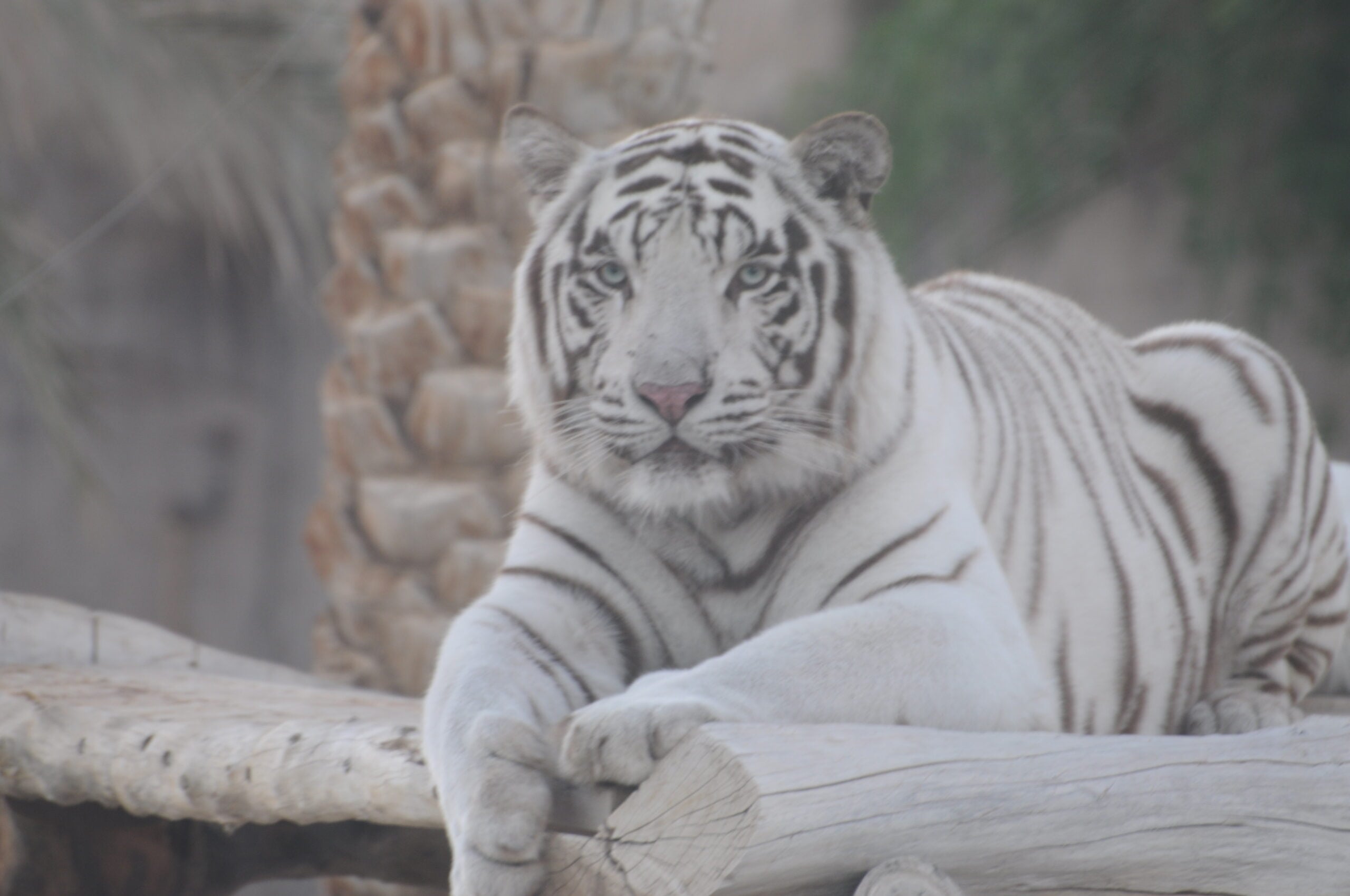 Photo Credit: shankar s. from Dubai, united arab emirates / Wikimedia
In the heart of the dense jungles and mangrove swamps of India, the white tiger, scientifically known as Panthera tigris tigris, prowls with an air of majesty. Its striking white fur, adorned with bold black stripes, creates a stunning contrast against the lush greenery, making it a breathtaking sight to behold. With piercing blue eyes that seem to hold the secrets of the wild, this rare variant of the Bengal tiger captivates both scientists and nature enthusiasts alike. The white tiger’s unique coloration is not just a visual marvel; it is a result of a genetic mutation that has sparked curiosity and admiration across the globe.
As the sun filters through the canopy, casting dappled shadows on the forest floor, the white tiger embodies both grace and power. Weighing between 140 to 300 kilograms, or about 309 to 660 pounds, it is a formidable predator, expertly adapted to its environment. The white tiger’s role as an apex predator is crucial, as it helps maintain the balance of its ecosystem by preying on large mammals like deer and wild boar. However, the beauty of this magnificent creature is overshadowed by its endangered status, as there are no wild populations left today. The story of the white tiger is not just one of survival; it is a poignant reminder of the delicate balance of nature and the urgent need for conservation efforts to protect these extraordinary animals.
The white tiger, a striking and rare variant of the Bengal tiger, holds a special place in the animal kingdom. Taxonomically, it belongs to the Kingdom Animalia, Phylum Chordata, Class Mammalia, Order Carnivora, Family Felidae, and Genus Panthera. What sets the white tiger apart is not just its stunning white coat with black stripes, but also its genetic makeup. This beautiful big cat is a result of a recessive gene that affects pigmentation, making it a captivating subject for both scientists and wildlife enthusiasts alike.
| Taxonomic Rank | Scientific Name | Meaning & Significance |
|---|---|---|
| Kingdom | Animalia | The term “Animalia” comes from the Latin word “animalis,” meaning “having breath” or “living.” This classification includes all multicellular organisms that are capable of movement and responsive to their environment. |
| Phylum | Chordata | “Chordata” is derived from the Latin word “chorda,” meaning “string” or “cord.” This refers to the notochord, a flexible rod that supports the body in the early stages of development, a feature present in all members of this group. |
| Class | Mammalia | The name “Mammalia” comes from the Latin word “mamma,” meaning “breast.” This classification highlights the defining characteristic of mammals: females possess mammary glands that produce milk to nourish their young. |
| Order | Carnivora | “Carnivora” means “meat-eater” in Latin, which is fitting for this group that includes animals like tigers, lions, and bears, all of which have adaptations for hunting and consuming other animals. |
| Family | Felidae | The name “Felidae” comes from the Latin word “felis,” meaning “cat.” This family encompasses all true cats, known for their retractable claws, keen senses, and powerful bodies. |
| Genus | Panthera | “Panthera” is derived from the Greek word “panthera,” which refers to a large cat. This genus includes the big cats like tigers, lions, leopards, and jaguars, known for their strength and agility. |
Understanding the white tiger’s classification reveals much about its evolutionary history. As a member of the Panthera genus, it shares a common ancestor with other big cats, showcasing the adaptations that have allowed these magnificent animals to thrive in various environments. The white tiger’s unique coloration is not just a beautiful anomaly; it reflects the complex interplay of genetics and evolution, illustrating how species can diverge and adapt over time. This captivating creature serves as a reminder of the diversity and wonder of life on Earth, inviting us to explore and appreciate the intricate web of connections that bind all living things.
The evolutionary journey of the white tiger is a captivating tale that stretches back millions of years. Tigers, including the white tiger, belong to the Panthera genus, which emerged around 6 million years ago. This lineage has undergone significant changes, adapting to various environments and challenges throughout its history. The white tiger, specifically, is a genetic variant of the Bengal tiger, which itself has a rich evolutionary background.
The ancestors of modern tigers roamed the Earth during the late Miocene epoch. These early felids were larger and more robust than today’s tigers, adapting to diverse habitats across Asia. Over time, as the climate changed and landscapes evolved, these ancestors split into different species, including the Bengal tiger. The white coloration of the white tiger is due to a recessive gene that affects pigmentation, a fascinating twist in its evolutionary story. This mutation likely arose in the wild, but it became more prominent through selective breeding in captivity.
The adaptations of the white tiger have played a vital role in its survival. The ability to camouflage in snowy landscapes allows it to stalk prey without being easily detected. Its powerful build and acute senses enhance its hunting prowess, ensuring it can capture food effectively. Additionally, being solitary reduces competition, allowing the white tiger to thrive in its environment. These traits, shaped by millions of years of evolution, highlight the intricate relationship between an animal and its habitat, showcasing the wonders of nature’s design.
The white tiger is a breathtaking sight, embodying both grace and power. With a robust body structure, these magnificent animals can weigh between 140 to 300 kilograms, which is about 309 to 660 pounds. Their muscular build is designed for strength and agility, allowing them to navigate their habitats with ease. The most striking aspect of their appearance is their stunning white fur, which contrasts beautifully with their vivid blue eyes. This combination creates an impression of both elegance and ferocity, making them one of nature’s most captivating predators.
| Feature | Description |
|---|---|
| Weight | 140kg – 300kg (309lbs – 660lbs) |
| Skin Type | Fur |
| Most Distinctive Feature | White fur with bright, blue eyes |
The white tiger’s features are not just for show; they play vital roles in its survival. The thick fur provides insulation against cold weather, while the striking coloration helps with camouflage in snowy environments. Their powerful build allows them to take down prey efficiently, and those piercing blue eyes are not just beautiful—they enhance their vision in low light, making them effective hunters at dawn and dusk. Together, these characteristics create a perfect blend of beauty and functionality, ensuring that the white tiger remains a formidable presence in the wild.
The white tiger roams through the dense jungles and mangrove swamps of its homeland, where the lush greenery creates a vibrant backdrop for its striking appearance. These habitats are rich with tall grasses, thick underbrush, and towering trees, providing both cover and hunting grounds. The interplay of light and shadow in these environments enhances the white tiger’s beautiful coat, allowing it to blend seamlessly into its surroundings while stalking prey.
The climate in these regions is typically warm and humid, with monsoon seasons bringing heavy rainfall. This moisture supports the growth of diverse plant life, which in turn sustains a variety of animals that the white tiger preys upon. The combination of dense foliage and water sources creates an ideal environment for these majestic cats, allowing them to thrive in their natural habitat.
In adapting to these specific habitats, the white tiger has developed keen hunting skills and a stealthy approach. Its pale fur, marked with dark stripes, not only provides camouflage in the dappled light of the jungle but also helps it remain hidden from both prey and potential threats. This remarkable adaptation allows the white tiger to navigate its environment with grace, making it a master of its domain.
The daily life of a white tiger unfolds in the warm light of day, as these magnificent animals are primarily diurnal, meaning they are most active during daylight hours. As the sun rises, a white tiger stretches its powerful limbs and begins its routine. It may start with a leisurely stroll through its territory, which can span several square miles. This exploration is not just for exercise; it helps the tiger mark its territory with scent markings, ensuring that other tigers know where it roams. Throughout the day, the tiger engages in various activities, including grooming its striking white fur, resting in the shade of trees, and occasionally hunting for prey.
While white tigers are known for their solitary nature, they do exhibit interesting social behaviors, especially during mating season. Typically, these tigers prefer to live alone, relying on their keen senses and stealth to hunt. However, when it comes to raising cubs, a mother will fiercely protect her young, teaching them essential survival skills. Communication among white tigers is subtle yet effective. They use a range of vocalizations, such as growls and chuffs, along with body language to convey their feelings and intentions. This solitary lifestyle allows them to be stealthy hunters, but it also means they must be self-reliant.
| Behavior Type | Description |
|---|---|
| Activity Patterns | Primarily diurnal, engaging in hunting, grooming, and territory marking during the day. |
| Social Structure | Solitary, except for mothers with cubs; males and females come together only for mating. |
| Communication Methods | Vocalizations like growls and chuffs, along with body language to express emotions and intentions. |
The behaviors of white tigers are finely tuned to ensure their survival in the wild. Their solitary nature allows them to be stealthy hunters, relying on their keen senses to stalk prey without drawing attention. By marking their territory, they avoid unnecessary confrontations with other tigers, which could lead to dangerous encounters. The skills learned from their mothers during cubhood are crucial for their independence, enabling them to thrive in their lush, yet challenging habitats. Each aspect of their daily life is a testament to their adaptability and strength in the wild.
The white tiger is a carnivore, which means it primarily eats meat. Its diet mainly consists of large mammals, and it has developed impressive hunting skills to catch its prey. These magnificent hunters rely on their keen eyesight and powerful bodies to stalk and ambush animals like deer, wild boar, and even cattle. With their striking white fur providing excellent camouflage in their natural habitat, white tigers can sneak up on their unsuspecting meals, making them effective predators.
| Dietary Aspect | Details |
|---|---|
| Diet Type | Carnivore |
| Favorite Foods | Deer, Wild Boar, Cattle |
| Prey Items | Large mammals such as deer and wild boar |
| Hunting Strategies | Stalking and ambushing prey using camouflage |
The diet of the white tiger plays a crucial role in shaping its ecology and daily routine. By preying on large herbivores, these tigers help maintain the balance of their ecosystem, preventing overpopulation of certain species. Their hunting activities also influence the behavior of prey animals, creating a dynamic interaction within their habitat. As they hunt, white tigers not only fulfill their nutritional needs but also engage in essential behaviors that contribute to their survival and the health of their environment.
The mating behavior of white tigers is as captivating as their appearance. Breeding typically occurs during the cooler months, often between November and March. During this time, males will roam their territory, seeking out females. Courtship can be quite a spectacle, with males displaying their strength and agility to impress potential mates. Once a female is receptive, the pair will mate multiple times over several days, ensuring the best chance of successful reproduction.
| Reproductive Aspect | Details |
|---|---|
| Gestation Period | 103 days |
| Average Litter Size | 3 |
| Age of Sexual Maturity | 3 – 4 years |
| Name of Young | Cub |
Once the cubs are born, they rely heavily on their mother for survival. The mother is fiercely protective and nurturing, providing warmth and nourishment. Cubs are born blind and helpless, making their mother’s care crucial during the first few weeks of life. As they grow, they begin to explore their surroundings, learning essential skills like hunting and climbing. By the time they reach maturity at around three to four years, these young tigers are ready to venture out on their own, continuing the legacy of their magnificent species.
The white tiger occupies a crucial position in the food web, primarily as an apex predator. This means it sits at the top of the food chain, preying on large mammals like deer and wild boar. However, despite its powerful status, the white tiger faces numerous dangers that threaten its survival. These threats can disrupt its role in the ecosystem and impact the balance of its habitat.
To defend itself against these threats, the white tiger employs a variety of survival strategies. Its striking coat provides excellent camouflage in the dappled light of the forest, allowing it to stalk prey effectively. Additionally, white tigers are solitary hunters, which means they can avoid competition and reduce the risk of confrontation with other predators. Their keen senses, especially sight and hearing, help them detect danger early, giving them a better chance to escape or hide. Through these adaptations, the white tiger continues to navigate the challenges of its environment, showcasing the resilience of this magnificent animal.
A keystone species is an organism that plays a critical role in maintaining the structure of its ecosystem. These species have a disproportionately large impact on their environment relative to their abundance. The white tiger, while a stunning and iconic animal, does not qualify as a true keystone species. This is primarily because it is a solitary predator, and its role in the ecosystem is more about maintaining balance within its prey populations rather than shaping the entire ecosystem.
Despite not being a keystone species, the white tiger does have significant ecological impacts. As an apex predator, it helps control the populations of large herbivores, such as deer and wild boar. By keeping these populations in check, white tigers prevent overgrazing, which can lead to habitat degradation. This balance is essential for the health of the dense jungles and mangrove swamps they inhabit, as it allows various plant species to thrive, supporting a diverse range of other wildlife.
Moreover, the presence of white tigers can influence the behavior of their prey. When these powerful hunters are around, herbivores tend to be more cautious and vigilant, which can lead to more diverse grazing patterns. This behavior allows different plant species to flourish, promoting biodiversity in their habitat. Additionally, the white tiger’s hunting activities can create opportunities for scavengers, such as vultures and hyenas, who benefit from the remains of its kills.
If white tigers were to disappear from their ecosystems, the consequences could be significant. Without these apex predators, herbivore populations could surge, leading to overgrazing and the decline of plant species. This shift would not only affect the vegetation but also the entire food web, as other animals that rely on those plants for food would struggle to survive. The loss of white tigers would ripple through the ecosystem, highlighting the interconnectedness of all species and the importance of every animal, no matter how solitary or rare.
The white tiger, a stunning variant of the Bengal tiger, plays a vital role in its ecosystem, particularly in the dense jungles and mangrove swamps it calls home. As an apex predator, it helps maintain the balance of its environment by controlling the populations of large herbivores. This balance is crucial because it prevents overgrazing, allowing various plant species to thrive and supporting a diverse range of other wildlife. The presence of white tigers indicates a healthy ecosystem, as they require large territories and abundant prey to survive.
| Ecosystem Service | Impact |
|---|---|
| Population Control | Regulates herbivore numbers, preventing overgrazing. |
| Habitat Maintenance | Encourages plant diversity by controlling prey species. |
| Food Source | Provides sustenance for scavengers and smaller predators. |
| Tourism and Education | Attracts visitors, promoting conservation awareness. |
The influence of the white tiger extends beyond its immediate hunting practices. By preying on large mammals like deer and wild boar, it helps maintain a balanced ecosystem. When herbivore populations are kept in check, vegetation can flourish, creating a rich habitat for countless other species. This dynamic supports not only the plants but also smaller animals that rely on these plants for food and shelter. Additionally, the presence of white tigers can boost local economies through eco-tourism, as people travel from far and wide to glimpse these majestic animals in their natural habitat.
The broader ecological importance of the white tiger cannot be overstated. As a keystone species, its role is crucial for the health of its ecosystem. The balance it maintains allows for a diverse array of life to thrive, from the smallest insects to the tallest trees. Protecting the white tiger and its habitat is essential not just for the survival of this magnificent animal, but for the entire ecosystem that depends on its presence. By ensuring the health of the white tiger population, we also safeguard the intricate web of life that flourishes in the jungles and swamps they inhabit.
In the intricate web of life, symbiosis refers to the close and often long-term interactions between different species. These relationships can take many forms, including mutualism, where both species benefit, parasitism, where one benefits at the expense of the other, and commensalism, where one benefits while the other is neither helped nor harmed. Understanding these ecological relationships helps us appreciate how species like the white tiger interact with their environment and other organisms, creating a balance that sustains their ecosystems.
| Species/Type | Relationship Type | Description |
|---|---|---|
| Birds (e.g., cattle egrets) | Commensal | These birds often follow large mammals like tigers, feeding on insects stirred up by their movements. The tigers are unaffected by the presence of the birds. |
| Parasites (e.g., ticks) | Parasitic | Ticks can latch onto white tigers, feeding on their blood. This relationship harms the tiger, as it can lead to health issues. |
| Prey species (e.g., deer) | Mutualistic | While the white tiger hunts deer, the presence of tigers helps regulate deer populations, which in turn supports the health of the forest ecosystem. |
The evolution of these relationships is a testament to nature’s adaptability. Over time, species have developed ways to coexist, whether through mutual benefits or by finding their niche in the ecosystem. For the white tiger, these interactions are crucial for survival, influencing everything from hunting strategies to habitat preferences. By understanding these connections, we can better appreciate the delicate balance of life in the jungles and swamps where these magnificent animals roam.
The white tiger is not just a beautiful animal; it is a fascinating symbol of nature’s wonders and mysteries. With its striking white fur and bright blue eyes, this rare variant of the Bengal tiger captivates the hearts of many. Here are some surprising facts that showcase the extraordinary life of the white tiger.
Throughout history, the white tiger has captivated human imagination and culture. Revered in various societies, these majestic animals have often been seen as symbols of strength, beauty, and mystery. In ancient Indian folklore, the white tiger was associated with royalty and power, often depicted in art and literature. This cultural significance has led to a deep-rooted fascination with the species, inspiring stories, myths, and even religious beliefs. As a result, the white tiger has become an emblem of the wild, representing both the allure and the fragility of nature.
In modern times, the relationship between white tigers and humanity has evolved significantly. Conservation efforts are underway to protect these rare animals from extinction, as their populations have dwindled due to habitat loss and poaching. However, this relationship is not without conflict. In some regions, white tigers are kept in captivity, leading to debates about ethics and animal welfare. While some facilities aim to educate the public and promote conservation, others prioritize entertainment, raising concerns about the treatment of these magnificent creatures. The challenge lies in finding a balance between preserving their natural habitats and addressing human interests.
Looking ahead, the future of the relationship between white tigers and humanity holds both promise and challenges. As awareness of conservation issues grows, there is hope for more effective strategies to protect these magnificent animals and their habitats. By fostering a deeper understanding of the ecological roles that white tigers play, we can inspire future generations to appreciate and safeguard the natural world. Ultimately, the bond between humans and white tigers can evolve into a partnership that respects and cherishes the beauty of wildlife, ensuring that these stunning creatures continue to roam the earth for years to come.
The conservation status of the white tiger is a pressing concern, as this stunning animal is classified as Endangered. Unfortunately, there are no wild populations of white tigers left today. This striking variant of the Bengal tiger has been primarily bred in captivity, leading to a significant decline in its natural presence. The absence of white tigers in the wild highlights the urgent need for conservation efforts to protect their genetic diversity and habitat.
| Conservation Factor | Status/Details |
|---|---|
| IUCN Status | Endangered |
| Estimated Population Size | 0 in the wild |
| Population Trend | Declining |
The main threats to white tigers stem from habitat loss, poaching, and the illegal wildlife trade. As forests are cleared for agriculture and urban development, these majestic animals lose their natural homes. Poaching, driven by the demand for tiger parts in traditional medicine and luxury items, poses a significant risk. Additionally, the breeding of white tigers in captivity often leads to inbreeding, which can cause health issues and reduce genetic diversity, further endangering their survival.
Conservation efforts are underway to protect the white tiger and its habitat. Organizations are working to raise awareness about the importance of preserving not just the white tiger but also the ecosystems they inhabit. By promoting responsible tourism and supporting wildlife reserves, these initiatives aim to create a safer environment for all tigers. While the outlook for the white tiger remains challenging, dedicated conservationists are hopeful that with continued efforts, we can ensure a brighter future for this extraordinary animal.
| Question | Answer |
|---|---|
| What is the habitat of the White Tiger? | White Tigers are typically found in dense jungles and mangrove swamps. These environments provide them with plenty of cover for hunting and hiding from potential threats. |
| What do White Tigers eat? | As carnivores, White Tigers primarily hunt and eat other animals. Their diet includes deer, wild boar, and sometimes smaller mammals, which they catch using their excellent stealth and strength. |
| How do White Tigers behave in the wild? | White Tigers are solitary animals, meaning they prefer to live alone rather than in groups. They are also territorial, marking their areas with scent to keep other tigers away. |
| How do White Tigers reproduce? | White Tigers typically mate in the spring. After a gestation period of about 93 to 112 days, the female gives birth to a litter of two to four cubs, which she raises alone. |
| What are the main threats to White Tigers? | White Tigers face several threats, including habitat loss due to deforestation and poaching for their beautiful fur. Their endangered status means that conservation efforts are crucial to their survival. |
| What is a unique characteristic of White Tigers? | The most distinctive feature of White Tigers is their striking white fur and bright blue eyes. This unique coloration is due to a genetic mutation that affects their pigmentation. |
| Are White Tigers a separate species? | No, White Tigers are not a separate species; they are a color variant of the Bengal Tiger. This means they belong to the same species but have a different fur color due to their genetics. |