Taxonomy & Classification
- Kingdom
- Animalia
- Phylum
- Chordata
- Class
- Mammalia
- Order
- Artiodactyla
- Family
- Bovidae
- Genus
- Connochaetes
- Species
- Connochaetes Taurinus

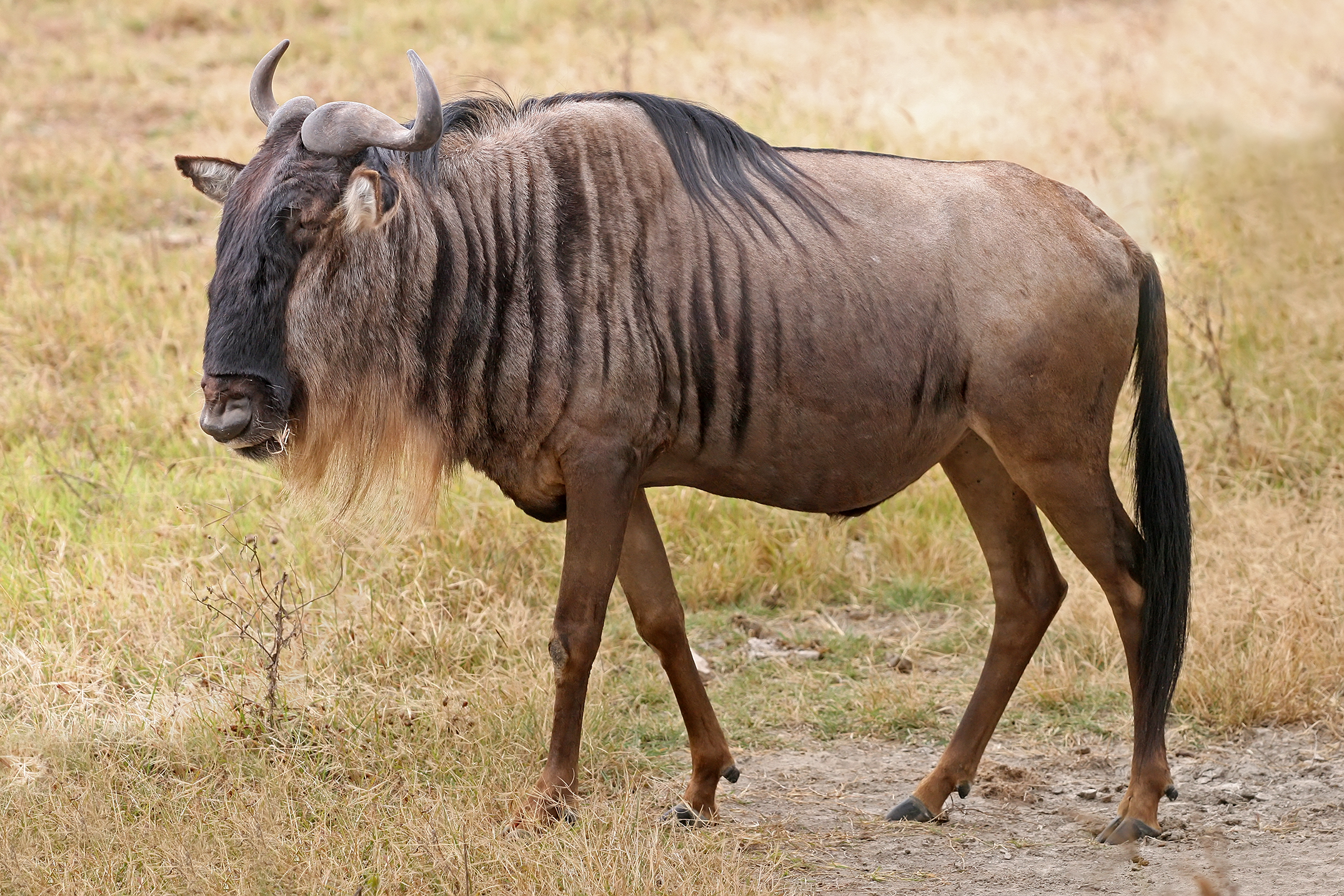 Photo Credit: Muhammad Mahdi Karim / Wikimedia Commons
In the heart of the African savanna, the wildebeest, scientifically known as Connochaetes, roams the vast grasslands in search of food and safety. With its sturdy, muscular body and distinctive curved horns, this remarkable animal is a true icon of the wild. Picture a scene where the sun rises over the horizon, casting a golden hue across the landscape, as thousands of wildebeests gather in massive herds, their deep grunts echoing through the air. These animals are not just a sight to behold; they play a crucial role in their ecosystem, shaping the environment around them as they graze on the lush grasses.
Wildebeests are fascinating not only for their striking appearance but also for their incredible migratory behavior. Each year, they embark on a perilous journey across the savanna, following the rains in search of fresh pastures. This migration, one of the largest on Earth, showcases their resilience and adaptability. Scientists and nature enthusiasts alike are captivated by their social structures and interactions, as these animals form strong bonds within their herds. As we delve deeper into the world of the wildebeest, we will explore their unique adaptations, behaviors, and the vital role they play in the African ecosystem, revealing why these magnificent creatures continue to inspire awe and curiosity in all who encounter them.
The wildebeest, known scientifically as Connochaetes, occupies a significant position in the animal kingdom. This large, hoofed mammal belongs to the family Bovidae, which includes other grazing animals like antelopes and cattle. What sets the wildebeest apart is its unique social behavior and migratory patterns. These animals are famous for their incredible migrations across the African savannas, where they travel in massive herds, often alongside zebras. This not only showcases their adaptability but also highlights their role in the ecosystem as grazers, helping to maintain the balance of their habitats.
| Taxonomic Rank | Scientific Name | Meaning & Significance |
|---|---|---|
| Kingdom | Animalia | This name signifies that wildebeests are part of the vast group of multicellular organisms known as animals, which are characterized by their ability to move and respond to their environment. |
| Phylum | Chordata | Chordata means “having a notochord,” a flexible rod that supports the body. This group includes all animals with a backbone, highlighting the wildebeest’s place among vertebrates. |
| Class | Mammalia | Mammalia refers to mammals, which are warm-blooded animals that have fur or hair and typically give live birth. This classification emphasizes the wildebeest’s nurturing traits, as mothers care for their young. |
| Order | Artiodactyla | Artiodactyla means “even-toed,” indicating that wildebeests have an even number of toes on each foot, which aids in their running and stability on varied terrains. |
| Family | Bovidae | Bovidae includes animals like antelopes and bison, known for their grazing habits. This classification reflects the wildebeest’s herbivorous diet and social grazing behavior. |
| Genus | Connochaetes | Connochaetes translates to “with a beard,” referring to the distinctive tuft of hair on the chin of wildebeests, which is a notable physical feature of these animals. |
Understanding the taxonomic classification of the wildebeest reveals much about its evolutionary journey. As a member of the Bovidae family, it shares common ancestry with other grazing animals, showcasing adaptations that have allowed it to thrive in the African landscape. The wildebeest’s unique features, such as its social structure and migratory behavior, are not just fascinating traits; they are essential for survival in a challenging environment. This classification helps us appreciate the intricate web of life and the evolutionary paths that have shaped the diverse species we see today.
The evolutionary journey of the wildebeest, or Connochaetes, stretches back millions of years, weaving through the rich tapestry of life on Earth. These fascinating animals belong to the Bovidae family, which includes a variety of hoofed mammals. The story of the wildebeest is one of adaptation and survival, shaped by the changing landscapes of Africa where they roam today.
Wildebeests share a common ancestor with other bovids, dating back to the late Miocene epoch, around 10 million years ago. Early ancestors of the wildebeest were more diverse in size and habitat, but over time, they evolved to thrive in the open grasslands and savannas of Africa. This transition involved significant changes in their physical structure and behavior, allowing them to become highly efficient grazers. As they adapted to their environment, they developed longer legs for speed and endurance, which are crucial for escaping predators.
These adaptations have been vital for the survival of wildebeests in the wild. Their long legs not only allow for quick escapes but also enable them to cover vast distances during migrations, which is essential for finding food and water. The social structure of herds provides safety from predators, while their specialized digestive systems ensure they can thrive on the grasses that dominate their habitats. Together, these traits have made the wildebeest a symbol of resilience and adaptability in the African landscape.
The wildebeest, a striking figure on the African savanna, presents a robust and muscular body that is both powerful and agile. With a sturdy frame, these animals can weigh between 136 to 272 kilograms, or 300 to 600 pounds, making them quite hefty. Their long legs are built for speed, allowing them to sprint away from predators when necessary. The wildebeest’s head is adorned with large, curved horns that can grow up to 80 centimeters long, giving them a distinctive silhouette against the golden grasslands. Their skin is covered in short, coarse hair, which helps them adapt to the varying temperatures of their environment.
| Feature | Description |
|---|---|
| Weight | 136-272 kg (300-600 lbs) |
| Skin Type | Short, coarse hair |
| Horns | Large, curved horns up to 80 cm long |
| Body Structure | Muscular and robust with long legs |
The combination of these features plays a crucial role in the wildebeest’s survival. Their powerful legs not only allow for quick escapes from predators but also enable them to traverse vast distances in search of food and water. The coarse hair helps protect their skin from the harsh sun and biting insects, while their impressive horns serve as both a defense mechanism and a display of strength during mating season. Together, these physical traits make the wildebeest a well-adapted inhabitant of the African plains, thriving in a challenging environment.
The wildebeest roams the vast grass plains and bush-covered savannas of Africa, where the horizon stretches endlessly under a brilliant blue sky. These open landscapes are dotted with acacia trees and patches of tall grasses, creating a perfect setting for these magnificent animals. The sound of rustling grass and the distant calls of other wildlife fill the air, making it a lively home for the wildebeest and their companions.
Wildebeests thrive in climates that offer a mix of wet and dry seasons. They prefer areas where rainfall is sufficient to support lush grasses, which are their primary food source. During the rainy season, the plains come alive with green vegetation, while the dry season forces these animals to migrate in search of water and fresh grazing grounds. This seasonal shift is crucial for their survival, as it helps them avoid drought and find the nutrients they need.
Adapted to their environment, wildebeests have developed several traits that help them flourish in the savanna. Their strong legs allow them to run swiftly, escaping predators like lions and hyenas. Additionally, their social behavior, often seen in large herds, provides safety in numbers. By moving together, they can better detect danger and protect each other. This combination of physical prowess and social structure makes the wildebeest a true survivor in the wild.
Wildebeests lead a life that revolves around the rhythm of the African savanna. Each day begins with the sun rising over the horizon, casting a golden glow on the vast grasslands. As the temperature warms, wildebeests emerge from their resting spots, often found in the shade of acacia trees. Their daily activities include grazing on the abundant grasses, moving in search of fresh pastures, and drinking from nearby water sources. This routine is not just about feeding; it’s a carefully choreographed dance of survival, where every action is influenced by the environment and the presence of predators.
Socially, wildebeests are highly gregarious animals, meaning they thrive in groups. They form large herds that can number in the thousands, creating a bustling community on the plains. Within these herds, wildebeests exhibit fascinating group dynamics. They communicate through a variety of vocalizations, body language, and even subtle movements. This social structure helps them stay alert to dangers, as more eyes can spot predators like lions or hyenas. The bonds formed within the herd are crucial, as they provide safety in numbers and a sense of belonging.
| Behavior Type | Description |
|---|---|
| Activity Patterns | Wildebeests graze during the cooler parts of the day, often moving to new areas to find fresh grass. They also drink water regularly, especially in the heat of the day. |
| Social Structure | Herds consist of females, their young, and a few dominant males. This structure helps protect the young and ensures that the strongest males can mate. |
| Communication Methods | Wildebeests communicate through grunts, snorts, and body movements. These sounds help alert the herd to potential threats and coordinate movements. |
The behaviors of wildebeests are finely tuned to enhance their chances of survival in the wild. By living in herds, they not only protect themselves from predators but also ensure that they can find food and water more efficiently. Their social interactions and communication methods create a network of awareness, allowing them to thrive in the challenging environment of the savanna. Each day is a testament to their adaptability and resilience, showcasing the intricate balance of life in the wild.
Wildebeests are herbivores, which means they primarily eat plants. Their diet mainly consists of grasses, leaves, and shoots. These animals are well-adapted to their environment, using their strong, sharp teeth to graze on the tough grasses that grow in their savanna habitats. Wildebeests are social eaters, often found in large herds, which helps them stay safe from predators while they munch on their favorite foods. They spend a significant part of their day foraging, moving from one patch of grass to another in search of the freshest and most nutritious bites.
| Dietary Aspect | Details |
|---|---|
| Diet Type | Herbivore |
| Favorite Foods | Grass, leaves, and shoots |
| Prey Items | None, as they are herbivores |
| Hunting/Foraging Strategies | Grazing in herds for safety and efficiency |
This plant-based diet plays a crucial role in the wildebeest’s ecology and daily routine. By grazing on grasses, they help maintain the health of the savanna ecosystem, promoting new growth and providing food for other herbivores. Their constant movement in search of fresh pastures also influences the migration patterns of various species in the region. As they travel in large groups, they create a dynamic environment that supports a diverse range of wildlife, making the wildebeest an essential player in the circle of life on the African plains.
Wildebeests have a fascinating mating behavior that is closely tied to the rhythm of the seasons. During the breeding season, which typically occurs from May to June, males gather in large groups to compete for the attention of females. They engage in displays of strength and agility, often clashing with one another in a show of dominance. This competitive spirit helps ensure that the strongest males pass on their genes. Once a female selects a mate, she will mate with him, and after a gestation period, she will give birth to a single calf.
| Reproductive Aspect | Details |
|---|---|
| Gestation Period | Approximately 7 to 8 months |
| Litter Size | 1 |
| Age of Maturity | About 1.5 years |
| Name of Young | Calf |
After giving birth, a mother wildebeest is incredibly attentive to her calf. The young are able to stand and walk shortly after birth, which is crucial for their survival in the wild. Mothers often keep their calves hidden in tall grass for the first few weeks to protect them from predators. As the calves grow, they begin to join the herd, learning essential survival skills from their mothers and other adults. By the time they reach maturity at around 1.5 years, they are well-prepared to navigate the challenges of life on the savanna, continuing the cycle of life for this iconic species.
Wildebeests play a crucial role in the African food web, serving as both grazers and prey. These large herbivores are a vital food source for many predators, helping to maintain the balance of their ecosystem. By feeding on grasses, they help keep the savanna healthy, while their presence supports a variety of carnivores that rely on them for survival. This interconnectedness highlights the importance of wildebeests in their natural habitat.
To defend themselves against these threats, wildebeests have developed several survival strategies. They often travel in large herds, which provides safety in numbers. When danger approaches, they can quickly change direction and run in different ways, making it harder for predators to catch them. Additionally, wildebeests have keen senses, allowing them to detect predators from a distance. Their strong legs enable them to sprint away at impressive speeds, helping them escape from the jaws of danger. Through these behaviors, wildebeests demonstrate their resilience and adaptability in the wild.
A keystone species is an organism that has a disproportionately large impact on its environment relative to its abundance. In the case of the wildebeest, or Connochaetes, this animal certainly qualifies as a keystone species in its ecosystem. By influencing the structure and function of the grasslands and savannas of Africa, wildebeests play a vital role in maintaining the health and balance of their habitats.
Wildebeests are herbivores that primarily graze on grasses, which helps to control plant growth and maintain the open landscape of the savanna. Their grazing habits prevent certain plant species from dominating the area, allowing a diverse range of flora to thrive. This diversity is crucial for many other species that depend on various plants for food and shelter. Additionally, wildebeests are known for their migratory behavior, traveling in large herds across the plains. This movement not only helps to spread seeds but also creates pathways that other animals can use, enhancing the overall connectivity of the ecosystem.
Moreover, wildebeests are a key food source for numerous predators, including lions, hyenas, and crocodiles. By being part of the food web, they help sustain these predator populations, which in turn regulate herbivore numbers and maintain ecological balance. The presence of wildebeests also attracts scavengers, such as vultures and jackals, who benefit from the remains of animals that fall prey to larger predators. This interconnectedness illustrates how the wildebeest’s role extends beyond its own survival, impacting many other species in the ecosystem.
If wildebeests were to disappear, the consequences would ripple throughout the ecosystem. Without their grazing, certain plant species could overgrow, leading to a decline in biodiversity. This change would affect not only the plants but also the many animals that rely on a variety of vegetation for food and habitat. Predators that depend on wildebeests for sustenance would struggle to find enough food, potentially leading to their decline as well. The entire balance of the savanna ecosystem could be disrupted, highlighting just how crucial wildebeests are to their environment.
The wildebeest, or Connochaetes, plays a vital role in shaping its ecosystem, particularly in the grass plains and bush-covered savannas of Africa. As a large herbivore, it occupies an ecological niche that involves grazing on grasses and other vegetation. This grazing behavior not only helps control plant growth but also creates a mosaic of habitats that benefit various other species. By moving in herds, wildebeests influence the distribution of nutrients in the soil, which supports a diverse array of life in their environment.
| Ecosystem Service | Impact |
|---|---|
| Grazing | Controls plant growth and promotes biodiversity |
| Nutrient Cycling | Redistributes nutrients through dung, enriching the soil |
| Prey for Predators | Supports the food web by providing sustenance for carnivores |
| Seed Dispersal | Helps in the spread of various plant species through dung |
Wildebeests significantly influence their environment in several ways. Their grazing habits prevent overgrowth of certain grasses, allowing a variety of plant species to thrive. This diversity is crucial for other animals that depend on different plants for food and shelter. Additionally, when wildebeests move across the savanna, they trample the ground, which can create new habitats for smaller creatures. Their dung, rich in nutrients, acts as a natural fertilizer, promoting healthy soil and encouraging the growth of new plants. This cycle of grazing, trampling, and nutrient cycling supports a vibrant ecosystem.
The broader ecological importance of wildebeests cannot be overstated. As a keystone species, their presence helps maintain the balance of the savanna ecosystem. Without them, the landscape would change dramatically, potentially leading to a decline in biodiversity. Their role in the food web supports not only predators like lions and hyenas but also scavengers that rely on their remains. By shaping their environment, wildebeests contribute to the health and resilience of the entire ecosystem, showcasing the interconnectedness of life on Earth.
In the intricate web of life on the African savanna, wildebeests engage in various partnerships with other species, showcasing the beauty of symbiosis. Symbiosis refers to the close interactions between different species, which can be beneficial, harmful, or neutral. These relationships are essential for the survival and thriving of many animals, including the wildebeest. By forming connections with other species, wildebeests not only enhance their own lives but also contribute to the health of their ecosystem.
| Species/Type | Relationship Type | Description |
|---|---|---|
| Oxpecker Birds | Mutualistic | Oxpeckers perch on wildebeests, eating ticks and parasites from their skin. In return, the birds get a meal, while the wildebeests enjoy relief from pests. |
| Acacia Trees | Commensal | Wildebeests graze near acacia trees, which provide shade and shelter. The trees benefit from the grazing, as it helps control their growth, but they are not directly affected by the wildebeests. |
| Hyenas | Parasitic | While hyenas primarily hunt wildebeests, they can also scavenge on carcasses. This relationship can be harmful to wildebeests, especially when they are weak or injured. |
The evolution of these relationships has been shaped by the needs and behaviors of the species involved. Over time, wildebeests have developed a mutualistic bond with oxpecker birds, which helps them stay healthy by reducing parasite loads. This partnership illustrates how species can adapt to benefit one another. Meanwhile, the relationship with acacia trees highlights a more neutral interaction, where both parties coexist without direct impact on each other. On the other hand, the predatory relationship with hyenas serves as a reminder of the harsh realities of survival in the wild. These dynamic interactions not only enhance the lives of the wildebeests but also contribute to the balance of the savanna ecosystem, showcasing the interconnectedness of life.
Wildebeests, also known as gnus, are fascinating animals that roam the African savanna in massive herds. Their unique behaviors and adaptations make them a captivating subject for nature enthusiasts of all ages.
Wildebeests, or gnus, have long held a special place in the hearts and minds of humans. Historically, these magnificent animals have been a source of inspiration and sustenance for various cultures across Africa. Indigenous peoples have revered wildebeests for their strength and resilience, often featuring them in folklore and art. The annual migration of wildebeests, one of the most spectacular wildlife events on the planet, has captivated the imagination of many, drawing tourists and researchers alike to witness this breathtaking journey across the savanna.
In contemporary times, the relationship between wildebeests and humans has evolved, marked by both cooperation and conflict. Conservation efforts are underway to protect these animals and their habitats, as they face threats from habitat loss and poaching. However, as human populations expand, clashes can occur, particularly in areas where livestock grazing overlaps with wildebeest migration routes. Some communities have even explored the domestication of wildebeests, recognizing their potential as livestock, though this practice remains limited. The balance between preserving these iconic animals and meeting human needs continues to be a pressing challenge.
As we look to the future, the relationship between wildebeests and humanity will likely continue to evolve. With increasing awareness of the importance of biodiversity and ecosystem health, there is hope for a more harmonious coexistence. By prioritizing conservation and sustainable practices, we can ensure that these remarkable animals thrive alongside human communities. The story of the wildebeest is not just about survival; it is a shared journey that highlights our interconnectedness with the natural world.
The conservation status of wildebeests, or gnus, is currently classified as Endangered. This designation indicates that their populations are facing significant threats, leading to a decline in numbers. While exact population estimates can be challenging to determine due to their migratory nature, it is believed that there are fewer than 500,000 wildebeests remaining in the wild. This decline is concerning, as it suggests that without effective conservation measures, these iconic animals could face even greater risks in the future.
| Conservation Factor | Status/Details |
|---|---|
| IUCN Status | Endangered |
| Population Estimates | Fewer than 500,000 |
| Trend Direction | Declining |
One of the main threats to wildebeests is habitat loss, primarily due to human activities such as agriculture and urban development. As more land is converted for farming or building, the open grasslands that wildebeests rely on for grazing are shrinking. Additionally, poaching poses a significant risk, as these animals are hunted for their meat and hides. Climate change also plays a role, altering weather patterns and affecting the availability of food and water sources, which can further stress wildebeest populations.
Conservation efforts are underway to protect wildebeests and their habitats. Organizations are working to establish protected areas and wildlife corridors that allow these animals to migrate safely. Education and awareness campaigns are also crucial, helping local communities understand the importance of preserving wildebeests and their ecosystems. With continued efforts and support, there is hope that wildebeest populations can stabilize and even recover, ensuring that these magnificent animals continue to roam the African savanna for generations to come.
| Question | Answer |
|---|---|
| What is the habitat of wildebeest? | Wildebeest primarily inhabit grass plains and bush-covered savanna. These open areas provide them with plenty of grass to graze on and space to roam in large herds. |
| What do wildebeest eat? | Wildebeest are herbivores, meaning they eat only plants. Their diet mainly consists of grasses, which they graze on throughout the day, helping to keep the grasslands healthy. |
| How do wildebeest behave in the wild? | Wildebeest are social animals that live in large herds, often numbering in the thousands. This behavior helps protect them from predators, as there is safety in numbers. |
| How do wildebeest reproduce? | Wildebeest have a unique breeding season, usually timed with the rainy season. Females give birth to a single calf after a gestation period of about eight months, and the calves can stand and run shortly after birth to escape predators. |
| What are the main threats to wildebeest? | Wildebeest face several threats, including habitat loss due to farming and human development. They are also vulnerable to predators like lions and hyenas, which can significantly impact their populations. |
| What are some interesting characteristics of wildebeest? | Wildebeest are known for their impressive migrations, where they travel long distances in search of food and water. This migration is one of the largest in the animal kingdom and is a spectacular sight to behold. |
| Are wildebeest endangered? | Wildebeest are currently classified as endangered due to their declining populations. Conservation efforts are crucial to protect their habitats and ensure their survival in the wild. |