Taxonomy & Classification
- Kingdom
- Animalia
- Phylum
- Chordata
- Class
- Mammalia
- Order
- Artiodactyla
- Family
- Bovidae
- Genus
- Bison
- Species
- Bison bison athabascae

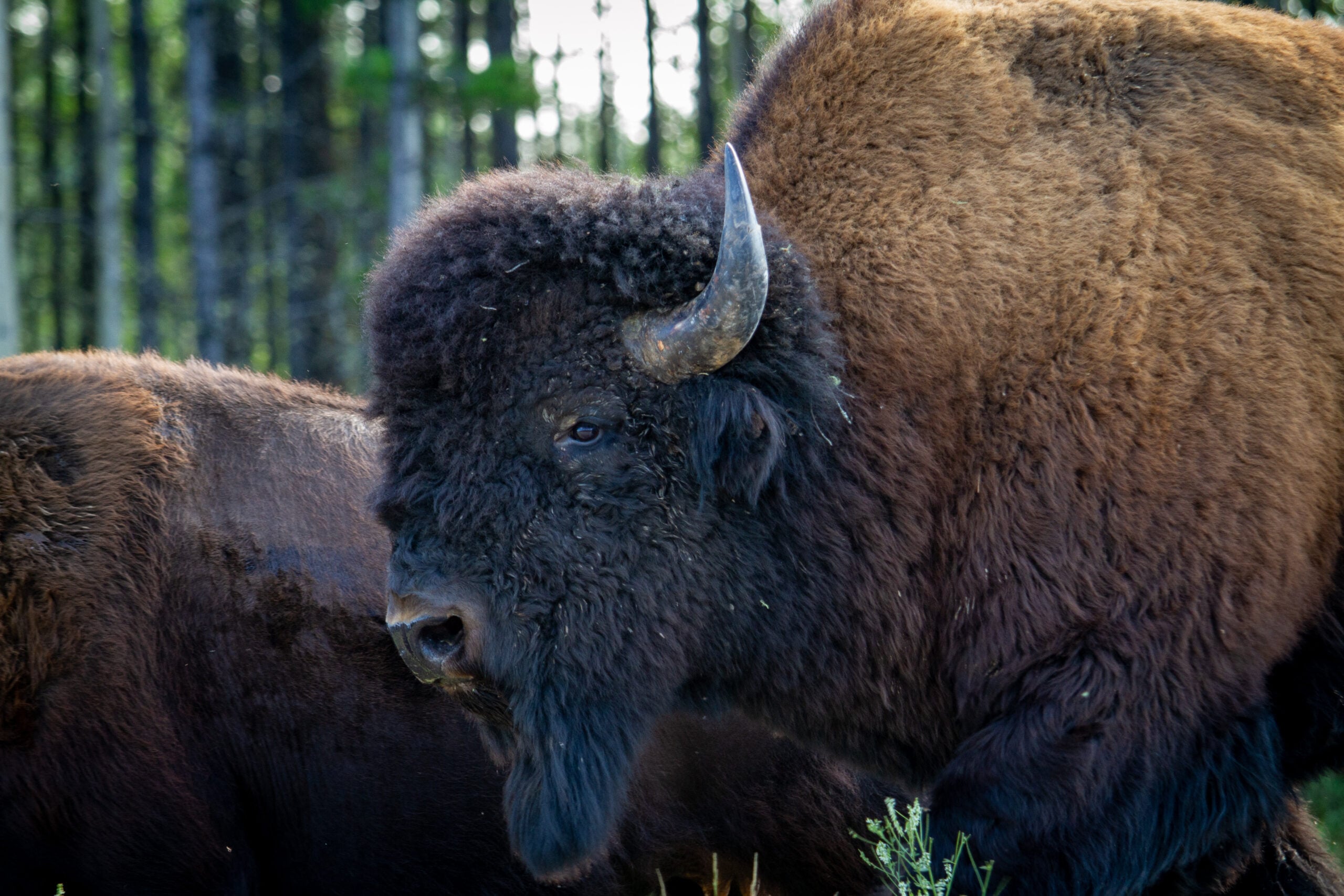 Photo Credit: Arthur T. LaBar from Central Kentucky, USA / Wikimedia
In the vast, open landscapes of North America’s cold steppe, the Wood Bison, scientifically known as Bison bison athabascae, roams majestically. Picture a scene where the sun rises over rolling grasslands, casting a golden hue on the thick, shaggy fur of these magnificent animals. Standing nearly two meters tall, or about nine feet, the Wood Bison is a sight to behold, with its massive frame and powerful build. Its distinctive hump, formed by strong muscles and bones, gives it a commanding presence, while its long, curved horns add to its rugged charm.
Scientists and nature enthusiasts alike are captivated by the Wood Bison not just for its impressive size, but also for its vital role in the ecosystem. As a keystone species, the Wood Bison helps shape its environment by grazing on grasses and other plants, which in turn supports a diverse range of wildlife. This grazing behavior creates open spaces that allow new plants to grow, fostering a rich habitat for many other species. The Wood Bison’s story is one of resilience and adaptation, making it a fascinating subject for those who seek to understand the intricate connections within nature. As we explore the life of the Wood Bison, we will uncover its behaviors, diet, and the challenges it faces in the wild, revealing the remarkable journey of this iconic animal.
The Wood Bison, a majestic and powerful animal, holds a significant place in the tree of life. Scientifically classified within the Kingdom Animalia, this impressive mammal is part of the Phylum Chordata, which includes all animals with a backbone. As a member of the Class Mammalia, Wood Bison share traits like warm-bloodedness and fur with other mammals. They belong to the Order Artiodactyla, which encompasses even-toed ungulates, meaning they have an even number of toes on each foot. Within the Family Bovidae, which includes animals like antelopes and goats, Wood Bison stand out as the largest land mammals in North America. Their classification not only highlights their physical characteristics but also their evolutionary journey through time.
| Taxonomic Rank | Scientific Name | Meaning & Significance |
|---|---|---|
| Kingdom | Animalia | This name comes from the Latin word “animalis,” meaning “having breath,” which reflects the living, breathing nature of all animals. |
| Phylum | Chordata | Derived from the Greek word “chordē,” meaning “string,” this term refers to the notochord, a flexible rod that supports the body in all chordates during some stage of development. |
| Class | Mammalia | This name comes from the Latin “mamma,” meaning “breast,” highlighting the defining feature of mammals: females nurse their young with milk. |
| Order | Artiodactyla | From the Greek “artios,” meaning “even,” and “daktulos,” meaning “finger,” this term describes animals with an even number of toes, like the Wood Bison. |
| Family | Bovidae | This name is derived from the Latin “bos,” meaning “cow,” which connects to the family’s members that are often large, grazing animals. |
| Genus | Bison | The name “Bison” comes from the Latin word for “wild ox,” emphasizing the animal’s robust build and its historical significance in the wild. |
The classification of the Wood Bison reveals much about its evolutionary history. As a member of the Bovidae family, it shares a common ancestor with other grazing animals, adapting over millions of years to thrive in the diverse habitats of North America. This lineage showcases the Wood Bison’s remarkable ability to survive in harsh environments, from the boreal forests to the tundra. Understanding its taxonomic position not only highlights its unique traits but also connects it to a broader narrative of life on Earth, illustrating how species evolve and adapt to their surroundings over time.
The evolutionary journey of the Wood Bison stretches back thousands of years, weaving through the tapestry of Earth’s history. These magnificent animals belong to the Bovidae family, which includes other hoofed mammals like antelopes and goats. The Wood Bison’s ancestors roamed the vast landscapes of North America, adapting to changing climates and environments over time. Their story is one of resilience and transformation, reflecting the dynamic nature of evolution.
The Wood Bison’s lineage can be traced to the ancient Bison species that first appeared around 2 million years ago during the Pleistocene Epoch, a time marked by glacial cycles and dramatic shifts in habitat. Early ancestors, like the Bison priscus, were larger and more robust, adapted to the cold, harsh conditions of the Ice Age. As the climate warmed and glaciers receded, these early bison evolved into various forms, including the steppe bison, which spread across the continent. Eventually, the Wood Bison emerged as a distinct species, adapting to the forests and grasslands of Canada and Alaska, where they developed traits suited for survival in these environments.
The adaptations of the Wood Bison have been crucial for their survival in the wild. Their thick fur not only shields them from the cold but also helps them maintain body heat, while their impressive size deters many potential predators. Living in herds enhances their safety, as they can work together to spot danger. Their specialized mouths and flexible diets enable them to thrive in diverse environments, ensuring they can find food even when resources are scarce. Together, these traits have allowed the Wood Bison to endure through the ages, a testament to the power of evolution in shaping life on Earth.
The Wood Bison is an awe-inspiring sight, embodying strength and resilience. Standing at an impressive height of about 2 meters, or 9 feet, these animals command attention with their massive frames. Their broad shoulders and thick necks give them a robust appearance, making them look even larger than they are. With a weight ranging from 544 to 907 kilograms, or 1,200 to 2,000 pounds, they are among the heaviest land mammals in North America. Their powerful build is complemented by a shaggy coat of hair that adds to their rugged charm, making them well-suited for the cold environments they often inhabit.
| Feature | Description |
|---|---|
| Height | Approximately 2 meters (9 feet) |
| Weight | Between 544 kg and 907 kg (1,200 lb to 2,000 lb) |
| Skin Type | Covered in thick, shaggy hair |
| Distinctive Feature | Huge shoulders and a sizeable neck |
The Wood Bison’s impressive physical features are not just for show; they play crucial roles in its survival. The thick, shaggy hair provides insulation against harsh winter temperatures, keeping the animal warm in its often frigid habitat. Their powerful shoulders and necks are essential for foraging, allowing them to push through snow and reach vegetation hidden beneath. This combination of size and strength helps them navigate their environment effectively, ensuring they can find food and protect themselves from predators. In essence, every aspect of the Wood Bison’s form is a testament to its adaptation and survival in the wild.
The Wood Bison roams the vast, open landscapes of the cold steppe, a habitat characterized by its flat terrain and sparse vegetation. Imagine wide expanses of grasslands, dotted with hardy shrubs and the occasional cluster of trees. This environment is often chilly, with long winters and short summers, creating a unique ecosystem where only the toughest plants and animals can thrive. The Wood Bison’s home is a place where the sky stretches endlessly, and the air is crisp and invigorating, perfect for these magnificent animals to roam freely.
The climate in these regions is quite extreme, with temperatures that can plummet during the winter months. Wood Bison are well-suited to endure these harsh conditions, as they thrive in environments that experience cold, dry weather. The steppe is often windy, and the bison have adapted to withstand the chill, relying on their thick fur coats to keep warm. During the summer, the temperatures can rise, but the bison are well-equipped to handle the seasonal changes, finding shade and water to stay cool.
These magnificent animals have developed several adaptations that help them survive in their cold steppe habitat. Their large, muscular bodies are designed to conserve heat, while their broad hooves allow them to traverse snowy terrain with ease. Wood Bison are also social animals, often found in herds, which provides safety in numbers against predators. Their grazing habits enable them to thrive on the tough grasses and shrubs that grow in their environment, making them perfectly suited to life in the wild, open spaces of Canada and Alaska.
The daily life of a Wood Bison is a blend of grazing, socializing, and resting, all set against the backdrop of their expansive, grassy habitats. As dawn breaks, these large mammals begin their day by foraging for food, munching on the tough grasses and shrubs that make up their diet. They are most active during the cooler parts of the day, often seen moving in groups to find the best grazing spots. As the sun rises higher, they take breaks to ruminate, a process where they chew their food again to aid digestion. This routine of eating, resting, and social interaction is essential for their well-being.
Wood Bison are highly social animals, living in herds that can range from a few individuals to several dozen. These groups are often led by a dominant female, who plays a crucial role in guiding the herd to food and water sources. Within the herd, bison communicate through a variety of sounds, including grunts and snorts, which help maintain group cohesion. They also engage in physical displays, such as head-butting or rubbing against each other, to strengthen social bonds. This social structure not only provides safety in numbers but also fosters relationships that are vital for their survival.
| Behavior Type | Description |
|---|---|
| Activity Patterns | Wood Bison are most active during the early morning and late afternoon, grazing and foraging for food while resting during the heat of the day. |
| Social Structure | Herds are typically led by a dominant female, with strong social bonds formed through interactions and communication. |
| Communication Methods | Bison use a range of vocalizations, such as grunts and snorts, along with physical behaviors like head-butting to communicate with one another. |
The behaviors of Wood Bison are finely tuned to ensure their survival in the wild. By living in herds, they benefit from the safety of numbers, which helps protect them from predators. Their social interactions not only strengthen bonds within the group but also enhance their ability to find food and navigate their environment. This combination of foraging, resting, and socializing creates a dynamic lifestyle that is essential for thriving in the challenging landscapes they call home.
The Wood Bison is a dedicated herbivore, meaning it primarily eats plants. These magnificent animals have a diet that mainly consists of grasses, sedges, and other herbaceous plants. They are well-adapted to their cold, northern habitats, where they graze on the tough vegetation that thrives in these environments. Wood Bison are known for their strong, muscular bodies, which allow them to travel long distances in search of food. Their feeding behavior is characterized by a slow, methodical approach, as they carefully select the most nutritious plants available.
| Dietary Aspect | Details |
|---|---|
| Diet Type | Herbivore |
| Favorite Foods | Grasses, sedges, and other herbaceous plants |
| Prey Items | None (as a herbivore, it does not hunt) |
| Foraging Strategies | Grazing and browsing in open grasslands |
The Wood Bison’s diet plays a crucial role in shaping its ecology and daily routine. By grazing on grasses and other plants, they help maintain the health of their grassland ecosystems. Their feeding habits promote new plant growth, which benefits not only themselves but also other herbivores that share their habitat. Additionally, their movements across the landscape help to aerate the soil, allowing for better water absorption and nutrient cycling. This interconnectedness highlights the importance of the Wood Bison in their environment, making them a vital part of the northern ecosystems they inhabit.
When it comes to the mating behavior of Wood Bison, the breeding season is a lively time filled with activity. Typically, this season occurs in late summer to early fall, around July to September. During this period, males engage in impressive displays to attract females. They may bellow loudly, stomp their hooves, and even engage in sparring matches with other males. These contests showcase their strength and dominance, helping females choose the strongest mate. Once a female selects her partner, the two will mate, setting the stage for the arrival of new life.
| Reproductive Aspect | Details |
|---|---|
| Gestation Period | 270 days |
| Litter Size | 1 |
| Age of Sexual Maturity | 24 months |
| Name of Young | Calves |
After a lengthy gestation period of about 270 days, a single calf is born, usually in late spring. This timing allows the young bison to take advantage of the lush, green pastures that spring brings. The mother is highly attentive, providing warmth and protection to her calf. As the young bison grows, it learns essential survival skills by observing its mother and the herd. Within two years, the calf reaches sexual maturity, ready to continue the cycle of life. The bond between mother and calf is strong, ensuring that the next generation of Wood Bison thrives in their natural habitat.
The Wood Bison plays a vital role in its ecosystem, primarily as a herbivore that helps shape the landscape by grazing on grasses and other plants. This grazing not only provides food for the bison but also creates habitats for other species. However, despite its size and strength, the Wood Bison faces several dangers that threaten its survival in the wild.
To defend themselves against these threats, Wood Bison have developed several survival strategies. Adult bison are large and powerful, making them formidable opponents for most predators. When threatened, they can run at speeds of up to 35 miles per hour, using their strength to fend off attackers. Additionally, they often form herds, which provides safety in numbers. By staying close together, they can protect their young and deter potential threats, showcasing the power of community in the animal kingdom.
A keystone species is an organism that has a disproportionately large impact on its environment relative to its abundance. In other words, if a keystone species were to disappear, the entire ecosystem could change dramatically. The Wood Bison qualifies as a keystone species due to its significant role in shaping the habitats it occupies and influencing the lives of many other organisms.
Wood Bison are herbivores that primarily graze on grasses and other plants in the cold steppe habitats they call home. By feeding on these plants, they help maintain the balance of the ecosystem. Their grazing prevents certain plant species from dominating the landscape, allowing a variety of plants to thrive. This diversity is crucial because it supports a wide range of other wildlife, from insects to birds, all of which rely on different plants for food and shelter.
Moreover, Wood Bison contribute to soil health through their grazing habits. As they move across the landscape, they trample the ground, which can help aerate the soil and promote new plant growth. Their droppings also enrich the soil with nutrients, creating a more fertile environment for plants to flourish. This nutrient cycling is essential for maintaining the health of the entire ecosystem.
Additionally, Wood Bison serve as prey for large predators, such as wolves and bears. By being part of the food web, they help sustain these predator populations, which in turn keeps herbivore populations in check. This balance is vital for the overall health of the ecosystem, ensuring that no single species overwhelms the environment.
If Wood Bison were to disappear, the consequences would ripple throughout the ecosystem. Without their grazing, certain plant species could overgrow, leading to a decline in plant diversity. This loss would affect many other animals that depend on a variety of plants for food and shelter. Additionally, the absence of Wood Bison would disrupt the balance of predator and prey relationships, potentially leading to overpopulation of some herbivores and a decline in predator species. The entire ecosystem would face significant changes, highlighting just how crucial the Wood Bison is to its environment.
The Wood Bison occupies a crucial ecological niche in the cold steppe habitats of North America. As a large herbivore, it plays a vital role in shaping the landscape and influencing the dynamics of its ecosystem. By grazing on grasses and other plants, the Wood Bison helps maintain the balance of plant life, ensuring that no single species dominates the area. This grazing behavior not only supports the health of the grasslands but also creates a diverse environment that benefits many other species.
| Ecosystem Service | Impact |
|---|---|
| Grazing | Controls plant growth and promotes biodiversity |
| Soil Aeration | Improves soil health through trampling |
| Nutrient Cycling | Contributes to nutrient distribution via dung |
| Habitat Creation | Creates open spaces for other species |
The influence of the Wood Bison extends beyond its immediate actions. For instance, as these animals graze, they prevent certain grasses from overtaking the landscape, allowing a variety of plant species to thrive. This diversity is essential for many smaller animals and insects that rely on different plants for food and shelter. Additionally, when Wood Bison move through their habitat, they trample the ground, which helps aerate the soil. This process allows water and nutrients to penetrate deeper, benefiting the entire ecosystem. Their dung also plays a significant role, as it enriches the soil and provides a habitat for various organisms, including insects and fungi.
The broader ecological importance of the Wood Bison cannot be overstated. As a keystone species, their presence is vital for maintaining the health and stability of the cold steppe ecosystem. If Wood Bison were to disappear, the consequences would ripple through the environment, potentially leading to a decline in plant diversity and the animals that depend on those plants. By understanding and protecting the Wood Bison, we not only safeguard this magnificent animal but also the intricate web of life that thrives in its presence.
In the intricate web of life, symbiosis refers to the close interactions between different species, which can take many forms. These relationships can be mutualistic, where both species benefit, parasitic, where one benefits at the expense of the other, or commensal, where one benefits while the other is neither helped nor harmed. The Wood Bison, a magnificent herbivore of the cold steppe, engages in various ecological partnerships that highlight the interconnectedness of nature. These relationships not only enhance the survival of the Wood Bison but also contribute to the health of their ecosystem.
| Species/Type | Relationship Type | Description |
|---|---|---|
| Birds (e.g., oxpeckers) | Mutualistic | These birds feed on parasites found on the bison’s skin, helping to keep the bison healthy while enjoying a meal. |
| Plants (grasses and sedges) | Commensal | The bison graze on these plants, which thrive in the nutrient-rich soil enriched by the bison’s droppings, benefiting from their presence. |
| Ticks | Parasitic | Ticks latch onto the bison to feed on their blood, which can harm the bison by causing irritation and potential disease. |
The evolution of these relationships showcases the dynamic nature of ecosystems. Over time, Wood Bison have developed partnerships that enhance their survival and well-being. Mutualistic relationships, like those with birds, help keep the bison free from harmful parasites, while the plants benefit from the nutrients provided by the bison’s grazing habits. However, not all interactions are beneficial; parasites like ticks can pose threats to the bison’s health. Understanding these connections helps us appreciate the delicate balance of life in the cold steppe and the vital roles each species plays in maintaining that balance.
The Wood Bison is a fascinating animal that captures the imagination with its impressive size and unique behaviors. Here are some surprising facts that showcase just how remarkable this species truly is.
The Wood Bison has a rich history intertwined with human culture, particularly among Indigenous peoples of North America. For centuries, these majestic animals were not just a source of food but also held deep spiritual significance. Tribes relied on the bison for sustenance, using every part of the animal for food, clothing, and tools. The bison’s presence in their lives shaped their traditions, stories, and even their economies. As a symbol of strength and resilience, the Wood Bison became a central figure in many cultural narratives, representing the connection between nature and humanity.
Today, the relationship between Wood Bison and humans is complex and evolving. Conservation efforts are underway to protect these magnificent creatures, as they were once on the brink of extinction due to overhunting and habitat loss. Organizations and governments are working together to restore bison populations and their habitats, recognizing their importance in maintaining ecological balance. However, conflicts can arise, especially when bison wander into agricultural areas, leading to tensions between conservation goals and farming interests. Some ranchers have even explored the idea of domestication, seeing the potential for bison farming as a sustainable alternative to traditional cattle ranching.
As we look to the future, the relationship between Wood Bison and humanity holds promise. With continued efforts in conservation and education, we can foster a deeper understanding of these animals and their role in our ecosystems. By embracing sustainable practices and respecting the cultural significance of the bison, we can ensure that future generations will not only witness the grandeur of the Wood Bison but also appreciate the vital connection we share with them. Together, we can create a harmonious balance that honors both the bison and the landscapes they inhabit.
The Wood Bison, a symbol of strength and resilience, currently holds a conservation status of “Least Concern.” This means that, while they are not facing immediate extinction, their populations are still being monitored closely. Recent estimates suggest that there are about 11,000 Wood Bison roaming the wild. This number reflects a positive trend, as conservation efforts have helped stabilize and even increase their populations in certain areas.
| Conservation Factor | Status/Details |
|---|---|
| IUCN Status | Least Concern |
| Estimated Population Size | 11,000 |
| Population Trend | Increasing |
Despite their current stable status, Wood Bison face several threats that could impact their future. Habitat loss due to human activities, such as agriculture and urban development, poses a significant risk. Additionally, climate change can alter their habitats and food sources, making survival more challenging. Diseases, particularly those that can spread from domestic livestock, also threaten their health and population stability.
Conservation efforts are actively underway to ensure the Wood Bison continues to thrive. Organizations and governments are working together to protect their habitats and manage populations effectively. Reintroduction programs have been successful in some regions, allowing these magnificent animals to reclaim parts of their historical range. With ongoing commitment and awareness, the outlook for the Wood Bison remains hopeful, as they continue to roam the vast landscapes of North America.
| Question | Answer |
|---|---|
| What is the habitat of the Wood Bison? | Wood Bison primarily inhabit cold steppe regions, which are characterized by vast grasslands and sparse trees. These areas provide the open space they need to graze and roam freely. |
| What do Wood Bison eat? | Wood Bison are herbivores, meaning they primarily eat plants. Their diet consists mainly of grasses, sedges, and other vegetation found in their natural habitat. |
| How do Wood Bison behave in the wild? | Wood Bison are social animals that often form herds, especially during the summer months. They communicate through various vocalizations and body language, and they can be quite protective of their young. |
| How do Wood Bison reproduce? | Wood Bison typically mate in the summer, with females giving birth to a single calf after a gestation period of about nine months. Calves are able to stand and walk shortly after birth, which helps them keep up with the herd. |
| What threats do Wood Bison face? | While Wood Bison are currently classified as Least Concern, they still face threats from habitat loss and climate change. Additionally, diseases from domestic livestock can pose risks to their populations. |
| What is a distinctive feature of the Wood Bison? | The Wood Bison is known for its huge shoulders and sizeable neck, which give it a powerful appearance. This distinctive feature helps it navigate through its rugged habitat and assert dominance within the herd. |
| Are Wood Bison endangered? | Wood Bison are not considered endangered and are classified as Least Concern. However, conservation efforts are important to maintain their populations and protect their habitats from further degradation. |