Taxonomy & Classification
- Kingdom
- Animalia
- Phylum
- Chordata
- Class
- Mammalia
- Order
- Artiodactyla
- Family
- Bovidae
- Genus
- Bos
- Species
- Bos grunniens

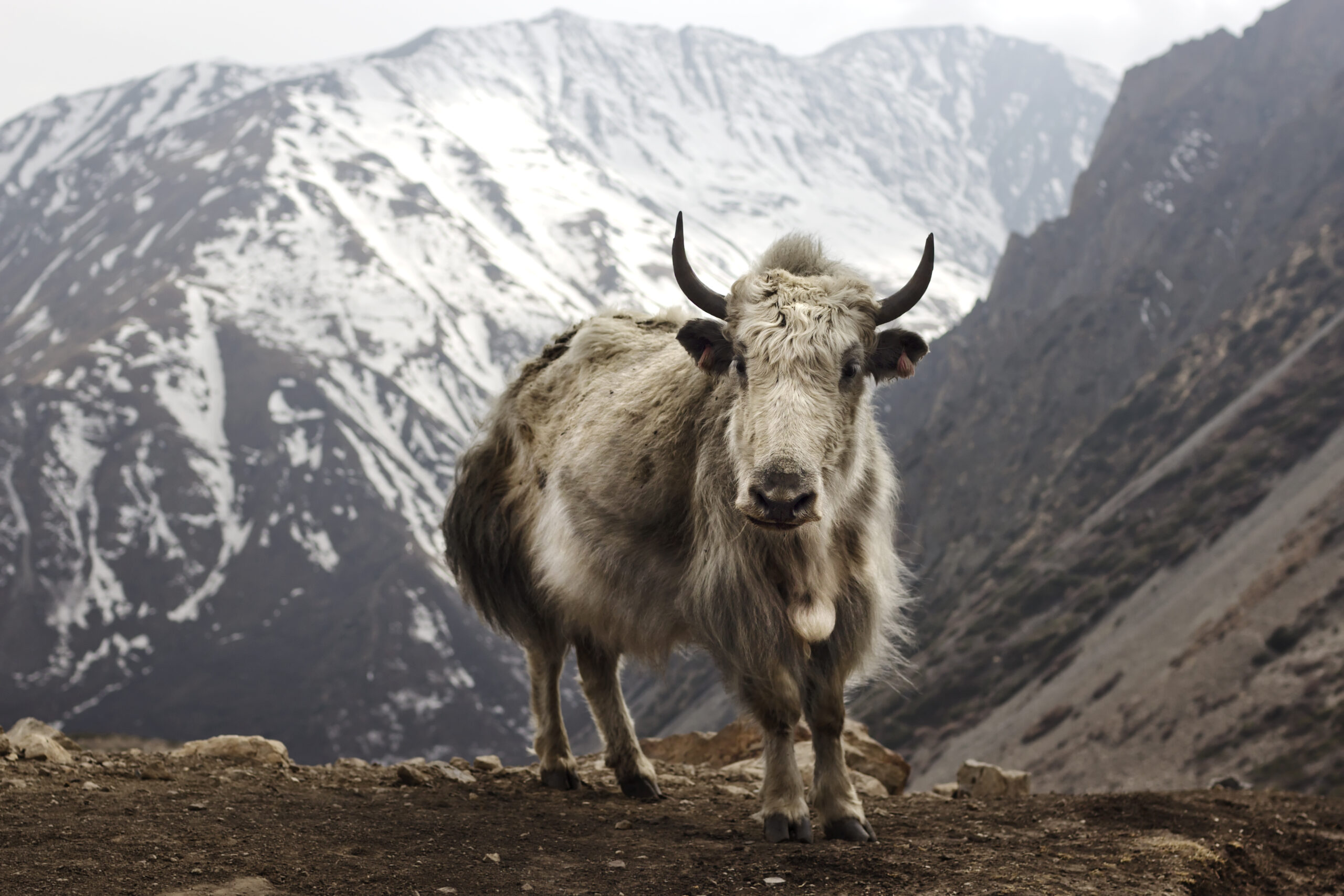 Photo Credit: Bruce1ee / Wikimedia Commons
In the rugged heights of the Himalayas, the yak, scientifically known as Bos grunniens, stands as a symbol of strength and resilience. With its long, shaggy coat that sways in the brisk mountain winds and its impressive curved horns, the yak is perfectly adapted to thrive in one of the harshest environments on Earth. Imagine a vast landscape where the air is thin and crisp, dotted with rocky outcrops and lush patches of grass. Here, yaks roam in herds, their deep grunts echoing through the valleys, creating a symphony of life in this breathtaking wilderness.
What makes the yak so captivating to scientists and nature lovers alike is not just its striking appearance but also its remarkable adaptations. These sturdy animals can weigh up to 2,000 pounds, making them one of the largest mammals in their region. Their thick fur keeps them warm in freezing temperatures, while their broad hooves help them navigate the rocky terrain with ease. Yaks are herbivores, primarily feeding on grasses and mosses, which they expertly find even in the most challenging conditions. As we explore the world of yaks, we will uncover their fascinating behaviors, their vital role in the ecosystem, and the deep connection they share with the people who depend on them for survival.
The yak holds a special place in the tree of life, showcasing its unique adaptations and evolutionary journey. Classified within the kingdom Animalia, yaks belong to the phylum Chordata, which includes all animals with a backbone. As mammals, they are part of the class Mammalia, characterized by their warm-blooded nature and fur-covered bodies. Yaks are further classified in the order Artiodactyla, which consists of even-toed ungulates, like cows and deer. Their family, Bovidae, includes animals known for their horns and grazing habits. The genus Bos, which yaks belong to, highlights their close relationship with domestic cattle. This classification not only emphasizes their biological traits but also their role in the ecosystems of the high-altitude regions they inhabit.
| Taxonomic Rank | Scientific Name | Meaning & Significance |
|---|---|---|
| Kingdom | Animalia | From the Latin word “animalis,” meaning “having breath,” highlighting the living nature of these organisms. |
| Phylum | Chordata | Derived from the Greek word “chordē,” meaning “string,” referring to the notochord, a flexible rod that supports the body in the early stages of development. |
| Class | Mammalia | From the Latin “mamma,” meaning “breast,” indicating that these animals nurse their young with milk. |
| Order | Artiodactyla | From the Greek “artios,” meaning “even,” and “daktulos,” meaning “finger,” referring to the even number of toes on their feet. |
| Family | Bovidae | From the Latin “bos,” meaning “cow,” which reflects the family’s association with cattle and similar animals. |
| Genus | Bos | Also derived from the Latin word for “cow,” emphasizing the yak’s close ties to domesticated cattle. |
The classification of the yak reveals much about its evolutionary history and ecological niche. As a member of the Bovidae family, yaks share common ancestors with other grazing animals, which have adapted to thrive in diverse environments. Their classification underscores their adaptations to high-altitude habitats, where they have developed thick fur and a robust body to withstand harsh conditions. Understanding where yaks fit in the tree of life not only highlights their biological significance but also their role in the ecosystems they inhabit, showcasing the intricate connections that bind all living organisms together.
The evolutionary journey of the yak stretches back millions of years, weaving through the rugged landscapes of Central Asia. This remarkable animal, part of the Bovidae family, has adapted to some of the harshest environments on Earth. The story of the yak is one of survival, resilience, and transformation, reflecting the dynamic interplay between species and their habitats over time.
Yaks are descendants of ancient bovids that roamed the Earth during the late Miocene epoch, around 10 million years ago. These early ancestors were likely similar to modern wild cattle, but as they migrated to the high-altitude regions of the Himalayas and Tibetan Plateau, they underwent significant changes. Over time, they developed thick, long fur to insulate against the biting cold and a stocky build to navigate rocky terrains. Their ability to thrive in such extreme conditions is a testament to the power of evolution, as these adaptations allowed them to exploit resources that few other animals could.
The adaptations of the yak have been vital for its survival in the unforgiving climates of the Tibetan Plateau and surrounding regions. Their thick fur not only shields them from the cold but also helps them retain body heat, while their large lungs enable them to thrive where oxygen is scarce. Strong hooves allow yaks to navigate steep, rocky terrains with ease, and their social behavior fosters cooperation and safety within herds. Together, these traits illustrate how evolution shapes life, equipping species to meet the challenges of their environments and ensuring their continued existence.
The yak is an impressive sight, embodying strength and resilience in its robust form. With a sturdy body built for the harsh climates of the Himalayas, yaks are large, powerful animals that can weigh anywhere from 496 to 2,200 pounds. Their broad shoulders and thick legs support a hefty frame, while their long, shaggy hair drapes down like a warm blanket, providing insulation against the biting cold. The yak’s large, curved horns add to its majestic appearance, framing a face that is both gentle and formidable.
| Feature | Description |
|---|---|
| Weight | 496-2,200 lbs (225-1,000 kg) |
| Skin Type | Hair |
These physical characteristics are not just for show; they play vital roles in the yak’s survival. The thick hair acts as a natural insulator, keeping the animal warm in frigid temperatures, while its substantial weight and muscular build help it navigate the rugged terrain of its mountainous habitat. The curved horns serve as both a defense mechanism against predators and a tool for establishing dominance within herds. Together, these features create a well-adapted animal that thrives in one of the harshest environments on Earth.
The yak thrives in the breathtaking heights of the mountains and plateaus of Central Asia. Picture vast, open spaces where the air is crisp and the landscape is dotted with rocky outcrops and grassy meadows. These majestic animals roam freely in regions that are often shrouded in mist, surrounded by towering peaks that touch the sky. The scenery is as rugged as it is beautiful, with the sun casting long shadows over the undulating terrain, creating a perfect home for these hardy mammals.
The climate in these regions is often extreme, with cold temperatures and strong winds that can whip through the valleys. Yaks are well-suited to endure these conditions, as they are accustomed to high altitudes where the air is thin and oxygen levels are lower. The environment can be harsh, with heavy snowfall in winter and a short growing season for vegetation, but yaks have evolved to thrive in this challenging habitat.
To survive in such demanding surroundings, yaks have developed several remarkable adaptations. Their thick, long fur acts as a natural insulator, keeping them warm during frigid nights. They also have large lungs and a strong heart, which help them breathe efficiently in the thin mountain air. Additionally, their sturdy hooves are designed to navigate rocky terrain, allowing them to traverse steep slopes with ease. These adaptations not only help yaks survive but also enable them to flourish in one of the most breathtaking yet challenging environments on Earth.
Yaks lead a daily life that revolves around their herd, a tight-knit group that provides safety and companionship. As the sun rises over the rugged mountains, these magnificent animals begin their day by grazing on the nutrient-rich grasses and shrubs that dot their high-altitude habitat. They spend several hours munching on vegetation, which is essential for their energy needs. Yaks are ruminants, meaning they have a special stomach that allows them to digest tough plant material efficiently. After a hearty breakfast, they often engage in social grooming, a behavior that strengthens bonds within the herd and helps keep their thick fur clean.
Social behavior is a cornerstone of yak life. These animals are highly social and prefer to live in herds, which can range from a few individuals to several dozen. Within these groups, yaks establish a clear social hierarchy, with dominant individuals leading the way during foraging and migration. Communication is vital in these herds, and yaks use a variety of sounds, from low grunts to high-pitched calls, to convey messages. They also rely on body language, such as head movements and postures, to express their feelings and intentions. This social structure not only fosters cooperation but also enhances their ability to detect predators and respond to threats.
| Behavior Type | Description |
|---|---|
| Activity Patterns | Yaks graze for several hours each day, primarily in the morning and late afternoon, when temperatures are cooler. |
| Social Structure | Yaks live in herds with a clear hierarchy, where dominant individuals lead and protect the group. |
| Communication Methods | They communicate through a range of vocalizations and body language, helping to maintain group cohesion and alert others to danger. |
The behaviors of yaks are finely tuned to ensure their survival in the harsh environments they inhabit. By living in herds, they benefit from collective vigilance against predators, while their social interactions foster strong bonds that enhance group stability. Their grazing habits and communication skills not only support their daily needs but also play a crucial role in the overall health and safety of the herd. In the wild, every action counts, and yaks exemplify how cooperation and social structure can lead to thriving in even the most challenging conditions.
Yaks are herbivores, which means they primarily eat plants. Their diet mainly consists of grasses, herbs, and mosses, making them well-suited for the high-altitude environments they inhabit. Yaks are equipped with strong, flat teeth that help them graze on tough vegetation. They spend a significant part of their day foraging, using their keen sense of smell to locate the best patches of food. This feeding behavior is essential for their survival, especially in the harsh climates of the Himalayas, where food can be scarce.
| Dietary Aspect | Details |
|---|---|
| Diet Type | Herbivore |
| Favorite Foods | Grass, herbs, and mosses |
| Prey Items | None (as they are herbivores) |
| Hunting/Foraging Strategies | Grazing and foraging in herds |
The yak’s diet plays a crucial role in shaping its ecology and daily routine. By grazing on various plants, yaks help maintain the health of their mountainous habitats. Their feeding habits promote the growth of new vegetation, which benefits other animals in the ecosystem. Additionally, the time spent foraging in herds fosters social bonds among yaks, enhancing their sense of community. This interconnectedness highlights the importance of their diet not just for individual survival, but for the overall balance of their environment.
When it comes to reproduction, yaks have a specific breeding season that typically occurs in the summer months, around June to August. During this time, males, known as bulls, engage in a variety of courtship behaviors to attract females, or cows. These behaviors can include vocalizations, displays of strength, and even physical confrontations with other males. Once a female is successfully courted, mating occurs, and the cycle of life begins anew.
| Reproductive Aspect | Details |
|---|---|
| Gestation Period | Approximately 9 months |
| Litter Size | 1 |
| Age of Maturity | 2 to 3 years |
| Name of Young | Calf |
After a gestation period of about nine months, a single calf is born. Yak mothers are incredibly attentive, providing warmth and protection to their young in the harsh mountain environment. The calves are able to stand and walk shortly after birth, which is crucial for their survival in the wild. As they grow, they stay close to their mothers, learning essential skills and social behaviors within the herd. By the age of two to three years, these young yaks reach maturity, ready to embark on their own journeys in the rugged landscapes they call home.
The yak occupies a vital role in its ecosystem, sitting near the base of the food web in its high-altitude habitat. As a herbivore, it primarily feeds on grasses and other vegetation, which helps support the energy flow in its environment. However, yaks are not without their dangers. They face threats from various predators and environmental challenges that can impact their survival.
To defend themselves against these threats, yaks have developed several survival strategies. They often travel in herds, which provides safety in numbers and makes it harder for predators to single out an individual. When threatened, yaks can use their powerful bodies to charge at attackers, showcasing their strength. Additionally, their thick fur keeps them warm in frigid temperatures, allowing them to thrive in harsh conditions. By staying alert and using their natural instincts, yaks continue to navigate the challenges of their rugged environment.
A keystone species is an organism that plays a critical role in maintaining the structure of its ecosystem. This means that its presence and activities significantly influence the environment and the other species living there. The yak, with its unique adaptations to high-altitude habitats, qualifies as a keystone species in the mountainous regions of Central Asia. Its impact on the ecosystem is profound, affecting everything from vegetation to the animals that share its habitat.
Yaks are herbivores, meaning they primarily eat plants, and their grazing habits help shape the landscape. By feeding on grasses and herbs, yaks prevent overgrowth, allowing a variety of plant species to thrive. This grazing behavior creates a diverse plant community, which in turn supports a wide range of other animals. For example, smaller herbivores benefit from the open spaces created by yaks, as they can find food more easily. Additionally, the nutrients from yak droppings enrich the soil, promoting healthy plant growth and supporting the entire ecosystem.
The yak’s role extends beyond just plant life. Their presence also influences predator-prey dynamics. Larger predators, such as wolves, rely on yaks as a food source. If yaks were to disappear, these predators would face a significant food shortage, which could lead to a decline in their populations. Furthermore, the absence of yaks would disrupt the balance of the ecosystem, potentially leading to overpopulation of certain plant species and a decline in biodiversity.
If yaks were to vanish from their mountainous homes, the consequences would ripple through the ecosystem. Without their grazing, certain plants could dominate the landscape, choking out other species and reducing biodiversity. This shift would not only affect the plants but also the animals that depend on a variety of vegetation for survival. Predators would struggle to find food, leading to a decline in their populations. In essence, the disappearance of yaks would create an imbalance, transforming the vibrant ecosystem into a less diverse and less resilient environment.
The yak is a fascinating animal that plays a crucial role in shaping its ecosystem, particularly in the high-altitude regions of Central Asia. As a herbivore, it primarily feeds on grasses and other vegetation, which helps maintain the balance of plant life in its mountainous habitat. By grazing, yaks prevent certain plants from dominating the landscape, allowing a diverse range of species to thrive. This grazing behavior not only supports the health of the grasslands but also creates a habitat for other animals and plants, making the yak an essential part of its ecological niche.
| Ecosystem Service | Impact |
|---|---|
| Grazing | Controls plant growth and promotes biodiversity |
| Soil Fertilization | Contributes nutrients through manure, enhancing soil quality |
| Seed Dispersal | Helps spread plant seeds through their movement and droppings |
| Habitat Creation | Provides shelter and food for other species in the ecosystem |
Yaks influence their environment in several specific ways. For instance, their grazing habits help maintain the health of alpine meadows, which are home to a variety of plant species. By eating certain grasses, yaks encourage the growth of other plants that might otherwise be overshadowed. Additionally, their manure acts as a natural fertilizer, enriching the soil and promoting the growth of new vegetation. This nutrient-rich environment supports not only the yaks but also a host of other animals, from insects to larger herbivores, creating a vibrant community.
The broader ecological importance of yaks cannot be overstated. As a keystone species, their presence is vital for the stability of their ecosystem. Without yaks, the balance of plant life would shift, potentially leading to overgrowth of certain species and a decline in biodiversity. This ripple effect can impact everything from soil health to the survival of other animals that rely on the same habitat. By understanding the role of yaks in their environment, we gain insight into the intricate web of life that sustains these breathtaking mountain landscapes.
In the intricate web of life, many species form partnerships that benefit them in various ways. These relationships can be mutualistic, where both species gain advantages, parasitic, where one benefits at the other’s expense, or commensal, where one benefits while the other is neither helped nor harmed. Understanding these ecological relationships helps us appreciate the balance of nature and the interconnectedness of all living things.
| Species/Type | Relationship Type | Description |
|---|---|---|
| Birds (e.g., snowfinches) | Mutualistic | Snowfinches often accompany yaks, feeding on insects and parasites that infest the yak’s thick fur. In return, yaks benefit from having fewer pests. |
| Plants (e.g., grasses) | Mutualistic | Yaks graze on grasses, which helps keep the plant population healthy by promoting new growth. The plants, in turn, provide food and nutrients for the yaks. |
| Ticks | Parasitic | Ticks attach to yaks to feed on their blood, which can weaken the yak. This relationship is harmful to the yak but provides sustenance for the ticks. |
| Small mammals (e.g., marmots) | Commensal | Marmots may use the burrows created by yaks to escape predators. The yaks are unaffected by the presence of these small mammals. |
These relationships have evolved over time, shaped by the needs and behaviors of the species involved. Mutualistic partnerships, like those between yaks and snowfinches, highlight how cooperation can enhance survival for both parties. Meanwhile, parasitic relationships, such as those with ticks, remind us that not all interactions are beneficial. Understanding these dynamics helps us see how yaks and their partners contribute to the health of their ecosystems, showcasing the delicate balance of life in the high-altitude habitats they call home.
Yaks are truly extraordinary animals, known for their strength and adaptability in some of the harshest environments on Earth. Here are some surprising facts that showcase their unique characteristics and behaviors.
The relationship between yaks and humanity stretches back thousands of years, deeply woven into the cultural fabric of the regions where these magnificent animals roam. Historically, yaks have been indispensable to the people of the Himalayas and Tibetan Plateau, serving as a source of food, clothing, and transportation. Their milk is rich and nutritious, while their long, shaggy hair is spun into warm textiles. In many cultures, yaks symbolize strength and resilience, often appearing in folklore and traditional ceremonies. This bond has fostered a mutual respect, as communities have learned to rely on yaks for survival in some of the harshest climates on Earth.
Today, the interaction between yaks and humans continues to evolve, reflecting both cooperation and conflict. As climate change alters their high-altitude habitats, conservation efforts are underway to protect these iconic animals and their ecosystems. However, as human populations expand, conflicts can arise over grazing land and resources. Domesticated yaks are still vital for many rural communities, providing labor and sustenance. Yet, wild yak populations face threats from poaching and habitat loss, prompting conservationists to advocate for their protection. This delicate balance between human needs and wildlife conservation is crucial for the future of yaks.
Looking ahead, the future of the yak-human relationship hinges on our ability to adapt and find harmony with nature. As we face environmental challenges, fostering sustainable practices will be essential for both yaks and the communities that depend on them. By prioritizing conservation and respecting the needs of these remarkable animals, we can ensure that yaks continue to thrive alongside humanity, enriching our lives and cultures for generations to come.
The conservation status of the yak is currently classified as Near Threatened according to the International Union for Conservation of Nature (IUCN). This means that while yaks are not yet at immediate risk of extinction, their populations are declining and could face greater threats in the future. Estimates suggest that there are around 1 million yaks remaining in the wild, but this number is not stable. The trend indicates a decrease in their population due to various environmental and human-related factors.
| Conservation Factor | Status/Details |
|---|---|
| IUCN Status | Near Threatened |
| Population Estimates | Approximately 1 million |
| Trend Direction | Decreasing |
One of the main threats to yaks comes from habitat loss, primarily due to climate change and human encroachment. As temperatures rise and weather patterns shift, the high-altitude grasslands where yaks thrive are becoming less hospitable. Additionally, overgrazing by livestock and competition for resources can further strain their populations. Poaching and illegal hunting also pose risks, as yaks are sometimes targeted for their valuable fur and meat.
Conservation efforts are underway to protect yaks and their habitats. Organizations are working to promote sustainable grazing practices and raise awareness about the importance of yaks in their ecosystems. Local communities are being engaged to help monitor yak populations and protect their environments. With continued efforts and support, there is hope that the yak can maintain its place in the wild, ensuring that future generations can marvel at these magnificent animals.
| Question | Answer |
|---|---|
| Where do yaks live? | Yaks are found in the high mountains and plateaus of Central Asia, particularly in Tibet and the Himalayas. They thrive in cold, rugged environments where few other animals can survive. |
| What do yaks eat? | Yaks are herbivores, which means they primarily eat plants. Their diet consists of grasses, herbs, and shrubs, which they graze on in their mountainous habitats. |
| How do yaks behave in the wild? | Yaks are social animals that often live in herds. They communicate with each other through a variety of sounds and body language, and they work together to protect themselves from predators. |
| How do yaks reproduce? | Female yaks, called cows, usually give birth to one calf after a gestation period of about nine months. Calves are born in the spring when food is plentiful, helping them grow strong quickly. |
| What threats do yaks face? | Yaks are currently classified as Near Threatened due to habitat loss and climate change. Additionally, hunting and competition with livestock for food can also pose significant threats to their populations. |
| What are some interesting characteristics of yaks? | Yaks have long, thick fur that keeps them warm in freezing temperatures. They also have large, curved horns that can be used for defense and to establish dominance within their herds. |
| Can yaks be domesticated? | Yes, yaks have been domesticated for thousands of years. They are used for their milk, meat, and wool, and they can also carry heavy loads, making them valuable to the people living in their native regions. |