Taxonomy & Classification
- Kingdom
- Animalia
- Phylum
- Chordata
- Class
- Actinopterygii
- Family
- Acanthuridae
- Genus
- Zebrasoma
- Species
- Zebrasoma flavescens

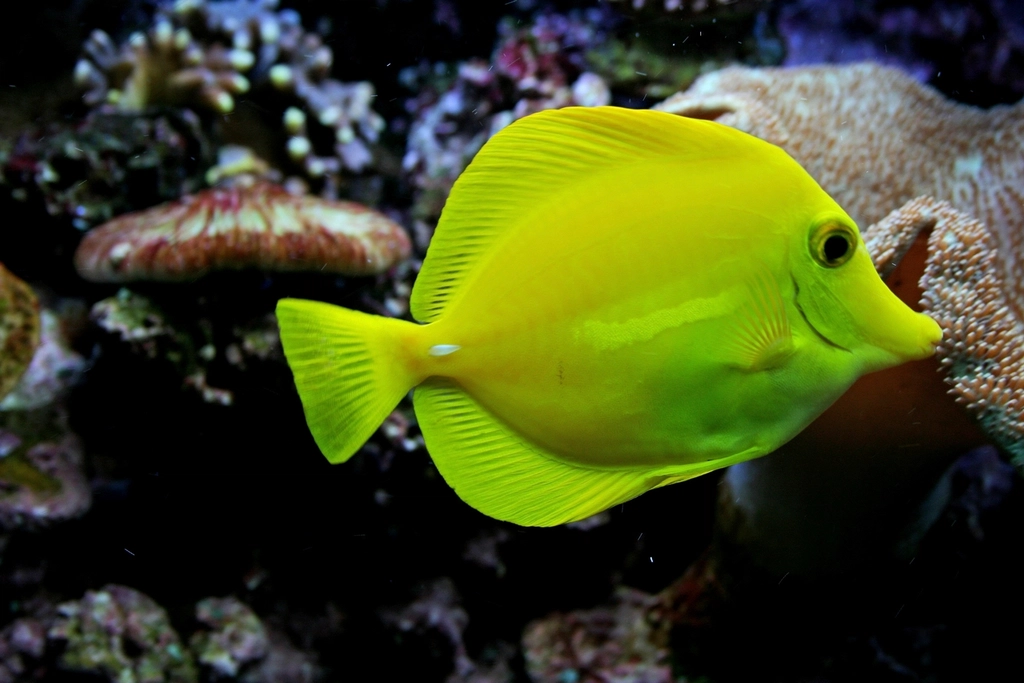 Photo Credit: Rawpixel
In the sun-drenched waters of the Pacific Ocean, the Yellow Tang, scientifically known as Zebrasoma flavescens, dances among the vibrant coral reefs. With its striking, bright yellow body, this fish is like a splash of sunshine beneath the waves. Its oval shape and graceful movements make it a delightful sight as it glides through the water, weaving in and out of colorful corals and swaying sea plants. The Yellow Tang is not just a pretty face; it plays a vital role in its ecosystem, helping to keep algae in check and maintaining the health of its underwater home.
Scientists and nature enthusiasts alike are captivated by the Yellow Tang’s lively personality and its importance in the marine food web. As a herbivore, it primarily feeds on algae, using its specialized teeth to graze on this plant material throughout the day. This feeding behavior is crucial for the coral reefs, as it prevents algae from overtaking the delicate corals that provide shelter and food for countless other marine species. The Yellow Tang’s vibrant color and energetic lifestyle make it a symbol of the rich biodiversity found in coral reef ecosystems, inviting us to explore and appreciate the wonders of the ocean.
The Yellow Tang, a vibrant fish known for its bright yellow color and lively personality, occupies a special place in the tree of life. Scientifically classified within the Kingdom Animalia, it belongs to the Phylum Chordata, which includes all animals with a backbone. This fish is part of the Class Actinopterygii, the ray-finned fishes, characterized by their bony fins and diverse forms. The Yellow Tang is a member of the Family Acanthuridae, commonly known as surgeonfish, which are recognized for their sharp spines near the tail. Its genus, Zebrasoma, highlights its unique body shape and coloration, making it a favorite among aquarium enthusiasts and divers alike.
| Taxonomic Rank | Scientific Name | Meaning & Significance |
|---|---|---|
| Kingdom | Animalia | This name signifies that the Yellow Tang is part of the vast group of multicellular organisms known as animals. |
| Phylum | Chordata | Chordata means “having a notochord,” which is a flexible rod that supports the body, a feature present in all vertebrates, including the Yellow Tang. |
| Class | Actinopterygii | This term translates to “ray-finned fishes,” referring to the structure of their fins, which are supported by bony rays. |
| Family | Acanthuridae | Acanthuridae means “thorn tail,” a nod to the sharp spines that surgeonfish, including the Yellow Tang, possess near their tails for defense. |
| Genus | Zebrasoma | This name combines “zebra,” referring to the striped patterns found in some species, and “soma,” meaning body, highlighting the distinctive shape and coloration of these fish. |
The classification of the Yellow Tang reveals much about its evolutionary journey. As a member of the Acanthuridae family, it shares common ancestry with other surgeonfish, which have adapted to life in coral reefs. This environment has shaped their physical traits, such as their vibrant colors and specialized spines, which help them navigate and defend themselves in complex underwater landscapes. Understanding its taxonomic position not only showcases the Yellow Tang’s unique adaptations but also illustrates the intricate web of life that connects all species in the ocean.
The evolutionary journey of the Yellow Tang, a dazzling fish that glides through the warm waters of the Pacific Ocean, stretches back millions of years. This vibrant species, scientifically known as Zebrasoma flavescens, is part of the Acanthuridae family, which includes other surgeonfish. The story of the Yellow Tang is one of adaptation and survival, shaped by the ever-changing environments of coral reefs and ocean currents.
The ancestors of the Yellow Tang were likely small, herbivorous fish that roamed the shallow seas. Over time, these early fish underwent significant changes, adapting to their surroundings. One major transition was the development of specialized teeth that allowed them to graze on algae, a primary food source in their reef habitats. This adaptation not only provided them with nourishment but also helped maintain the health of coral reefs by controlling algae growth.
These evolutionary adaptations have been crucial for the Yellow Tang’s survival in the competitive and often perilous world of coral reefs. Their bright color not only attracts mates but also serves as a defense mechanism, while their body shape and social behavior enhance their ability to evade predators. Together, these traits have allowed the Yellow Tang to thrive in its vibrant underwater home, showcasing the wonders of evolution in action.
The Yellow Tang is a dazzling spectacle of the ocean, instantly recognizable by its brilliant yellow hue that seems to glow under the sunlit waters. Its body is oval-shaped, allowing it to swim gracefully through coral reefs and rocky crevices. With a small mouth designed for grazing on algae, this fish is perfectly adapted to its environment. The Yellow Tang’s fins are delicate yet strong, helping it navigate swiftly and elegantly among the vibrant underwater landscapes.
| Feature | Description |
|---|---|
| Size | Typically grows to about 7 to 8 inches long |
| Color | Bright yellow, often with a slight orange tint |
| Skin Type | Covered in smooth, overlapping scales |
| Body Shape | Oval and flattened, ideal for maneuvering |
| Fins | Long dorsal fin and pectoral fins for agile swimming |
These striking features not only make the Yellow Tang a visual delight but also serve important survival functions. Its vibrant color helps it blend into the sunlit coral reefs, providing camouflage from predators. The oval body shape and agile fins allow for quick movements, enabling it to dart away from danger or navigate through tight spaces in the reef. Together, these characteristics create a perfect balance of beauty and functionality, ensuring the Yellow Tang thrives in its colorful underwater world.
The Yellow Tang thrives in the warm, sun-drenched waters of the Pacific Ocean, where it calls vibrant coral reefs its home. These underwater gardens are alive with color and activity, providing a perfect backdrop for this lively fish. The reefs are bustling ecosystems, filled with a variety of marine life, from tiny shrimp to majestic sea turtles. The Yellow Tang darts among the corals, using its agility to navigate through the intricate structures that offer both shelter and food.
To flourish in its habitat, the Yellow Tang requires specific environmental conditions. It prefers warm waters, typically ranging from 72 to 78 degrees Fahrenheit (22 to 26 degrees Celsius). The clarity of the water is also crucial, as it allows sunlight to penetrate and support the growth of the algae that the Yellow Tang feeds on. These fish are often found in shallow areas, where the sunlight can reach the coral and promote a rich diversity of life.
Adaptations have finely tuned the Yellow Tang to its reef environment. Its bright yellow coloration not only makes it a striking sight but also serves as a form of camouflage among the sunlit corals. This helps it evade predators while it grazes on algae, which is a primary food source. Additionally, its streamlined body allows for swift movements, enabling it to dart in and out of the coral formations with ease. These features make the Yellow Tang a true master of its vibrant underwater world.
As the sun rises over the coral reefs of the Pacific Ocean, the Yellow Tang begins its day. This lively fish is known for its energetic swimming and curious nature. Throughout the day, it engages in a variety of activities, from foraging for algae to exploring the nooks and crannies of its vibrant home. The Yellow Tang is a solitary creature, often seen gliding gracefully through the water, its bright yellow body shimmering in the sunlight. It spends much of its time nibbling on algae, which is not only a tasty treat but also essential for keeping its environment healthy.
While the Yellow Tang is primarily solitary, it does interact with other fish, especially during feeding times. These interactions can be brief, as the Yellow Tang tends to maintain its own space. However, it is not entirely antisocial; it may occasionally be seen swimming near other fish, especially in areas rich in food. Communication among Yellow Tangs is subtle, often involving body language and color changes. When feeling threatened or excited, they may display different shades, signaling their mood to nearby fish.
| Behavior Type | Description |
|---|---|
| Feeding | The Yellow Tang primarily feeds on algae, using its specialized teeth to scrape it off rocks and coral. |
| Social Structure | Generally solitary, the Yellow Tang prefers to swim alone but may interact with others during feeding. |
| Communication | Uses body language and color changes to express feelings, such as excitement or stress. |
The behaviors of the Yellow Tang are finely tuned to ensure its survival in the bustling underwater world. By foraging for algae, it not only sustains itself but also helps maintain the health of its coral reef habitat. Its solitary nature allows it to avoid competition for food and reduces the risk of predation. Through its unique communication methods, the Yellow Tang can navigate its environment effectively, ensuring it thrives in the vibrant tapestry of ocean life.
The Yellow Tang primarily follows a herbivorous diet, meaning it mainly eats plant material. This vibrant fish is particularly fond of algae, which it grazes on throughout the day. Using its specialized teeth, the Yellow Tang scrapes algae off rocks and coral surfaces, making it a vital player in maintaining the health of its coral reef habitat. By keeping algae in check, it helps ensure that the reef remains a thriving ecosystem for many other marine species.
| Dietary Aspect | Details |
|---|---|
| Diet Type | Herbivore |
| Favorite Foods | Algae, particularly filamentous algae |
| Prey Items | Primarily feeds on plant material, especially algae |
| Hunting/Foraging Strategies | Grazes on algae by scraping it off rocks and coral |
The Yellow Tang’s diet plays a crucial role in its daily routine and the overall health of its coral reef environment. By consuming algae, it not only nourishes itself but also helps prevent algal overgrowth, which can suffocate corals and disrupt the delicate balance of the reef ecosystem. This feeding behavior allows the Yellow Tang to thrive in its vibrant habitat while supporting the diverse marine life that depends on healthy coral reefs.
The Yellow Tang has a fascinating approach to reproduction, which typically occurs during the warmer months when the water temperature rises. During this breeding season, males engage in elaborate courtship displays to attract females. They may swim in circles, change colors slightly, and even perform quick bursts of speed to impress potential mates. Once a female is ready to spawn, she releases her eggs into the water, and the male follows closely behind to fertilize them. This synchronized dance of life is a spectacular sight in the vibrant coral reefs they call home.
| Reproductive Aspect | Details |
|---|---|
| Gestation Period | Eggs hatch within 24 to 48 hours |
| Litter Size | Up to 10,000 eggs |
| Age of Maturity | About 1 year |
| Name of Young | Fry |
After the eggs hatch, the tiny fry are on their own from the very beginning. They drift in the open water, feeding on microscopic algae and plankton, which are tiny organisms that float in the ocean. As they grow, they gradually develop the bright yellow coloration that makes them so recognizable. While Yellow Tangs do not provide parental care after spawning, their early life stage is filled with adventure and challenges. With time, these little fish will find their way to the safety of coral reefs, where they will continue to grow and thrive, eventually becoming the vibrant adults that swim gracefully through their underwater world.
The Yellow Tang plays a crucial role in the marine food web, primarily as a herbivore that helps control algae growth on coral reefs. This vibrant fish is not only a feast for larger predators but also contributes to the health of its ecosystem by maintaining the balance of plant life. However, its bright color, while beautiful, can also make it a target for various threats lurking in the waters.
To survive against these dangers, the Yellow Tang employs several clever strategies. It often hides among the crevices of coral reefs, using its vibrant color as camouflage against the colorful backdrop of the reef. When threatened, it can quickly dart away, showcasing its agility. Additionally, the Yellow Tang is known to swim in schools, which provides safety in numbers, making it harder for predators to single out an individual fish. These behaviors help ensure that this lively fish continues to thrive in its underwater home.
A keystone species is a vital part of its ecosystem, meaning its presence and activities have a significant impact on the environment and other organisms. The Yellow Tang, with its bright yellow color and herbivorous diet, qualifies as a keystone species in the coral reef ecosystems of the Pacific Ocean. By controlling algae growth, it helps maintain the health and balance of these vibrant underwater communities.
The Yellow Tang primarily feeds on algae, which can quickly overgrow and suffocate coral if left unchecked. By grazing on these algae, the Yellow Tang prevents them from dominating the reef, allowing corals to thrive. Healthy coral reefs are essential not only for the fish that live there but also for countless other marine organisms. When the Yellow Tang keeps algae in check, it supports a diverse range of life, from tiny shrimp to larger fish that rely on coral for shelter and food.
Moreover, the Yellow Tang’s activities influence the overall structure of the reef. As it feeds, it helps create a more stable environment for other species. For example, the presence of healthy corals encourages the growth of various invertebrates, which in turn attract larger predators. This interconnected web of life showcases how the Yellow Tang plays a crucial role in maintaining the balance of its ecosystem.
If the Yellow Tang were to disappear, the consequences could be dire. Without this vibrant fish to control algae, coral reefs could become overrun, leading to a decline in coral health. This would not only affect the corals themselves but also the myriad of species that depend on them for food and shelter. The entire ecosystem could suffer, resulting in a loss of biodiversity and the collapse of the intricate relationships that sustain life in these underwater gardens. The Yellow Tang is more than just a colorful fish; it is a guardian of the reef, ensuring that the ocean remains a thriving habitat for all its inhabitants.
The Yellow Tang is a vibrant fish that plays a crucial role in its ecosystem, particularly within the saltwater reefs of the Pacific Ocean. As a herbivore, it primarily feeds on algae, which helps maintain the balance of the reef environment. By grazing on these plant materials, the Yellow Tang prevents algae from overwhelming the corals, allowing for a diverse range of marine life to thrive. This ecological niche is vital, as it supports not only the health of the reef but also the myriad of species that depend on it.
| Ecosystem Service | Impact |
|---|---|
| Algae Control | Prevents algae overgrowth, promoting coral health |
| Food Source | Serves as prey for larger fish and marine animals |
| Habitat Maintenance | Supports biodiversity by maintaining a balanced ecosystem |
The influence of the Yellow Tang extends beyond its diet. For instance, by keeping algae in check, it allows corals to receive the sunlight they need for photosynthesis, a process where corals use sunlight to produce energy. This relationship is essential for the survival of coral reefs, which are often referred to as the “rainforests of the sea” due to their incredible biodiversity. Additionally, the Yellow Tang itself is a food source for larger predators, such as groupers and moray eels, making it an integral part of the marine food web.
The broader ecological importance of the Yellow Tang cannot be overstated. As a keystone species, its presence significantly influences the health and stability of coral reef ecosystems. When Yellow Tangs thrive, the entire reef benefits, leading to a rich habitat for countless marine organisms. Conversely, if their populations decline, the balance of the reef can be disrupted, leading to negative consequences for many species. Thus, the Yellow Tang is not just a colorful inhabitant of the ocean; it is a vital player in the intricate web of life that sustains the underwater world.
In the intricate web of life beneath the ocean’s surface, symbiosis plays a vital role in maintaining balance among species. Symbiosis refers to the close and often long-term interactions between different biological species. These relationships can take various forms, including mutualism, where both species benefit, commensalism, where one benefits while the other is neither helped nor harmed, and parasitism, where one species benefits at the expense of the other. The Yellow Tang, a bright and lively fish, engages in several fascinating partnerships that illustrate these ecological relationships.
| Species/Type | Relationship Type | Description |
|---|---|---|
| Cleaner Shrimp | Mutualistic | The Yellow Tang visits cleaner shrimp, which remove parasites and dead skin from its body. In return, the shrimp get a meal, benefiting both parties. |
| Coral Reefs | Commensal | While the Yellow Tang feeds on algae growing on coral, the coral itself is not affected. The fish helps keep the reef healthy by controlling algae growth. |
| Sea Urchins | Parasitic | In some cases, the Yellow Tang may feed on sea urchins, which can be harmful to coral reefs. This relationship can be seen as parasitic when the urchins are overgrazed, affecting their populations. |
These relationships have evolved over time, shaped by the needs and behaviors of the species involved. The mutualistic bond between the Yellow Tang and cleaner shrimp is a perfect example of how cooperation can enhance survival. By keeping each other healthy, they thrive in their shared environment. Meanwhile, the Yellow Tang’s interactions with coral reefs highlight the importance of balance in ecosystems. By grazing on algae, the Yellow Tang helps maintain the health of the reef, ensuring that it remains a vibrant habitat for countless marine species. Understanding these connections deepens our appreciation for the delicate dance of life in the ocean, reminding us that every creature plays a role in the grand tapestry of nature.
The Yellow Tang is not just a pretty face in the ocean; it has some surprising traits that make it truly special. This vibrant fish, with its bright yellow color, plays a vital role in its underwater world, and its behaviors and adaptations are nothing short of fascinating.
The Yellow Tang, with its brilliant yellow hue, has captivated humans for centuries. Historically, these vibrant fish have been a part of the cultural tapestry in many Pacific Island communities. In Hawaiian culture, for instance, the Yellow Tang, known as “Lau’ipala,” is not only admired for its beauty but also respected for its role in the ecosystem. These fish are often featured in local art and stories, symbolizing the rich marine life that surrounds the islands. Their presence in the ocean has inspired generations, reminding people of the importance of preserving the delicate balance of marine ecosystems.
Today, the relationship between Yellow Tangs and humanity is complex and multifaceted. As the popularity of aquarium keeping has surged, these fish have become a sought-after species for home aquariums. Unfortunately, this demand has led to overfishing in some areas, threatening their populations. Conservation efforts are now underway to protect these vibrant fish and their habitats. Organizations are working to promote sustainable fishing practices and educate the public about the importance of coral reef ecosystems. Additionally, some aquarists are exploring captive breeding programs to reduce the pressure on wild populations.
As we look to the future, the relationship between Yellow Tangs and humanity holds both promise and challenges. With increased awareness of the need for conservation, there is hope that sustainable practices will prevail. By fostering a deeper understanding of these vibrant fish and their role in the ecosystem, we can work together to ensure that future generations will continue to marvel at their beauty. Protecting the Yellow Tang means protecting the health of our oceans, a vital task that requires cooperation and commitment from all of us.
The Yellow Tang, a dazzling fish that brightens the coral reefs of the Pacific Ocean, currently holds a conservation status of “Least Concern.” This means that, for now, the species is not facing immediate threats of extinction. However, population trends can fluctuate, and while the Yellow Tang is relatively abundant, ongoing monitoring is essential to ensure its continued health in the wild.
| Conservation Factor | Status/Details |
|---|---|
| IUCN Status | Least Concern |
| Population Estimates | Stable, with no specific numbers available |
| Trend Direction | Stable |
Despite its current stable status, the Yellow Tang faces several threats that could impact its future. One of the main challenges is habitat degradation, particularly due to coral reef destruction caused by climate change, pollution, and overfishing. As the reefs suffer, so does the delicate balance of life that supports the Yellow Tang and many other marine species. Additionally, the aquarium trade can put pressure on local populations, as these vibrant fish are highly sought after for home aquariums.
Conservation efforts are underway to protect the Yellow Tang and its habitat. Organizations are working to promote sustainable fishing practices and raise awareness about the importance of coral reef ecosystems. Marine protected areas are also being established to safeguard these vital habitats from human impact. With continued efforts and public support, the outlook for the Yellow Tang remains hopeful, ensuring that future generations can enjoy the beauty of this vibrant fish in its natural environment.
| Question | Answer |
|---|---|
| What is the natural habitat of the Yellow Tang? | Yellow Tangs are found in the warm, shallow waters of saltwater reefs in the Pacific Ocean. They prefer areas with plenty of coral and algae, which provide both shelter and food. |
| What do Yellow Tangs eat? | As herbivores, Yellow Tangs primarily feed on algae and plant matter. They use their specialized teeth to scrape algae off rocks and coral, which is essential for their diet and helps keep the reef healthy. |
| How do Yellow Tangs behave in the wild? | Yellow Tangs are known for their lively and social behavior. They often swim in small groups and are very territorial, especially when it comes to their feeding areas. |
| How do Yellow Tangs reproduce? | Yellow Tangs reproduce through a process called spawning, where males and females release their eggs and sperm into the water simultaneously. This usually happens during the full moon, and the fertilized eggs float to the surface, where they hatch into larvae. |
| What threats do Yellow Tangs face? | While Yellow Tangs are currently classified as Least Concern, they face threats from habitat destruction and overfishing. Coral reef degradation due to climate change also poses a significant risk to their populations. |
| What are some interesting characteristics of Yellow Tangs? | One fascinating feature of Yellow Tangs is their bright yellow coloration, which helps them blend into their vibrant reef environment. They also have a sharp spine on their tail, which they can use for defense against predators. |
| Can Yellow Tangs be kept in aquariums? | Yes, Yellow Tangs are popular in home aquariums due to their striking color and active nature. However, they require a large tank with plenty of space and hiding spots to thrive. |