Taxonomy & Classification
- Kingdom
- Animalia
- Phylum
- Chordata
- Class
- Mammalia
- Order
- Primates
- Family
- Hylobatidae
- Genus
- Hylobates
- Species
- Hylobatidae

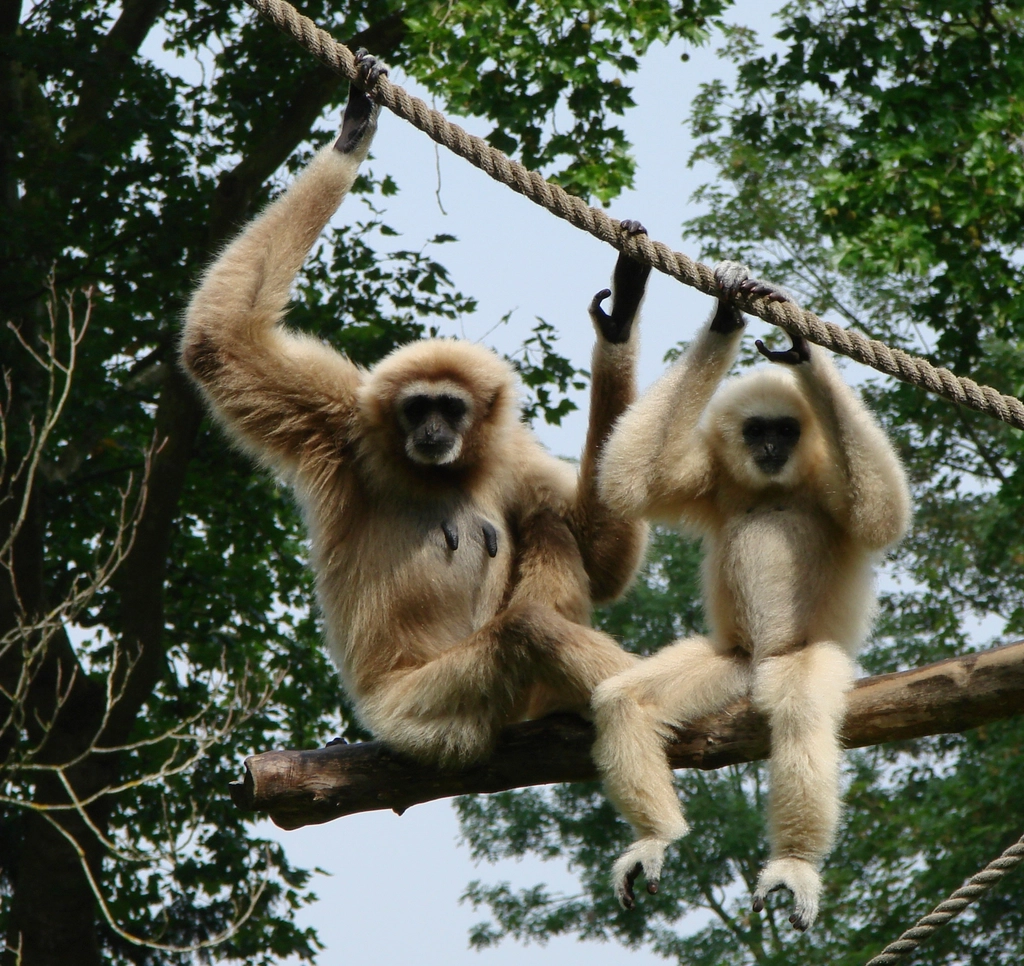 Photo Credit: Rawpixel
In the heart of Southeast Asia’s lush rainforests, the agile gibbon, known scientifically as Hylobatidae, swings gracefully from branch to branch. With its long, slender limbs and expressive face, this lesser ape captivates anyone lucky enough to catch a glimpse. Gibbons are not just remarkable for their acrobatics; they are also known for their enchanting songs that fill the forest at dawn, creating a symphony of calls that echo through the trees. These vocalizations serve as both a way to communicate with their mates and to establish their territory, showcasing their complex social lives.
What makes gibbons particularly fascinating to scientists and nature lovers alike is their unique adaptations for life in the treetops. Their powerful arms allow them to move with incredible speed and agility, making them some of the best swingers in the animal kingdom. As they navigate the dense canopy, gibbons play a crucial role in their ecosystem, helping to disperse seeds and maintain the health of their forest homes. With their playful nature and strong family bonds, gibbons invite us to explore the wonders of the natural world, reminding us of the delicate balance that exists within our planet’s diverse habitats.
Gibbons hold a special place in the tree of life, nestled within the primate family. They belong to the family Hylobatidae, which sets them apart as the lesser apes. Unlike their larger relatives, such as gorillas and chimpanzees, gibbons are known for their incredible agility and unique vocalizations. These small, tree-dwelling primates are expert brachiators, meaning they swing from branch to branch using their long arms. This remarkable adaptation allows them to navigate the dense forests of Southeast Asia with ease, showcasing their specialized lifestyle and evolutionary journey.
| Taxonomic Rank | Scientific Name | Meaning & Significance |
|---|---|---|
| Kingdom | Animalia | This name comes from the Latin word for “animal,” highlighting that gibbons are part of the vast group of living organisms that are multicellular and capable of movement. |
| Phylum | Chordata | Derived from the Greek word “chordē,” meaning “string,” this classification indicates that gibbons have a notochord, a flexible rod that supports their bodies during development. |
| Class | Mammalia | This term comes from the Latin “mamma,” meaning “breast,” referring to the characteristic of mammals to nurse their young with milk produced by mammary glands. |
| Order | Primates | From the Latin word “primus,” meaning “first,” this order includes humans, monkeys, and apes, emphasizing their advanced brain development and social behaviors. |
| Family | Hylobatidae | This name is derived from the Greek “hylobates,” meaning “tree walker,” which perfectly describes their arboreal lifestyle and exceptional climbing abilities. |
| Genus | Hylobates | Similar to the family name, “Hylobates” emphasizes their tree-dwelling nature, showcasing their adaptation to life in the treetops. |
Understanding where gibbons fit in the taxonomic hierarchy reveals much about their evolutionary history. As members of the primate order, they share a common ancestor with humans and other apes, highlighting the deep connections among these species. Their classification as lesser apes, distinct from the great apes, underscores their unique adaptations and ecological niches. By studying gibbons, we gain insights into the evolutionary processes that shape the diversity of life on our planet, reminding us of the intricate web of relationships that connect all living beings.
The evolutionary journey of gibbons stretches back millions of years, weaving through the complex tapestry of primate history. These agile apes emerged around 18 million years ago during the Miocene epoch, a time when the world was undergoing significant climatic changes. As forests expanded and contracted, gibbons adapted to their environment, evolving traits that would help them thrive in the lush canopies of Southeast Asia.
Gibbons are part of the family Hylobatidae, which distinguishes them as lesser apes. Their ancestors were likely small, tree-dwelling primates that began to develop adaptations for life in the trees. One major transition was the shift from a more generalized primate form to a specialized arboreal lifestyle. This meant evolving longer arms and a lighter body, allowing them to swing gracefully from branch to branch. Over time, gibbons also developed a unique form of locomotion called brachiation, which is swinging from limb to limb using their arms. This adaptation not only made them incredibly agile but also helped them escape predators and find food more efficiently.
These evolutionary adaptations have been crucial for gibbons’ survival in their forest homes. Their long arms and flexible shoulders allow them to navigate the treetops with ease, while their vocalizations help maintain social bonds and warn of danger. Living in family groups enhances their ability to find food and protect their young, ensuring that they can thrive in the ever-changing landscapes of their tropical habitats. As they swing through the trees, gibbons remind us of the incredible journey of evolution that has shaped their lives and the world around them.
Gibbons are a striking sight, with their long, slender limbs and agile bodies perfectly designed for life in the treetops. These lesser apes have a graceful appearance, often swinging effortlessly from branch to branch. Their arms are notably longer than their legs, giving them an impressive reach that aids in their acrobatic movements. With a lightweight frame, gibbons can weigh between 6 to 9 kilograms, or about 13 to 20 pounds, making them nimble and quick as they navigate their forest homes.
| Feature | Description |
|---|---|
| Size | 6-9 kg (13.2-19.8 lbs) |
| Skin Type | Hair |
| Limbs | Long arms for swinging and climbing |
| Body Shape | Slender and lightweight |
These physical traits work together to create a perfect blend of speed and agility, essential for survival in the dense forests where gibbons reside. Their long arms allow them to swing from tree to tree with ease, while their lightweight bodies help them avoid predators and reach food sources high above the ground. The hair covering their skin not only provides warmth but also helps them blend into their leafy surroundings, making it easier to stay hidden from potential threats. In the world of gibbons, every feature plays a vital role in their daily adventures and survival.
Gibbons thrive in the lush embrace of dense forests and jungles, where the canopy forms a vibrant green ceiling high above the ground. These lively primates swing from branch to branch, their long arms allowing them to navigate the treetops with ease. The sounds of rustling leaves and distant calls fill the air, creating a symphony of life in their tropical homes. Sunlight filters through the foliage, casting playful shadows on the forest floor, while the rich biodiversity of plants and animals surrounds them.
Gibbons prefer warm, humid climates that are typical of tropical rainforests. These environments provide the perfect conditions for their survival, with temperatures often ranging from 20 to 30 degrees Celsius (68 to 86 degrees Fahrenheit). The high humidity and abundant rainfall create a thriving ecosystem, filled with fruit-bearing trees and dense undergrowth. This climate not only supports their diet but also offers shelter from predators and harsh weather.
To flourish in these specific habitats, gibbons have developed remarkable adaptations. Their long arms and lightweight bodies make them expert swingers, allowing them to travel swiftly through the treetops in search of food. Their diet mainly consists of fruits, leaves, and flowers, which are plentiful in their forest homes. Additionally, gibbons have a strong social structure, often living in small family groups that help them protect their territory and raise their young. This combination of physical traits and social behavior ensures their survival in the vibrant, yet challenging, world of the jungle.
Gibbons lead an active and vibrant daily life, filled with movement and social interaction. As early risers, they greet the dawn with a chorus of songs that echo through the forest. These vocalizations serve multiple purposes, from marking territory to strengthening social bonds. Throughout the day, gibbons engage in a variety of activities, including foraging for fruits, leaves, and insects. Their agile bodies allow them to swing gracefully from branch to branch, covering large distances in search of food. This energetic lifestyle is not just for fun; it’s essential for their survival in the wild.
Socially, gibbons are known for their strong family ties and cooperative behavior. They typically live in small groups called troops, which usually consist of a mated pair and their offspring. This close-knit structure fosters a sense of security and helps in raising young gibbons. Communication is key in these groups, and gibbons use a mix of vocalizations, gestures, and facial expressions to convey messages. They often engage in playful interactions, which not only strengthens their bonds but also teaches younger members important survival skills.
| Behavior Type | Description |
|---|---|
| Activity Patterns | Gibbons are diurnal, meaning they are active during the day. They spend their time foraging, playing, and resting in the trees. |
| Social Structure | Gibbons live in small family groups called troops, typically consisting of a mated pair and their offspring. |
| Communication Methods | They use a variety of vocalizations, including songs, as well as gestures and facial expressions to communicate with each other. |
The behaviors of gibbons are finely tuned to ensure their survival in the wild. Their social structure provides safety in numbers, while their communication skills help maintain group cohesion. By foraging together and sharing information about food sources, they increase their chances of finding enough to eat. The playful interactions among troop members not only strengthen their bonds but also prepare the young for the challenges of life in the forest. In this way, gibbons exemplify the intricate balance of social living and survival in the animal kingdom.
Gibbons are omnivores, which means they enjoy a varied diet that includes both plant and animal matter. Their primary food source consists of fruits, which they skillfully forage for in the treetops. Gibbons are known for their impressive agility, allowing them to swing from branch to branch in search of their favorite snacks. In addition to fruits, they also consume eggs and insects, adding protein to their diet. This diverse eating habit not only supports their energetic lifestyle but also plays a crucial role in their social interactions and daily routines.
| Dietary Aspect | Details |
|---|---|
| Diet Type | Omnivore |
| Favorite Foods | Fruits, particularly ripe ones |
| Prey Items | Eggs and insects |
| Hunting/Foraging Strategies | Agile swinging through trees to reach food |
The gibbon’s diet significantly influences its ecology and daily activities. By primarily feeding on fruits, they help in seed dispersal, which is vital for forest regeneration. Their foraging behavior encourages them to explore their habitat extensively, promoting a healthy ecosystem. This constant movement not only keeps them fit but also strengthens social bonds within their groups, as they often forage together. Thus, the gibbon’s diet is intricately linked to its role in the forest, making it an essential player in maintaining the balance of its environment.
Gibbons have a fascinating approach to mating and reproduction, often forming strong pair bonds with a single partner. These bonds are not just for show; they play a crucial role in raising their young. The breeding season can vary depending on the species and environmental conditions, but gibbons typically mate year-round. Their courtship involves playful displays and vocal duets, which help strengthen their connection and establish territory.
| Reproductive Aspect | Details |
|---|---|
| Gestation Period | Approximately 7 months |
| Litter Size | 1 |
| Age of Maturity | 4 to 5 years |
| Name of Young | Infant |
Once the infant is born, both parents take an active role in nurturing and protecting their young. Gibbon infants are born with a soft, fuzzy coat and are completely dependent on their parents for survival. As they grow, they cling to their mother’s fur, learning essential skills like climbing and foraging. Parental care is vital, as it not only ensures the infant’s safety but also teaches them the social behaviors they will need as adults. By the time they reach maturity, these young gibbons are ready to swing into their own adventures, continuing the cycle of life in the treetops.
Gibbons occupy a vital position in the food web of their forest homes. As agile primates, they are primarily herbivorous, feasting on fruits, leaves, and flowers. However, they are not at the top of the food chain. Their lively movements and vocalizations attract attention, making them potential targets for various predators. Understanding their place in the ecosystem helps us appreciate the challenges they face in the wild.
To survive these threats, gibbons have developed several clever strategies. Their incredible agility allows them to swing swiftly through the treetops, making it difficult for predators to catch them. When danger approaches, they often use their loud calls to alert other gibbons in the area, creating a network of awareness. Additionally, their preference for living high in the canopy provides a natural refuge from many ground-based threats. By staying alert and using their environment to their advantage, gibbons continue to thrive in their forest homes despite the dangers they face.
A keystone species is a vital part of its ecosystem, playing a role that has a disproportionate effect on its environment compared to its abundance. Gibbons, with their unique behaviors and ecological interactions, can indeed be considered a keystone species in their forest habitats. Their presence helps maintain the balance of the ecosystem, influencing both plant and animal life around them.
Gibbons are known for their incredible agility and vocalizations, which serve important ecological functions. As they swing through the treetops, they help disperse seeds from the fruits they consume. This seed dispersal is crucial for the growth of various plant species, ensuring that the forest remains diverse and healthy. Additionally, their songs can establish territory and communicate with other gibbons, which helps maintain social structures within their groups. This social cohesion is essential for the survival of their species and the stability of their habitat.
Moreover, gibbons contribute to the control of insect populations. By foraging on leaves and fruits, they inadvertently keep certain insect species in check, preventing overpopulation that could harm the vegetation. Their omnivorous diet allows them to adapt to changes in food availability, making them resilient and influential in their ecosystems.
If gibbons were to disappear from their ecosystems, the consequences could be severe. Without their seed dispersal, many plant species might struggle to reproduce, leading to a decline in forest diversity. This loss would ripple through the food web, affecting other animals that rely on those plants for food and habitat. Additionally, the absence of their vocalizations could disrupt the social structures of other gibbon groups, leading to increased competition and stress among remaining wildlife. In essence, the disappearance of gibbons would not only impact their immediate environment but could also destabilize the entire forest ecosystem.
Gibbons play a crucial role in their ecosystems, primarily found in dense forests and jungles. As agile primates, they occupy a unique ecological niche, where their behaviors and dietary habits significantly influence their surroundings. By foraging for fruits and leaves high in the canopy, gibbons help in seed dispersal, which is essential for plant reproduction. Their presence in the forest not only supports the growth of various plant species but also contributes to the overall health of the ecosystem.
| Ecosystem Service | Impact |
|---|---|
| Seed Dispersal | Gibbons help spread seeds through their diet, promoting plant diversity. |
| Forest Canopy Maintenance | By feeding on certain plants, they help control vegetation growth. |
| Habitat for Other Species | Their activities create spaces for other animals and plants to thrive. |
| Social Structure Influence | Their troop dynamics can affect the behavior of other forest inhabitants. |
Gibbons are not just passive residents of their forest homes; they actively shape their environment. For instance, as they swing from branch to branch, they prune trees and shrubs, which can encourage new growth. Their foraging habits also create opportunities for other species. When gibbons eat fruits, they often leave behind seeds that can sprout into new plants, fostering a rich and diverse ecosystem. Additionally, their vocalizations and social interactions can influence the behavior of other animals, creating a vibrant community in the forest.
The broader ecological importance of gibbons cannot be overstated. As a keystone species, their presence is vital for maintaining the balance of their habitat. By supporting plant diversity and creating opportunities for other wildlife, gibbons contribute to the resilience of their ecosystems. Protecting these agile primates is essential not only for their survival but also for the health of the forests they inhabit. In this way, gibbons remind us of the interconnectedness of life and the importance of every species in the web of nature.
In the intricate web of life, symbiosis refers to the close interactions between different species, which can take on various forms. These relationships can be mutualistic, where both species benefit; parasitic, where one benefits at the expense of the other; or commensal, where one benefits while the other is neither helped nor harmed. Gibbons, with their lively presence in dense forests and jungles, engage in several fascinating partnerships that illustrate the complexity of ecological relationships.
| Species/Type | Relationship Type | Description |
|---|---|---|
| Birds (e.g., Drongos) | Mutualistic | Gibbons and certain bird species, like drongos, often share the same habitat. The birds benefit from the gibbons’ movement through the trees, which stirs up insects, making them easier to catch. In return, the gibbons may benefit from the birds’ alarm calls, alerting them to potential predators nearby. |
| Fungi | Mutualistic | Gibbons indirectly support fungi through their foraging habits. As they consume fruits and leaves, they help disperse the seeds of various plants, which in turn can support fungal growth in the forest floor. This relationship enhances the health of the ecosystem. |
| Parasites (e.g., ticks) | Parasitic | Like many animals, gibbons can host parasites such as ticks. These tiny creatures feed on the gibbons’ blood, benefiting from the host while potentially harming the gibbons by draining their nutrients and causing irritation. |
The evolution of these relationships showcases the dynamic nature of ecosystems. Over time, gibbons have adapted to their environments, forming partnerships that enhance their survival and that of other species. Mutualistic relationships, in particular, highlight the interconnectedness of life, where cooperation leads to greater benefits for all involved. Understanding these connections not only deepens our appreciation for gibbons but also emphasizes the importance of preserving their habitats, ensuring that these intricate relationships continue to thrive.
Gibbons are truly captivating creatures that bring a unique flair to the primate family. These agile apes are not just known for their impressive swinging abilities; they also have some surprising traits that make them stand out in the animal kingdom.
Throughout history, gibbons have captivated human imagination and culture. These agile apes, known for their impressive acrobatics and melodious calls, have often been featured in folklore and art across various cultures. In many Asian societies, gibbons symbolize grace and harmony, reflecting their elegant movements through the treetops. Historical encounters between gibbons and humans have ranged from admiration to exploitation, as these primates were sometimes captured for entertainment or kept as exotic pets. This complex relationship has shaped how we view gibbons today, intertwining their existence with our own cultural narratives.
In the present day, interactions between gibbons and humans are marked by both conservation efforts and challenges. As deforestation and habitat loss threaten their survival, many organizations are working tirelessly to protect these remarkable primates and their forest homes. However, conflicts can arise when human activities encroach on gibbon habitats, leading to tensions between local communities and wildlife. While gibbons are not domesticated animals, their intelligence and social nature have led to some instances of human-gibbon interactions that blur the lines between wild and tame. These relationships highlight the need for a balanced approach to coexistence, where both gibbons and humans can thrive.
Looking ahead, the future of the relationship between gibbons and humanity hinges on our ability to foster understanding and respect for these incredible animals. As awareness grows about the importance of biodiversity and the role gibbons play in their ecosystems, there is hope for a more harmonious coexistence. By prioritizing conservation and sustainable practices, we can ensure that gibbons continue to swing through the trees, singing their songs for generations to come. Together, we can create a world where both humans and gibbons thrive, celebrating the beauty of our shared planet.
Gibbons are currently classified as Near Threatened, which means they face a risk of becoming endangered in the near future. Their populations are declining due to various factors, and while exact numbers can be hard to pin down, it is estimated that there are fewer than 200,000 individuals left in the wild. This decline is alarming, as gibbons play a crucial role in their forest ecosystems, and their loss could have significant impacts on biodiversity.
| Conservation Factor | Status/Details |
|---|---|
| IUCN Status | Near Threatened |
| Population Estimates | Fewer than 200,000 individuals |
| Trend Direction | Declining |
The main threats to gibbons stem from habitat loss and fragmentation, primarily due to deforestation for agriculture and logging. As forests are cleared, gibbons lose their homes and the trees they rely on for food and safety. Additionally, illegal hunting poses a significant risk, as gibbons are sometimes captured for the pet trade or hunted for bushmeat. These pressures not only reduce their numbers but also disrupt their social structures, making it harder for them to thrive.
Conservation efforts are underway to protect gibbons and their habitats. Organizations are working to establish protected areas and promote sustainable land-use practices that allow both wildlife and humans to coexist. Education and awareness campaigns are also crucial, helping local communities understand the importance of gibbons in their ecosystems. While the outlook remains challenging, there is hope that with continued efforts, we can stabilize and even increase gibbon populations in the wild.
| Question | Answer |
|---|---|
| What is the natural habitat of gibbons? | Gibbons live in dense forests and jungles, primarily in Southeast Asia. These lush environments provide them with plenty of trees to swing from and food to eat. |
| What do gibbons eat? | Gibbons are omnivores, which means they eat both plants and animals. Their diet mainly consists of fruits, leaves, and insects, allowing them to enjoy a variety of flavors and nutrients. |
| How do gibbons behave in the wild? | Gibbons are known for their incredible agility and are often seen swinging through the trees using their long arms. They are social animals, living in small family groups and communicating with each other through loud calls. |
| How do gibbons reproduce? | Gibbons typically mate for life, forming strong bonds with their partners. After a gestation period of about seven months, the female gives birth to a single baby, which she cares for closely during its early years. |
| What threats do gibbons face? | Gibbons are classified as Near Threatened due to habitat loss and hunting. Deforestation for agriculture and logging has significantly reduced their living spaces, making it harder for them to survive. |
| What are some interesting characteristics of gibbons? | One fascinating feature of gibbons is their ability to swing through trees at incredible speeds, a movement called brachiation. They also have a unique vocalization, which can be heard over long distances, helping them communicate with their family members. |
| How long do gibbons live? | In the wild, gibbons can live up to 25 years, while those in captivity may live even longer, sometimes reaching 40 years. Their lifespan can be influenced by factors like diet, habitat, and threats from humans. |