Taxonomy & Classification
- Kingdom
- Animalia
- Phylum
- Chordata
- Class
- Mammalia
- Order
- Carnivora
- Family
- Nandiniidae
- Genus
- Nandinia
- Species
- Nandinia binotata

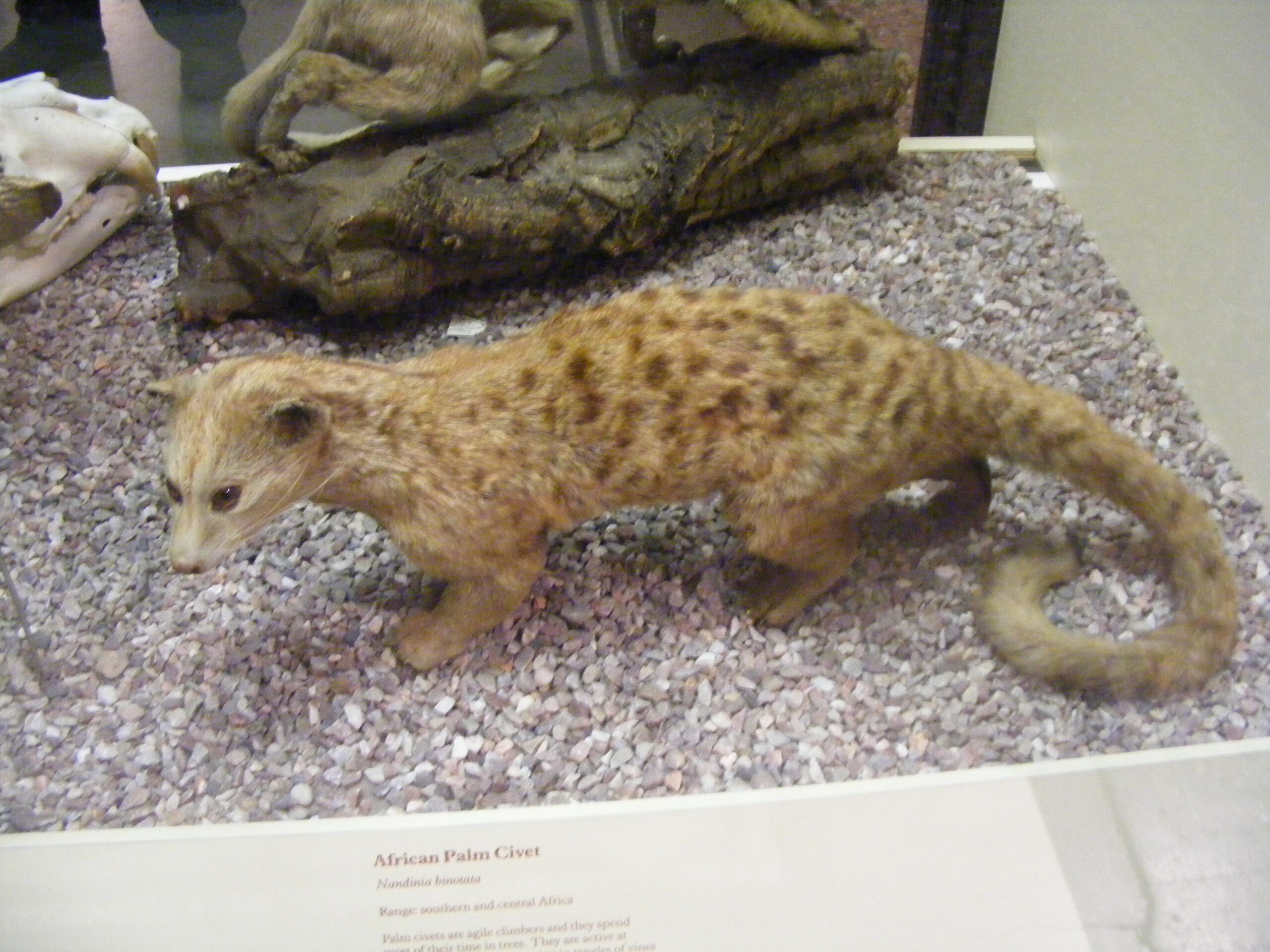 Photo Credit: Wikipedia
In the heart of Africa’s lush tropical rainforests, the African Palm Civet, or Nandinia binotata, quietly navigates its vibrant world. With its sleek body adorned in a striking coat of dark fur and distinctive spots, this small mammal is a master of stealth. As the sun dips below the horizon, the civet awakens, its large, expressive eyes glinting in the fading light. It moves gracefully through the dense underbrush, a shadow among shadows, searching for its next meal. This nocturnal creature is not just a sight to behold; it plays a vital role in its ecosystem, helping to maintain the balance of life in its habitat.
What makes the African Palm Civet particularly captivating to scientists and nature lovers alike is its unique blend of characteristics. As a member of the Carnivora order, it shares a lineage with other meat-eating mammals, yet it is also an omnivore, feasting on a diverse diet that includes fruits, small animals, and insects. This adaptability allows it to thrive in various environments, from rainforests to savannas. With its intriguing behaviors and ecological importance, the African Palm Civet invites us to explore the wonders of the natural world, reminding us of the delicate connections that sustain life on our planet.
The African Palm Civet holds a special place in the animal kingdom, nestled within the fascinating order Carnivora, which includes all meat-eating mammals. This small, nocturnal mammal is the only member of the family Nandiniidae, making it quite distinct from its more well-known relatives like cats and dogs. With its striking appearance, featuring a long body, a bushy tail, and a coat adorned with dark spots, the African Palm Civet is not just a pretty face. Its unique adaptations, such as a keen sense of smell and a diet that includes fruits, insects, and small animals, showcase its role as an important player in its ecosystem, particularly in seed dispersal.
| Taxonomic Rank | Scientific Name | Meaning & Significance |
|---|---|---|
| Kingdom | Animalia | This name comes from the Latin word “animalis,” meaning “having breath,” which reflects the living nature of this diverse group of organisms. |
| Phylum | Chordata | Derived from the Latin “chorda,” meaning “string,” this term refers to animals that have a notochord, a flexible rod that supports the body during development. |
| Class | Mammalia | This name comes from “mamma,” the Latin word for “breast,” highlighting the defining feature of mammals: females nurse their young with milk. |
| Order | Carnivora | From the Latin “carnivorus,” meaning “meat-eating,” this order includes animals that primarily consume meat, although some, like the African Palm Civet, have a varied diet. |
| Family | Nandiniidae | This family name is derived from the genus Nandinia, which is thought to be named after the African word “nandi,” meaning “to eat,” reflecting its dietary habits. |
| Genus | Nandinia | The genus name is a nod to the civet’s unique characteristics and its place in the evolutionary tree, emphasizing its distinct lineage within Carnivora. |
Understanding the African Palm Civet’s classification reveals much about its evolutionary journey. As a member of the Carnivora order, it shares a common ancestor with other meat-eating mammals, yet its unique family and genus highlight its divergence from more familiar carnivores. This separation suggests that the African Palm Civet has adapted to its environment in ways that are distinct from its relatives, showcasing the incredible diversity of life on our planet. By studying its taxonomic position, we gain insights into the evolutionary pressures that have shaped this intriguing animal, allowing us to appreciate the rich tapestry of life that surrounds us.
The African Palm Civet, scientifically known as Nandinia binotata, has a captivating evolutionary history that stretches back millions of years. This small, agile mammal belongs to the family Nandiniidae, which diverged from other carnivorous mammals around 30 million years ago. As the world changed, so did the ancestors of the African Palm Civet, adapting to new environments and challenges.
The evolutionary journey of the African Palm Civet began with its ancestors, which were likely similar to other early carnivores. These ancestral forms were small, tree-dwelling mammals that thrived in the lush forests of Africa. Over time, they developed traits that helped them navigate their arboreal habitats. One major transition was the development of a more flexible body, allowing them to climb and leap between branches with ease. This adaptation was crucial for escaping predators and finding food in the treetops.
The adaptations of the African Palm Civet have played a significant role in its survival. Its climbing skills enable it to escape threats and access food sources that ground-dwelling animals cannot reach. The ability to eat a wide range of fruits ensures that it can find nourishment in various environments, while its nocturnal habits help it avoid competition and predators. Together, these traits have allowed the African Palm Civet to thrive in the rich ecosystems of Africa, showcasing the wonders of evolution in action.
The African Palm Civet is a striking animal that captures attention with its sleek, agile body and distinctive features. This small mammal typically measures between 43 to 71 centimeters in height, making it a compact yet nimble creature. Its fur is soft and dense, providing both warmth and camouflage in its forest habitat. The civet’s elongated body is complemented by a long, bushy tail that helps with balance as it navigates through the trees. With a sharp, pointed snout and keen eyes, it exudes an air of curiosity and intelligence, ready to explore its surroundings under the cover of night.
| Feature | Description |
|---|---|
| Height | 43cm – 71cm (17in – 28in) |
| Weight | 1.4kg – 4.5kg (3lbs – 10lbs) |
| Skin Type | Fur |
| Most Distinctive Feature | Snout with sharp, pointed teeth |
The combination of the African Palm Civet’s physical traits plays a crucial role in its survival. Its size allows it to be agile and stealthy, perfect for a nocturnal lifestyle where it hunts for fruits, insects, and small animals. The soft fur not only keeps it warm but also helps it blend into the dappled light of the forest, making it less visible to predators. Meanwhile, the sharp teeth are essential for grasping and tearing food, showcasing the civet’s adaptability in a diverse diet. Together, these features create a well-equipped animal, perfectly suited for life in the wild.
The African Palm Civet thrives in the lush embrace of tropical rainforests, where the air is thick with humidity and the canopy is alive with the sounds of chirping birds and rustling leaves. These vibrant forests are a tapestry of green, filled with towering trees, winding vines, and a rich undergrowth that provides both shelter and food. The dappled sunlight filters through the leaves, creating a magical atmosphere that is perfect for this agile mammal to navigate and explore.
This remarkable animal prefers warm, humid climates that are characteristic of tropical regions. The temperatures in these areas typically range from 20 to 30 degrees Celsius (68 to 86 degrees Fahrenheit), providing a comfortable environment for the civet. The dense foliage of the rainforest not only offers protection from predators but also ensures a steady supply of fruits, insects, and small animals, which are essential for its diet.
Adapted to life in the trees, the African Palm Civet has developed strong limbs and sharp claws that allow it to climb with ease. Its keen sense of smell helps it locate ripe fruits and other food sources hidden among the leaves. The civet’s nocturnal habits mean it is most active at night, when it can stealthily move through the forest, avoiding the heat of the day and the watchful eyes of daytime predators. This combination of physical traits and behavioral adaptations makes the African Palm Civet a true master of its tropical rainforest home.
The African Palm Civet leads a life that is both intriguing and adaptable. As a crepuscular animal, it is most active during the twilight hours of dawn and dusk. This timing allows it to take advantage of cooler temperatures while avoiding the heat of the day. During its active hours, the civet scours the forest floor and climbs trees in search of food, which includes fruits, insects, and small animals. Its keen sense of smell helps it locate ripe fruits and hidden prey, making it a skilled forager in its tropical rainforest home.
While the African Palm Civet is primarily solitary, it does exhibit some interesting social behaviors. These mammals are known to establish territories, which they mark with scent to communicate their presence to others. Although they prefer to live alone, they may occasionally come together during mating season. Their interactions are often brief and centered around reproduction rather than forming lasting bonds. This solitary lifestyle allows them to be stealthy hunters, relying on their agility and keen senses to navigate their environment without the competition of a group.
| Behavior Type | Description |
|---|---|
| Activity Patterns | Active during twilight hours, searching for food and exploring their territory. |
| Social Structure | Primarily solitary, with occasional interactions during mating season. |
| Communication Methods | Use scent marking to establish territory and communicate with other civets. |
The behaviors of the African Palm Civet are finely tuned to ensure its survival in the wild. By being crepuscular, it avoids the heat and potential predators that are more active during the day. Its solitary nature allows it to be stealthy and efficient in hunting, while scent marking helps it maintain its territory without the need for constant social interactions. This combination of traits makes the African Palm Civet a master of its environment, thriving in the rich biodiversity of the rainforest.
The African Palm Civet has a diverse diet that reflects its omnivorous nature, meaning it enjoys both plant and animal foods. This adaptable mammal primarily feeds on small animals like rodents, snakes, and frogs, but it also indulges in fruits and other vegetation. Its feeding behavior is quite opportunistic, allowing it to take advantage of whatever food sources are available in its tropical rainforest habitat. With keen senses and agile movements, the African Palm Civet is well-equipped to hunt and forage for its meals, often exploring the forest floor and climbing trees to find tasty treats.
| Dietary Aspect | Details |
|---|---|
| Diet Type | Omnivore |
| Favorite Foods | Fruits, rodents, snakes, frogs |
| Prey Items | Small mammals, reptiles, amphibians |
| Hunting/Foraging Strategies | Opportunistic foraging, climbing trees, exploring forest floor |
This varied diet plays a crucial role in the African Palm Civet’s ecology and daily routine. By consuming a wide range of foods, it helps control populations of small animals and contributes to seed dispersal through its fruit consumption. This not only supports the health of its rainforest habitat but also allows the civet to thrive in a dynamic environment. Its ability to adapt its diet based on availability ensures that it can find nourishment throughout the year, making it a resilient and resourceful inhabitant of the tropical ecosystem.
The African Palm Civet has a fascinating mating ritual that takes place during specific breeding seasons, often influenced by environmental factors like food availability. Males and females engage in vocalizations and scent-marking to attract each other. This courtship can be quite lively, with playful interactions that help strengthen their bond before they mate. Once a pair has formed, they will typically mate several times over a short period, ensuring the best chance of successful reproduction.
| Reproductive Aspect | Details |
|---|---|
| Gestation Period | 64 days |
| Average Litter Size | 2 |
| Age of Sexual Maturity | 2 – 3 years |
| Name of Young | Pup |
After the pups are born, the mother takes on the primary role of caregiver. She provides warmth and nourishment, nursing them until they are old enough to eat solid food. The pups are born blind and helpless, relying entirely on their mother for survival in those early weeks. As they grow, they begin to explore their surroundings, learning essential skills through play and observation. By the time they reach sexual maturity at around two to three years, they are well-equipped to navigate the world on their own, continuing the cycle of life for this intriguing species.
The African Palm Civet plays a vital role in its ecosystem, sitting comfortably in the middle of the food web. As an omnivore, it helps control populations of small animals and insects while also dispersing seeds through its varied diet. This means that the civet not only survives by eating but also contributes to the health of its rainforest home. However, like many creatures in the wild, it faces several dangers that threaten its survival.
To defend itself against these threats, the African Palm Civet has developed several clever survival strategies. Its nocturnal lifestyle allows it to avoid many predators that are active during the day. When threatened, it can climb trees swiftly, using its sharp claws to escape danger. Additionally, the civet has a keen sense of smell and hearing, which helps it detect potential threats early. By being elusive and adaptable, the African Palm Civet continues to navigate the challenges of its environment, showcasing the resilience of wildlife in the face of adversity.
A keystone species is an organism that has a disproportionately large impact on its environment relative to its abundance. In other words, if a keystone species were to disappear, the entire ecosystem could change dramatically. The African Palm Civet, with its unique role in the tropical rainforest, qualifies as a keystone species. This small mammal influences its habitat in several significant ways, helping to maintain the balance of its ecosystem.
The African Palm Civet is an omnivore, which means it eats both plants and animals. This diverse diet allows it to play a crucial role in seed dispersal. When the civet consumes fruits, it often travels some distance before excreting the seeds. This process helps to spread various plant species throughout the rainforest, promoting biodiversity. Additionally, by preying on small animals and insects, the civet helps control their populations, preventing any one species from becoming too dominant.
Moreover, the African Palm Civet contributes to the nutrient cycle in its habitat. As it forages for food, it digs into the forest floor, aerating the soil and allowing water and nutrients to penetrate more deeply. This activity supports the growth of plants, which in turn provides food and shelter for countless other species. The civet’s presence thus fosters a thriving community of life in the rainforest.
If the African Palm Civet were to vanish from its ecosystem, the consequences could be severe. Without this species to disperse seeds, many plants might struggle to reproduce, leading to a decline in plant diversity. This, in turn, would affect the animals that rely on those plants for food and shelter. The balance of the rainforest would be disrupted, potentially leading to a cascade of extinctions and a less resilient ecosystem. The African Palm Civet is not just a small player in the rainforest; it is a vital part of a complex web of life.
The African Palm Civet occupies a crucial ecological niche in the tropical rainforests of Africa. As an omnivore, it plays a significant role in maintaining the balance of its environment. By feeding on a variety of foods, including fruits, small mammals, and insects, this agile creature helps regulate populations of both plants and animals. Its crepuscular lifestyle, being most active during dawn and dusk, allows it to interact with various species, contributing to the dynamic web of life in its habitat.
| Ecosystem Service | Impact |
|---|---|
| Seed Dispersal | Helps in the growth of new plants by spreading seeds through its droppings. |
| Pest Control | Regulates insect populations, preventing overpopulation and crop damage. |
| Food Source | Serves as prey for larger predators, supporting the food web. |
| Nutrient Cycling | Contributes to soil health through waste, enriching the forest floor. |
The African Palm Civet’s influence on its ecosystem is evident in several ways. For instance, as it consumes fruits, it aids in seed dispersal, allowing new plants to grow in different areas. This process is vital for forest regeneration and biodiversity. Additionally, by preying on insects and small mammals, it helps control their populations, which can otherwise explode and disrupt the balance of the ecosystem. Its presence ensures that various species can thrive, creating a healthier environment for all.
The broader ecological importance of the African Palm Civet cannot be overstated. As a keystone species, its activities have a ripple effect throughout the rainforest. If this small mammal were to vanish, the consequences would be felt far and wide, potentially leading to overgrown vegetation, pest outbreaks, and a decline in other animal populations. By understanding the role of the African Palm Civet, we gain insight into the intricate connections that sustain the vibrant life of tropical rainforests.
In the vibrant tapestry of nature, symbiosis refers to the close and often long-term interactions between different species. These relationships can take many forms, including mutualism, where both species benefit, parasitism, where one benefits at the expense of the other, and commensalism, where one benefits while the other is neither helped nor harmed. The African Palm Civet, a small and agile mammal found in the tropical rainforests of Africa, engages in various ecological relationships that highlight the interconnectedness of life in its habitat.
| Species/Type | Relationship Type | Description |
|---|---|---|
| Fruit Trees | Mutualistic | The African Palm Civet helps disperse seeds from the fruits it eats, promoting the growth of new plants while benefiting from the nutritious food source. |
| Insects | Commensal | While foraging, the civet may disturb leaf litter, inadvertently exposing insects for birds or other animals to catch, benefiting them without affecting the civet. |
| Parasites (like ticks) | Parasitic | Ticks and other parasites can latch onto the civet, feeding on its blood, which can weaken the civet but provides sustenance for the parasites. |
The evolution of these relationships is a testament to the adaptability and resilience of species like the African Palm Civet. Over time, these interactions have shaped their behaviors and survival strategies. For instance, by aiding in seed dispersal, the civet not only secures its food sources but also supports the health of its ecosystem. Meanwhile, the presence of parasites, while detrimental, is a natural part of life that can lead to stronger immune responses in the civet. Understanding these connections helps us appreciate the delicate balance of life in the rainforest and the vital roles each species plays in maintaining it.
The African Palm Civet is a captivating creature that often goes unnoticed in the lush rainforests of Africa. With its unique adaptations and intriguing behaviors, this small mammal is full of surprises that will delight nature enthusiasts of all ages.
The African Palm Civet has woven itself into the cultural fabric of various African communities throughout history. Often regarded as a symbol of mystery and adaptability, this small mammal has appeared in folklore and traditional stories, where it is sometimes associated with cleverness and resourcefulness. In some regions, its striking appearance and elusive nature have made it a subject of fascination, leading to artistic representations and local legends that celebrate its unique traits. These historical encounters highlight the civet’s role not just as a wildlife species, but as a part of human storytelling and cultural identity.
Today, the relationship between the African Palm Civet and humanity is complex and multifaceted. As urban areas expand into their natural habitats, these civets often find themselves in conflict with humans. They may raid crops or invade gardens, leading to tensions with farmers. However, conservation efforts are underway to protect their habitats and ensure their survival. Some communities are beginning to recognize the ecological importance of the civet, as it helps control pest populations and contributes to seed dispersal. While domestication is not common, there are instances where people have kept civets as exotic pets, raising questions about their welfare and the ethics of such practices.
As we look to the future, the relationship between the African Palm Civet and humanity holds both challenges and opportunities. With increasing awareness of the importance of biodiversity, there is hope that more people will advocate for the protection of this unique species and its habitat. Education about the civet’s ecological role can foster coexistence, allowing communities to benefit from its presence rather than viewing it solely as a nuisance. By embracing a more harmonious relationship, we can ensure that the African Palm Civet continues to thrive in the wild, enriching our natural world for generations to come.
The African Palm Civet, known scientifically as Nandinia binotata, currently holds a conservation status of “Least Concern” according to the International Union for Conservation of Nature (IUCN). This means that, overall, the species is not facing immediate threats of extinction. In fact, it is considered locally abundant in many areas of its tropical rainforest habitat. However, while the population is stable in some regions, ongoing habitat loss and other pressures could impact its future.
| Conservation Factor | Status/Details |
|---|---|
| IUCN Status | Least Concern |
| Estimated Population Size | Locally abundant |
| Population Trend | Stable in some areas |
Despite its current status, the African Palm Civet faces several significant threats. Habitat destruction, primarily due to logging and agricultural expansion, is a major concern. As forests are cleared for farming or urban development, these civets lose their homes and the rich biodiversity they rely on for food. Additionally, hunting and poaching for bushmeat can further diminish local populations, especially in areas where they are considered a delicacy.
Conservation efforts are underway to protect the African Palm Civet and its habitat. Initiatives include the establishment of protected areas and wildlife reserves, which help safeguard the lush rainforests these animals call home. Education programs aimed at local communities also play a crucial role in raising awareness about the importance of preserving this species and its ecosystem. With continued efforts, there is hope that the African Palm Civet will thrive in its natural habitat for generations to come.
| Question | Answer |
|---|---|
| What is the habitat of the African Palm Civet? | The African Palm Civet primarily lives in tropical rainforests. These lush environments provide the dense cover and abundant food sources that these animals need to thrive. |
| What does the African Palm Civet eat? | This species is an omnivore, meaning it eats both plants and animals. Its diet includes fruits, insects, small mammals, and even birds, allowing it to adapt to various food sources in its habitat. |
| What are some interesting behaviors of the African Palm Civet? | African Palm Civets are mostly nocturnal, which means they are active at night. They are also known for their climbing abilities, often seen scaling trees to find food or escape predators. |
| How does the African Palm Civet reproduce? | These civets typically breed once a year, with a gestation period of about 60 to 70 days. After this time, the female gives birth to one to three young, which she raises in a secure den. |
| What threats do African Palm Civets face? | While the African Palm Civet is currently listed as Least Concern, it still faces threats from habitat loss due to deforestation. Additionally, hunting and the illegal pet trade can impact local populations. |
| What is a distinctive feature of the African Palm Civet? | One of the most distinctive features of the African Palm Civet is its snout, which has sharp, pointed teeth. This unique adaptation helps it catch and consume a variety of prey. |
| Are African Palm Civets social animals? | African Palm Civets are generally solitary creatures. They prefer to live alone or in small family groups, coming together only during mating season or when raising young. |