Taxonomy & Classification
- Kingdom
- Animalia
- Phylum
- Chordata
- Class
- Mammalia
- Order
- Rodentia
- Family
- Castoridae
- Genus
- Castoroides
- Species
- Castoroides

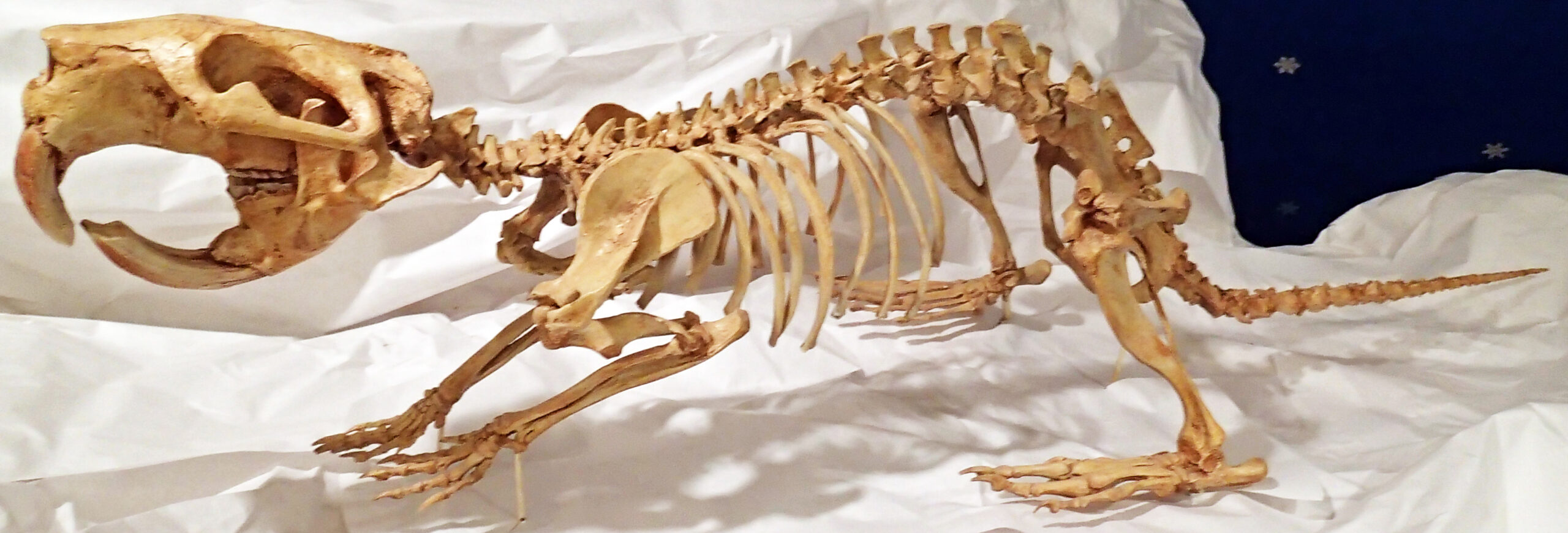 Photo Credit: James St. John / Wikimedia
In the lush wetlands of ancient North America, the Giant Beaver, known scientifically as Castoroides, once thrived in a world teeming with life. Imagine a creature the size of a small bear, with a robust body covered in thick fur, and a flat, paddle-like tail that could swish through the water with ease. This remarkable rodent, weighing between 250 to 275 pounds, was not just a sight to behold; it was a master builder, creating intricate dams and lodges that transformed its environment. Scientists and nature enthusiasts alike are captivated by the Giant Beaver’s impressive size and its role as a keystone species, meaning it played a crucial part in maintaining the balance of its ecosystem.
As the sun dipped below the horizon, casting golden rays over serene ponds and marshes, the Giant Beaver would emerge from its lodge, ready to forage for tender aquatic plants. With its strong teeth, capable of gnawing through tough vegetation, Castoroides was an herbivore, feasting on a diet rich in greens. The sounds of water splashing and the rustle of leaves filled the air as this colossal rodent went about its daily activities, shaping the landscape around it. The story of the Giant Beaver is not just one of size and strength; it is a tale of adaptation and survival in a changing world, inviting us to explore the mysteries of a time long past.
The Giant Beaver, known scientifically as Castoroides, holds a special place in the tree of life. This extraordinary animal, which roamed North America during the Pleistocene epoch, is a member of the rodent family, specifically the Castoridae, which includes modern beavers. What sets the Giant Beaver apart is its impressive size—some individuals could grow as large as a small car! This unique feature, along with its adaptations for a semi-aquatic lifestyle, makes it a captivating subject for both scientists and nature enthusiasts alike.
| Taxonomic Rank | Scientific Name | Meaning & Significance |
|---|---|---|
| Kingdom | Animalia | This name signifies that the Giant Beaver belongs to the broad group of multicellular organisms known as animals, which are characterized by their ability to move and respond to their environment. |
| Phylum | Chordata | Chordata means “having a notochord,” a flexible rod that supports the body. This group includes all animals with a backbone, highlighting the Giant Beaver’s place among more complex life forms. |
| Class | Mammalia | Mammalia refers to mammals, animals that have fur or hair and produce milk for their young. The Giant Beaver shares this trait with modern beavers, emphasizing its warm-blooded nature. |
| Order | Rodentia | Rodentia, the order of rodents, is derived from the Latin word “rodere,” meaning “to gnaw.” This classification reflects the Giant Beaver’s strong, continuously growing teeth, perfect for chewing through tough vegetation. |
| Family | Castoridae | Castoridae is the family that includes beavers. The name is derived from the Latin “castor,” which means “beaver,” linking the Giant Beaver to its modern relatives. |
| Genus | Castoroides | Castoroides combines “castor,” meaning beaver, with the Greek “oidēs,” meaning “resembling.” This name highlights the Giant Beaver’s close resemblance to today’s beavers, despite its much larger size. |
The classification of the Giant Beaver reveals much about its evolutionary history. As a member of the rodent family, it shares common ancestors with modern beavers, showcasing how species can adapt and evolve over time. The Giant Beaver’s impressive size and unique adaptations for its environment provide insight into the ecological niches it occupied. Understanding its place in the animal kingdom helps us appreciate the diversity of life that has existed on Earth and the fascinating ways in which animals have adapted to their surroundings throughout history.
The story of the Giant Beaver, or Castoroides, unfolds during the Pleistocene epoch, a time that spanned from about 2.6 million to 11,700 years ago. This era was marked by dramatic climate changes and the presence of massive ice sheets. As the world transformed, so did the animals that inhabited it, including the Giant Beaver, which thrived in the lush wetlands and forests of North America.
The Giant Beaver is a distant relative of modern beavers, belonging to the family Castoridae. Its ancestors were smaller, more typical beavers that adapted to their environments over millions of years. As these early beavers evolved, they developed larger bodies and stronger teeth, allowing them to fell trees and build dams more effectively. This transition was crucial, as it enabled them to create habitats that supported diverse ecosystems. Over time, the Giant Beaver grew to impressive sizes, reaching lengths of up to eight feet, making it one of the largest rodents to ever exist.
The adaptations of the Giant Beaver were key to its survival in a changing world. Its size and strong teeth allowed it to manipulate its environment, creating habitats that supported not only itself but also countless other species. By being able to eat a wide range of plants, it could thrive in various conditions, while its social behavior likely provided additional protection against predators. These traits made the Giant Beaver a successful inhabitant of its time, showcasing the incredible power of evolution in shaping life on Earth.
The Giant Beaver, a colossal rodent from the past, leaves a striking impression with its impressive size and sturdy build. Imagine a creature that could weigh between 250 to 275 pounds, roughly the size of a small bear! Its body was robust and muscular, designed for both swimming and land movement. With a long, flat tail that could reach impressive lengths, this ancient beaver was not just a lumbering giant; it was a master of its environment, capable of navigating rivers and lakes with ease.
| Feature | Description |
|---|---|
| Weight | 250 to 275 pounds |
| Skin Type | Fur |
| Most Distinctive Feature | Large teeth that could get up to 6 inches long |
The Giant Beaver’s features were not just for show; they played crucial roles in its survival. Its thick fur provided insulation against the cold, while its massive teeth were perfect for gnawing through tough wood and bark. This ability allowed it to build dams and lodges, creating habitats that supported not only itself but also other wildlife. Together, these characteristics made the Giant Beaver a formidable presence in its ecosystem, showcasing the incredible adaptations that have allowed animals to thrive in diverse environments throughout history.
The Giant Beaver, a fascinating inhabitant of the ancient world, thrived in lush, watery environments. Picture vast marshes, serene ponds, and expansive lakes, where the gentle sounds of water lapping against the shore create a peaceful backdrop. These habitats were rich in vegetation, providing ample food and materials for building. The Giant Beaver’s world was a vibrant tapestry of life, where the interplay of water and land supported a diverse ecosystem.
This remarkable rodent preferred climates that were temperate, meaning they enjoyed mild weather with distinct seasons. The wetlands where they lived were often warm enough to support a variety of plant life, yet cool enough to provide a comfortable environment. These areas were typically rich in nutrients, allowing for the growth of willows, alders, and other trees that the Giant Beaver relied on for food and construction materials.
To thrive in these specific habitats, the Giant Beaver developed several adaptations. Its strong teeth were perfect for gnawing through tough bark and branches, while its large size helped it navigate through water with ease. The Giant Beaver’s ability to build dams and lodges from sticks and mud not only created safe spaces for living but also helped to manage water levels in their environment. This engineering skill allowed them to create the ideal conditions for their survival, showcasing their remarkable ability to shape their surroundings.
The daily life of the Giant Beaver, or Castoroides, was a blend of industrious activity and social interaction. These massive rodents were known for their impressive building skills, spending much of their time constructing dams and lodges. With their strong teeth, they gnawed on trees and branches, creating a safe haven for themselves and their families. As day turned to night, they would forage for food, diving into the water to gather aquatic plants and tender shoots. Their routine was a mix of hard work and play, as they navigated their watery world with grace and purpose.
Socially, Giant Beavers were likely quite communal, living in family groups that worked together to maintain their homes. These groups would have included parents and their young, all cooperating to gather food and defend their territory. Communication among them was essential, as they would use a variety of sounds and body language to signal danger or share information about food sources. This social structure not only strengthened their bonds but also enhanced their survival in a world filled with predators.
| Behavior Type | Description |
|---|---|
| Activity Patterns | Giant Beavers spent their days building dams, foraging for food, and maintaining their lodges. They were most active during dawn and dusk, taking advantage of cooler temperatures. |
| Social Structure | They lived in family groups, typically consisting of parents and their offspring, working together to ensure safety and resource availability. |
| Communication Methods | Giant Beavers communicated through a mix of vocalizations, such as grunts and whistles, as well as physical gestures, like tail slaps on the water to signal alarm. |
The behaviors of the Giant Beaver were crucial for their survival in the wild. By building sturdy dams, they created safe habitats that protected them from predators and provided access to food. Their social interactions fostered cooperation, allowing them to thrive in their environment. Through teamwork and effective communication, these ancient beavers not only ensured their own survival but also shaped the ecosystems they inhabited, leaving a lasting impact on the landscape of North America.
The Giant Beaver, or Castoroides, was primarily an herbivore, meaning it mainly ate plants. This enormous rodent had a diet rich in various types of vegetation, which it skillfully foraged from its watery habitat. With its strong teeth and powerful jaws, the Giant Beaver could easily gnaw through tough plant material, allowing it to access a variety of foods. Its feeding behavior was not just about munching on leaves; it also involved gathering and storing food for later use, especially during the colder months when fresh vegetation was scarce.
| Dietary Aspect | Details |
|---|---|
| Diet Type | Herbivore |
| Favorite Foods | Leaves, aquatic plants, and woody shrubs |
| Prey Items | None, as it is strictly herbivorous |
| Hunting/Foraging Strategies | Foraging in water and on land, using strong teeth to cut through vegetation |
The diet of the Giant Beaver played a crucial role in shaping its ecology and daily routine. By consuming large amounts of plant material, it helped maintain the health of its environment, promoting the growth of new vegetation. This not only benefited the Giant Beaver but also supported other animals in its ecosystem. Its foraging habits likely influenced the structure of the wetlands it inhabited, creating habitats for various species. Thus, the Giant Beaver was not just a consumer of plants; it was an important player in the intricate web of life during its time.
The mating behavior of the Giant Beaver, or Castoroides, was likely influenced by the seasonal changes in its environment. During the warmer months, when food was abundant and the weather was milder, these beavers would come together to mate. This breeding season was a time of social interaction, where potential mates would engage in displays of strength and agility, showcasing their fitness for reproduction.
| Reproductive Aspect | Details |
|---|---|
| Gestation Period | Approximately 3 to 4 months |
| Litter Size | 1 to 3 young |
| Age of Maturity | About 2 years |
| Name of Young | kits |
After the young, known as kits, are born, parental care becomes crucial for their survival. The mother would nurse her kits, providing them with the necessary nutrients to grow strong. As they developed, the kits would learn essential skills from their parents, such as foraging for food and building dams. This nurturing environment helped them transition into adulthood, where they would eventually take on the responsibilities of their own families, continuing the cycle of life in their watery habitats.
The Giant Beaver, or Castoroides, once held a significant role in its ecosystem, acting as both a herbivore and a potential prey for various predators. As a large rodent, it contributed to the food web by consuming vast amounts of vegetation and, in turn, providing sustenance for larger carnivores. However, its size and lifestyle also made it vulnerable to threats from the environment and other animals.
To survive these dangers, the Giant Beaver likely employed a range of defensive behaviors. Its massive size could deter some predators, while its ability to build dams and create complex habitats provided refuge from threats. By living in water-rich environments, it could quickly escape into deeper waters when danger approached. These strategies, combined with its strong teeth for gnawing through wood and vegetation, helped the Giant Beaver navigate the challenges of its prehistoric world.
A keystone species is an organism that plays a critical role in maintaining the structure of its ecosystem. Its presence or absence can significantly impact the environment and the other species living there. The Giant Beaver, known scientifically as Castoroides, qualifies as a keystone species due to its unique behaviors and ecological contributions during its time on Earth.
The Giant Beaver was an impressive herbivore that primarily fed on aquatic plants. By foraging and consuming large amounts of vegetation, it helped shape the plant community in its habitat. This activity not only influenced the types of plants that thrived but also created open areas in marshes and ponds, allowing sunlight to reach the water and supporting a diverse range of aquatic life. Additionally, the Giant Beaver’s impressive building skills meant it constructed large dams, which altered water flow and created new wetland habitats. These wetlands were essential for many other species, providing breeding grounds and shelter.
Moreover, the Giant Beaver’s presence affected the food web. As a large herbivore, it served as a food source for predators, including large carnivores that roamed the same landscapes. Its activities also supported smaller herbivores by maintaining a healthy plant community. The balance it created in its ecosystem allowed various species to thrive, demonstrating the interconnectedness of life.
If the Giant Beaver were to disappear, the consequences would ripple through its ecosystem. Without its dam-building activities, water levels would stabilize, potentially leading to the loss of wetland habitats. This change would affect countless species that rely on these environments for survival. Additionally, the absence of this large herbivore would disrupt the balance of plant life, allowing certain species to overgrow while others might vanish. The loss of the Giant Beaver would not only diminish biodiversity but also alter the entire landscape, showcasing just how vital this ancient creature was to its world.
The Giant Beaver, known scientifically as Castoroides, played a vital role in shaping its ecosystem during the Pleistocene epoch. As a large herbivore, it thrived in marshes, ponds, and lakes, where it not only foraged for food but also influenced the environment around it. By building dams and creating wetlands, the Giant Beaver helped to maintain the delicate balance of its habitat, providing essential resources for many other species. This ecological niche made it a key player in the ancient landscapes of North America.
| Ecosystem Service | Impact |
|---|---|
| Habitat Creation | Constructs wetlands that support diverse plant and animal life. |
| Water Regulation | Helps maintain water levels in ponds and marshes, preventing flooding. |
| Nutrient Cycling | Contributes to soil fertility through plant foraging and decomposition. |
| Food Source | Serves as prey for large predators, supporting the food web. |
The influence of the Giant Beaver on its environment can be seen in the way it transformed landscapes. By building dams, it created ponds that served as habitats for fish, amphibians, and birds. These wetlands became bustling ecosystems, rich in biodiversity. The Giant Beaver’s foraging habits also played a role in shaping plant communities, as it consumed various aquatic and terrestrial vegetation. This not only affected the types of plants that thrived but also provided food and shelter for countless other species.
The broader ecological importance of the Giant Beaver cannot be overstated. As a keystone species, its presence had a ripple effect throughout its ecosystem. The wetlands it created supported a variety of life, from insects to larger mammals, and its activities helped regulate water flow and quality. The Giant Beaver’s role in nutrient cycling also contributed to the health of the environment, ensuring that the ecosystems it inhabited remained vibrant and resilient. Even though this magnificent creature is no longer with us, its legacy continues to remind us of the intricate connections that bind all living things together in nature.
In the intricate web of life, symbiosis refers to the close relationships between different species, where they interact in various ways. These ecological partnerships can be mutualistic, where both species benefit, parasitic, where one benefits at the other’s expense, or commensal, where one benefits while the other is neither helped nor harmed. The Giant Beaver, or Castoroides, while primarily known for its impressive size and herbivorous diet, also engaged in fascinating relationships with other species in its environment.
| Species/Type | Relationship Type | Description |
|---|---|---|
| Waterfowl | Mutualistic | Waterfowl benefit from the open water created by Giant Beavers’ dam-building, while the beavers may benefit from the birds’ presence, which can alert them to predators. |
| Fish | Commensal | Fish may thrive in the ponds and lakes formed by Giant Beavers, enjoying the habitat without directly affecting the beavers. |
| Insects | Parasitic | Certain insects may live on or around Giant Beavers, feeding on their fur or skin, which can be harmful to the beavers. |
These relationships evolved over time as the Giant Beaver adapted to its environment and interacted with other species. The mutualistic connections, like those with waterfowl, highlight how different animals can support each other’s survival. Meanwhile, the commensal relationships with fish show how the beaver’s activities create new habitats that benefit other creatures. Even the parasitic relationships remind us that nature is a complex balance of give and take. Understanding these connections helps us appreciate the role of the Giant Beaver in its ecosystem and the delicate dance of life that continues to unfold in the natural world.
The Giant Beaver, known scientifically as Castoroides, is a fascinating creature that once roamed the landscapes of North America during the Pleistocene epoch. This enormous rodent, which could weigh as much as a small car, has some surprising traits that make it stand out in the animal kingdom.
The Giant Beaver, or Castoroides, has a storied history intertwined with humanity. These massive rodents, which lived during the Pleistocene epoch, were not just remarkable for their size but also for their cultural significance. Early humans encountered Giant Beavers, and their bones have been found alongside ancient tools, suggesting that they were hunted for food and materials. In many Native American cultures, the Giant Beaver was a symbol of strength and industriousness, reflecting the animal’s impressive building skills and its role in shaping the landscape. This connection between the Giant Beaver and early human societies highlights a relationship that was both practical and symbolic.
Today, the Giant Beaver is no longer roaming the earth, having gone extinct around 10,000 years ago. However, its legacy continues to influence our understanding of prehistoric ecosystems and the interactions between species. While we cannot directly interact with Giant Beavers anymore, their story informs conservation efforts for modern beaver species, which play similar ecological roles. These living beavers are often seen as both allies and adversaries to humans. They create wetlands that support biodiversity, but their dam-building can sometimes lead to conflicts with agriculture and infrastructure. Understanding these dynamics is crucial for fostering coexistence.
As we look to the future, the relationship between humans and beavers—descendants of the Giant Beaver—remains vital. By learning from the past, we can better appreciate the role these animals play in our ecosystems. Conservation efforts that focus on habitat preservation and understanding animal behavior can help mitigate conflicts. As we strive for a balanced coexistence, the legacy of the Giant Beaver serves as a reminder of the intricate connections between species and the importance of protecting our natural world.
The Giant Beaver, known scientifically as Castoroides, is currently classified as extinct in the wild. This means that there are no living populations of this impressive rodent today. Once a dominant herbivore in North America during the Pleistocene epoch, the Giant Beaver’s population has dwindled to nothing, leaving behind only fossils and a rich history. Understanding its past can help us learn about the ecosystems it once inhabited and the factors that led to its extinction.
| Conservation Factor | Status/Details |
|---|---|
| IUCN Status | Extinct in the Wild |
| Population Estimates | None |
| Trend Direction | Decreasing |
The main threats to the Giant Beaver were likely a combination of climate change and human activities. As the Earth warmed and habitats transformed, the lush marshes and lakes that supported these beavers began to disappear. Additionally, early human populations may have hunted them for food or altered their environments through agriculture and settlement. These pressures created a perfect storm that the Giant Beaver could not survive.
Despite its extinction, the story of the Giant Beaver continues to inspire conservation efforts aimed at protecting other species that face similar threats. By studying the past, scientists and conservationists can better understand how to preserve the delicate balance of ecosystems today. While the Giant Beaver itself is gone, its legacy serves as a reminder of the importance of biodiversity and the need to safeguard the natural world for future generations.
| Question | Answer |
|---|---|
| What was the habitat of the Giant Beaver? | The Giant Beaver lived in marshes, ponds, and lakes. These wetland areas provided the perfect environment for them to build their homes and find food. |
| What did the Giant Beaver eat? | As an herbivore, the Giant Beaver primarily fed on plants. Its diet included aquatic vegetation, tree bark, and leaves, which it could easily access in its watery habitat. |
| How did the Giant Beaver behave? | The Giant Beaver was known for its social behavior, often living in groups. They were also excellent builders, creating dams and lodges to help manage their environment. |
| How did the Giant Beaver reproduce? | Giant Beavers likely had a similar reproductive cycle to modern beavers. They would mate in the spring, and after a gestation period of about 3 months, the female would give birth to one to four kits. |
| What threats did the Giant Beaver face? | The Giant Beaver faced threats from habitat loss and hunting by early humans. As their environment changed and they were hunted for their fur and meat, their populations dwindled. |
| What is an interesting characteristic of the Giant Beaver? | One of the most distinctive features of the Giant Beaver was its large teeth, which could grow up to 6 inches long! These impressive teeth were perfect for gnawing on tough plant material. |
| Is the Giant Beaver still around today? | No, the Giant Beaver is extinct in the wild. It lived during the Pleistocene epoch and disappeared around 10,000 years ago, likely due to a combination of climate change and human activity. |