Taxonomy & Classification
- Kingdom
- Animalia
- Phylum
- Chordata
- Class
- Mammalia
- Order
- Cetacea
- Family
- Balaenopteridae
- Genus
- Megaptera
- Species
- Megaptera novaeangliae

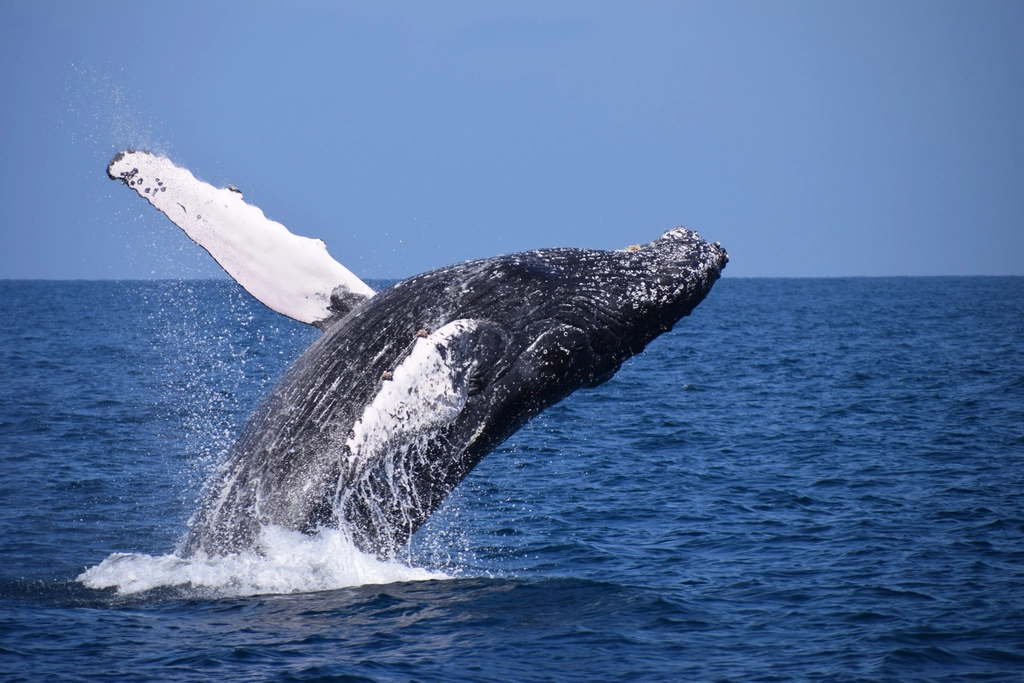 Photo Credit: Rawpixel
In the vast, shimmering blue of the ocean, the humpback whale, known scientifically as Megaptera novaeangliae, glides gracefully through the water. With its long pectoral fins and distinctive hump on its back, this gentle giant can weigh between 40 to 100 tons, making it one of the largest animals on the planet. Imagine standing on a sunlit shore, the salty breeze ruffling your hair, as you catch a glimpse of these magnificent creatures breaching the surface, their massive bodies arcing through the air before crashing back into the waves with a thunderous splash. It’s a breathtaking sight that leaves onlookers in awe, and it’s no wonder that scientists and nature enthusiasts alike are captivated by their beauty and behavior.
Humpback whales are not just known for their size; they are also famous for their complex songs, which can travel for miles underwater. These haunting melodies are believed to play a role in communication and mating, adding an air of mystery to their already fascinating lives. As they migrate thousands of miles between feeding and breeding grounds, these whales demonstrate remarkable endurance and adaptability. Their role in the ocean ecosystem is equally impressive, as they help maintain the balance of marine life by consuming vast amounts of smaller creatures like krill and fish. Join us as we dive deeper into the world of humpback whales, exploring their behaviors, habitats, and the vital role they play in our oceans.
The humpback whale, a magnificent marine mammal, holds a special place in the tree of life. Scientifically classified as Megaptera novaeangliae, it belongs to the kingdom Animalia, which includes all animals, and the phylum Chordata, known for creatures with a backbone. What sets humpback whales apart is their incredible acrobatic displays, such as breaching and slapping the water with their fins. These behaviors not only captivate observers but also play a role in communication and social interaction among these gentle giants.
| Taxonomic Rank | Scientific Name | Meaning & Significance |
|---|---|---|
| Kingdom | Animalia | This term means “animals” in Latin, highlighting the diverse group of living organisms that share characteristics like movement and consumption of organic material. |
| Phylum | Chordata | Derived from the Greek word “chordē,” meaning “string,” this classification refers to animals with a notochord, a flexible rod that supports the body, which in vertebrates becomes the backbone. |
| Class | Mammalia | This name comes from the Latin word “mamma,” meaning “breast,” indicating that members of this class nurse their young with milk produced by mammary glands. |
| Order | Cetacea | From the Greek word “ketos,” meaning “whale,” this order encompasses all whales, dolphins, and porpoises, highlighting their aquatic adaptations. |
| Family | Balaenopteridae | This family name means “winged whales,” referring to the long pectoral fins of these species, which are adapted for life in the ocean. |
| Genus | Megaptera | Translating to “large wings” in Greek, this name reflects the humpback whale’s impressive pectoral fins, which can be up to 15 feet long, showcasing their unique physical features. |
| Species | novaeangliae | This Latin term means “New England,” as early whalers in the 18th century first identified this species in the waters off the coast of New England. |
The classification of the humpback whale reveals much about its evolutionary journey. As a member of the order Cetacea, it shares a common ancestor with land mammals, showcasing the incredible adaptations that have allowed it to thrive in marine environments. The unique features and behaviors of humpback whales, from their long fins to their complex songs, illustrate the diverse paths life can take in response to changing habitats and ecological niches. Understanding their place in the animal kingdom not only deepens our appreciation for these majestic beings but also highlights the importance of conserving their oceanic homes.
The evolutionary journey of the humpback whale stretches back millions of years, tracing its lineage through a fascinating timeline of adaptation and change. These majestic giants belong to the family Balaenopteridae and are part of a larger group known as cetaceans, which includes all whales, dolphins, and porpoises. The story begins around 50 million years ago, when the ancestors of modern whales were still land-dwelling mammals. Over time, these early creatures made a dramatic shift from land to sea, leading to the incredible forms we see today.
The ancestors of humpback whales were likely similar to modern-day hippos, sharing a common ancestor that roamed the land. As they ventured into aquatic environments, they underwent significant transformations. Their limbs gradually evolved into flippers, allowing for graceful swimming. The development of a streamlined body shape reduced drag in the water, making it easier to glide through the ocean. Additionally, their nostrils migrated to the top of their heads, forming blowholes that enabled them to breathe efficiently while swimming.
These remarkable adaptations have equipped humpback whales to thrive in their oceanic habitats. Their streamlined bodies and powerful flippers enable them to navigate vast distances during migrations, while their unique songs foster social connections and attract mates. The ability to breathe efficiently through blowholes allows them to spend more time foraging for food, and their thick blubber keeps them warm in chilly waters. Together, these features not only enhance their survival but also contribute to the awe-inspiring presence of humpback whales in our oceans today.
The humpback whale is a breathtaking sight in the ocean, with its massive body gliding gracefully through the water. These gentle giants can weigh between 40 to 100 tons, making them one of the largest animals on the planet. Their streamlined shape allows them to swim efficiently, while their long pectoral fins, which can reach up to 15 feet, add to their impressive silhouette. The most distinctive feature of the humpback is the small hump on its back, which gives it a unique profile when surfacing. With a smooth skin that glistens in the sunlight, these whales are not just large; they are also stunningly beautiful.
| Feature | Description |
|---|---|
| Weight | 40-100 tons (36,000-99,800 kg) |
| Skin Type | Smooth |
| Most Distinctive Feature | Small hump on the back |
The combination of their size, smooth skin, and unique hump plays a vital role in their survival. The smooth skin helps reduce drag as they swim, allowing them to move swiftly through the water. This agility is essential for catching prey, such as small fish and krill. The hump on their back is not just for show; it aids in their breathing and helps them to dive more efficiently. Together, these features make the humpback whale a master of the ocean, perfectly adapted to its aquatic environment.
The humpback whale calls the vast oceans its home, often favoring areas close to the shore. Picture a shimmering blue expanse where the sun dances on the waves, and the salty breeze carries the sounds of the sea. These whales thrive in both warm tropical waters and cooler temperate regions, making their habitat a blend of rich marine environments. From vibrant coral reefs to deep ocean canyons, the humpback whale’s home is as diverse as it is beautiful.
Humpback whales are adaptable and can be found in a variety of climates, from the warm, sun-soaked waters of the tropics to the chilly, nutrient-rich seas of the polar regions. They prefer areas where food is abundant, such as krill and small fish, which thrive in cooler waters. These whales often migrate long distances between feeding and breeding grounds, showcasing their remarkable ability to navigate through different environmental conditions.
To thrive in their diverse habitats, humpback whales have developed several adaptations. Their large bodies are designed for efficient swimming, allowing them to travel great distances in search of food. They also possess a unique method of communication, using complex songs that can travel for miles underwater. This vocalization not only helps them find mates but also allows them to coordinate with other whales during their long migrations. With these adaptations, humpback whales continue to flourish in the ever-changing oceanic world.
Humpback whales lead a dynamic daily life that revolves around their need for food, social interaction, and communication. These gentle giants spend much of their time swimming through the ocean, often diving deep to hunt for their favorite meals—small fish and krill. Their days are filled with a mix of feeding, resting, and socializing, creating a rhythm that is both purposeful and serene. As they glide through the water, they can cover vast distances, sometimes traveling hundreds of miles in search of food or warmer waters during migration.
Social behavior is a key aspect of humpback whale life. They are known to form groups called pods, which can consist of a few individuals or several dozen. These pods are not just for companionship; they play a crucial role in their survival. Humpbacks communicate with each other using a variety of sounds, including songs that can travel long distances underwater. These songs are thought to be a way to attract mates or establish social bonds. Within their pods, whales often engage in playful behaviors, such as breaching—jumping out of the water—and slapping the surface with their fins, which can strengthen their social ties and help coordinate group activities.
| Behavior Type | Description |
|---|---|
| Feeding | Humpback whales use a technique called bubble net feeding, where they create bubbles to trap fish, making it easier to catch their prey. |
| Social Structure | They live in pods, which can vary in size, and often include mothers with calves, as well as other related individuals. |
| Communication | Humpbacks are famous for their complex songs, which can last for hours and are believed to play a role in mating and social interactions. |
| Playful Behavior | Whales often breach and slap the water with their fins, which may serve as a form of communication or simply for fun. |
The behaviors of humpback whales are not just fascinating; they are essential for their survival. By forming pods, they enhance their chances of finding food and protecting each other from predators. Their ability to communicate through songs and playful interactions strengthens social bonds, which can be vital during migration and breeding seasons. In the vast ocean, these behaviors create a network of support that helps ensure the continuation of their species, showcasing the intricate connections within the marine world.
Humpback whales are fascinating omnivores, meaning they eat both plants and animals. Their primary diet consists of tiny creatures like plankton, as well as larger prey such as fish and crustaceans. To obtain their food, these magnificent whales employ a variety of clever hunting techniques, showcasing their intelligence and adaptability in the ocean.
| Dietary Aspect | Details |
|---|---|
| Diet Type | Omnivore |
| Favorite Foods | Plankton, fish, and crustaceans |
| Prey Items | Small fish, krill, and other marine invertebrates |
| Hunting/Foraging Strategies | Bubble net feeding and lunge feeding |
The diet of humpback whales plays a crucial role in their ecology and daily routines. By consuming vast amounts of plankton and small fish, they help maintain the balance of marine ecosystems. Their feeding habits also influence the distribution of prey species, creating a ripple effect throughout the ocean. As they migrate between feeding and breeding grounds, their dietary needs shape their journey, making them key players in the health of our oceans.
Humpback whales have a captivating mating ritual that takes place during the breeding season, which typically occurs from late fall to early spring. During this time, males engage in a spectacular display of songs and acrobatics to attract females. These songs can travel long distances underwater, creating a symphony of sounds that echo through the ocean. Once a female chooses a mate, the pair may swim together for a short time before the female becomes pregnant.
| Reproductive Aspect | Details |
|---|---|
| Gestation Period | 11 months |
| Average Litter Size | 1 |
| Age of Maturity | 4 to 5 years |
| Name of Young | Calf |
After a lengthy gestation period of about 11 months, a single calf is born, measuring around 10 to 15 feet long and weighing up to 2 tons! The mother is incredibly nurturing, providing her calf with rich milk that helps it grow rapidly. For the first year of its life, the calf stays close to its mother, learning essential survival skills and how to navigate the vast ocean. This strong bond between mother and calf is crucial, as it ensures the young whale develops into a healthy adult, ready to join the ranks of these magnificent creatures in the deep blue sea.
Humpback whales play a vital role in the ocean’s food web, primarily as large consumers of smaller marine life. They feast on tiny creatures like krill and small fish, helping to maintain the balance of marine ecosystems. However, despite their size and strength, these gentle giants face several dangers that threaten their survival.
To defend themselves against these threats, humpback whales have developed several survival strategies. They are known for their acrobatic displays, such as breaching and slapping the water with their fins, which may help to communicate danger to other whales. Additionally, their strong social bonds allow them to work together, often forming groups to protect one another. By using their intelligence and adaptability, humpback whales continue to navigate the challenges of their environment, showcasing their resilience in the face of adversity.
A keystone species is a vital part of its ecosystem, meaning its presence has a significant impact on the environment and other living things. The humpback whale, with its impressive size and unique behaviors, qualifies as a keystone species in the marine world. By influencing the populations of other marine organisms and shaping the oceanic environment, humpback whales play a crucial role in maintaining the health of their ecosystems.
One of the most important ways humpback whales impact their environment is through their feeding habits. As omnivores, they consume vast amounts of small fish and krill, which helps regulate these populations. When humpbacks dive deep to feed, they stir up nutrients from the ocean floor, promoting the growth of phytoplankton. This tiny plant life forms the base of the marine food web, supporting countless other species. Without the humpback’s feeding, these nutrient cycles could be disrupted, leading to imbalances in the ecosystem.
Additionally, humpback whales are known for their complex social structures, often traveling in pods. This group behavior not only enhances their hunting efficiency but also fosters a sense of community among the whales. Their social interactions can influence the behavior of other marine animals, as the presence of these large mammals can deter potential predators or attract smaller fish. The ripple effects of their social dynamics extend throughout the ocean, showcasing their importance beyond just their physical presence.
If humpback whales were to disappear, the consequences would be profound. The balance of marine ecosystems would be disrupted, leading to overpopulation of smaller fish and krill, which could deplete phytoplankton and other vital resources. This chain reaction would not only affect marine life but could also impact human communities that rely on healthy oceans for food and livelihoods. The loss of these magnificent whales would echo through the ocean, reminding us of the interconnectedness of all life.
The humpback whale plays a crucial role in shaping its marine ecosystem. As a keystone species, it influences the structure and health of ocean environments. These magnificent creatures are not just impressive in size; they also contribute to the balance of life in the oceans. By feeding on various marine organisms, they help regulate populations of smaller species, ensuring that no single group overwhelms the ecosystem. Their presence supports a diverse range of life, from tiny plankton to larger fish, creating a vibrant underwater community.
| Ecosystem Service | Impact |
|---|---|
| Nutrient Cycling | Humpback whales contribute to nutrient distribution through their feeding and excretion, enriching the water and supporting marine life. |
| Prey Regulation | By consuming large quantities of krill and small fish, they help maintain balanced populations of these species, preventing overpopulation. |
| Habitat Creation | Their movements and behaviors can create habitats for other marine organisms, such as barnacles and small fish that attach to their bodies. |
| Carbon Sequestration | When humpback whales die, their bodies sink to the ocean floor, sequestering carbon and providing nutrients to deep-sea ecosystems. |
Humpback whales influence their environment in many fascinating ways. For instance, their feeding habits not only control the populations of their prey but also promote the growth of phytoplankton. These tiny plants are essential for producing oxygen and absorbing carbon dioxide, making them vital for the health of our planet. Additionally, when humpbacks migrate, they travel through various oceanic regions, spreading nutrients and supporting diverse marine life along their journey. Their songs, which can travel long distances underwater, also play a role in communication among marine species, fostering connections in the ocean’s vast expanse.
The broader ecological importance of humpback whales cannot be overstated. As they navigate the oceans, they help maintain the delicate balance of marine ecosystems. Their presence supports a web of life that includes countless species, from the smallest plankton to the largest fish. By contributing to nutrient cycling and habitat creation, humpback whales ensure that the ocean remains a thriving environment. Protecting these majestic animals is not just about preserving a single species; it is about safeguarding the intricate tapestry of life that depends on them.
In the intricate web of life beneath the waves, symbiosis plays a vital role in the survival and thriving of various species. Symbiosis refers to the close and often long-term interactions between different biological species. These relationships can be mutualistic, where both species benefit; parasitic, where one benefits at the expense of the other; or commensal, where one benefits while the other is neither helped nor harmed. Humpback whales, with their majestic presence, engage in several fascinating partnerships with other marine life, showcasing the interconnectedness of ocean ecosystems.
| Species/Type | Relationship Type | Description |
|---|---|---|
| Remora Fish | Mutualistic | Remora fish attach themselves to the humpback whale, gaining protection and transportation while helping to keep the whale’s skin clean by eating parasites. |
| Barnacles | Commensal | Barnacles attach to the skin of humpback whales, benefiting from the whale’s movement through the water, which brings them food. The whale is not affected by their presence. |
| Orca Whales | Parasitic | In some cases, orca whales may prey on young humpback whales, benefiting from the hunt while the humpback suffers a loss. |
These relationships have evolved over time, shaped by the needs and behaviors of the species involved. Mutualistic partnerships, like that of the remora fish and humpback whales, highlight how cooperation can enhance survival for both parties. Meanwhile, the presence of barnacles illustrates how some species can thrive without impacting their hosts. On the other hand, the predatory relationship with orcas reminds us that not all interactions are beneficial. Understanding these dynamics helps us appreciate the delicate balance of marine ecosystems and the roles that each species plays in maintaining that balance.
Humpback whales are truly captivating creatures of the ocean, known for their acrobatic displays and haunting songs. Here are some surprising facts that showcase their incredible nature.
Throughout history, humpback whales have captivated the human imagination, appearing in folklore, art, and literature across cultures. Ancient mariners often regarded these majestic creatures as symbols of strength and grace, weaving tales of their grandeur into the fabric of maritime lore. In many indigenous cultures, humpbacks are seen as spiritual beings, embodying the connection between the ocean and humanity. Their songs, which can travel for miles underwater, have inspired countless stories and songs, reflecting our deep-seated fascination with the mysteries of the sea.
In modern times, the relationship between humpback whales and humans has evolved significantly. Conservation efforts have gained momentum as awareness of the threats these whales face has increased. Activities like whaling, pollution, and climate change have put pressure on their populations. Thankfully, many countries have enacted laws to protect these gentle giants, leading to a resurgence in their numbers. However, conflicts still arise, particularly in areas where shipping routes intersect with whale migration paths. Understanding and mitigating these conflicts is crucial for ensuring the survival of humpback whales and the health of marine ecosystems.
Looking ahead, the future of the relationship between humpback whales and humanity holds both promise and challenges. As we continue to learn more about these incredible animals, our responsibility to protect their habitats and ensure their survival becomes ever more critical. By fostering a deeper understanding and respect for humpback whales, we can create a harmonious coexistence that benefits both these magnificent creatures and the health of our oceans. Together, we can ensure that future generations will also be able to marvel at the beauty and grace of humpback whales swimming through the deep blue sea.
The humpback whale is currently classified as “Least Concern” by the International Union for Conservation of Nature (IUCN). This status reflects a positive trend in their population, which is estimated to be between 120,000 and 150,000 individuals. Thanks to concerted conservation efforts, these magnificent marine mammals have rebounded from the brink of extinction, showcasing the resilience of nature when given a chance to recover.
| Conservation Factor | Status/Details |
|---|---|
| IUCN Status | Least Concern |
| Estimated Population Size | 120,000 to 150,000 |
| Population Trend | Increasing |
Humpback whales face several threats that can impact their populations. One of the most significant dangers comes from human activities, such as ship strikes and entanglement in fishing gear. These incidents can lead to injury or death for these gentle giants. Additionally, climate change poses a growing risk, affecting their food sources and migratory patterns. As ocean temperatures rise and habitats shift, humpback whales may struggle to find the krill and small fish they rely on for sustenance.
Conservation efforts have made a remarkable difference for humpback whales, and the outlook for their future is hopeful. Various organizations and governments have implemented protective measures, such as establishing marine protected areas and enforcing regulations to reduce ship traffic in critical habitats. Public awareness campaigns have also played a vital role in promoting responsible whale watching and reducing plastic pollution in the oceans. With continued dedication to their protection, humpback whales can thrive in our oceans for generations to come.
| Question | Answer |
|---|---|
| Where do Humpback Whales live? | Humpback Whales are found in oceans close to the shore, often migrating between feeding and breeding grounds. They travel thousands of miles each year, moving from colder waters where they feed to warmer waters where they give birth. |
| What do Humpback Whales eat? | Humpback Whales are omnivores, meaning they eat both plants and animals. Their diet mainly consists of small fish and krill, which are tiny shrimp-like creatures. They use a technique called bubble net feeding to trap their prey. |
| How do Humpback Whales behave? | Humpback Whales are known for their acrobatic displays, often breaching or jumping out of the water. They are also very social animals, frequently seen in groups, and they communicate using complex songs that can last for hours. |
| How do Humpback Whales reproduce? | Humpback Whales typically mate during the winter months in warmer waters. After a gestation period of about 11 to 12 months, a female gives birth to a single calf, which she nurses for about six months before it learns to feed on its own. |
| What threats do Humpback Whales face? | While Humpback Whales are currently listed as Least Concern, they still face threats from ship strikes, entanglement in fishing gear, and climate change. These factors can impact their food supply and breeding grounds, making conservation efforts important. |
| What is a distinctive feature of Humpback Whales? | One of the most distinctive features of Humpback Whales is the small hump on their back, which gives them their name. This hump is often visible when they dive, and it helps researchers identify individual whales. |
| Are Humpback Whales social animals? | Yes, Humpback Whales are very social creatures. They often travel in groups called pods and engage in playful behaviors, such as breaching and slapping the water with their fins. Their social nature is part of what makes them so fascinating to observe. |