Taxonomy & Classification
- Kingdom
- Animalia
- Phylum
- Chordata
- Class
- Mammalia
- Order
- Rodentia
- Family
- Cricetidae
- Genus
- Ondatra
- Species
- Ondatra zibethicus

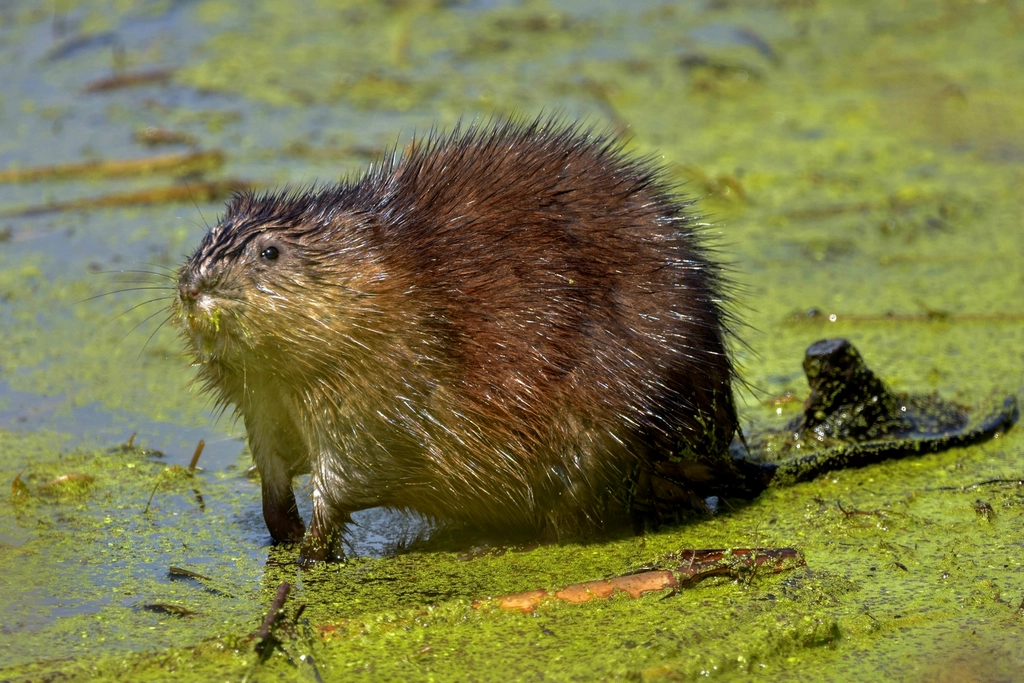 Photo Credit: Rawpixel
In the shimmering waters of North America, the muskrat, known scientifically as Ondatra zibethicus, glides gracefully through its lush habitat. With its sleek, elongated body and a distinctive, flat tail, this small mammal is perfectly adapted for life in the water. Muskrats are often spotted in wetlands, ponds, and marshes, where they create intricate burrows and lodges from reeds and mud. Their soft, dense fur, which ranges from brown to gray, helps keep them warm as they dive beneath the surface, searching for aquatic plants and small creatures to munch on.
What makes the muskrat particularly captivating to scientists and nature enthusiasts alike is its role as a keystone species. This means that muskrats have a significant impact on their environment, helping to maintain the health of wetland ecosystems. As they forage and build their homes, they create habitats for other wildlife, from frogs to birds. Their playful antics and social behaviors, such as chirps and whistles during courtship, add to their charm, making them a delightful subject of study. As we explore the world of the muskrat, we’ll uncover the secrets of its life cycle, diet, and the vital role it plays in the natural world.
The muskrat, a small yet intriguing mammal, occupies a special place in the tree of life. Scientifically classified within the kingdom Animalia, it belongs to the phylum Chordata, which includes all animals with a backbone. As a member of the class Mammalia, muskrats share traits like fur and the ability to nurse their young. They are part of the order Rodentia, which is home to the largest group of mammals, including mice and squirrels. What sets muskrats apart is their semi-aquatic lifestyle, allowing them to thrive in wetlands and marshes. Their unique adaptations, such as webbed hind feet and a flattened tail, make them excellent swimmers, showcasing the incredible diversity of life on our planet.
| Taxonomic Rank | Scientific Name | Meaning & Significance |
|---|---|---|
| Kingdom | Animalia | This name means “animals” in Latin, highlighting the muskrat’s classification as a living organism that moves and consumes organic material. |
| Phylum | Chordata | Derived from the Greek word “chordē,” meaning “string,” this refers to the muskrat’s backbone, a key feature of all vertebrates. |
| Class | Mammalia | This term comes from the Latin “mamma,” meaning “breast,” indicating that muskrats, like all mammals, nurse their young with milk. |
| Order | Rodentia | From the Latin “rodere,” meaning “to gnaw,” this name reflects the muskrat’s characteristic front teeth, which continuously grow and are perfect for chewing through tough plant material. |
| Family | Cricetidae | This family name is derived from the Latin “cricetus,” referring to a type of hamster, and it encompasses many small, burrowing rodents, including the muskrat. |
| Genus | Ondatra | Originating from the Algonquin word for “water rat,” this name emphasizes the muskrat’s aquatic habits and its role in wetland ecosystems. |
The classification of the muskrat reveals much about its evolutionary journey. As a member of the rodent family, it shares a common ancestor with other rodents, showcasing the adaptability and resilience of this group. The muskrat’s unique adaptations for a semi-aquatic lifestyle highlight how evolution shapes species to thrive in specific environments. By understanding its taxonomic position, we gain insight into the muskrat’s ecological role and the intricate web of life that connects all living beings.
The evolutionary journey of the muskrat, a small semi-aquatic mammal, stretches back millions of years. This timeline reveals a fascinating story of adaptation and survival, as these creatures evolved to thrive in wetland habitats across North America. The muskrat, scientifically known as Ondatra zibethicus, is a member of the Cricetidae family, which includes various rodents. Understanding its ancestry helps us appreciate how it has become so well-suited to its environment.
Muskrats are believed to have evolved from ancient rodent ancestors that roamed the earth during the late Eocene epoch, around 35 million years ago. These early rodents were small and primarily terrestrial, but as they adapted to changing climates and environments, some began to exploit aquatic habitats. Over time, the muskrat’s ancestors developed features that allowed them to become more comfortable in water, leading to significant evolutionary changes. The transition from land to water was marked by adaptations such as webbed feet and a streamlined body, which enhanced their swimming abilities.
These adaptations have been crucial for the muskrat’s survival in diverse wetland ecosystems. The ability to swim efficiently allows them to escape predators and access food sources like cattails and reeds. Their thick fur provides insulation against cold water, while their strong teeth enable them to thrive on a diet of vegetation. Together, these traits have made the muskrat a resilient and successful inhabitant of marshes, ponds, and rivers, showcasing the wonders of evolution in action.
The muskrat is a charming little mammal that captures the imagination with its compact body and lively demeanor. With a streamlined shape, it is perfectly designed for life in the water. Its body is covered in dense, waterproof fur that helps it glide effortlessly through ponds and marshes. Muskrats have a long, flattened tail that acts like a rudder, steering them as they swim. Their webbed hind feet are a standout feature, allowing them to paddle swiftly and navigate their aquatic habitats with ease.
| Feature | Description |
|---|---|
| Weight | 0.7kg – 1.8kg (1.5lbs – 4lbs) |
| Skin Type | Hair |
| Most Distinctive Feature | Webbed hind feet |
These physical traits work together to create a highly efficient swimmer. The muskrat’s lightweight body allows it to move quickly through water, while its waterproof fur keeps it warm and dry. The webbed feet are not just for show; they provide the necessary propulsion to escape predators and forage for food. This combination of features makes the muskrat a master of its environment, thriving in wetlands where it can find both shelter and sustenance.
The muskrat thrives in a world of shimmering waters and lush greenery. Picture a tranquil lake or a serene pond, where the gentle rustle of reeds and the soft lapping of water create a peaceful symphony. These small mammals are often found in wetlands, which are rich ecosystems teeming with life. Here, they build their homes, known as lodges, from mud, reeds, and grasses, creating cozy retreats that blend seamlessly into their surroundings.
Muskrats prefer environments that offer both water and vegetation. They are most comfortable in areas where the climate is mild, as they need access to open water for swimming and foraging. Wetlands provide the perfect balance of moisture and plant life, which is essential for their diet. These habitats often experience seasonal changes, and muskrats are well-suited to adapt to varying water levels and temperatures, making them resilient in the face of environmental shifts.
To thrive in their watery homes, muskrats have developed several clever adaptations. Their webbed feet make them excellent swimmers, allowing them to navigate through the water with ease. Their thick fur keeps them warm, even in cooler climates, while their keen sense of smell helps them locate food and avoid predators. By building lodges and burrows, they create safe spaces to rest and raise their young, ensuring their survival in the diverse habitats they call home.
The muskrat’s daily life is a blend of activity and rest, shaped by its semi-aquatic lifestyle. As dawn breaks, these small mammals emerge from their burrows, ready to forage for food. Muskrats are primarily herbivores, munching on a diet of aquatic plants, roots, and even some small invertebrates. They spend much of their day swimming and diving, using their webbed feet to navigate through the water with ease. When the sun sets, they return to their burrows, often creating intricate tunnels and lodges made of mud and vegetation. This daily rhythm is essential for their survival, allowing them to gather food and maintain their homes.
Socially, muskrats are quite engaging creatures. They often live in family units, which can include a mother, her young, and sometimes a few older siblings. These family groups work together to defend their territory and share resources. Communication among muskrats is vital; they use a variety of sounds, such as chirps and whistles, to alert each other to danger or to signal their presence. This social structure not only strengthens their bonds but also enhances their ability to thrive in their environment.
| Behavior Type | Description |
|---|---|
| Foraging | Muskrats search for food, primarily aquatic plants and roots, using their keen sense of smell. |
| Family Units | They live in small family groups, which help in raising young and defending territory. |
| Communication | Muskrats use sounds like chirps and whistles to communicate with each other, especially in warning situations. |
| Building | They construct burrows and lodges from mud and vegetation, providing shelter and safety. |
The behaviors of muskrats are finely tuned to ensure their survival in the wild. By foraging efficiently, living in family groups, and communicating effectively, they create a supportive community that enhances their chances of thriving. Their ability to adapt to their environment, along with their social dynamics, plays a crucial role in their ongoing success as a species.
Muskrats are omnivores, which means they enjoy a varied diet that includes both plants and animals. These clever little mammals primarily feast on aquatic vegetation, such as cattails and water lilies, but they also have a taste for small animals. When foraging, muskrats use their sharp front teeth to snip off tender plant parts and can dive underwater to catch small fish, frogs, and even crustaceans like crayfish. Their feeding behavior is quite resourceful, as they often gather food and store it in their burrows for later use, ensuring they have enough to eat even when resources are scarce.
| Dietary Aspect | Details |
|---|---|
| Diet Type | Omnivore |
| Favorite Foods | Aquatic plants, mussels, fish, frogs, crayfish, and turtles |
| Prey Items | Small fish, frogs, and crustaceans |
| Hunting/Foraging Strategies | Dives underwater to catch prey and gathers vegetation |
This diverse diet plays a crucial role in the muskrat’s ecology and daily routine. By consuming both plants and animals, muskrats help maintain the balance of their aquatic ecosystems. Their foraging activities not only provide them with essential nutrients but also influence the growth of vegetation in their habitats. As they nibble on plants, they promote new growth, which benefits other wildlife. This interconnectedness highlights the importance of muskrats in their environment, showcasing how their eating habits shape the world around them.
As spring arrives, muskrats engage in a lively courtship dance that sets the stage for their breeding season. Males and females communicate through a series of chirps and whistles, establishing bonds that will lead to the creation of new life. This season typically begins in late winter and can extend into early summer, depending on the climate. Once paired, the female prepares to nest, often choosing a cozy spot near water where she can safely raise her young.
| Reproductive Aspect | Details |
|---|---|
| Gestation Period | 28 days |
| Litter Size | 4 to 10 kits |
| Age of Maturity | Up to 1 year |
| Name of Young | Kits |
Once the kits are born, they are completely dependent on their mother for care. Muskrats are attentive parents, providing warmth and nourishment to their young. The kits are born blind and hairless, but they grow quickly, developing fur and opening their eyes within a few weeks. As they mature, the young muskrats learn essential survival skills from their mother, such as foraging for food and navigating their watery habitat. By the time they reach sexual maturity, they are ready to explore the world on their own, continuing the cycle of life in the vibrant ecosystems they inhabit.
Muskrats play a vital role in their ecosystems, acting as both prey and a contributor to the health of wetland environments. As herbivores, they help control aquatic plant growth, while their burrowing activities aerate the soil and create habitats for other species. However, muskrats are not at the top of the food chain; they face numerous dangers that threaten their survival.
To defend themselves against these threats, muskrats have developed several clever survival strategies. They are excellent swimmers, using their speed and agility to escape predators in the water. When danger approaches, they can quickly dive underwater and hold their breath for several minutes. Additionally, muskrats often build their homes in dense vegetation, providing natural cover from aerial hunters. By staying alert and using their environment wisely, muskrats continue to thrive despite the challenges they face.
A keystone species is an organism that has a disproportionately large impact on its environment relative to its abundance. In simpler terms, if you remove a keystone species from an ecosystem, it can cause significant changes or even collapse. The muskrat, a small semi-aquatic mammal found in lakes, ponds, and wetlands, qualifies as a keystone species due to its vital role in maintaining the health and balance of its habitat.
Muskrats contribute to their ecosystems in several important ways. First, they are excellent engineers of their environment. By building burrows and creating lodges from reeds and mud, they help shape the landscape of wetlands. These structures provide shelter not only for muskrats but also for other animals, including birds and amphibians. This creates a rich habitat that supports a diverse range of wildlife.
Additionally, muskrats play a crucial role in controlling aquatic plant growth. As omnivores, they primarily feed on aquatic vegetation like cattails and water lilies. By munching on these plants, muskrats help prevent overgrowth, which can choke waterways and reduce oxygen levels in the water. This balance is essential for the health of fish and other aquatic organisms that rely on clear, oxygen-rich water.
Moreover, muskrats serve as a food source for various predators, including foxes, raccoons, and birds of prey. Their presence in the food web supports these larger animals, helping to maintain the balance of predator and prey relationships in their ecosystem.
If muskrats were to disappear from their ecosystems, the consequences could be dire. Without their burrowing activities, wetland habitats would lose essential structures that support a variety of wildlife. Overgrown aquatic plants could lead to decreased oxygen levels in the water, harming fish and other aquatic life. Additionally, the absence of muskrats would disrupt the food web, leaving predators without a vital food source. This chain reaction could ultimately lead to a decline in biodiversity, highlighting just how important these small mammals are to the health of their ecosystems.
The muskrat is a small but mighty player in its ecosystem, often found in lakes, ponds, and wetlands. This semi-aquatic mammal has a unique ecological niche, meaning it fills a specific role in its environment. By foraging for food and creating burrows, muskrats help shape the landscape around them. Their activities not only provide food for other animals but also contribute to the health of wetland habitats, making them essential for maintaining biodiversity.
| Ecosystem Service | Impact |
|---|---|
| Vegetation Control | Muskrats eat aquatic plants, helping to prevent overgrowth and maintain a balanced ecosystem. |
| Habitat Creation | Their burrowing activities create channels and ponds that benefit other wildlife. |
| Food Source | Muskrats serve as prey for various predators, including birds of prey and larger mammals. |
| Nutrient Cycling | By feeding on plants and decomposing organic matter, muskrats help recycle nutrients in the ecosystem. |
Muskrats influence their environment in several fascinating ways. For instance, as they munch on aquatic plants like cattails and water lilies, they help keep these species in check. This is crucial because unchecked plant growth can choke waterways, leading to less oxygen for fish and other aquatic life. Additionally, their burrows can create small ponds that provide homes for frogs, turtles, and countless insects. These little water bodies can become bustling hubs of biodiversity, showcasing the interconnectedness of life in wetlands.
The broader ecological importance of muskrats cannot be overstated. As a keystone species, their presence supports a wide range of other organisms, from the tiniest insects to larger mammals. By maintaining the health of wetland ecosystems, muskrats play a vital role in water purification and flood control. Their activities help create a thriving environment that benefits not just themselves but also countless other species, highlighting the intricate web of life that exists in our natural world.
In the intricate web of life, symbiosis plays a crucial role in shaping the relationships between different species. Symbiosis refers to the close interactions between organisms, which can be beneficial, harmful, or neutral. These ecological relationships can take many forms, such as mutualism, where both species gain from the interaction, parasitism, where one benefits at the expense of the other, and commensalism, where one species benefits while the other is neither helped nor harmed. The muskrat, a small semi-aquatic mammal, engages in various partnerships with other species, showcasing the beauty and complexity of nature.
| Species/Type | Relationship Type | Description |
|---|---|---|
| Waterfowl | Mutualistic | Muskrats create habitats that attract waterfowl, while the birds help control insect populations around muskrat burrows. |
| Beavers | Commensal | Muskrats often share the same habitats as beavers, benefiting from the ponds they create without affecting the beavers. |
| Parasites (like ticks) | Parasitic | Ticks and other parasites can latch onto muskrats, feeding on their blood and potentially harming their health. |
These relationships have evolved over time, shaped by the needs and behaviors of the species involved. Mutualistic partnerships, like those with waterfowl, enhance the survival of both species, while commensal relationships allow muskrats to thrive in environments created by others, like beavers. On the other hand, parasitic relationships remind us that not all interactions are beneficial. Understanding these connections helps us appreciate the delicate balance of ecosystems and the roles each species plays in maintaining that balance. Through these interactions, muskrats contribute to the health of their habitats while also navigating the challenges posed by their partners.
Muskrats are often overlooked in the animal kingdom, but these small, semi-aquatic mammals are full of surprises that can captivate nature lovers of all ages. From their unique adaptations to their important role in ecosystems, muskrats have much to teach us about the natural world.
Throughout history, muskrats have woven themselves into the fabric of human culture and daily life. Native American tribes revered these small mammals, often incorporating them into their folklore and using their pelts for clothing and trade. In many regions, muskrats symbolize the connection between land and water, embodying the spirit of wetlands. Their presence in literature and art reflects humanity’s long-standing fascination with nature and the intricate relationships we share with wildlife.
In modern times, the interactions between muskrats and humans have evolved, marked by both cooperation and conflict. As wetlands are developed for agriculture and urbanization, muskrats often find themselves in competition with human interests. While some people appreciate their role in maintaining healthy ecosystems, others view them as pests due to their burrowing habits, which can undermine dikes and flood control systems. Conservation efforts are underway to protect their habitats, recognizing that muskrats contribute to biodiversity and the overall health of wetland environments. Interestingly, some communities have even explored the idea of domestication, raising muskrats for their fur and meat, which adds another layer to this complex relationship.
As we look to the future, the relationship between muskrats and humanity will likely continue to evolve. With increasing awareness of environmental issues, more people are recognizing the importance of preserving natural habitats. This shift could lead to greater efforts in conservation and coexistence, allowing muskrats to thrive alongside human communities. By understanding and respecting these small mammals, we can foster a more harmonious relationship that benefits both species and the ecosystems we share.
The muskrat, a small semi-aquatic mammal, currently holds a conservation status of “Least Concern” according to the International Union for Conservation of Nature (IUCN). This means that, overall, muskrats are not facing immediate threats that could lead to their extinction. While specific population estimates are unknown, muskrats are generally considered to be stable across their range. Their adaptability to various wetland habitats has allowed them to thrive in many areas, although local populations can fluctuate based on environmental conditions.
| Conservation Factor | Status/Details |
|---|---|
| IUCN Status | Least Concern |
| Estimated Population Size | Unknown |
| Population Trend | Stable |
Despite their overall stable status, muskrats face several threats that can impact local populations. Habitat loss is a significant concern, as wetlands are drained for agriculture and urban development. Pollution from agricultural runoff can also degrade their habitats, affecting the quality of the water and the plants they rely on for food. Additionally, muskrats are vulnerable to predation from animals like foxes, raccoons, and birds of prey, which can impact their numbers in certain areas.
Conservation efforts for muskrats focus on protecting their wetland habitats and promoting sustainable land use practices. Organizations and wildlife agencies work to restore and maintain wetlands, ensuring that these vital ecosystems remain healthy and vibrant. The outlook for muskrats is generally positive, as long as conservation measures continue to be implemented. By safeguarding their habitats, we can help ensure that muskrats remain a thriving part of our natural world for generations to come.
| Question | Answer |
|---|---|
| What is the habitat of a Muskrat? | Muskrats are commonly found in lakes, ponds, and wetlands. These areas provide the water they need for swimming and the vegetation they eat. They often build their homes, called lodges, from reeds and mud in these habitats. |
| What do Muskrats eat? | Muskrats are omnivores, which means they eat both plants and animals. Their diet mainly consists of aquatic plants, roots, and tubers, but they also enjoy small fish, frogs, and insects. This varied diet helps them thrive in their wetland homes. |
| How do Muskrats behave? | Muskrats are mostly nocturnal, meaning they are active at night. They are social animals and often live in family groups. You can see them swimming, diving, or foraging for food, and they are known for their playful antics in the water. |
| How do Muskrats reproduce? | Muskrats typically breed in the spring and can have two to three litters each year. A female usually gives birth to about 5 to 10 young, called kits, after a gestation period of about 30 days. The kits are born blind and helpless but grow quickly and learn to swim within a few weeks. |
| What threats do Muskrats face? | While Muskrats are currently listed as Least Concern, they do face threats from habitat loss and pollution. Wetland drainage for agriculture and urban development can reduce their living spaces. Additionally, they can be hunted for their fur, which poses another risk to their populations. |
| What is a distinctive feature of Muskrats? | One of the most distinctive features of Muskrats is their webbed hind feet, which help them swim efficiently. These adaptations make them excellent swimmers, allowing them to navigate through their aquatic environments with ease. Their long, flattened tails also aid in swimming and balance. |
| Are Muskrats good for the environment? | Yes, Muskrats play an important role in their ecosystems. By feeding on aquatic plants, they help maintain healthy wetland environments. Their burrowing activities can also create habitats for other animals, making them a vital part of the food web. |