Taxonomy & Classification
- Kingdom
- Animalia
- Phylum
- Chordata
- Class
- Mammalia
- Order
- Perissodactyla
- Family
- Equidae
- Genus
- Equus
- Species
- Equus hemionus

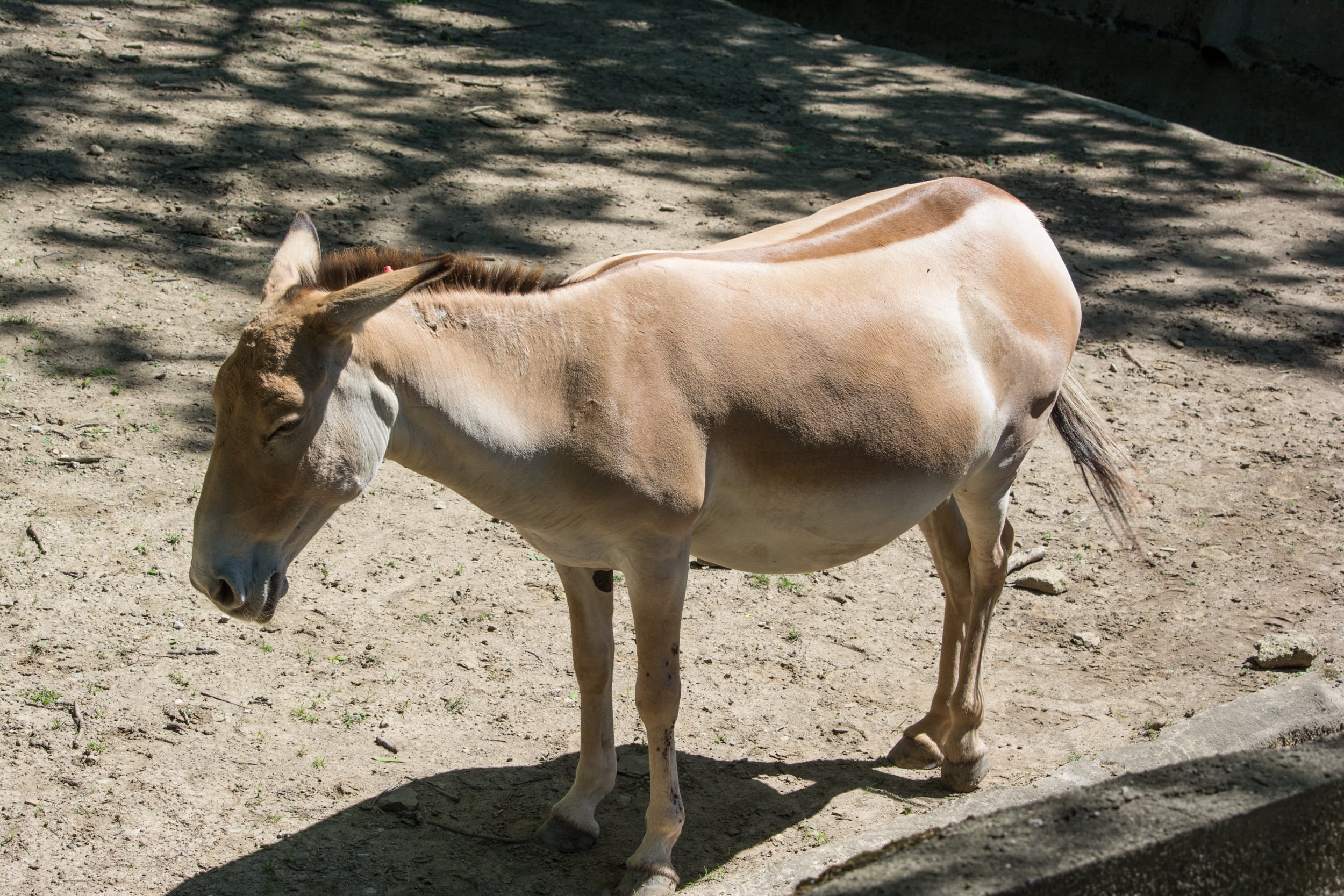 Photo Credit: Jarble / Wikimedia Commons
In the sun-drenched expanses of Central Asia, the Onager, scientifically known as Equus hemionus, roams the rugged terrain with a grace that captivates all who encounter it. This wild ass, often referred to as the “unruly” due to its spirited nature, boasts a striking appearance with a sandy-brown coat and a distinctive dark stripe running down its back. Its long legs and powerful build allow it to navigate the arid landscapes with ease, making it a true marvel of adaptation. Scientists and nature enthusiasts alike are drawn to the Onager not only for its beauty but also for its fascinating behaviors and the critical role it plays in its ecosystem.
Imagine standing on a vast plain, the wind gently rustling through the sparse vegetation, as you catch sight of a small herd of Onagers grazing peacefully. These animals are crepuscular, meaning they are most active during the cooler hours of dawn and dusk, when the sun casts a golden hue over the landscape. Their keen senses and social structures add layers of intrigue to their lives, as they communicate through a series of whinnies and body language. As we delve deeper into the world of the Onager, we will explore its unique adaptations, the challenges it faces in the wild, and the efforts being made to ensure its survival in an ever-changing environment. Join us on this adventure to uncover the secrets of this remarkable species and the vital role it plays in the tapestry of life in Asia.
The Onager, a wild ass native to the arid regions of Asia, holds a special place in the animal kingdom. Taxonomically, it belongs to the Kingdom Animalia, which includes all animals, and is classified under the Phylum Chordata, meaning it has a backbone. As a member of the Class Mammalia, it shares traits like warm-bloodedness and fur with other mammals. The Onager is part of the Order Perissodactyla, which includes odd-toed ungulates like horses and rhinos. Its family, Equidae, is where it finds its closest relatives, including domestic horses. What makes the Onager particularly interesting is its adaptability to harsh environments, showcasing the incredible diversity of life on Earth.
| Taxonomic Rank | Scientific Name | Meaning & Significance |
|---|---|---|
| Kingdom | Animalia | This name signifies all animals, highlighting the Onager’s place among living organisms that share certain biological characteristics. |
| Phylum | Chordata | Derived from the Greek word “chordē,” meaning string, this name refers to the presence of a notochord, or backbone, which is a key feature of the Onager. |
| Class | Mammalia | This term comes from “mamma,” Latin for breast, indicating that Onagers, like all mammals, nurse their young with milk. |
| Order | Perissodactyla | Meaning “odd-toed,” this name reflects the Onager’s unique hoof structure, which has one main toe on each foot, unlike even-toed animals like cows. |
| Family | Equidae | This name is derived from “equus,” the Latin word for horse, emphasizing the Onager’s close relationship to horses and other equids. |
| Genus | Equus | Also from the Latin word for horse, this classification highlights the Onager’s physical and behavioral similarities to its domesticated relatives. |
The Onager’s classification reveals much about its evolutionary journey. As a member of the Equidae family, it shares a common ancestor with horses, which diverged millions of years ago. This lineage showcases how species adapt to their environments over time. The Onager’s ability to thrive in dry, rugged landscapes speaks to its evolutionary resilience, illustrating the intricate web of life that connects all animals. Understanding its taxonomic position not only highlights its unique traits but also emphasizes the importance of preserving such remarkable species in our ever-changing world.
The evolutionary journey of the Onager, a wild ass found in the dry landscapes of Asia, stretches back millions of years. This fascinating animal is part of the Equidae family, which includes horses, zebras, and donkeys. The story of the Onager is intertwined with the evolution of the entire horse lineage, showcasing how these animals adapted to their environments over time.
The ancestors of the Onager can be traced back to the Eocene epoch, around 55 million years ago, when early equids began to emerge. These primitive horses were small and forest-dwelling, but as the climate changed and grasslands expanded, they evolved to become larger and more suited to open habitats. One significant transition occurred during the Miocene epoch, about 20 million years ago, when the ancestors of modern horses developed longer legs and more efficient grazing teeth. This adaptation allowed them to thrive in the vast, open plains where grasses became the dominant vegetation.
These evolutionary adaptations have been crucial for the Onager’s survival in harsh environments. The long legs not only provide speed but also allow the Onager to traverse rocky and uneven landscapes with ease. Its specialized teeth ensure that it can find enough food in areas where other animals might struggle. Additionally, the social structure of Onager herds enhances their ability to detect danger and respond quickly, making them resilient in the face of challenges. Together, these traits illustrate the Onager’s remarkable ability to thrive in a world that is constantly changing.
The Onager, a wild ass that roams the sun-baked plains of Asia, presents a striking silhouette against the rugged landscape. With a sturdy build, it stands tall and proud, showcasing a body that is both muscular and agile. Its long legs are designed for speed, allowing it to navigate the harsh terrain with ease. The Onager’s head is elongated, featuring large, expressive eyes that reflect its keen awareness of the environment. This animal’s overall appearance is a blend of strength and grace, making it a captivating sight in its natural habitat.
| Feature | Description |
|---|---|
| Weight | 440 to 640 pounds |
| Skin Type | Hair |
| Most Distinctive Feature | Black dorsal stripe with white borders |
The Onager’s physical traits are not just for show; they play vital roles in its survival. The black dorsal stripe, bordered by white, serves as a form of camouflage, helping it blend into the shadows of its arid surroundings. This adaptation is crucial for evading predators. Its robust body and powerful legs allow it to sprint away from danger, while its thick hair provides protection against the harsh sun and biting winds. Together, these features create a well-equipped animal, perfectly suited to thrive in the challenging environments it calls home.
The Onager thrives in a variety of dry and open landscapes, painting a vivid picture of life in the arid regions of Asia. Imagine vast desert plains stretching endlessly under a blazing sun, dotted with patches of resilient grass and hardy shrubs. These wild asses are often found in grasslands and shrublands, where they can graze on the sparse vegetation. Oases, with their life-giving water, provide a refreshing contrast to the surrounding dry terrain, making them vital spots for these animals. The Onager’s home is a blend of rugged steppes and gentle slopes, where the earth is both challenging and beautiful.
The climate in these regions is typically harsh, characterized by extreme temperatures and limited rainfall. Summers can be scorching, while winters may bring chilly winds and frost. The Onager is well-suited to these conditions, as it can endure long periods without water and withstand the heat of the day. The environment is often dry, with sparse vegetation that requires the Onager to be resourceful in finding food and shelter.
Adaptations have allowed the Onager to thrive in such challenging habitats. Its body is built for endurance, with strong legs that enable it to travel long distances in search of food and water. The Onager’s coat is short and light-colored, reflecting sunlight and helping to keep it cool. Additionally, its ability to go without water for extended periods means it can survive in areas where other animals might struggle. This remarkable resilience makes the Onager a true survivor in the wild, perfectly attuned to its environment.
The Onager leads a life that is both rhythmic and attuned to the rhythms of its environment. As a crepuscular animal, it is most active during the early morning and late afternoon, when the sun is not at its harshest. During these cooler parts of the day, Onagers graze on grasses and shrubs, using their strong teeth to nibble on tough vegetation. They spend the hottest hours resting in the shade, conserving energy and avoiding the intense heat of midday. This daily routine allows them to thrive in their arid habitats, where water and food can be scarce.
Socially, Onagers are known to form herds, which provide safety in numbers. These groups can vary in size, often consisting of a few individuals to larger family units. Within these herds, Onagers establish a social hierarchy, where dominant individuals lead the group to grazing areas and water sources. Communication among them is vital; they use a range of sounds, body language, and even facial expressions to convey messages. This social structure not only helps them find food but also strengthens bonds within the group, ensuring that they can work together to evade predators.
| Behavior Type | Description |
|---|---|
| Activity Patterns | Onagers are crepuscular, meaning they are most active during dawn and dusk, allowing them to avoid the heat of the day. |
| Social Structure | They live in herds, which can range from small family groups to larger gatherings, providing safety and support. |
| Communication Methods | Onagers communicate through vocalizations, body language, and facial expressions, helping them coordinate activities and alert each other to danger. |
The behaviors of the Onager are finely tuned to ensure their survival in challenging environments. By being active during cooler times and forming social groups, they maximize their chances of finding food and water while minimizing the risk of predation. This clever combination of habits not only helps them thrive in the wild but also showcases the incredible adaptability of life in the harsh landscapes of Asia.
The Onager is a herbivore, which means it primarily eats plants. This wild ass has adapted to thrive in its arid environment by foraging for grasses, shrubs, and other vegetation. With its strong teeth and specialized digestive system, the Onager can efficiently break down tough plant materials, allowing it to extract the nutrients it needs to survive. Its feeding behavior is often influenced by the availability of food, leading it to roam across vast distances in search of the best grazing spots.
| Dietary Aspect | Details |
|---|---|
| Diet Type | Herbivore |
| Favorite Foods | Grasses, shrubs, and other vegetation |
| Prey Items | None (as a herbivore, it does not hunt) |
| Hunting/Foraging Strategies | Roams large areas to find food, often grazing in the early morning and late afternoon |
The Onager’s diet plays a crucial role in shaping its ecology and daily routine. By feeding on a variety of plants, it helps maintain the balance of its habitat, preventing overgrowth and promoting biodiversity. Its foraging habits also dictate its movements, as it must constantly seek out fresh grazing areas. This not only influences its social structure, as Onagers often travel in small groups, but also impacts the other species that share its environment, creating a dynamic web of life in the arid landscapes of Asia.
The Onager’s mating behavior is a captivating dance of courtship that typically occurs during the spring months. During this time, males become more vocal and display their strength to attract females. They may engage in playful sparring, showcasing their agility and stamina. Once a female is receptive, she will mate with a male, leading to a gestation period of about 11 months. This careful timing ensures that the young are born when conditions are more favorable for survival.
| Reproductive Aspect | Details |
|---|---|
| Gestation Period | 11 months |
| Litter Size | 1 foal |
| Age of Maturity | 2 years |
| Name of Young | Foal, colt |
After the foal is born, the Onager mother provides attentive care, ensuring her young one is safe and nourished. The foal is able to stand and walk shortly after birth, a crucial ability for survival in the wild. As the foal grows, it learns essential skills from its mother, such as foraging for food and recognizing potential dangers. By the time it reaches two years of age, the young Onager is ready to venture out on its own, fully equipped to thrive in the challenging environments of its home. This nurturing process highlights the strong bond between mother and offspring, a vital aspect of their life cycle.
The Onager occupies a crucial role in the food web of its arid habitat, primarily as a herbivore. This means it feeds on plants, which makes it an important source of energy for the predators that rely on it. However, the Onager faces numerous dangers that threaten its survival, stemming from both natural predators and human activities.
To defend itself against these threats, the Onager has developed several survival strategies. It relies on its keen senses to detect danger, often fleeing at high speeds when predators approach. Additionally, the Onager tends to live in small groups, which helps them keep watch for threats together. By staying alert and using their agility, these wild asses can navigate their challenging environment and evade danger, ensuring their continued existence in the wild.
A keystone species is an organism that plays a critical role in maintaining the structure of its ecosystem. Its presence or absence can significantly impact the environment and the other species that inhabit it. The Onager, a wild ass native to the arid regions of Asia, qualifies as a keystone species due to its unique interactions with the ecosystem. By influencing plant communities and serving as prey for larger predators, the Onager helps shape the ecological balance of its habitat.
The Onager’s herbivorous diet allows it to play a vital role in controlling plant growth. By grazing on grasses and shrubs, it prevents any single plant species from dominating the landscape. This grazing behavior promotes biodiversity, allowing various plant species to thrive. For example, when Onagers feed on certain plants, they create open spaces that encourage the growth of other vegetation, which in turn supports a wider range of animal species.
Additionally, Onagers are social animals that live in herds. This group behavior can lead to more efficient foraging, as they work together to find food and water sources. Their movement across the landscape also helps to aerate the soil, which is essential for plant health. The Onager’s presence in its ecosystem thus fosters a dynamic environment where multiple species can coexist and flourish.
If the Onager were to disappear from its ecosystem, the consequences could be profound. Without this wild ass, certain plant species might overgrow, leading to a decline in biodiversity. The loss of grazing pressure could result in a less resilient ecosystem, making it more vulnerable to diseases and invasive species. Additionally, predators that rely on Onagers for food would face challenges, potentially leading to their decline as well. The intricate web of life that depends on the Onager would unravel, highlighting just how crucial this remarkable animal is to its environment.
The Onager, a wild ass native to the arid regions of Asia, plays a vital role in shaping its ecosystem. As a herbivore, it occupies a unique ecological niche, primarily feeding on grasses, shrubs, and other vegetation. This dietary choice not only sustains the Onager but also influences the plant communities in its habitat. By grazing, the Onager helps control plant growth, ensuring that no single species dominates the landscape. This balance is crucial for maintaining biodiversity, allowing various plants and animals to thrive in the same environment.
| Ecosystem Service | Impact |
|---|---|
| Grazing | Controls plant growth and promotes diverse vegetation |
| Seed Dispersal | Helps spread seeds through its droppings, aiding plant reproduction |
| Soil Aeration | Tramples the ground, improving soil structure and water infiltration |
| Prey for Predators | Serves as a food source for larger carnivores, supporting the food web |
The Onager’s influence on its environment is evident in several ways. For instance, by grazing on certain plants, it prevents overgrowth, which can lead to a healthier ecosystem. This grazing behavior allows sunlight to reach the ground, encouraging the growth of a variety of plant species. Additionally, as the Onager moves through its habitat, it inadvertently helps with seed dispersal. The seeds that pass through its digestive system can germinate in new locations, promoting plant diversity. Furthermore, the Onager’s movements can aerate the soil, enhancing its ability to retain water and nutrients, which benefits other organisms in the ecosystem.
The broader ecological importance of the Onager cannot be overstated. As a keystone species, its presence is essential for maintaining the balance of its habitat. Without the Onager, the dynamics of plant and animal interactions would shift dramatically, potentially leading to a decline in biodiversity. By supporting various plant species and serving as prey for predators, the Onager helps sustain the intricate web of life in its arid environment. This wild ass is not just a fascinating animal; it is a crucial player in the health and stability of its ecosystem.
In the intricate web of life, symbiosis refers to the close and often long-term interactions between different species. These relationships can take many forms, including mutualism, where both species benefit, parasitism, where one benefits at the expense of the other, and commensalism, where one benefits while the other is neither helped nor harmed. The Onager, a wild ass native to the arid regions of Asia, engages in various ecological partnerships that highlight the complexity of its environment and the interconnectedness of life.
| Species/Type | Relationship Type | Description |
|---|---|---|
| Birds (e.g., oxpeckers) | Mutualistic | These birds often perch on the Onager, feeding on ticks and parasites found on its skin. The Onager benefits from reduced parasite load, while the birds gain a meal. |
| Plants (grasses and shrubs) | Commensal | The Onager feeds on various grasses and shrubs, helping to control plant growth. While the plants are not harmed, they benefit from the Onager’s grazing, which can promote new growth. |
| Predators (e.g., wolves) | Parasitic | While not a direct relationship, the presence of predators like wolves can impact Onager populations. Predators benefit by preying on the Onager, which can lead to population control. |
The evolution of these relationships showcases the adaptability and resilience of the Onager in its harsh environment. Over time, these partnerships have developed as both the Onager and the species it interacts with have adapted to their surroundings. Mutualistic relationships, like those with birds, enhance the health of the Onager, while the grazing habits of the Onager can help maintain the balance of plant life in its habitat. Understanding these connections not only highlights the Onager’s role in its ecosystem but also emphasizes the importance of preserving these intricate relationships for future generations.
The Onager, a wild ass native to the arid regions of Asia, is a creature full of surprises that can captivate anyone interested in the natural world. Here are some intriguing facts that showcase its unique adaptations and behaviors.
The Onager, a wild ass native to the arid landscapes of Asia, has a rich history intertwined with humanity. In ancient times, these animals were admired for their strength and endurance, often depicted in art and literature. Cultures across the region recognized the Onager’s significance, viewing it as a symbol of resilience in harsh environments. Historical encounters between humans and Onagers often revolved around hunting and domestication attempts, as people sought to harness their power for transportation and agriculture. This connection has left a lasting mark on folklore and traditions, highlighting the Onager’s role in human history.
Today, the relationship between Onagers and humans is complex and multifaceted. While some populations are protected in reserves, others face threats from habitat loss and competition with livestock. Conservation efforts are underway to ensure their survival, as these animals are vital to their ecosystems. However, conflicts can arise when Onagers venture into agricultural areas, leading to tensions between farmers and wildlife. Interestingly, some regions have seen successful attempts at domestication, where Onagers are bred for their hardiness and adaptability, showcasing a blend of wild and domestic traits.
Looking ahead, the future of the Onager and its relationship with humanity hinges on our ability to balance conservation with agricultural needs. As we learn more about these remarkable animals, we can foster a deeper appreciation for their role in the ecosystem. By promoting coexistence and understanding, we can ensure that the Onager continues to thrive in the wild while enriching our cultural heritage. The journey of the Onager is a testament to the intricate bond between nature and humanity, reminding us of the importance of protecting our shared world.
The Onager, a wild ass native to the arid regions of Asia, is currently classified as Endangered. With an estimated population of around 28,000 individuals, this species has faced significant challenges in recent years. While some conservation efforts have been implemented, the overall trend in their population remains concerning, highlighting the urgent need for continued protection and awareness.
| Conservation Factor | Status/Details |
|---|---|
| IUCN Status | Endangered |
| Estimated Population Size | 28,000 |
| Population Trend | Declining |
The main threats to the Onager stem from habitat loss and human activities. As urban areas expand and agriculture takes over more land, the natural habitats of these wild asses are shrinking. Additionally, poaching and competition with livestock for food resources further exacerbate their struggles. These factors create a challenging environment for the Onager, making survival increasingly difficult.
Conservation efforts are underway to help protect the Onager and its habitat. Organizations are working to establish protected areas and promote sustainable land use practices. Education and awareness campaigns are also crucial in fostering a better understanding of the Onager’s plight. With continued dedication and support, there is hope that the Onager’s population can stabilize and even recover, allowing this remarkable species to thrive once more in its natural environment.
| Question | Answer |
|---|---|
| What is the habitat of the Onager? | The Onager, also known as the Asiatic wild ass, thrives in a variety of habitats including deserts, grasslands, and arid shrublands. They are often found in open areas like steppes and savannas, where they can roam freely and find food. |
| What does the Onager eat? | As herbivores, Onagers primarily feed on grasses, leaves, and shrubs. Their diet is well-suited to their dry habitats, allowing them to survive on tough, fibrous plants that many other animals might avoid. |
| What are some interesting behaviors of the Onager? | Onagers are known for their strong social structures, often forming small herds. They are also quite agile and can run at impressive speeds, which helps them escape from predators in their open habitats. |
| How do Onagers reproduce? | Onagers typically breed in the spring, with a gestation period of about 12 months. After this time, a single foal is born, which is able to stand and run shortly after birth, an important survival trait in the wild. |
| What threats do Onagers face? | Onagers are classified as endangered, facing threats from habitat loss and competition with livestock for food. Additionally, hunting and poaching have significantly reduced their populations in the wild. |
| What is a distinctive feature of the Onager? | One of the most striking features of the Onager is its black dorsal stripe, which is bordered by white. This unique marking helps them blend into their natural environment while also making them easily recognizable. |
| Where can Onagers be found today? | Today, Onagers are primarily found in parts of Iran and surrounding regions. Conservation efforts are underway to protect their remaining populations and restore their habitats, ensuring these remarkable animals continue to thrive. |